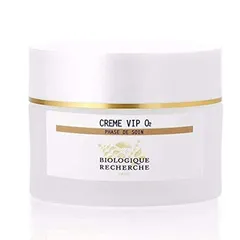
Works for:
based on ingredients and %- Moisturizing
Doesn't work for:
based on ingredients and %- Evens skin tone
Can it cause trouble?
- Irritation risk: high
- Comedogenic risk ingredients: 1
Key actives


Product Summary
"Biologique Recherche - Creme VIP O2" is effective for: Moisturizing
Ingredient callouts
- Humectants (sodium hyaluronate 0.20% - 0.40%, urea 0.25% - 0.50%, sodium lactate 0.30% - 0.55% and glycerin 3.00% - 3.60%). These ingredients help attract water to the upper layer of the skin and improve the skin hydration.
Moisturizing
This product contains good ingredients to attract water to the upper layer of the skin. These ingredients are called "humectants": glycerin, sodium hyaluronate.
When humectants are on the surface of the skin, they “pull in” the moisture from the outside environment, or from within deeper layers of the skin. If the air is dry, humectants can speed up the moisture loss from the skin. This is why it is a good idea to use another product on top of this one to help "seal in" the moisture (look for ingredients like dimethicone, squalane, oils and butters).
The following ingredients in this product are especially good for supporting the skin barrier and helping with the hydration level: urea
One of the best moisturizing ingredients. Attracts water into the upper layer of the skin
Helps attract water to the upper layer of the skin. Is often used to adjust the pH level of the product
Naturally present in skin (urea makes up about 7% of natural moisturizing factors in skin). Attracts water to the upper layer of the skin. Also has a positive effect on the skin barrier beyond the humectant action. Can enhance penetration of other ingredients. Is an exfoliating ingredient when used in high concentrations
Yeast extract. Helps attract water to the upper layer of the skin
One of the best moisturizing ingredients. Naturally present in skin. It attracts water to the upper layer of the skin working as a humectant
An amino-acid that helps to attract water to the upper layer of the skin. In combination with other amino-acids, might help to reduce fine lines and wrinkles
A non-drying alcohol that works to soften the skin and stabilize product formulations helping oil and water mix together
Can help attract water to the upper layer of the skin
Helps oil and water mix together and works as an emollient
Used to preserve products, dissolve other ingredients and create a nice product texture
Helps preserve products and creates a nice product texture
An emollient that is naturally present in skin and helps soften it
Helps oil and water mix together and can enhance the penetration of other ingredients into the skin. It can be irritating
Helps attract water to the upper layer of the skin and improves the product texture
Helps calm down inflammation in skin and can help reduce itching. Helps to repair the skin barrier and keep skin hydrated
Helps attract water to the upper layer of the skin and might have some anti-oxidant and skin lightening properties. It can help calm down inflammation in skin
An exfoliating and moisturizing alpha-hydroxy acid (AHA). Typically causes less irritation than other AHAs, for example, glycolic acid. At high concentrations (about 15%), lactic acid can help reduce lines and wrinkles. Recent studies show that lactic acid can support the "good" bacteria living on skin's surface (healthy skin microbiome)
Is proven to be effective in reducing blemishes, evening out skin tone and helping to improve lines and wrinkles. It helps the skin to repair sun damage, calm down inflammation and keep maintain good levels of moisture. The concentration of about 2% is effective for supporting the skin barrier and evening out the skin tone. Concentration of 4-6% is better for helping with acne and balancing the sebum production
Might be somewhat helpful in reducing hyperpigmentation and neutralizing free radicals but its typical concentration in a product is too low for having an effect
Evens skin tone
Effective ingredients missing or their concentration is too low
Is proven to be effective in reducing blemishes, evening out skin tone and helping to improve lines and wrinkles. It helps the skin to repair sun damage, calm down inflammation and keep maintain good levels of moisture. The concentration of about 2% is effective for supporting the skin barrier and evening out the skin tone. Concentration of 4-6% is better for helping with acne and balancing the sebum production
An exfoliating and moisturizing alpha-hydroxy acid (AHA). Typically causes less irritation than other AHAs, for example, glycolic acid. At high concentrations (about 15%), lactic acid can help reduce lines and wrinkles. Recent studies show that lactic acid can support the "good" bacteria living on skin's surface (healthy skin microbiome)
Helps attract water to the upper layer of the skin and might have some anti-oxidant and skin lightening properties. It can help calm down inflammation in skin
Used for skin exfoliation. It has an anti-inflammatory and anti-bacterial effect, helps to unclog pores, prevent blemishes and speed up healing of the existing ones. Sometimes referred to as a BHA (beta-hydroxy acid)
How honest is this product?
| Promise | Can it deliver? |
|---|---|
| Moisturizing |
Total Promises Fulfilled score: 100/100.
We receive a small commission for purchases made through these links at no cost for you. Thank you for your support! Learn more
Potential irritants
Comedogenic ingredients
User reviews (0)
Averages from community submissions.
No reviews yet for this product.
Be the first to share your experience!
Tried this product?
Help capture what the ingredient list can't—texture, finish, pilling, scent, and more. Answer what you can, skip the rest.
Takes ~30 seconds.
Reviews are shown in aggregate. No personal details.
| Product | Similarity | Price | Irritancy |
|---|---|---|---|
 Biologique Recherche Creme VIP O2 | Current | $157.94 | |
Skin proud Daily AHA BHA Detox Tonic with Glycolic, Lactic and Salicylic Acid | 81% | - | |
Evidence Skincare B Calm | 79% | - | |
 skintific 2% SALICYLIC ACID ANTI ACNE SERUM | 79% | - | |
 SUNDO Ultimate AHA & BHA Renewal Solution | 78% | $14.28 | |
 It Cosmetics Bye Bye Breakout Salicylic Acid Acne Serum | 77% | $36.00 |
Key Actives
Is proven to be effective in reducing blemishes, evening out skin tone and helping to improve lines and wrinkles. It helps the skin to repair sun damage, calm down inflammation and keep maintain good levels of moisture. The concentration of about 2% is effective for supporting the skin barrier and evening out the skin tone. Concentration of 4-6% is better for helping with acne and balancing the sebum production
Helps calm down inflammation in skin and can help reduce itching. Helps to repair the skin barrier and keep skin hydrated
Helps attract water to the upper layer of the skin and might have some anti-oxidant and skin lightening properties. It can help calm down inflammation in skin
Used for skin exfoliation. It has an anti-inflammatory and anti-bacterial effect, helps to unclog pores, prevent blemishes and speed up healing of the existing ones. Sometimes referred to as a BHA (beta-hydroxy acid)
An exfoliating and moisturizing alpha-hydroxy acid (AHA). Typically causes less irritation than other AHAs, for example, glycolic acid. At high concentrations (about 15%), lactic acid can help reduce lines and wrinkles. Recent studies show that lactic acid can support the "good" bacteria living on skin's surface (healthy skin microbiome)
An amino-acid that helps to attract water to the upper layer of the skin. In combination with other amino-acids, might help to reduce fine lines and wrinkles
Naturally present in skin (urea makes up about 7% of natural moisturizing factors in skin). Attracts water to the upper layer of the skin. Also has a positive effect on the skin barrier beyond the humectant action. Can enhance penetration of other ingredients. Is an exfoliating ingredient when used in high concentrations
One of the best moisturizing ingredients. Naturally present in skin. It attracts water to the upper layer of the skin working as a humectant
Yeast extract. Helps attract water to the upper layer of the skin
Helps attract water to the upper layer of the skin. Is often used to adjust the pH level of the product
One of the best moisturizing ingredients. Attracts water into the upper layer of the skin
Potential irritants
Helps oil and water mix together and can enhance the penetration of other ingredients into the skin. It can be irritating
Produces temporary toning effect. Can help dissolve other ingredients or preserve products
Helps preserve products. Can mask unpleasant smell. Could be irritating
Used for skin exfoliation. It has an anti-inflammatory and anti-bacterial effect, helps to unclog pores, prevent blemishes and speed up healing of the existing ones. Sometimes referred to as a BHA (beta-hydroxy acid)
Can be drying and contribute to skin irritation. Used in formulars to dissolve other ingredients, create a thinner product consistency or for its antibacterial properties
A plant extract that can help calm down inflammation in skin. Can, however, itself be irritating
A plant extract (perforate St John's-wort) that might have some anti-oxidant effect. Can be used as a fragrance and be irritating
Used to preserve products, dissolve other ingredients and create a nice product texture
Helps preserve products and creates a nice product texture
An exfoliating and moisturizing alpha-hydroxy acid (AHA). Typically causes less irritation than other AHAs, for example, glycolic acid. At high concentrations (about 15%), lactic acid can help reduce lines and wrinkles. Recent studies show that lactic acid can support the "good" bacteria living on skin's surface (healthy skin microbiome)
Might be somewhat helpful in reducing hyperpigmentation and neutralizing free radicals but its typical concentration in a product is too low for having an effect
Helps attract water to the upper layer of the skin. Is often used to adjust the pH level of the product
Can temporarily tighten the skin right after application of the product. The effect will be short-lived. Helps improve the product considtency
Can help attract water to the upper layer of the skin. Is studied as a mosquito repellent
The salt of salicylic acid. Helps exfoliate the upper layer of the skin. Can also work to preserve cosmetic products
Comedogenic ingredients
All ingredients
Helps oil and water mix together and can enhance the penetration of other ingredients into the skin. It can be irritating
One of the best moisturizing ingredients. Naturally present in skin. It attracts water to the upper layer of the skin working as a humectant
An emollient that is naturally present in skin and helps soften it
Used to preserve products, dissolve other ingredients and create a nice product texture
A non-drying alcohol that works to soften the skin and stabilize product formulations helping oil and water mix together
Produces temporary toning effect. Can help dissolve other ingredients or preserve products
Helps preserve products. Can mask unpleasant smell. Could be irritating
Helps preserve products and creates a nice product texture
Is proven to be effective in reducing blemishes, evening out skin tone and helping to improve lines and wrinkles. It helps the skin to repair sun damage, calm down inflammation and keep maintain good levels of moisture. The concentration of about 2% is effective for supporting the skin barrier and evening out the skin tone. Concentration of 4-6% is better for helping with acne and balancing the sebum production
An exfoliating and moisturizing alpha-hydroxy acid (AHA). Typically causes less irritation than other AHAs, for example, glycolic acid. At high concentrations (about 15%), lactic acid can help reduce lines and wrinkles. Recent studies show that lactic acid can support the "good" bacteria living on skin's surface (healthy skin microbiome)
A preservative. It helps prevent bacterial growth in cosmetic products
Might be somewhat helpful in reducing hyperpigmentation and neutralizing free radicals but its typical concentration in a product is too low for having an effect
Increases thickness of a product. Texture enhancer for oil-in-water emulsions
Helps attract water to the upper layer of the skin and might have some anti-oxidant and skin lightening properties. It can help calm down inflammation in skin
Yeast extract. Helps attract water to the upper layer of the skin
Used for skin exfoliation. It has an anti-inflammatory and anti-bacterial effect, helps to unclog pores, prevent blemishes and speed up healing of the existing ones. Sometimes referred to as a BHA (beta-hydroxy acid)
Helps attract water to the upper layer of the skin. Is often used to adjust the pH level of the product
Can be drying and contribute to skin irritation. Used in formulars to dissolve other ingredients, create a thinner product consistency or for its antibacterial properties
Helps attract water to the upper layer of the skin and improves the product texture
A plant extract that can help calm down inflammation in skin. Can, however, itself be irritating
A plant extract (perforate St John's-wort) that might have some anti-oxidant effect. Can be used as a fragrance and be irritating
An amino-acid that helps to attract water to the upper layer of the skin. In combination with other amino-acids, might help to reduce fine lines and wrinkles
Naturally present in skin (urea makes up about 7% of natural moisturizing factors in skin). Attracts water to the upper layer of the skin. Also has a positive effect on the skin barrier beyond the humectant action. Can enhance penetration of other ingredients. Is an exfoliating ingredient when used in high concentrations
Helps calm down inflammation in skin and can help reduce itching. Helps to repair the skin barrier and keep skin hydrated
Can temporarily tighten the skin right after application of the product. The effect will be short-lived. Helps improve the product considtency
One of the best moisturizing ingredients. Attracts water into the upper layer of the skin
Can help attract water to the upper layer of the skin. Is studied as a mosquito repellent
The salt of salicylic acid. Helps exfoliate the upper layer of the skin. Can also work to preserve cosmetic products
Ingredient list view
Water, Propylene glycol, Stearic acid, Glycerin, Palmitic acid, Amniotic fluid, Polysorbate 40, Pentylene glycol, Cetyl alcohol, Tea-stearate, Peg-2 stearate, Perfluorodecalin, Alcohol denat., Polyperfluoromethylisopropyl ether, P-anisic acid, Caprylyl glycol, Poloxamer 188, Niacinamide, Lactic acid, Phenoxyethanol, Cucumis sativus fruit extract, Sodium dehydroacetate, Hydrolyzed silk, Ammonium acryloyldimethyltaurate/vp copolymer, Yeast extract, Faex extract, Sodium benzoate, Magnesium chloride, Vinegar, Acetum, Tea-lactate, Salicylic acid, Sodium lactate, Mimosa tenuiflora bark extract, Alcohol, Sorbitol, Hamamelis virginiana bark/leaf/twig extract, Myrtus communis extract, Allium cepa bulb extract, Hypericum perforatum flower/leaf/stem extract, Serine, Urea, Allantoin, Rhizobian gum, Sodium hyaluronate, Commiphora myrrha resin extract, Potassium sorbate, Chlorphenesin, Thiamine hcl, Pyridoxine hcl, Sodium salicylate, Sorbic acid
- Surfactants and experimental irritant contact dermatitis
- Propylene Glycol
- Skin-sensitizing and irritant properties of propylene glycol
- Glycerol and the skin: holistic approach to its origin and functions
- Sodium anisate
- Niacinamide - mechanisms of action and its topical use in dermatology
- Gehring, W. (2004). Nicotinic acid/niacinamide and the skin. Journal of Cosmetic Dermatology, 3(2), 88–93. doi:10.1111/j.1473-2130.2004.00115.x
- Epidermal and dermal effects of topical lactic acid
- Dual Effects of Alpha-Hydroxy Acids on the Skin
- 4 Final Report on the Safety Assessment of Sodium Dehydroacetate and Dehydroacetic Acid
- Moisturizing efficiency of silk protein hydrolysate: Silk fibroin
- The natural yeast extract isolated by ethanol precipitation inhibits melanin synthesis by modulating tyrosinase activity and downregulating melanosome transfer
- Evaluation of dermatological effects of cosmetic formulations containing Saccharomyces cerevisiae extract and vitamins
- Salicylic acid as a peeling agent: a comprehensive review
- Beta Hydroxy Acids
- A review of toxicity from topical salicylic acid preparations
- Glycolic Acid Peels Versus Salicylic–Mandelic Acid Peels in Active Acne Vulgaris and Post‐Acne Scarring and Hyperpigmentation: A Comparative Study
- Medical Attributes of St. John’s Wort (Hypericum perforatum)
- Topical palmitoyl pentapeptide provides improvement in photoaged human facial skin
- Topical urea in skincare: A review
- Profile of wound healing process induced by allantoin
- Hyaluronic acid: A key molecule in skin aging
- Hyaluronan (Hyaluronic Acid): a natural moisturizer for skin care
- Three clinical studies showing the anti-aging benefits of sodium salicylate in human skin