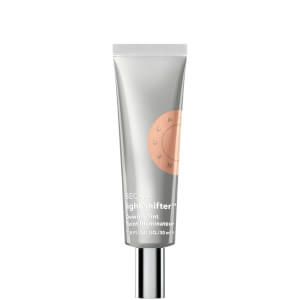
BECCA Light Shifter Dewing Tint Tinted Moisturiser - Various Shades
Works for
1 of 2 advertised claims delivered
Moisturizing8 ingredients credited for this claimGood support
“Light Shifter Dewing Tint Tinted Moisturiser .”
This product can help improve hydration of the skin with the two types of ingredients.
The first type is called “humectants”:
these ingredients help attract water.
When humectants are on the surface of the skin, they “pull in” the moisture from the outside environment, or from
within deeper layers of the skin. The following ingredients in this product do the job:
glycerin, sodium hyaluronate.
This product also contains ingredients called “occlusives”. They help reduce the speed with which our skin loses moisture to the outside environment. These ingredients also help soften the upper layer of the skin, so it feels less tight and nicer to the touch. The following ingredients in this product do the job: squalane, soybean glycerides.
Anti-aging2 ingredients credited for this claimWeak support
“This weightless tinted moisturizer contains antioxidant vitamin E for anti-pollution protection and blue light protection.”
Effective ingredients missing or their concentration is too low.
Can it cause trouble?
Irritancy12 flagged ingredientsMedium risk
Comedogenic1 ingredient rated 2 or more on the 0–5 pore-clogging scale1 flagged
User reviews
Be the first — your take helps the next person decide.
Ingredients
Filter by role to see what each ingredient is doing.
Water~45–55%
Hydrogenated didecene~5.1–6.3%
- Irritation risk
- Low
Glycerin~4–4.9%
- Irritation risk
- Low
One of the best moisturizing ingredients. Naturally present in skin. It attracts water to the upper layer of the skin working as a humectant
More about GlycerinPropanediol~3.1–3.7%
- Irritation risk
- Low
Acts as a solvent for other ingredients. Speeds up the absorption of other ingredients into the skin
More about PropanediolIsoamyl laurate~2.4–2.9%
- Irritation risk
- Medium
Helps stabilize emulsions and create a nice product texture
More about Isoamyl laurateSqualane~2–2.5%
- Irritation risk
- Low
An oil naturally present in skin. Works as an emollient to soften the skin and form a protective layer on its surface without a greasy feeling.
More about SqualaneCetyl peg/ppg-10/1 dimethicone~1.6–2%
- Irritation risk
- Low
A type of silicone that helps water and oil mix together. Can help to soften upper layer of the skin
More about Cetyl peg/ppg-10/1 dimethiconeSoybean glycerides~1.4–1.8%
- Irritation risk
- Low
Help soften the upper layer of the skin
More about Soybean glyceridesHydrogenated styrene/isoprene copolymer~1.2–1.4%
- Irritation risk
- Medium
Helps to create a thicker product consistency
More about Hydrogenated styrene/isoprene copolymerPolyglyceryl-4 isostearate~0.95–1.15%
- Irritation risk
- Medium
Helps water and oil mix together
More about Polyglyceryl-4 isostearateSodium chloride~0.75–1.1%
- Irritation risk
- Low
Used to stabilize mixtures of oil and water, and create thicker, gel-like product textures
More about Sodium chlorideButyrospermum parkii butter unsaponifiables~0.55–0.8%
- Irritation risk
- Low
- Comedogenicity
- 2/5
A great moisturizing ingredient that softens the skin and reduces water loss from its upper layer. It also can be helpful in protecting skin from free radicals
More about Butyrospermum parkii butter unsaponifiablesDisteardimonium hectorite~0.5–0.75%
- Irritation risk
- Low
A type of clay that is used to thicken the product consistency
More about Disteardimonium hectoriteCaprylyl glycol~0.5–0.75%
- Irritation risk
- Medium
Helps preserve products and creates a nice product texture
More about Caprylyl glycol1,2-hexanediol~0.4–0.6%
Disodium edta~0.4–0.65%
Sodium hyaluronate~0.4–0.6%
- Irritation risk
- Low
One of the best moisturizing ingredients. Attracts water into the upper layer of the skin
More about Sodium hyaluronateGlycyrrhiza glabra root extract~0.3–0.55%
- Irritation risk
- Medium
A plant extract that can help lighten the skin and calm down inflammation. Might be helpful in neutralizing free radicals
More about Glycyrrhiza glabra root extractCamellia sinensis leaf extract~0.3–0.6%
- Irritation risk
- Low
Can contain potent anti-oxidant compounds (abbreviated ECG, GCG, EGC, and EGCG) that might help protect the skin from free radicals. Can help calm down inflammation and has some anti-bacterial properties. Unfortunately, these antioxidants are unstable and lose their effectiveness very quickly in products. The concentration of the antioxidant compounds in the extract also tends to be low to be effective in topical formulation
More about Camellia sinensis leaf extractAscorbyl palmitate~0.3–0.5%
- Irritation risk
- Medium
Being a lipid soluble form of vitamin C, it is more stable and can penetrate the skin better than L-Ascorbic acid. It is effective in protecting the skin from free radicals, as well as evening the skin tone, but is less effective in stimulating collagen production compared to L-Ascorbic acid.
More about Ascorbyl palmitatePentaerythrityl tetra-di-t-butyl hydroxyhydrocinnamate~0.3–0.5%
- Irritation risk
- Low
Used to increase stability of product formulations
More about Pentaerythrityl tetra-di-t-butyl hydroxyhydrocinnamateCitric acid~0.25–0.45%
- Irritation risk
- Medium
Can work as an exfoliant but is typically used to adjust the product pH
More about Citric acidHydroxyacetophenone~0.25–0.45%
Tocopheryl acetate~0.25–0.45%
- Irritation risk
- Medium
A more stable but less bio-available form of vitamin E compared to Tocopherol. Might help moisturize and protect the skin from free radicals, but mostly used in low concentrations to stabilize other ingredients.
More about Tocopheryl acetateBht~0.25–0.4%
Phenoxyethanol~0.25–0.45%
- Irritation risk
- Low
A preservative. It helps prevent bacterial growth in cosmetic products
More about PhenoxyethanolMica~0.25–0.5%
- Irritation risk
- Low
Creates an illusion of smoother and more radiant skin tone. Adds shimmer to the skin by reflecting light
More about MicaTitanium dioxide~0.3–0.6%
- Irritation risk
- Low
Works as a UV filter when used in high concentrations. It is photostable and is effective mostly against the UVB light, with some protection in the UVA range. In small concentrations, used for its ability to improve the color of cosmetic products. Is usually well tolerated by the skin
More about Titanium dioxideCi 77891~0.2–0.35%
- Irritation risk
- Low
Ci 77163~0.2–0.35%
Iron oxides~0.15–0.25%
- Irritation risk
- Low
An umbrella term for the following three colorants: CI 77491, CI 77492, CI 77499. They might be able to offer some protection against visible light, but the degree of the protection is not clear
More about Iron oxidesCi 77492~0.15–0.25%
Iron oxides~0.1–0.2%
- Irritation risk
- Low
An umbrella term for the following three colorants: CI 77491, CI 77492, CI 77499. They might be able to offer some protection against visible light, but the degree of the protection is not clear
More about Iron oxidesCi 77491~0.1–0.2%
- Irritation risk
- Low
A red colorant made of iron oxide. Typically is not irritating
More about Ci 77491Iron oxides~0.05–0.15%
- Irritation risk
- Low
An umbrella term for the following three colorants: CI 77491, CI 77492, CI 77499. They might be able to offer some protection against visible light, but the degree of the protection is not clear
More about Iron oxidesCi 77499~0.05–0.1%
Ingredient list view
Water, Hydrogenated didecene, Glycerin, Propanediol, Isoamyl laurate, Squalane, Cetyl peg/ppg-10/1 dimethicone, Soybean glycerides, Hydrogenated styrene/isoprene copolymer, Polyglyceryl-4 isostearate, Sodium chloride, Butyrospermum parkii butter unsaponifiables, Disteardimonium hectorite, Caprylyl glycol, 1,2-hexanediol, Disodium edta, Sodium hyaluronate, Glycyrrhiza glabra root extract, Camellia sinensis leaf extract, Ascorbyl palmitate, Pentaerythrityl tetra-di-t-butyl hydroxyhydrocinnamate, Citric acid, Hydroxyacetophenone, Tocopheryl acetate, Bht, Phenoxyethanol, Mica, Titanium dioxide, Ci 77891, Ci 77163, Iron oxides, Ci 77492, Iron oxides, Ci 77491, Iron oxides, Ci 77499
Compare prices
Retailers ranked by price — lowest first.

Sources cited in this review
Every concentration estimate and effectiveness label is anchored to one of these 5 studies and safety reviews.
- 1
- 2
- 3Hyaluronic acid: A key molecule in skin agingncbi.nlm.nih.gov
- 4
- 5

Affiliate links · As an Amazon Associate, WIMJ earns from qualifying purchases.