Works for
1 of 2 advertised claims delivered
Moisturizing19 ingredients credited for this claimStrong support
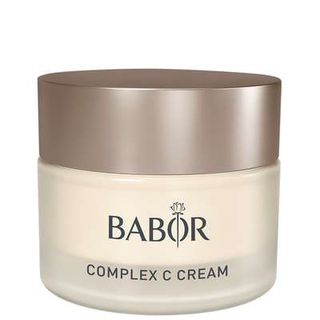
“Skinovage Complex C Cream”
This product can help improve hydration of the skin with the two types of ingredients.
The first type is called “humectants”:
these ingredients help attract water.
When humectants are on the surface of the skin, they “pull in” the moisture from the outside environment, or from
within deeper layers of the skin. The following ingredients in this product do the job:
erythritol, glycerin.
This product also contains ingredients called “occlusives”. They help reduce the speed with which our skin loses moisture to the outside environment. These ingredients also help soften the upper layer of the skin, so it feels less tight and nicer to the touch. The following ingredients in this product do the job: dimethicone, helianthus annuus seed oil.
The following ingredients in this product are especially good for supporting the skin barrier and helping with the hydration level: panthenol
Anti-aging5 ingredients credited for this claimLimited support
“Alpine stem cells protect against the visual signs of premature skin ageing and Osmo Tec helps optimise the skin's ability to absorb active cosmetic ingredients.”
This product does not contain ingredients that are able to reduce fine lines and wrinkles or help with skin elasticity, but it can improve the look of the skin temporarily through moisturization. Well-moisturized skin might also be able to repair the sun damage better.This ingredient - magnesium aluminum silicate - could be helpful for preventing or repairing signs of aging in theory, but there is no evidence that it actually works.
Can it cause trouble?
Irritancy2 strong irritants: Retinyl palmitate, ParfumMedium risk
Comedogenic3 ingredients rated 2 or more on the 0–5 pore-clogging scale3 flagged
User reviews
Be the first — your take helps the next person decide.
Ingredients
Filter by role to see what each ingredient is doing.
Water~45–55%
Decyl oleate~4.1–5%
- Irritation risk
- Low
- Comedogenicity
- 2/5
Helps soften the upper layer of the skin
More about Decyl oleateCetearyl alcohol~3.9–4.7%
- Irritation risk
- Low
- Comedogenicity
- 2/5
A non-drying alcohol. Works as an emollient. Helps water and oil mix together and creates a nice product texture
More about Cetearyl alcoholGlycerin~3.1–3.8%
- Irritation risk
- Low
One of the best moisturizing ingredients. Naturally present in skin. It attracts water to the upper layer of the skin working as a humectant
More about GlycerinDicaprylyl carbonate~2.4–2.9%
- Irritation risk
- Low
Helps products spread more easily and works as an emollient to soften skin
More about Dicaprylyl carbonateGlyceryl stearate~2–2.4%
- Irritation risk
- Low
An emollient that softens the skin and forms a protective layer on its surface. Helps water and oil mix together
More about Glyceryl stearateSesamum indicum seed oil~1.7–2.1%
- Irritation risk
- Low
A good moisturizing plant oil. Due to the high linoleic acid content, it helps soften the upper layer of the skin, reduce water loss and support skin barrier function
More about Sesamum indicum seed oilPeg-100 stearate~1.5–1.9%
- Irritation risk
- Low
Helps oil and water mix togehter and creates a nice product texture
More about Peg-100 stearateMacadamia integrifolia seed oil~1.2–1.5%
- Irritation risk
- Low
A plant oil that helps soften the upper layer of the skin
More about Macadamia integrifolia seed oilErythritol~0.95–1.15%
- Irritation risk
- Low
Helps to attract water to the upper layer of the skin
More about ErythritolPanthenol~0.65–1%
- Irritation risk
- Low
Helps attract water to the upper layer of the skin and can help improve skin barrier function
More about PanthenolPhenoxyethanol~0.55–0.8%
- Irritation risk
- Low
A preservative. It helps prevent bacterial growth in cosmetic products
More about PhenoxyethanolGlyceryl linoleate~0.55–0.8%
- Irritation risk
- Medium
Helps oil and water mix together
More about Glyceryl linoleateTocopheryl acetate~0.45–0.7%
- Irritation risk
- Medium
A more stable but less bio-available form of vitamin E compared to Tocopherol. Might help moisturize and protect the skin from free radicals, but mostly used in low concentrations to stabilize other ingredients.
More about Tocopheryl acetateRetinyl palmitate~0.4–0.6%
- Irritation risk
- High
Three steps removed from the active form of vitamin A - retinoic acid. To have an effect in the skin, it first needs to be converted twice to become the retinoic acid. This means it is less potent than retinol, but could also be less irritating. Once converted to the retinoic acid in the skin, it helps against all signs of aging, improves skin cell turnover and helps fight blemishes and clogged pores. However, in many cosmetic formulations, it is used in a concentration that is too low to have the full effect
More about Retinyl palmitateIsomalt~0.4–0.6%
- Irritation risk
- Low
Helps attract water to the upper layer of the skin
More about IsomaltParfum~0.35–0.6%
- Irritation risk
- High
An aromatic blend of unspecified and possibly irritating ingredients
More about ParfumGlyceryl oleate~0.35–0.65%
- Irritation risk
- High
Helps oil and water mix together. Can be irritating
More about Glyceryl oleateMagnesium aluminum silicate~0.3–0.6%
- Irritation risk
- Low
Might be helpful in restoring skin barrier function and, when combined with zinc carbonate and malonic acid, reducing fine lines and wrinkles by stimulating elastin production. Also helps stabilize the product formulation
More about Magnesium aluminum silicateDimethicone~0.35–0.6%
- Irritation risk
- Low
A silicone that helps to reduce water loss from the surface of the skin. Can temporarily "fill in" lines and wrinkles, absorb oil, and create a nice product finish
More about DimethiconeGlyceryl palmitate~0.3–0.55%
- Irritation risk
- Low
Disodium edta~0.25–0.45%
Xanthan gum~0.25–0.45%
- Irritation risk
- Low
Used to create a thicker product consistency
More about Xanthan gumEthylhexylglycerin~0.25–0.45%
Lecithin~0.25–0.5%
- Irritation risk
- Low
Used mostly for creating emulsions - helping oil and water mix together. Helps soften the upper layer of the skin
More about LecithinGlyceryl linolenate~0.25–0.5%
- Irritation risk
- Low
Helps soften the upper layer of the skin
More about Glyceryl linolenate3-o-ethyl ascorbic acid~0.25–0.4%
- Irritation risk
- High
A vitamin C derivative that is more stable but less potent than pure form of vitamin C. Can help neutralize free radicals and help reduce hyperpigmentation, but the required concentration is likely to be much higher than for the pure form of vitamin C, limiting the ingredient's effectiveness in products
More about 3-o-ethyl ascorbic acidTocopherol~0.25–0.45%
- Irritation risk
- Low
Pure form of vitamin E. Can help moisturise and protect the skin from free radicals. Often used to help stabilise other ingredients or the formula itself
More about TocopherolSodium dehydroacetate~0.25–0.45%
Helianthus annuus seed oil~0.25–0.5%
- Irritation risk
- Low
A great emollient due to its high linoleic acid content. One of the most effective plant oils in helping skin hydration and repairing skin barrier function
More about Helianthus annuus seed oilCitric acid~0.25–0.45%
- Irritation risk
- Medium
Can work as an exfoliant but is typically used to adjust the product pH
More about Citric acidSodium benzoate~0.25–0.45%
Potassium sorbate~0.25–0.45%
Benzyl alcohol~0.2–0.35%
- Irritation risk
- High
A preservative. Can be used to mask unpleasant smell. Can be irritating
More about Benzyl alcoholLonicera caprifolium flower extract~0.2–0.4%
- Irritation risk
- High
A plant extract that might help neutralize free radicals in skin. Can contain volalite oils and be irritating
More about Lonicera caprifolium flower extractLonicera japonica flower extract~0.25–0.4%
- Irritation risk
- High
A plant extract that might help neutralize free radicals in skin. Can contain volalite oils and be irritating
More about Lonicera japonica flower extractHomarine hcl~0.2–0.4%
- Irritation risk
- Medium
Might help to improve skin hydration levels
More about Homarine hclPantolactone~0.2–0.4%
- Irritation risk
- Low
Helps attract water to the upper layer of the skin
More about PantolactoneBenzoic acid~0.2–0.35%
Dehydroacetic acid~0.15–0.25%
Rhododendron ferrugineum leaf cell culture extract~0.15–0.3%
- Irritation risk
- Low
Lactic acid~0.15–0.3%
- Irritation risk
- Medium
An exfoliating and moisturizing alpha-hydroxy acid (AHA). Typically causes less irritation than other AHAs, for example, glycolic acid. At high concentrations (about 15%), lactic acid can help reduce lines and wrinkles. Recent studies show that lactic acid can support the "good" bacteria living on skin's surface (healthy skin microbiome)
More about Lactic acidGlycine soja oil~0.2–0.35%
- Irritation risk
- Medium
- Comedogenicity
- 2/5
A good emollient that helps soften the skin and helps repair its barrier function. It can clog pores if used in high concentrations.
More about Glycine soja oilCi 19140~0.1–0.2%
Ci 15510~0.1–0.2%
- Irritation risk
- Low
Ingredient list view
Water, Decyl oleate, Cetearyl alcohol, Glycerin, Dicaprylyl carbonate, Glyceryl stearate, Sesamum indicum seed oil, Peg-100 stearate, Macadamia integrifolia seed oil, Erythritol, Panthenol, Phenoxyethanol, Glyceryl linoleate, Tocopheryl acetate, Retinyl palmitate, Isomalt, Parfum, Glyceryl oleate, Magnesium aluminum silicate, Dimethicone, Glyceryl palmitate, Disodium edta, Xanthan gum, Ethylhexylglycerin, Lecithin, Glyceryl linolenate, 3-o-ethyl ascorbic acid, Tocopherol, Sodium dehydroacetate, Helianthus annuus seed oil, Citric acid, Sodium benzoate, Potassium sorbate, Benzyl alcohol, Lonicera caprifolium flower extract, Lonicera japonica flower extract, Homarine hcl, Pantolactone, Benzoic acid, Dehydroacetic acid, Rhododendron ferrugineum leaf cell culture extract, Lactic acid, Glycine soja oil, Ci 19140, Ci 15510
Compare prices
Retailers ranked by price — lowest first.
Worth comparing, line by line.
Match % combines shared ingredients, the first five ingredients, shared actives and hero ingredients, irritancy (lower counts in the alternative's favour), texture and body area. Only products in the same routine step are compared.
| BABORSkinovage Complex C CreamYOUR PRODUCT | CetaphilMoisturising Llotion | |
|---|---|---|
| Match | — | 50% |
| Price | $59.43 | — |
| Shared key ingredients | — | 5 of 12 |
| Key difference | — | Niacinamide |
| Irritancy | Medium | Low |
| Drying alcohol | — | — |
| View product | Shop |


Product summary
"BABOR - Skinovage Complex C Cream" has a good moisturizing formula. To work well, any moisturizer needs to include a combination of water-binding and emollient ingredients. BABOR - Skinovage Complex C Cream ticks this box. Humectants in this product (panthenol, erythritol, glycerin, isomalt and pantolactone) help to increase the water content in the upper layer of the skin. (These ingredients do so by "capturing" water molecules from the outside air or from within the deeper layers of the skin). Glycine soja oil, sesamum indicum seed oil, dimethicone, helianthus annuus seed oil and cetearyl alcohol in this product help decrease the water evoporation from the skin, so that it stays hydrated for longer. These ingredients also soften the skin and take away the feeling of tightness and dryness.
Ingredient callouts
- this moisturizer includes a form of Retinoids (vitamin A) - retinyl palmitate 0.40% - 0.60%, but this type of vitamin A is not very effective. It could in theory help with fine lines and wrinkles, but the effect is most likely minimal.
- Panthenol (pro-vitamin B5) at about 0.65% - 1.00% concentration. In this concentration, Panthenol works effectively to improve the skin barrier and reduce inflammation.
Irritation risk
This formulation includes some common irritants, including ingredients that do not provide a benefit for the skin. We assess the overall irritancy of this moisturizer to be medium. For a detailed overview of all potential irritants: click here
You can see the detailed formula review with the breakdown of all actives in the product and the full ingredient list with estimated concentrations in the tables below.
Price
The product retails for 1312.00£ in the United Kingdom.
For a detailed price comparison: click here.
Sources cited in this review
Every concentration estimate and effectiveness label is anchored to one of these 26 studies and safety reviews.
- 1
- 2
- 3Triglyceride composition of Sesamum indicum seed oilonlinelibrary.wiley.com
- 4
- 5
- 6Skin moisturizing effects of panthenol-based formulationspdfs.semanticscholar.org

Affiliate links · As an Amazon Associate, WIMJ earns from qualifying purchases.