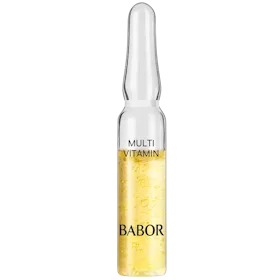
Works for
MoisturizingNiacinamide, Panthenol + 4 moreWorks well
“Additionally contained hyaluronic acid is the foundation for comprehensive skincare thanks to its moisturizing and moisture-binding properties.”
This product can help improve hydration of the skin with the two types of ingredients.
The first type is called “humectants”:
these ingredients help attract water.
When humectants are on the surface of the skin, they “pull in” the moisture from the outside environment, or from
within deeper layers of the skin. The following ingredients in this product do the job:
sodium hyaluronate.
This product also contains ingredients called “occlusives”. They help reduce the speed with which our skin loses moisture to the outside environment. These ingredients also help soften the upper layer of the skin, so it feels less tight and nicer to the touch. The following ingredients in this product do the job: helianthus annuus seed oil.
The following ingredients in this product are especially good for supporting the skin barrier and helping with the hydration level: niacinamide, panthenol
Anti-agingSide benefit · Niacinamide, Retinyl palmitate + 2 moreWorks well
This product can help reduce and prevent fine lines and wrinkles, improve skin elasticity and firmness because it contains niacinamide.
These ingredients in the product can also be helpful, even though there is less evidence for their effectiveness: retinyl palmitate.
Keep in mind that it typically takes at least 6 weeks to notice any results because the changes that are needed to improve fine lines and elasticity happen in the deeper layers of the skin. No topical anti-aging product can “erase” wrinkles or fully reverse signs of aging.
Evens skin toneSide benefit · 3-o-ethyl ascorbic acid, Niacinamide + 1 moreWorks well
This product can help reduce hypepigmentation and even out the skin tone because it contains the following effective ingredients: niacinamide
The following ingredient (ingredients) in this product might be helpful, but there is no evidence to confirm that it actually can help even out the skin tone: 3-o-ethyl ascorbic acid, retinyl palmitate.
Keep in mind that you would need to apply any topical skincare targetted at hypigmentation consistently for a couple of months to get a result. No topical skincare product can help get rid of hyperpigmentation (including post-acne marks and age spots) instantly.
Anti-blemishSide benefit · Niacinamide, Rosmarinus officinalis leaf extract + 1 moreWorks well
This product can help reduce breakouts and clogged pores because it contains the following ingredient: niacinamide. This ingredient is used for treating acne and can have a noticeable effect.
The following ingredient (ingredients) in this product might be helpful, but there is no evidence to confirm that it actually works: retinyl palmitate, rosmarinus officinalis leaf extract
Anti-oxidationSide benefit · 3-o-ethyl ascorbic acid, Tocopheryl acetate + 4 moreMay help
This product contains antioxidants (3-o-ethyl ascorbic acid) that might be able to help neutralize free radicals in skin to lessen the damage it gets from the UV light (sun). There is not enough evidence to confirm their effectiveness in skin though.
Can it cause trouble?
Irritancy6 strong irritants: Rosmarinus officinalis leaf extract, Retinyl palmitate + 4 more — patch-test recommendedHigh risk
ComedogenicClean of flagged comedogenic ingredientsNone flagged

User reviews
Be the first — your take helps the next person decide.
Ingredients
Filter by role to see what each ingredient is doing.
Water~40–60%
Caprylic/capric/succinic triglyceride~5.5–8.3%
3-o-ethyl ascorbic acid~4.4–6.6%
- Irritation risk
- High
A vitamin C derivative that is more stable but less potent than pure form of vitamin C. Can help neutralize free radicals and help reduce hyperpigmentation, but the required concentration is likely to be much higher than for the pure form of vitamin C, limiting the ingredient's effectiveness in products
More about 3-o-ethyl ascorbic acidNiacinamide~3–4.4%
- Irritation risk
- Low
Is proven to be effective in reducing blemishes, evening out skin tone and helping to improve lines and wrinkles. It helps the skin to repair sun damage, calm down inflammation and keep maintain good levels of moisture. The concentration of about 2% is effective for supporting the skin barrier and evening out the skin tone. Concentration of 4-6% is better for helping with acne and balancing the sebum production
More about NiacinamideTocopheryl acetate~2.1–3.1%
- Irritation risk
- Medium
A more stable but less bio-available form of vitamin E compared to Tocopherol. Might help moisturize and protect the skin from free radicals, but mostly used in low concentrations to stabilize other ingredients.
More about Tocopheryl acetateHippophae rhamnoides fruit extract~1.7–2.6%
- Irritation risk
- Medium
A plant extract that might help neutralize free radicals in skin, but research on its effectiveness is lacking
More about Hippophae rhamnoides fruit extractRosmarinus officinalis leaf extract~1.2–1.9%
- Irritation risk
- High
Can be helpful in reducing inflammation in skin, including inflamed acne. It can be irritating
More about Rosmarinus officinalis leaf extractHelianthus annuus seed oil~1.3–2%
- Irritation risk
- Low
A great emollient due to its high linoleic acid content. One of the most effective plant oils in helping skin hydration and repairing skin barrier function
More about Helianthus annuus seed oilPanthenol~0.95–1.45%
- Irritation risk
- Low
Helps attract water to the upper layer of the skin and can help improve skin barrier function
More about PanthenolTocopherol~0.6–1.4%
- Irritation risk
- Low
Pure form of vitamin E. Can help moisturise and protect the skin from free radicals. Often used to help stabilise other ingredients or the formula itself
More about TocopherolRetinyl palmitate~0.45–1.05%
- Irritation risk
- High
Three steps removed from the active form of vitamin A - retinoic acid. To have an effect in the skin, it first needs to be converted twice to become the retinoic acid. This means it is less potent than retinol, but could also be less irritating. Once converted to the retinoic acid in the skin, it helps against all signs of aging, improves skin cell turnover and helps fight blemishes and clogged pores. However, in many cosmetic formulations, it is used in a concentration that is too low to have the full effect
More about Retinyl palmitateBiotin~0.4–0.9%
- Irritation risk
- Low
Might have some moisturising properties. Is not effective when applied topically beyond some moisturizing effect
More about BiotinSodium hyaluronate~0.35–0.8%
- Irritation risk
- Low
One of the best moisturizing ingredients. Attracts water into the upper layer of the skin
More about Sodium hyaluronateErgothioneine~0.3–0.7%
- Irritation risk
- Low
Can help neutralize free radicals in skin. Preliminary studies show that it can be more effective than coenzyme Q10 but studies on effective concentration for topical applications are lacking
More about ErgothioneineXanthan gum~0.2–0.75%
- Irritation risk
- Low
Used to create a thicker product consistency
More about Xanthan gumCalcium chloride~0.2–0.75%
- Irritation risk
- Medium
Helps create a thicker product consistency. Might be irritating
More about Calcium chlorideParfum~0.15–0.65%
- Irritation risk
- High
An aromatic blend of unspecified and possibly irritating ingredients
More about ParfumGellan gum~0.15–0.65%
Citric acid~0.15–0.55%
- Irritation risk
- Medium
Can work as an exfoliant but is typically used to adjust the product pH
More about Citric acidDisodium phosphate~0.1–0.45%
- Irritation risk
- Low
Helps adjust the product pH and stabilize the formulation
More about Disodium phosphateSodium hydroxide~0.1–0.45%
Ethylhexylglycerin~0.1–0.4%
Phenoxyethanol~0.1–0.35%
- Irritation risk
- Low
A preservative. It helps prevent bacterial growth in cosmetic products
More about PhenoxyethanolCitrus aurantium peel oil~0.05–0.25%
- Irritation risk
- Low
Citrus limon peel oil~0.05–0.2%
Limonene~0.05–0.2%
- Irritation risk
- High
A common frangrance that can easily irritate skin, especially if exposed to air, light or heat
More about LimoneneLinalool~0.05–0.2%
Linalyl acetate~0.05–0.25%
- Irritation risk
- Low
Pinene~0.05–0.25%
- Irritation risk
- Low
Ingredient list view
Water, Caprylic/capric/succinic triglyceride, 3-o-ethyl ascorbic acid, Niacinamide, Tocopheryl acetate, Hippophae rhamnoides fruit extract, Rosmarinus officinalis leaf extract, Helianthus annuus seed oil, Panthenol, Tocopherol, Retinyl palmitate, Biotin, Sodium hyaluronate, Ergothioneine, Xanthan gum, Calcium chloride, Parfum, Gellan gum, Citric acid, Disodium phosphate, Sodium hydroxide, Ethylhexylglycerin, Phenoxyethanol, Citrus aurantium peel oil, Citrus limon peel oil, Limonene, Linalool, Linalyl acetate, Pinene
Compare prices
Retailers ranked by price — lowest first.
Affiliate links · As an Amazon Associate, WIMJ earns from qualifying purchases.
Worth comparing, line by line.
Match % combines shared ingredients, the first five ingredients, shared actives and hero ingredients, irritancy (lower counts in the alternative's favour), texture and body area. Only products in the same routine step are compared.
| BABORMulti VitaminYOUR PRODUCT | Osea MalibuAnti-Aging Sea Serum | pharma oilSunshine Serum 10% Vitamin C | Art&factNIACINAMIDE 2% + FOLIC ACID + LACTIC ACID + VITAMIN C + VITAMIN E + BETA-CAROTENE | |
|---|---|---|---|---|
| Match | — | 85% | 85% | 85% |
| Price | $45.00 | $88.00+$43.00 | — | — |
| Shared key ingredients | — | 5 of 9 | 4 of 9 | 4 of 9 |
| Key difference | — | Potassium Azeloyl Diglycinate | Hyaluronic Acid | Hydroxyethyl Urea |
| Irritancy | High | Medium | Low | Low |
| Drying alcohol | — | — | — | — |
| View product | Shop | Shop | Shop |

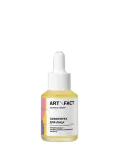
More alternatives: Crystal Clear Superboosters - Radiance Enhance2sol Facial Recovery Booster
Product summary
"BABOR - Multi Vitamin" is effective for: Anti-blemish, Anti-aging, Moisturizing and Evens skin tone
Ingredient callouts
- A good concentration of Niacinamide (3.00% - 4.40%). Niacinamide is a well-studied multi-tasking active. It is stable, and can work well in almost any hydrating formulation. There is solid evidence that Niacinamide can help support skin barrier, regulate oil production and reduce acne and clogged pores. It also helps to fight photodamage and improve the skin tone, reducing pigmentation marks.
- This product includes a form of Retinoids (vitamin A) - retinyl palmitate 0.30% - 0.75%, but this type of vitamin A is not very effective. It could in theory help with fine lines and wrinkles, but the effect is most likely minimal.
- An effective concentration of Panthenol (pro-vitamin B5) - about 1.70% - 2.60%. Panthenol helps strengthen the skin barrier, improve hydration and reduce inflammation in skin.
- Humectants (pantolactone 0.05% - 0.20%, sodium hyaluronate 0.10% - 0.35% and panthenol 1.70% - 2.60%). These ingredients help attract water to the upper layer of the skin and improve the skin hydration.
Price
The product retails for 120.00A$ in Australia, for 36.90$ in the United States and for 27.90£ in the United Kingdom.
For a detailed price comparison: click here.
Sources cited in this review
Every concentration estimate and effectiveness label is anchored to one of these 19 studies and safety reviews.
- 1
- 2
- 3
- 4Abundance of active ingredients in sea-buckthorn oilncbi.nlm.nih.gov
- 5Allergic contact dermatitis induced by rosemary leaf extract in a cleansing gelpubmed.ncbi.nlm.nih.gov
- 6

Affiliate links · As an Amazon Associate, WIMJ earns from qualifying purchases.