Works for
CleansingGlyceryl stearate citrate, Decyl glucoside + 4 moreCleanses gently
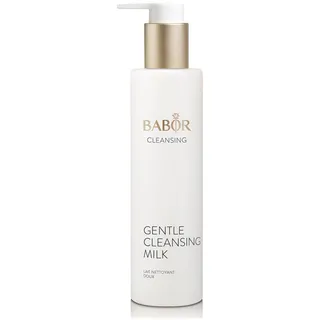
“Cleansing Gentle Cleansing Milk”
This product works by removing dirt and oil from the surface of the skin. It uses a combination of mild cleansing agents (cetearyl alcohol, coco-glucoside, decyl glucoside, glyceryl oleate, glyceryl stearate citrate, xanthan gum) and should be able to cleanse the skin gently. Still keep in mind that any cleansing can disrupt the skin barrier, and most people do not need to cleanse their skin more than once per day.
Even though this formulation is mild, the following cleansing agents could trigger an irritation or allergy for some people: coco-glucoside, decyl glucoside, glyceryl oleate
Can it cause trouble?
Irritancy2 strong irritants: Alcohol, Zingiber officinale root extractMedium risk
Comedogenic3 ingredients rated 2 or more on the 0–5 pore-clogging scale3 flagged
User reviews
Be the first — your take helps the next person decide.
Ingredients
Filter by role to see what each ingredient is doing.
Water~40–60%
Decyl oleate~4.8–7.2%
- Irritation risk
- Low
- Comedogenicity
- 2/5
Helps soften the upper layer of the skin
More about Decyl oleateGlycerin~3.8–5.6%
- Irritation risk
- Low
One of the best moisturizing ingredients. Naturally present in skin. It attracts water to the upper layer of the skin working as a humectant
More about GlycerinHelianthus annuus seed oil~2.9–4.4%
- Irritation risk
- Low
A great emollient due to its high linoleic acid content. One of the most effective plant oils in helping skin hydration and repairing skin barrier function
More about Helianthus annuus seed oilGlyceryl stearate citrate~2.1–3.2%
- Irritation risk
- Low
Helps oil and water mix together while softening the upper layer of the skin
More about Glyceryl stearate citrateZea mays germ oil~1.8–2.7%
- Irritation risk
- Low
- Comedogenicity
- 2/5
Propanediol~1.5–2.3%
- Irritation risk
- Low
Acts as a solvent for other ingredients. Speeds up the absorption of other ingredients into the skin
More about PropanediolDecyl glucoside~1.4–2.1%
- Irritation risk
- High
Helps oil and water mix together. Can be irritating
More about Decyl glucosidePyrus malus fruit water~1.1–1.6%
- Irritation risk
- Low
Phenoxyethanol~0.5–1%
- Irritation risk
- Low
A preservative. It helps prevent bacterial growth in cosmetic products
More about PhenoxyethanolCetearyl alcohol~0.6–1.4%
- Irritation risk
- Low
- Comedogenicity
- 2/5
A non-drying alcohol. Works as an emollient. Helps water and oil mix together and creates a nice product texture
More about Cetearyl alcoholCoco-glucoside~0.5–1.2%
- Irritation risk
- High
Used as a cleansing agent (surfactant) in cleansers. Helps water and oil mix together in lotions. Can be irritating
More about Coco-glucosideGlyceryl oleate~0.4–0.95%
- Irritation risk
- High
Helps oil and water mix together. Can be irritating
More about Glyceryl oleateXanthan gum~0.35–0.85%
- Irritation risk
- Low
Used to create a thicker product consistency
More about Xanthan gumCitric acid~0.35–0.75%
- Irritation risk
- Medium
Can work as an exfoliant but is typically used to adjust the product pH
More about Citric acidDisodium edta~0.3–0.7%
Ethylhexylglycerin~0.15–0.7%
Bisabolol~0.15–0.55%
- Irritation risk
- Low
An active component of chamomile plant that historically has been used to calm down irritated skin. A recent study shows that bisabolol indeed can have some anti-inflammatory effect on skin, even though conclusive data is lacking. Bisabolol has a sweet floral scent and can be added to products for its aromatic properties
More about BisabololAloe barbadensis leaf extract~0.2–0.7%
- Irritation risk
- Medium
Traditionally used to treat sunburns, dermatitis and inflammation, but evidence for its effectiveness is lacking. The extract can contain humectants that help attract water into the skin
More about Aloe barbadensis leaf extractAlcohol~0.1–0.5%
- Irritation risk
- High
Can be drying and contribute to skin irritation. Used in formulars to dissolve other ingredients, create a thinner product consistency or for its antibacterial properties
More about AlcoholCaprylic/capric triglyceride~0.15–0.55%
- Irritation risk
- Medium
A good mix of fatty acids that forms a protective layer on the skin. Improves the shelf life of products. Derived from coconut and glycerin
More about Caprylic/capric triglycerideBrassica oleracea italica extract~0.1–0.4%
- Irritation risk
- Medium
Might have some anti-inflammatory properties but research is lacking
More about Brassica oleracea italica extractBioflavonoids~0.05–0.3%
- Irritation risk
- Low
Ascorbyl palmitate~0.05–0.25%
- Irritation risk
- Medium
Being a lipid soluble form of vitamin C, it is more stable and can penetrate the skin better than L-Ascorbic acid. It is effective in protecting the skin from free radicals, as well as evening the skin tone, but is less effective in stimulating collagen production compared to L-Ascorbic acid.
More about Ascorbyl palmitateZingiber officinale root extract~0.05–0.15%
- Irritation risk
- High
A plant extract that can contain an irritating essential oil. Might have some anti-oxidant effect, but evidence is lacking
More about Zingiber officinale root extractAscorbic acid~0.05–0.15%
- Irritation risk
- High
The most well-researched antioxidant that works in skin. Helps neutralize free radicals supporting collagen production, helping to even out the skin tone and preventing early signs of aging
More about Ascorbic acidIngredient list view
Water, Decyl oleate, Glycerin, Helianthus annuus seed oil, Glyceryl stearate citrate, Zea mays germ oil, Propanediol, Decyl glucoside, Pyrus malus fruit water, Phenoxyethanol, Cetearyl alcohol, Coco-glucoside, Glyceryl oleate, Xanthan gum, Citric acid, Disodium edta, Ethylhexylglycerin, Bisabolol, Aloe barbadensis leaf extract, Alcohol, Caprylic/capric triglyceride, Brassica oleracea italica extract, Bioflavonoids, Ascorbyl palmitate, Zingiber officinale root extract, Ascorbic acid
Compare prices
Retailers ranked by price — lowest first.
Worth comparing, line by line.
Match % combines shared ingredients, the first five ingredients, shared actives and hero ingredients, irritancy (lower counts in the alternative's favour), texture and body area. Only products in the same routine step are compared.
| BABORCleansing Gentle Cleansing MilkYOUR PRODUCT | MDO by Simon Ourian MDD. The Cleanser | MDOThe Cleanser | Natura SibericaLittle Siberica Organic Baby Moisturising Milk | |
|---|---|---|---|---|
| Match | — | 26% | 26% | 24% |
| Price | — | $25.40 | — | $8.29 |
| Shared key ingredients | — | 7 of 10 | 7 of 10 | 4 of 10 |
| Key difference | — | Panthenol | Panthenol | Oatmeal Extract |
| Irritancy | Medium | Medium | Medium | Low |
| Drying alcohol | Contains drying alcohol | Contains drying alcohol | Contains drying alcohol | — |
| View product | Shop | Shop | Shop |


More alternatives: Dr. Barbara Sturm Super Anti-Aging Cleansing CreamNaturium The Calmer Ceramide Body Wash
Sources cited in this review
Every concentration estimate and effectiveness label is anchored to one of these 11 studies and safety reviews.
- 1
- 2
- 3
- 4Effect of topically applied lipids on surfactant-irritated skinonlinelibrary.wiley.com
- 5
- 6

Affiliate links · As an Amazon Associate, WIMJ earns from qualifying purchases.