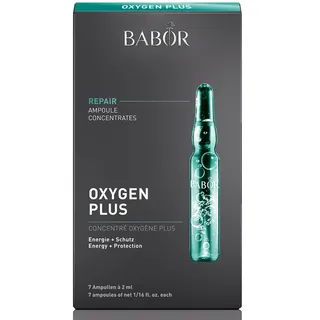
Works for
Anti-agingTocopherol, Niacinamide + 1 moreMay help
“minimize premature photo-ageing”
This product contains dimethylmethoxy chromanol. This ingredient help neutralize free radicals in skin. By doing so, they might be able to prevent early signs of aging (like fine lines and wrinkles), at least to some extent. These ingredients will not be able to "reverse" signs of aging.
Anti-oxidationSide benefit · Dimethylmethoxy chromanol, TocopherolWorks well
This product contains antioxidants (dimethylmethoxy chromanol) that can help neutralize free radicals in skin. By doing so, they can lessen the damage the skin gets from the UV light (sun).
MoisturizingSide benefit · Urea, Glycerin + 13 moreWorks well
This product can help improve hydration of the skin with the two types of ingredients.
The first type is called “humectants”:
these ingredients help attract water.
When humectants are on the surface of the skin, they “pull in” the moisture from the outside environment, or from
within deeper layers of the skin. The following ingredients in this product do the job:
biosaccharide gum-1, fructose.
This product also contains ingredients called “occlusives”. They help reduce the speed with which our skin loses moisture to the outside environment. These ingredients also help soften the upper layer of the skin, so it feels less tight and nicer to the touch. The following ingredients in this product do the job: helianthus annuus seed oil, glycosphingolipids.
The following ingredients in this product are especially good for supporting the skin barrier and helping with the hydration level: urea
Can it cause trouble?
Irritancy2 strong irritants: Parfum, AlcoholMedium risk
ComedogenicClean of flagged comedogenic ingredientsNone flagged


User reviews
Be the first — your take helps the next person decide.
Ingredients
Filter by role to see what each ingredient is doing.
Water~45–55%
Methylpropanediol~6.2–7.6%
Polyglyceryl-5 laurate~3.7–4.6%
Glycerin~3–3.6%
- Irritation risk
- Low
One of the best moisturizing ingredients. Naturally present in skin. It attracts water to the upper layer of the skin working as a humectant
More about GlycerinPhenoxyethanol~0.5–1%
- Irritation risk
- Low
A preservative. It helps prevent bacterial growth in cosmetic products
More about PhenoxyethanolSodium potassium aluminum silicate~1.9–2.3%
- Irritation risk
- Low
Perfluorodecalin~1.6–1.9%
- Irritation risk
- Low
Propylene glycol~1.3–1.6%
- Irritation risk
- High
Helps oil and water mix together and can enhance the penetration of other ingredients into the skin. It can be irritating
More about Propylene glycolHelianthus annuus seed oil~1.2–1.5%
- Irritation risk
- Low
A great emollient due to its high linoleic acid content. One of the most effective plant oils in helping skin hydration and repairing skin barrier function
More about Helianthus annuus seed oilCarbomer~0.95–1.15%
- Irritation risk
- Low
Helps create a thicker or gel-like product texture. It is not a surfactant but can be used in gentle cleansing formulations
More about CarbomerParfum~0.65–1%
- Irritation risk
- High
An aromatic blend of unspecified and possibly irritating ingredients
More about ParfumAlcohol~0.6–0.9%
- Irritation risk
- High
Can be drying and contribute to skin irritation. Used in formulars to dissolve other ingredients, create a thinner product consistency or for its antibacterial properties
More about AlcoholTocopherol~0.55–0.8%
- Irritation risk
- Low
Pure form of vitamin E. Can help moisturise and protect the skin from free radicals. Often used to help stabilise other ingredients or the formula itself
More about TocopherolSodium lactate~0.5–0.75%
- Irritation risk
- Medium
Helps attract water to the upper layer of the skin. Is often used to adjust the pH level of the product
More about Sodium lactateSodium pca~0.45–0.7%
- Irritation risk
- Low
Naturally present in skin and helps to attract water to its upper layer
More about Sodium pcaSimmondsia chinensis seed oil~0.5–0.8%
- Irritation risk
- Medium
Softens the upper layer of skin and helps restore the healthy skin barrier. Has shown to help calm down inflammation in skin. It is a stable oil, meaning that it retains its properties even when exposed to air.
More about Simmondsia chinensis seed oilSilica~0.65–0.95%
Ethylhexylglycerin~0.4–0.65%
Glycosphingolipids~0.4–0.65%
- Irritation risk
- Low
A type of lipids naturally present in skin. They can be converted to ceramides in skin
More about GlycosphingolipidsPolyglyceryl-2 oleate~0.35–0.65%
Sucrose palmitate~0.35–0.65%
Glyceryl citrate/lactate/linoleate/oleate~0.3–0.6%
Sodium hydroxide~0.3–0.5%
Disodium edta~0.3–0.5%
Biosaccharide gum-1~0.25–0.5%
- Irritation risk
- Low
Helps attract water to the upper layer of the skin and is claimed to provide a longer-lasting hydration because of its ability to create a water-binding film on the surface of the skin
More about Biosaccharide gum-1Xanthan gum~0.25–0.5%
- Irritation risk
- Low
Used to create a thicker product consistency
More about Xanthan gumSodium benzoate~0.25–0.5%
Glycine~0.25–0.45%
- Irritation risk
- Low
Helps to attract water to the upper layer of the skin and can help restore the skin barrier function
More about GlycineFructose~0.25–0.4%
- Irritation risk
- Low
Helps attract water to the upper layer of the skin
More about FructoseUrea~0.2–0.4%
- Irritation risk
- Low
Naturally present in skin (urea makes up about 7% of natural moisturizing factors in skin). Attracts water to the upper layer of the skin. Also has a positive effect on the skin barrier beyond the humectant action. Can enhance penetration of other ingredients. Is an exfoliating ingredient when used in high concentrations
More about UreaNiacinamide~0.2–0.35%
- Irritation risk
- Low
Is proven to be effective in reducing blemishes, evening out skin tone and helping to improve lines and wrinkles. It helps the skin to repair sun damage, calm down inflammation and keep maintain good levels of moisture. The concentration of about 2% is effective for supporting the skin barrier and evening out the skin tone. Concentration of 4-6% is better for helping with acne and balancing the sebum production
More about NiacinamideInositol~0.15–0.3%
Lactic acid~0.15–0.25%
- Irritation risk
- Medium
An exfoliating and moisturizing alpha-hydroxy acid (AHA). Typically causes less irritation than other AHAs, for example, glycolic acid. At high concentrations (about 15%), lactic acid can help reduce lines and wrinkles. Recent studies show that lactic acid can support the "good" bacteria living on skin's surface (healthy skin microbiome)
More about Lactic acidDehydroacetic acid~0.1–0.15%
Benzoic acid~0.1–0.2%
Dimethylmethoxy chromanol~0.05–0.15%
- Irritation risk
- Low
Can help neutralize free radicals in skin
More about Dimethylmethoxy chromanolPolyaminopropyl biguanide~0.1–0.15%
- Irritation risk
- High
A preservative. There seem to be an increasing number of cases of allergic reactions to it
More about Polyaminopropyl biguanideCi 77891~0.05%
- Irritation risk
- Low
Ingredient list view
Water, Methylpropanediol, Polyglyceryl-5 laurate, Glycerin, Phenoxyethanol, Sodium potassium aluminum silicate, Perfluorodecalin, Propylene glycol, Helianthus annuus seed oil, Carbomer, Parfum, Alcohol, Tocopherol, Sodium lactate, Sodium pca, Simmondsia chinensis seed oil, Silica, Ethylhexylglycerin, Glycosphingolipids, Polyglyceryl-2 oleate, Sucrose palmitate, Glyceryl citrate/lactate/linoleate/oleate, Sodium hydroxide, Disodium edta, Biosaccharide gum-1, Xanthan gum, Sodium benzoate, Glycine, Fructose, Urea, Niacinamide, Inositol, Lactic acid, Dehydroacetic acid, Benzoic acid, Dimethylmethoxy chromanol, Polyaminopropyl biguanide, Ci 77891
Compare prices
Retailers ranked by price — lowest first.
Worth comparing, line by line.
Match % combines shared ingredients, the first five ingredients, shared actives and hero ingredients, irritancy (lower counts in the alternative's favour), texture and body area. Only products in the same routine step are compared.
| BABORAmpoule Oxygen PlusYOUR PRODUCT | PCA SKINHydrating Serum | endota spaPeptide 8 Hyaluronic Serum | NuSkinNaPCA Moisture Mist | |
|---|---|---|---|---|
| Match | — | 90% | 90% | 86% |
| Price | — | $50.00 | — | $19.22 |
| Shared key ingredients | — | 7 of 14 | 6 of 14 | 8 of 14 |
| Key difference | — | Gluconolactone | Acetyl Octapeptide-3 | Lactic Acid |
| Irritancy | Medium | Low | Low | Low |
| Drying alcohol | Contains drying alcohol | — | — | — |
| View product | Shop | Shop | Shop |


More alternatives: 111SKIN Hyaluronic Acid Aqua BoosterTBH Skincare rebound serum
Sources cited in this review
Every concentration estimate and effectiveness label is anchored to one of these 20 studies and safety reviews.
- 1
- 2Surfactants and experimental irritant contact dermatitisncbi.nlm.nih.gov
- 3Propylene Glycolpubmed.ncbi.nlm.nih.gov
- 4Skin-sensitizing and irritant properties of propylene glycolonlinelibrary.wiley.com
- 5
- 6

Affiliate links · As an Amazon Associate, WIMJ earns from qualifying purchases.