Works for
1 of 1 advertised claim delivered
Moisturizing8 ingredients credited for this claimGood support
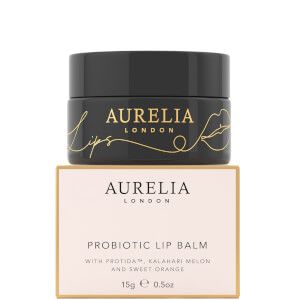
“Soothe dry lips with the nourishing Probiotic Lip Balm from Aurelia London.”
This product can help soften the skin and reduce its moisture loss with emollients and occlusives: bis-diglyceryl polyacyladipate-2, butyrospermum parkii butter.
Keep in mind that this product does not contain effective ingredients to attract water to the upper layer of the skin. This is why an additional product with humectants like glycerin or hyaluronic acid can be helpful (apply it before this product for the best results).
Can it cause trouble?
Irritancy2 strong irritants: Citrus aurantium dulcis flower oil, Pelargonium graveolens flower oilMedium risk
Comedogenic2 ingredients rated 2 or more on the 0–5 pore-clogging scale2 flagged
User reviews
Be the first — your take helps the next person decide.
Ingredients
Filter by role to see what each ingredient is doing.
Bis-diglyceryl polyacyladipate-2~22–34%
- Irritation risk
- Low
Helps soften the upper layer of the skin and reduce water loss from its surface
More about Bis-diglyceryl polyacyladipate-2Ricinus communis seed oil~5.3–7.9%
- Irritation risk
- Medium
A plant oil that can help soften the skin. It might be helpful in calming down inflammation, but solid research is lacking. Is often used in lip products to create the needed product consistency
More about Ricinus communis seed oilIsostearyl isostearate~4.4–6.6%
- Irritation risk
- Medium
- Comedogenicity
- 3/5
Helps soften the upper layer of the skin and improve the product texture. It can be comedogenic
More about Isostearyl isostearateRhus verniciflua peel wax~3.6–5.4%
- Irritation risk
- Low
Candelilla cera~2.9–4.4%
- Irritation risk
- Low
Copernicia cerifera wax~2.3–3.4%
- Irritation risk
- Low
Helps to soften the upper layer of the skin and create a nice product consistency
More about Copernicia cerifera waxCitrus aurantium dulcis flower oil~1.5–2.3%
- Irritation risk
- High
Butyrospermum parkii butter~1.5–2.3%
- Irritation risk
- Low
- Comedogenicity
- 3/5
A great moisturising ingredient that softens the skin and reduces water loss from its upper layer. It also can be helpful in protecting skin from free radicals
More about Butyrospermum parkii butterCitrullus lanatus seed oil~1.1–1.7%
- Irritation risk
- Low
Schinziophyton rautanenii kernel oil~1–1.45%
- Irritation risk
- Low
Tocopheryl acetate~0.6–1.4%
- Irritation risk
- Medium
A more stable but less bio-available form of vitamin E compared to Tocopherol. Might help moisturize and protect the skin from free radicals, but mostly used in low concentrations to stabilize other ingredients.
More about Tocopheryl acetatePelargonium graveolens flower oil~0.5–1.15%
- Irritation risk
- High
An essential oil. Can be irritating. Can become an allergen with oxidation
More about Pelargonium graveolens flower oilDistarch phosphate~0.45–1%
- Irritation risk
- Low
Ipomoea batatas root extract~0.4–0.9%
- Irritation risk
- Low
Water~0.3–0.75%
Citric acid~0.15–0.7%
- Irritation risk
- Medium
Can work as an exfoliant but is typically used to adjust the product pH
More about Citric acidBifida ferment lysate~0.15–0.65%
- Irritation risk
- Low
Consists of remains of dead yeast bacteria cells. Helps to hydrate the skin and reduce irritation. Might has some anti-oxidant effect
More about Bifida ferment lysateLactose~0.15–0.5%
- Irritation risk
- Low
Helps attract water to the upper layer of the skin
More about LactoseLactis proteinum~0.1–0.45%
- Irritation risk
- Low
Milk protein~0.1–0.45%
- Irritation risk
- Low
Helps attract water to the upper layer of the skin
More about Milk proteinLactic acid~0.1–0.4%
- Irritation risk
- Medium
An exfoliating and moisturizing alpha-hydroxy acid (AHA). Typically causes less irritation than other AHAs, for example, glycolic acid. At high concentrations (about 15%), lactic acid can help reduce lines and wrinkles. Recent studies show that lactic acid can support the "good" bacteria living on skin's surface (healthy skin microbiome)
More about Lactic acidIngredient list view
Bis-diglyceryl polyacyladipate-2, Ricinus communis seed oil, Isostearyl isostearate, Rhus verniciflua peel wax, Candelilla cera, Copernicia cerifera wax, Citrus aurantium dulcis flower oil, Butyrospermum parkii butter, Citrullus lanatus seed oil, Schinziophyton rautanenii kernel oil, Tocopheryl acetate, Pelargonium graveolens flower oil, Distarch phosphate, Ipomoea batatas root extract, Water, Citric acid, Bifida ferment lysate, Lactose, Lactis proteinum, Milk protein, Lactic acid
Compare prices
Retailers ranked by price — lowest first.

Affiliate links · prices updated regularly
Sources cited in this review
Every concentration estimate and effectiveness label is anchored to one of these 9 studies and safety reviews.
- 1
- 2
- 3
- 4
- 5
- 6Bifidobacterium longumlysate, a new ingredient forreactive skinonlinelibrary.wiley.com

Affiliate links · As an Amazon Associate, WIMJ earns from qualifying purchases.