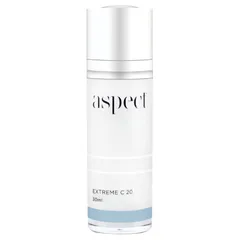
Works for:
based on ingredients and %- Anti-aging
- Moisturizing
- Anti-oxidation
Doesn't work for:
based on ingredients and %- Evens skin tone
Can it cause trouble?
- Irritation risk: high
- Comedogenic risk ingredients: 0
Key actives


Product Summary
Based on the ingredient list, "Aspect Doctor - Extreme C 20" can work well for skin moisturization. This moisturizer uses a good combo of humectants and emollients. These both types of ingredients are essentials for improving the skin hydration and keeping the skin barrier healthy. Panthenol and glycerin in this product (humectants) attract water molecules to the upper layer of the skin (the water comes from the outside air or from the deeper layers of the skin if the air is dry). Oryza sativa bran oil and lecithin in this product help decrease the water evoporation from the skin, so that it stays hydrated for longer. These ingredients also soften the skin and take away the feeling of tightness and dryness.
Ingredient callouts
- We like that this moisturizer contains peptides (dipeptide diaminobutyroyl benzylamide diacetate 0.10% - 0.45% and palmitoyl tripeptide-5 0.15% - 0.70%). There are many different kind of peptides and they are naturally present in our skin. They all are a combination of amino-acids. Some of them work as natural anti-biotics, promote wound-healing and production of collagen. The science is still not settled on how effective peptides in skincare are, but it is very likely that they have a benefit. Peptides might help restore the skin barrier and fight the signs of aging. At the very least, peptides work as humectants: they attract water to the upper layer of the skin and improve its hydration.
- This formulation also uses an effective concentration of panthenol (pro-vitamin B5) - about 3.50% - 5.30%. Panthenol helps strengthen the skin barrier, improve hydration and reduce inflammation in skin.
Irritation risk
This moisturizer contains a bunch of common irritants, including ingredients that do not provide any known benefit for the skin. It might not be the best choice if your skin is sensitive. We assess the overall irritancy of this moisturizer to be high. For a detailed overview of all potential irritants: click here
You can see the detailed formula review with the breakdown of all actives in the product and the full ingredient list with estimated concentrations in the tables below.
Price
The product retails for 108.80A$ in Australia.
For a detailed price comparison: click here.
Moisturizing
This product can help improve hydration of the skin with the two types of ingredients.
The first type is called “humectants”:
these ingredients help attract water.
When humectants are on the surface of the skin, they “pull in” the moisture from the outside environment, or from
within deeper layers of the skin. The following ingredients in this product do the job:
glycerin.
This product also contains ingredients called “occlusives”. They help reduce the speed with which our skin loses moisture to the outside environment. These ingredients also help soften the upper layer of the skin, so it feels less tight and nicer to the touch. The following ingredients in this product do the job: oryza sativa bran oil, lecithin.
The following ingredients in this product are especially good for supporting the skin barrier and helping with the hydration level: dipeptide diaminobutyroyl benzylamide diacetate, palmitoyl tripeptide-5, panthenol
One of the best moisturizing ingredients. Naturally present in skin. It attracts water to the upper layer of the skin working as a humectant
A type of peptide. Peptides are excellent moisturizers and might be able support collagen production reducing fine lines and wrinkles
Helps attract water to the upper layer of the skin and can help improve skin barrier function
Helps soften the upper layer of the skin and might have some anti-oxidant properties
A type of peptide. Peptides are excellent moisturizers and might be able support collagen production reducing fine lines and wrinkles
Used mostly for creating emulsions - helping oil and water mix together. Helps soften the upper layer of the skin
An exfoliating and moisturizing alpha-hydroxy acid (AHA). Typically causes less irritation than other AHAs, for example, glycolic acid. At high concentrations (about 15%), lactic acid can help reduce lines and wrinkles. Recent studies show that lactic acid can support the "good" bacteria living on skin's surface (healthy skin microbiome)
A vitamin C derivative. Studies show that is might be effective in reducing hyperpigmentation, but there are no studies confirming that it is effectively converted into the bioavailable form of Vitamin C in skin. It is not clear how this derivative compares in effectiveness to the topical application of bioavailable form of vitamin C (L-ascorbic acid)
Anti-aging
What does the product description say?
With a high-strength vitamin C derivative and skin-supportive peptides, Extreme C 20 targets dullness, uneven tone, and visible ageing.
Source: Adore beauty
This product contains dipeptide diaminobutyroyl benzylamide diacetate, palmitoyl tripeptide-5. These ingredients might be able to help reduce and prevent fine lines and wrinkles, improve skin elasticity and firmness, but there is not enough evidence that it actually works.
A type of peptide. Peptides are excellent moisturizers and might be able support collagen production reducing fine lines and wrinkles
A type of peptide. Peptides are excellent moisturizers and might be able support collagen production reducing fine lines and wrinkles
A vitamin C derivative. Studies show that is might be effective in reducing hyperpigmentation, but there are no studies confirming that it is effectively converted into the bioavailable form of Vitamin C in skin. It is not clear how this derivative compares in effectiveness to the topical application of bioavailable form of vitamin C (L-ascorbic acid)
An exfoliating and moisturizing alpha-hydroxy acid (AHA). Typically causes less irritation than other AHAs, for example, glycolic acid. At high concentrations (about 15%), lactic acid can help reduce lines and wrinkles. Recent studies show that lactic acid can support the "good" bacteria living on skin's surface (healthy skin microbiome)
Anti-oxidation
This product contains antioxidants (epilobium angustifolium flower/leaf/stem extract) that might be able to help neutralize free radicals in skin to lessen the damage it gets from the UV light (sun). There is not enough evidence to confirm their effectiveness in skin though.
A plant extract that might contain antioxidants
A more stable but less bio-available form of vitamin E compared to Tocopherol. Might help moisturize and protect the skin from free radicals, but mostly used in low concentrations to stabilize other ingredients.
A plant extract used mostly as a fragrance. Can have some anti-microbial and anti-oxidant properties
A plant extract that might have some anti-oxidant effect in skin, but evidence is lacking
A vitamin C derivative. Studies show that is might be effective in reducing hyperpigmentation, but there are no studies confirming that it is effectively converted into the bioavailable form of Vitamin C in skin. It is not clear how this derivative compares in effectiveness to the topical application of bioavailable form of vitamin C (L-ascorbic acid)
Evens skin tone
What does the product description say?
With a high-strength vitamin C derivative and skin-supportive peptides, Extreme C 20 targets dullness, uneven tone, and visible ageing.
Source: Adore beauty
Effective ingredients missing or their concentration is too low
An exfoliating and moisturizing alpha-hydroxy acid (AHA). Typically causes less irritation than other AHAs, for example, glycolic acid. At high concentrations (about 15%), lactic acid can help reduce lines and wrinkles. Recent studies show that lactic acid can support the "good" bacteria living on skin's surface (healthy skin microbiome)
A vitamin C derivative. Studies show that is might be effective in reducing hyperpigmentation, but there are no studies confirming that it is effectively converted into the bioavailable form of Vitamin C in skin. It is not clear how this derivative compares in effectiveness to the topical application of bioavailable form of vitamin C (L-ascorbic acid)
How honest is this product?
| Promise | Can it deliver? |
|---|---|
| Anti-aging | |
| Evens skin tone |
Total Promises Fulfilled score: 37/100.
We receive a small commission for purchases made through these links at no cost for you. Thank you for your support! Learn more
Affiliate link · supports WIMJ at no cost to you
Potential irritants
Comedogenic ingredients
No comedogenic ingredients detected
User reviews (0)
Averages from community submissions.
No reviews yet for this product.
Be the first to share your experience!
Tried this product?
Help capture what the ingredient list can't—texture, finish, pilling, scent, and more. Answer what you can, skip the rest.
Takes ~30 seconds.
Reviews are shown in aggregate. No personal details.
| Product | Similarity | Price | Irritancy |
|---|---|---|---|
 Aspect Doctor Extreme C 20 | Current | ≈ $97.47 | |
 Farm Stay Black Snail & Peptide9 Perfect Serum | 55% | $20.50 | |
Luzern Laboratories Luzern WE3 Triple Action Serum Wrinkle Corrector | 55% | ≈ $227.39 | |
Abib Copper Peptide Serum Bouncing Drop – GHK-Cu, Argireline & Matrixyl Anti-Aging Face Serum | Wrinkle Care, Plumping & Firming Korean Skincare | 55% | $17.50 | |
 Image skincare IMAGE MD restoring youth repair serum | 51% | $112.00 | |
 NEOGEN X SUR.MEDIC AGECURE ONE MINUTE WRINKLE PERFECTION | 51% | - |
Key Actives
A vitamin C derivative. Studies show that is might be effective in reducing hyperpigmentation, but there are no studies confirming that it is effectively converted into the bioavailable form of Vitamin C in skin. It is not clear how this derivative compares in effectiveness to the topical application of bioavailable form of vitamin C (L-ascorbic acid)
Helps attract water to the upper layer of the skin and can help improve skin barrier function
A type of peptide. Peptides are excellent moisturizers and might be able support collagen production reducing fine lines and wrinkles
A type of peptide. Peptides are excellent moisturizers and might be able support collagen production reducing fine lines and wrinkles
One of the best moisturizing ingredients. Naturally present in skin. It attracts water to the upper layer of the skin working as a humectant
Helps soften the upper layer of the skin and might have some anti-oxidant properties
Creates a thin drying film on the skin resulting in a short-term tightening effect
A plant extract that might contain antioxidants
Potential irritants
An essentil oil from orange peel. Potential allergen and can be irritating
Creates a thin drying film on the skin resulting in a short-term tightening effect
An essential oil used for fragrance. Can be an allergen and irritant
A plant extract that might contain antioxidants
A plant extract used mostly as a fragrance. Can have some anti-microbial and anti-oxidant properties
A vitamin C derivative. Studies show that is might be effective in reducing hyperpigmentation, but there are no studies confirming that it is effectively converted into the bioavailable form of Vitamin C in skin. It is not clear how this derivative compares in effectiveness to the topical application of bioavailable form of vitamin C (L-ascorbic acid)
A more stable but less bio-available form of vitamin E compared to Tocopherol. Might help moisturize and protect the skin from free radicals, but mostly used in low concentrations to stabilize other ingredients.
A plant extract that might have some anti-oxidant effect in skin, but evidence is lacking
An exfoliating and moisturizing alpha-hydroxy acid (AHA). Typically causes less irritation than other AHAs, for example, glycolic acid. At high concentrations (about 15%), lactic acid can help reduce lines and wrinkles. Recent studies show that lactic acid can support the "good" bacteria living on skin's surface (healthy skin microbiome)
Comedogenic ingredients
We couldn't find any comedogenic ingredients in this product
All ingredients
One of the best moisturizing ingredients. Naturally present in skin. It attracts water to the upper layer of the skin working as a humectant
Helps attract water to the upper layer of the skin and can help improve skin barrier function
A vitamin C derivative. Studies show that is might be effective in reducing hyperpigmentation, but there are no studies confirming that it is effectively converted into the bioavailable form of Vitamin C in skin. It is not clear how this derivative compares in effectiveness to the topical application of bioavailable form of vitamin C (L-ascorbic acid)
A more stable but less bio-available form of vitamin E compared to Tocopherol. Might help moisturize and protect the skin from free radicals, but mostly used in low concentrations to stabilize other ingredients.
Used mostly for creating emulsions - helping oil and water mix together. Helps soften the upper layer of the skin
Helps soften the upper layer of the skin and might have some anti-oxidant properties
A preservative. It helps prevent bacterial growth in cosmetic products
An essentil oil from orange peel. Potential allergen and can be irritating
Creates a thin drying film on the skin resulting in a short-term tightening effect
An essential oil used for fragrance. Can be an allergen and irritant
A plant extract that might contain antioxidants
A microalgae extract that helps to attact water to the upper layer of the skin
A type of peptide. Peptides are excellent moisturizers and might be able support collagen production reducing fine lines and wrinkles
A plant extract that might have some anti-oxidant effect in skin, but evidence is lacking
A plant extract used mostly as a fragrance. Can have some anti-microbial and anti-oxidant properties
A type of peptide. Peptides are excellent moisturizers and might be able support collagen production reducing fine lines and wrinkles
An exfoliating and moisturizing alpha-hydroxy acid (AHA). Typically causes less irritation than other AHAs, for example, glycolic acid. At high concentrations (about 15%), lactic acid can help reduce lines and wrinkles. Recent studies show that lactic acid can support the "good" bacteria living on skin's surface (healthy skin microbiome)
Ingredient list view
Water, Glycerin, Panthenol, Ascorbyl tetraisopalmitate, Tocopheryl acetate, Lecithin, Oryza sativa bran oil, Phenoxyethanol, Citrus aurantium dulcis peel oil, Pullulan, Citrus reticulata peel oil, Epilobium angustifolium flower/leaf/stem extract, Nannochloropsis oculata extract, Palmitoyl tripeptide-5, Terminalia ferdinandiana fruit extract, Backhousia citriodora leaf extract, Tasmannia lanceolata fruit extract, Citrus glauca fruit extract, Davidsonia jerseyana fruit extract, Dipeptide diaminobutyroyl benzylamide diacetate, Citrus aurantium amara leaf/twig oil, Lactic acid, Xanthan gum, Sclerotium gum, Potassium sorbate, Sodium stearoyl glutamate, Tetrasodium edta, Ethylhexylglycerin, Benzoic acid, Sorbic acid, Sodium metabisulfite
- Glycerol and the skin: holistic approach to its origin and functions
- Skin moisturizing effects of panthenol-based formulations
- Safety Assessment of Panthenol, Pantothenic Acid, and Derivatives as Used in Cosmetics
- Assessment of penetration of Ascorbyl Tetraisopalmitate into biological membranes by molecular dynamics
- Stability evaluation of tocopheryl acetate and ascorbyl tetraisopalmitate in isolation and incorporated in cosmetic formulations using thermal analysis
- A new lipophilic pro-vitamin C, tetra-isopalmitoyl ascorbic acid (VC-IP), prevents UV-induced skin pigmentation through its anti-oxidative properties
- New lipophilic pro-vitamin C, tetra-isopalmitoyl ascorbic acid (VC-IP), suppresses senile lentigo through controlling of melanocytes-keratinocytes interaction
- Study on the Composition of Rice Bran Oil and Its Higher Free Fatty Acids Value
- Therapeutic Potential of Polyphenols from Epilobium Angustifolium (Fireweed): Polyphenols from Fireweed
- Safety assessment of the microalgae Nannochloropsis oculata
- The chemotherapeutic potential of Terminalia ferdinandiana: Phytochemistry and bioactivity
- Antimicrobial activity of Backhousia citriodora (lemon myrtle) methanolic extracts
- Epidermal and dermal effects of topical lactic acid
- Dual Effects of Alpha-Hydroxy Acids on the Skin
- Final report on the safety assessment of sodium sulfite, potassium sulfite, ammonium sulfite, sodium bisulfite, ammonium bisulfite, sodium metabisulfite and potassium metabisulfite