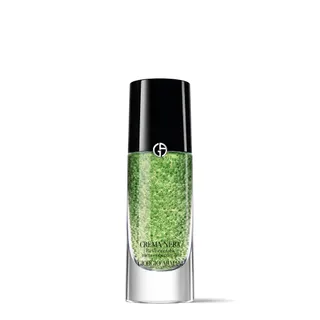
Armani Beauty CREMA NERA REVISCENTALIS META CONCENTRATE SERUM

Armani Beauty CREMA NERA REVISCENTALIS META CONCENTRATE SERUM

Efficacy91/100IrritancyHigh

Works for

Moisturizing
Ceramide np, Isopropyl lauroyl sarcosinate + 18 more
Works well
What the product description says
“A concentrated, lightweight, anti-aging face serum that brightens, protects and strengthens the skin barrier for plump, smooth, hydrated skin.”
Source: Armani Beauty US

This product can help improve hydration of the skin with the two types of ingredients.

The first type is called “humectants”:
these ingredients help attract water. When humectants are on the surface of the skin, they “pull in” the moisture from the outside environment, or from within deeper layers of the skin. The following ingredients in this product do the job: arginine, glycerin.

This product also contains ingredients called “occlusives”. They help reduce the speed with which our skin loses moisture to the outside environment. These ingredients also help soften the upper layer of the skin, so it feels less tight and nicer to the touch. The following ingredients in this product do the job: arginine, helianthus annuus seed oil.

The following ingredients in this product are especially good for supporting the skin barrier and helping with the hydration level: ceramide np

Ceramide npHero· EmollientEffect: HighA type of lipid similar to ceramides naturally present in skin. Helps to soften the upper layer of the skin and supports the skin barrier function to keep it hydrated. Can help to prevent inflammation in skin~0.25–0.45%
Isopropyl lauroyl sarcosinateKey active· EmollientEffect: MediumHelps soften the upper layer of the skin and create a nice product consistency~4.3–5.2%
GlycerinKey active· HumectantEffect: HighOne of the best moisturizing ingredients. Naturally present in skin. It attracts water to the upper layer of the skin working as a humectant~3–3.6%
Sodium acetylated hyaluronateKey active· HumectantEffect: HighA type of hyaluronic acid that works as an excellent moisturizer by attracting water into the upper layer of the skin. Is typically feels less sticky on the skin compared to the usual hyaluronic acid~0.3–0.6%
Helianthus annuus seed oilKey active· Emollient, OcclusiveEffect: HighA great emollient due to its high linoleic acid content. One of the most effective plant oils in helping skin hydration and repairing skin barrier function~0.25–0.5%
SerineKey activeEffect: HighAn amino-acid that helps to attract water to the upper layer of the skin. In combination with other amino-acids, might help to reduce fine lines and wrinkles~0.25–0.4%
TrehaloseKey active· HumectantEffect: HighA sugar that attracts water to the upper layer of the skin~0.25–0.4%
Sodium lactateKey active· HumectantEffect: HighHelps attract water to the upper layer of the skin. Is often used to adjust the pH level of the product~0.25–0.45%
RhamnoseKey active· HumectantEffect: MediumHelps oil and water mix together. It also helps attract water to the upper layer of the skin~0.25–0.45%
Hydrolyzed soy proteinKey active· HumectantEffect: MediumHelps attract water to the upper layer of the skin. Might have some anti-aging, anti-oxidant, and skin lightening properties, but solid evidence is missing~0.25–0.45%
ArginineKey active· Humectant, OcclusiveEffect: HighAn amino acid that is naturally present in skin and helps keep it hydrated. When used together with AHAs, it can reduce their irritating effect on the skin~0.2–0.4%
AdenosineKey activeEffect: MediumMight help improve cell turnover and reduce inflammation in skin. One study shows that the ingredients might be able to help reduce dynamic wrinkles (for example, in the corners of the eyes or on the forehead)~0.2–0.35%
Butylene glycol· HumectantEffect: LowUsed to create a nice product texture and help delivery of other ingredients. Might be somewhat helpful in attracting water to the upper layer of the skin~5.9–7.2%
Caprylyl glycol· Humectant, EmollientEffect: LowHelps preserve products and creates a nice product texture~0.75–1.15%
Pentylene glycol· EmollientEffect: LowUsed to preserve products, dissolve other ingredients and create a nice product texture~0.55–0.8%
AlginEffect: LowUsed to thicken product formulation. Can help attract water to the upper layer of the skin~0.2–0.4%
AgarEffect: LowPolysaccharide derived from seaweed. Used to create a thicker product consistency and might help attract water to the upper layer of the skin~0.2–0.4%
Ascorbyl tetraisopalmitateEffect: Low, below effective doseA vitamin C derivative. Studies show that is might be effective in reducing hyperpigmentation, but there are no studies confirming that it is effectively converted into the bioavailable form of Vitamin C in skin. It is not clear how this derivative compares in effectiveness to the topical application of bioavailable form of vitamin C (L-ascorbic acid)~0.45–0.65%
TocopherolEffect: Low, below effective dosePure form of vitamin E. Can help moisturise and protect the skin from free radicals. Often used to help stabilise other ingredients or the formula itself~0.3–0.5%
Caprylic/capric triglycerideUnder-dosedA good mix of fatty acids that forms a protective layer on the skin. Improves the shelf life of products. Derived from coconut and glycerin~0.3–0.55%
Anti-aging
Ferulic acid, Serine + 4 more
Works well
What the product description says
“A concentrated, lightweight, anti-aging face serum that brightens, protects and strengthens the skin barrier for plump, smooth, hydrated skin.”
Source: Armani Beauty US

This product can help reduce and prevent fine lines and wrinkles, improve skin elasticity and firmness because it contains adenosine.

These ingredients in the product can also be helpful, even though there is less evidence for their effectiveness: ferulic acid, serine.

Keep in mind that it typically takes at least 6 weeks to notice any results because the changes that are needed to improve fine lines and elasticity happen in the deeper layers of the skin. No topical anti-aging product can “erase” wrinkles or fully reverse signs of aging.

Ferulic acidKey activeEffect: MediumA potent anti-oxidant that has been shown to be effective in neutralizing free radicals in skin. There seem to have a synergetic effect of ferulic acid, vitamin E and C, meaning that when the ingredients are used together, they enhance each other's ability protect the skin against free radicals. Ferulic acid also helps to stabilize other ingredients - including vitamins C and E. It can help to even out the skin tone. Ferulic acid is approved for use as a sunscreen ingredient in Japan in concentrations up to 10%~0.3–0.6%
SerineKey activeEffect: MediumAn amino-acid that helps to attract water to the upper layer of the skin. In combination with other amino-acids, might help to reduce fine lines and wrinkles~0.25–0.4%
AdenosineKey activeEffect: HighMight help improve cell turnover and reduce inflammation in skin. One study shows that the ingredients might be able to help reduce dynamic wrinkles (for example, in the corners of the eyes or on the forehead)~0.2–0.35%
RhamnoseEffect: LowHelps oil and water mix together. It also helps attract water to the upper layer of the skin~0.25–0.45%
TocopherolEffect: Low, below effective dosePure form of vitamin E. Can help moisturise and protect the skin from free radicals. Often used to help stabilise other ingredients or the formula itself~0.3–0.5%
Ascorbyl tetraisopalmitateUnder-dosedA vitamin C derivative. Studies show that is might be effective in reducing hyperpigmentation, but there are no studies confirming that it is effectively converted into the bioavailable form of Vitamin C in skin. It is not clear how this derivative compares in effectiveness to the topical application of bioavailable form of vitamin C (L-ascorbic acid)~0.45–0.65%
Evens skin tone
Capryloyl salicylic acid, Ferulic acid + 2 more
May help
What the product description says
“A concentrated, lightweight, anti-aging face serum that brightens, protects and strengthens the skin barrier for plump, smooth, hydrated skin.”
Source: Armani Beauty US

The following ingredient (ingredients) in this product might be helpful, but there is no evidence to confirm that it actually works: capryloyl salicylic acid, ferulic acid.

Capryloyl salicylic acidKey activeEffect: Medium~0.35–0.6%
Ferulic acidKey activeEffect: MediumA potent anti-oxidant that has been shown to be effective in neutralizing free radicals in skin. There seem to have a synergetic effect of ferulic acid, vitamin E and C, meaning that when the ingredients are used together, they enhance each other's ability protect the skin against free radicals. Ferulic acid also helps to stabilize other ingredients - including vitamins C and E. It can help to even out the skin tone. Ferulic acid is approved for use as a sunscreen ingredient in Japan in concentrations up to 10%~0.3–0.6%
Hydrolyzed soy proteinEffect: LowHelps attract water to the upper layer of the skin. Might have some anti-aging, anti-oxidant, and skin lightening properties, but solid evidence is missing~0.25–0.45%
Ascorbyl tetraisopalmitateUnder-dosedA vitamin C derivative. Studies show that is might be effective in reducing hyperpigmentation, but there are no studies confirming that it is effectively converted into the bioavailable form of Vitamin C in skin. It is not clear how this derivative compares in effectiveness to the topical application of bioavailable form of vitamin C (L-ascorbic acid)~0.45–0.65%
Exfoliation
Side benefit · Capryloyl salicylic acid
Works well

This product can help exfoliate the skin. In other words, it helps break down the bonds between dead cells on the surface of the skin and speed up the skin turnover. Skin often appears softer and brighter after exfoliation, but overdoing it can result in disrupted skin barrier. The following ingredient is doing the exfoliating job in this product: capryloyl salicylic acid.

Capryloyl salicylic acidKey activeEffect: High~0.35–0.6%
Anti-oxidation
Side benefit · Ferulic acid, Haematococcus pluvialis extract + 4 more
Works well

This product contains antioxidants (ferulic acid) that can help neutralize free radicals in skin. By doing so, they can lessen the damage the skin gets from the UV light (sun).

The following ingredients - haematococcus pluvialis extract also can have an antioxidant effect, but there is less evidence to confirm their effectiveness in skin.

Ferulic acidKey activeEffect: HighA potent anti-oxidant that has been shown to be effective in neutralizing free radicals in skin. There seem to have a synergetic effect of ferulic acid, vitamin E and C, meaning that when the ingredients are used together, they enhance each other's ability protect the skin against free radicals. Ferulic acid also helps to stabilize other ingredients - including vitamins C and E. It can help to even out the skin tone. Ferulic acid is approved for use as a sunscreen ingredient in Japan in concentrations up to 10%~0.3–0.6%
Haematococcus pluvialis extractKey activeEffect: MediumGreen algae extract that might contain antioxidant astaxanthin~0.25–0.45%
Hydrolyzed soy proteinEffect: LowHelps attract water to the upper layer of the skin. Might have some anti-aging, anti-oxidant, and skin lightening properties, but solid evidence is missing~0.25–0.45%
AdenosineEffect: LowMight help improve cell turnover and reduce inflammation in skin. One study shows that the ingredients might be able to help reduce dynamic wrinkles (for example, in the corners of the eyes or on the forehead)~0.2–0.35%
Ascorbyl tetraisopalmitateUnder-dosedA vitamin C derivative. Studies show that is might be effective in reducing hyperpigmentation, but there are no studies confirming that it is effectively converted into the bioavailable form of Vitamin C in skin. It is not clear how this derivative compares in effectiveness to the topical application of bioavailable form of vitamin C (L-ascorbic acid)~0.45–0.65%
TocopherolUnder-dosedPure form of vitamin E. Can help moisturise and protect the skin from free radicals. Often used to help stabilise other ingredients or the formula itself~0.3–0.5%

Can it cause trouble?

Irritancy
7 strong irritants: Linalool, Hexyl cinnamal + 5 more — patch-test recommended
High risk
We flagged 30 ingredients with irritancy potential. Severity depends on your sensitivity threshold; the table lists the worst offenders first.
IngredientFunctionIrritationEst. amount
Capryloyl salicylic acid—High~0.35–0.6%est.
LinaloolA fragrance. Can be irritatingHigh~0.2–0.4%est.
Hexyl cinnamalA fragrance with jasmine smell. A likely irritantHigh~0.2–0.4%est.
Benzyl salicylateA fragrance. Is a likely irritantHigh~0.2–0.4%est.
Alpha-isomethyl iononeA fragrance. Potential allergen and can be irritatingHigh~0.2–0.4%est.
Benzyl alcoholA preservative. Can be used to mask unpleasant smell. Can be irritatingHigh~0.2–0.4%est.
CitronellolA fragrance. Can be irritatingHigh~0.2–0.4%est.
GeraniolA fragrance. Can be irritatingHigh~0.2–0.4%est.
Ci 19140A yellow dyeHigh~0.25–0.45%est.
ParfumAn aromatic blend of unspecified and possibly irritating ingredientsHigh~0.1–0.15%est.
Isopropyl lauroyl sarcosinateHelps soften the upper layer of the skin and create a nice product consistencyMedium~4.3–5.2%est.
HydroxyacetophenoneUsed to increase effectiveness of preservativesMedium~1.5–1.8%est.
Acrylates/c10-30 alkyl acrylate crosspolymerMaintains the texture of skincare products. Allows the product to spread evenly. Helps oil and water mix togetherMedium~1.4–1.7%est.
ChlorphenesinA preservativeMedium~0.16–0.32%est.
Caprylyl glycolHelps preserve products and creates a nice product textureMedium~0.75–1.15%est.
Peg-240/hdi copolymer bis-decyltetradeceth-20 etherHelps create a gel-like product textureMedium~0.55–0.85%est.
Pentylene glycolUsed to preserve products, dissolve other ingredients and create a nice product textureMedium~0.55–0.8%est.
Ascorbyl tetraisopalmitateA vitamin C derivative. Studies show that is might be effective in reducing hyperpigmentation, but there are no studies confirming that it is effectively converted into the bioavailable form of Vitamin C in skin. It is not clear how this derivative compares in effectiveness to the topical application of bioavailable form of vitamin C (L-ascorbic acid)Medium~0.45–0.65%est.
Trisodium ethylenediamine disuccinateUsed to improve stability of the formulationMedium~0.3–0.55%est.
Potassium hydroxideUsed to adjust the pH level of productsMedium~0.25–0.5%est.
AgarPolysaccharide derived from seaweed. Used to create a thicker product consistency and might help attract water to the upper layer of the skinMedium~0.2–0.4%est.
Ceratonia siliqua gumUsed to stabilize product formulations and create thicker consistencyMedium~0.25–0.5%est.
Peg-30 dipolyhydroxystearateHelps oil and water mix togetherMedium~0.25–0.45%est.
Sodium lactateHelps attract water to the upper layer of the skin. Is often used to adjust the pH level of the productMedium~0.25–0.45%est.
Haematococcus pluvialis extractGreen algae extract that might contain antioxidant astaxanthinMedium~0.25–0.45%est.
Caprylic/capric triglycerideA good mix of fatty acids that forms a protective layer on the skin. Improves the shelf life of products. Derived from coconut and glycerinMedium~0.3–0.55%est.
Potassium laurateHelps water and oil mix togetherMedium~0.25–0.45%est.
Ci 17200A red colorantMedium~0.2–0.35%est.
Benzoic acidA preservativeMedium~0.2–0.35%est.
Sorbic acidA preservativeMedium~0.15–0.3%est.
Comedogenic
1 ingredient rated 2 or more on the 0–5 pore-clogging scale
1 flagged
These ingredients have a comedogenic rating of 2 or more on a 0–5 scale; the table shows each one's rating. In leave-on products they can clog pores in acne-prone skin.
IngredientFunctionRatingEst. amount
AlginUsed to thicken product formulation. Can help attract water to the upper layer of the skin3/5~0.2–0.4%est.

User reviews

Would you recommend?
No community reviews yet.

Be the first — your take helps the next person decide.

Ingredients

Filter by role to see what each ingredient is doing.

Water~45–55%
Formula
Irritation risk
Low

Plain old water

More about Water
Butylene glycol~5.9–7.2%
Formula
Irritation risk
Low
Works for
Moisturizing

Used to create a nice product texture and help delivery of other ingredients. Might be somewhat helpful in attracting water to the upper layer of the skin

More about Butylene glycol
Isopropyl lauroyl sarcosinate~4.3–5.2%
Key activeIrritant · medium
Irritation risk
Medium
Works for
Moisturizing

Helps soften the upper layer of the skin and create a nice product consistency

More about Isopropyl lauroyl sarcosinate
Glycerin~3–3.6%
Key active
Irritation risk
Low
Works for
Moisturizing

One of the best moisturizing ingredients. Naturally present in skin. It attracts water to the upper layer of the skin working as a humectant

More about Glycerin
Dipropylene glycol~2.1–2.5%
Formula
Irritation risk
Low

Helps to dissolve other ingredients in a formulation. Slows down the rate of product drying

More about Dipropylene glycol
Caprylic/capric/succinic triglyceride~1.8–2.2%
Formula
Irritation risk
Low
Works for
Cleansing
More about Caprylic/capric/succinic triglyceride
Hydroxyacetophenone~1.5–1.8%
Irritant · medium
Irritation risk
Medium

Used to increase effectiveness of preservatives

More about Hydroxyacetophenone
Acrylates/c10-30 alkyl acrylate crosspolymer~1.4–1.7%
Irritant · medium
Irritation risk
Medium

Maintains the texture of skincare products. Allows the product to spread evenly. Helps oil and water mix together

More about Acrylates/c10-30 alkyl acrylate crosspolymer
Chlorphenesin~0.16–0.32%
Irritant · medium
Irritation risk
Medium

A preservative

More about Chlorphenesin
Caprylyl glycol~0.75–1.15%
Irritant · medium
Irritation risk
Medium
Works for
Moisturizing

Helps preserve products and creates a nice product texture

More about Caprylyl glycol
Peg-240/hdi copolymer bis-decyltetradeceth-20 ether~0.55–0.85%
Irritant · medium
Irritation risk
Medium

Helps create a gel-like product texture

More about Peg-240/hdi copolymer bis-decyltetradeceth-20 ether
Pentylene glycol~0.55–0.8%
Irritant · medium
Irritation risk
Medium
Works for
Moisturizing

Used to preserve products, dissolve other ingredients and create a nice product texture

More about Pentylene glycol
Ascorbyl tetraisopalmitate~0.45–0.65%
Under-dosedIrritant · medium
Irritation risk
Medium
Works for
Anti-oxidationEvens skin toneAnti-agingMoisturizing

A vitamin C derivative. Studies show that is might be effective in reducing hyperpigmentation, but there are no studies confirming that it is effectively converted into the bioavailable form of Vitamin C in skin. It is not clear how this derivative compares in effectiveness to the topical application of bioavailable form of vitamin C (L-ascorbic acid)

More about Ascorbyl tetraisopalmitate
Capryloyl salicylic acid~0.35–0.6%
Key activeIrritant · high
Irritation risk
High
Works for
ExfoliationAnti-blemishEvens skin tone
More about Capryloyl salicylic acid
Ferulic acid~0.3–0.6%
Key active
Irritation risk
Low
Works for
Anti-oxidationAnti-agingEvens skin toneAnti-inflammatory

A potent anti-oxidant that has been shown to be effective in neutralizing free radicals in skin. There seem to have a synergetic effect of ferulic acid, vitamin E and C, meaning that when the ingredients are used together, they enhance each other's ability protect the skin against free radicals. Ferulic acid also helps to stabilize other ingredients - including vitamins C and E. It can help to even out the skin tone. Ferulic acid is approved for use as a sunscreen ingredient in Japan in concentrations up to 10%

More about Ferulic acid
Sodium acetylated hyaluronate~0.3–0.6%
Key active
Irritation risk
Low
Works for
Moisturizing

A type of hyaluronic acid that works as an excellent moisturizer by attracting water into the upper layer of the skin. Is typically feels less sticky on the skin compared to the usual hyaluronic acid

More about Sodium acetylated hyaluronate
Trisodium ethylenediamine disuccinate~0.3–0.55%
Irritant · medium
Irritation risk
Medium

Used to improve stability of the formulation

More about Trisodium ethylenediamine disuccinate
Tocopherol~0.3–0.5%
Under-dosed
Irritation risk
Low
Works for
Anti-oxidationMoisturizingAnti-inflammatoryAnti-aging

Pure form of vitamin E. Can help moisturise and protect the skin from free radicals. Often used to help stabilise other ingredients or the formula itself

More about Tocopherol
Potassium hydroxide~0.25–0.5%
Irritant · medium
Irritation risk
Medium

Used to adjust the pH level of products

More about Potassium hydroxide
Trehalose~0.25–0.4%
Key active
Irritation risk
Low
Works for
Moisturizing

A sugar that attracts water to the upper layer of the skin

More about Trehalose
Agar~0.2–0.4%
Irritant · medium
Irritation risk
Medium
Works for
Moisturizing

Polysaccharide derived from seaweed. Used to create a thicker product consistency and might help attract water to the upper layer of the skin

More about Agar
Adenosine~0.2–0.35%
Key active
Irritation risk
Low
Works for
Anti-agingMoisturizingAnti-oxidation

Might help improve cell turnover and reduce inflammation in skin. One study shows that the ingredients might be able to help reduce dynamic wrinkles (for example, in the corners of the eyes or on the forehead)

More about Adenosine
Xanthan gum~0.2–0.35%
Formula
Irritation risk
Low
Works for
Cleansing

Used to create a thicker product consistency

More about Xanthan gum
Ceratonia siliqua gum~0.25–0.5%
Irritant · medium
Irritation risk
Medium

Used to stabilize product formulations and create thicker consistency

More about Ceratonia siliqua gum
Peg-30 dipolyhydroxystearate~0.25–0.45%
Irritant · medium
Irritation risk
Medium
Works for
Cleansing

Helps oil and water mix together

More about Peg-30 dipolyhydroxystearate
Trideceth-6~0.2–0.4%
Formula
Irritation risk
Low
Works for
Cleansing

Helps oil and water mix together

More about Trideceth-6
Algin~0.2–0.4%
Comedogenic 3/5
Irritation risk
Low
Comedogenicity
3/5
Works for
Moisturizing

Used to thicken product formulation. Can help attract water to the upper layer of the skin

More about Algin
Pentaerythrityl tetra-di-t-butyl hydroxyhydrocinnamate~0.2–0.4%
Formula
Irritation risk
Low

Used to increase stability of product formulations

More about Pentaerythrityl tetra-di-t-butyl hydroxyhydrocinnamate
Myrothamnus flabellifolia leaf extract~0.25–0.45%
Formula
Helianthus annuus seed oil~0.25–0.5%
Key active
Irritation risk
Low
Works for
Moisturizing

A great emollient due to its high linoleic acid content. One of the most effective plant oils in helping skin hydration and repairing skin barrier function

More about Helianthus annuus seed oil
Potassium chloride~0.25–0.45%
Formula
Arginine~0.2–0.4%
Key active
Irritation risk
Low
Works for
Moisturizing

An amino acid that is naturally present in skin and helps keep it hydrated. When used together with AHAs, it can reduce their irritating effect on the skin

More about Arginine
Serine~0.25–0.4%
Key active
Irritation risk
Low
Works for
MoisturizingAnti-aging

An amino-acid that helps to attract water to the upper layer of the skin. In combination with other amino-acids, might help to reduce fine lines and wrinkles

More about Serine
Rhamnose~0.25–0.45%
Key active
Irritation risk
Low
Works for
MoisturizingAnti-aging

Helps oil and water mix together. It also helps attract water to the upper layer of the skin

More about Rhamnose
Magnesium sulfate~0.25–0.5%
Formula
Irritation risk
Low

Used to create a thicker product consistency

More about Magnesium sulfate
Linalool~0.2–0.4%
Irritant · high
Irritation risk
High

A fragrance. Can be irritating

More about Linalool
Hexyl cinnamal~0.2–0.4%
Irritant · high
Irritation risk
High

A fragrance with jasmine smell. A likely irritant

More about Hexyl cinnamal
Sodium lactate~0.25–0.45%
Key activeIrritant · medium
Irritation risk
Medium
Works for
Moisturizing

Helps attract water to the upper layer of the skin. Is often used to adjust the pH level of the product

More about Sodium lactate
Benzyl salicylate~0.2–0.4%
Irritant · high
Irritation risk
High

A fragrance. Is a likely irritant

More about Benzyl salicylate
Alpha-isomethyl ionone~0.2–0.4%
Irritant · high
Irritation risk
High

A fragrance. Potential allergen and can be irritating

More about Alpha-isomethyl ionone
Benzyl alcohol~0.2–0.4%
Irritant · high
Irritation risk
High

A preservative. Can be used to mask unpleasant smell. Can be irritating

More about Benzyl alcohol
Citronellol~0.2–0.4%
Irritant · high
Irritation risk
High

A fragrance. Can be irritating

More about Citronellol
Geraniol~0.2–0.4%
Irritant · high
Irritation risk
High

A fragrance. Can be irritating

More about Geraniol
Ci 19140~0.25–0.45%
Irritant · high
Irritation risk
High

A yellow dye

More about Ci 19140
Haematococcus pluvialis extract~0.25–0.45%
Key activeIrritant · medium
Irritation risk
Medium
Works for
Anti-oxidation

Green algae extract that might contain antioxidant astaxanthin

More about Haematococcus pluvialis extract
Hydrolyzed soy protein~0.25–0.45%
Key active
Irritation risk
Low
Works for
MoisturizingAnti-oxidationAnti-inflammatoryEvens skin tone

Helps attract water to the upper layer of the skin. Might have some anti-aging, anti-oxidant, and skin lightening properties, but solid evidence is missing

More about Hydrolyzed soy protein
Ci 61570~0.25–0.45%
Formula
Irritation risk
Low
More about Ci 61570
Ci 61565~0.25–0.45%
Formula
Irritation risk
Low
More about Ci 61565
Caprylic/capric triglyceride~0.3–0.55%
Under-dosedIrritant · medium
Irritation risk
Medium
Works for
Moisturizing

A good mix of fatty acids that forms a protective layer on the skin. Improves the shelf life of products. Derived from coconut and glycerin

More about Caprylic/capric triglyceride
Potassium laurate~0.25–0.45%
Irritant · medium
Irritation risk
Medium
Works for
Cleansing

Helps water and oil mix together

More about Potassium laurate
Fagus sylvatica bud extract~0.2–0.4%
Formula
Ceramide np~0.25–0.45%
Hero · Moisturizing
Irritation risk
Low
Works for
MoisturizingReduces irritationAnti-inflammatory

A type of lipid similar to ceramides naturally present in skin. Helps to soften the upper layer of the skin and supports the skin barrier function to keep it hydrated. Can help to prevent inflammation in skin

More about Ceramide np
Ci 17200~0.2–0.35%
Irritant · medium
Irritation risk
Medium

A red colorant

More about Ci 17200
Ci 40800~0.15–0.3%
Formula
Irritation risk
Low
More about Ci 40800
Benzoic acid~0.2–0.35%
Irritant · medium
Irritation risk
Medium

A preservative

More about Benzoic acid
Sorbic acid~0.15–0.3%
Irritant · medium
Irritation risk
Medium

A preservative

More about Sorbic acid
Parfum~0.1–0.15%
Irritant · high
Irritation risk
High

An aromatic blend of unspecified and possibly irritating ingredients

More about Parfum
Ingredient list view

Water, Butylene glycol, Isopropyl lauroyl sarcosinate, Glycerin, Dipropylene glycol, Caprylic/capric/succinic triglyceride, Hydroxyacetophenone, Acrylates/c10-30 alkyl acrylate crosspolymer, Chlorphenesin, Caprylyl glycol, Peg-240/hdi copolymer bis-decyltetradeceth-20 ether, Pentylene glycol, Ascorbyl tetraisopalmitate, Capryloyl salicylic acid, Ferulic acid, Sodium acetylated hyaluronate, Trisodium ethylenediamine disuccinate, Tocopherol, Potassium hydroxide, Trehalose, Agar, Adenosine, Xanthan gum, Ceratonia siliqua gum, Peg-30 dipolyhydroxystearate, Trideceth-6, Algin, Pentaerythrityl tetra-di-t-butyl hydroxyhydrocinnamate, Myrothamnus flabellifolia leaf extract, Helianthus annuus seed oil, Potassium chloride, Arginine, Serine, Rhamnose, Magnesium sulfate, Linalool, Hexyl cinnamal, Sodium lactate, Benzyl salicylate, Alpha-isomethyl ionone, Benzyl alcohol, Citronellol, Geraniol, Ci 19140, Haematococcus pluvialis extract, Hydrolyzed soy protein, Ci 61570, Ci 61565, Caprylic/capric triglyceride, Potassium laurate, Fagus sylvatica bud extract, Ceramide np, Ci 17200, Ci 40800, Benzoic acid, Sorbic acid, Parfum

Compare prices

Retailers ranked by price — lowest first.

Armani Beauty US
$425.00
Buy

Affiliate links · As an Amazon Associate, WIMJ earns from qualifying purchases.

Worth comparing, line by line.

Match % combines shared ingredients, the first five ingredients, shared actives and hero ingredients, irritancy (lower counts in the alternative's favour), texture and body area. Only products in the same routine step are compared.

Side-by-side comparison of this product against its closest alternatives
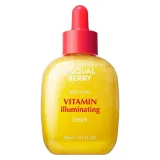
Armani BeautyCREMA NERA REVISCENTALIS META CONCENTRATE SERUMYOUR PRODUCTLANEIGEPerfect Renew Signature SerumSUNGBOON EDITORActive Marine Astaxanthin Capsule SerumEqqualberryVitamin illuminating Serum
Match—56%55%53%
Price$425.00$39.00−$386.00$18.80−$406.20$17.38−$407.62
Shared key ingredients—6 of 149 of 147 of 14
Key difference—RetinolCopper Tripeptide-1Niacinamide
Irritancy High Medium Medium Medium
Drying alcohol————
View product Shop Shop Shop

More alternatives: AHC Hydrating Korean Skincare Aqualuronic Face SerumNEOGEN X SUR.MEDIC Real Niacinamide 15% Serum

Cheaper alternatives? See how this stacks up against similar formulas.
We compare ingredient profiles across our catalog — pick the closest match for your budget.
Open dupe finder

Sources cited in this review

Every concentration estimate and effectiveness label is anchored to one of these 31 studies and safety reviews.

  1. 1
  2. 2
  3. 3
  4. 4
  5. 5
  6. 6
Armani Beauty CREMA NERA REVISCENTALIS META CONCENTRATE SERUM
Armani BeautyCREMA NERA REVISCENTALIS META CONCENTRATE SERUM

Affiliate links · As an Amazon Associate, WIMJ earns from qualifying purchases.

As an Amazon Associate, WIMJ earns from qualifying purchases.