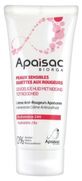
Apaisac Biorga Anti-Redness Soothing Cream
Works for
1 of 1 advertised claim delivered
Moisturizing17 ingredients credited for this claimGood support
“, Hyaluronic Acid, Linseed Oil and Shea Butter which moisturize, soothe and soften the skin.”
This product can help improve hydration of the skin with the two types of ingredients.
The first type is called “humectants”:
these ingredients help attract water.
When humectants are on the surface of the skin, they “pull in” the moisture from the outside environment, or from
within deeper layers of the skin. The following ingredients in this product do the job:
glycerin, sodium hyaluronate.
This product also contains ingredients called “occlusives”. They help reduce the speed with which our skin loses moisture to the outside environment. These ingredients also help soften the upper layer of the skin, so it feels less tight and nicer to the touch. The following ingredients in this product do the job: butyrospermum parkii butter, coco-caprylate.
Can it cause trouble?
Irritancy1 strong irritant: Chrysanthellum indicum extractMedium risk
Comedogenic1 ingredient rated 2 or more on the 0–5 pore-clogging scale1 flagged


User reviews
Be the first — your take helps the next person decide.
Ingredients
Filter by role to see what each ingredient is doing.
Water~45–55%
Linum usitatissimum seed oil~4.6–5.7%
Butyrospermum parkii butter~4.3–5.3%
- Irritation risk
- Low
- Comedogenicity
- 3/5
A great moisturising ingredient that softens the skin and reduces water loss from its upper layer. It also can be helpful in protecting skin from free radicals
More about Butyrospermum parkii butterCoco-caprylate~3.1–3.8%
- Irritation risk
- Medium
An emollient that softens skin and creates a nice product texture
More about Coco-caprylateSodium pca~2.3–2.9%
- Irritation risk
- Low
Naturally present in skin and helps to attract water to its upper layer
More about Sodium pcaCyclopentasiloxane~2–2.4%
- Irritation risk
- Low
A silicone that helps improve the product texture and spreadability. Can absorb oil creating a short-term mattifying effect on the skin
More about CyclopentasiloxaneMethyl methacrylate crosspolymer~1.7–2.1%
- Irritation risk
- Low
Helps thicken the product consistency
More about Methyl methacrylate crosspolymerGlycerin~1.5–1.9%
- Irritation risk
- Low
One of the best moisturizing ingredients. Naturally present in skin. It attracts water to the upper layer of the skin working as a humectant
More about GlycerinPropanediol dicaprylate~1.3–1.6%
- Irritation risk
- Low
Polyglyceryl-4 isostearate~1–1.2%
- Irritation risk
- Medium
Helps water and oil mix together
More about Polyglyceryl-4 isostearateCetyl peg/ppg-10/1 dimethicone~0.7–1.05%
- Irritation risk
- Low
A type of silicone that helps water and oil mix together. Can help to soften upper layer of the skin
More about Cetyl peg/ppg-10/1 dimethiconeHexyl laurate~0.6–0.95%
- Irritation risk
- Medium
Helps soften the upper layer of the skin and create a nice product consistency
More about Hexyl laurateAmmonium acryloyldimethyltaurate/vp copolymer~0.55–0.8%
- Irritation risk
- Low
Increases thickness of a product. Texture enhancer for oil-in-water emulsions
More about Ammonium acryloyldimethyltaurate/vp copolymerCyclohexasiloxane~0.55–0.8%
- Irritation risk
- Low
A silicone that serves as an emollient. Helps create a nice non-greasy feels
More about CyclohexasiloxaneIsononyl isononanoate~0.5–0.75%
- Irritation risk
- Low
Forms a protective film on the surface of the skin to prevent moisture loss. Gives a velvety feel to products while reducing tackiness
More about Isononyl isononanoatePentylene glycol~0.5–0.75%
- Irritation risk
- Medium
Used to preserve products, dissolve other ingredients and create a nice product texture
More about Pentylene glycolCaprylyl glycol~0.5–0.7%
- Irritation risk
- Medium
Helps preserve products and creates a nice product texture
More about Caprylyl glycolHydroxyethyl acrylate/sodium acryloyldimethyl taurate copolymer~0.4–0.65%
- Irritation risk
- Medium
A gelling agent that thickens the product consistency and leaves the skin with a velvety finish
More about Hydroxyethyl acrylate/sodium acryloyldimethyl taurate copolymerEthylhexylglycerin~0.35–0.65%
Polyglyceryl-3 oleate~0.35–0.65%
- Irritation risk
- Medium
Helps oil and water mix together
More about Polyglyceryl-3 oleateCi 77891~0.35–0.65%
- Irritation risk
- Low
Titanium dioxide~0.45–0.65%
- Irritation risk
- Low
Works as a UV filter when used in high concentrations. It is photostable and is effective mostly against the UVB light, with some protection in the UVA range. In small concentrations, used for its ability to improve the color of cosmetic products. Is usually well tolerated by the skin
More about Titanium dioxideSodium hyaluronate~0.3–0.5%
- Irritation risk
- Low
One of the best moisturizing ingredients. Attracts water into the upper layer of the skin
More about Sodium hyaluronateParaffinum liquidum~0.3–0.55%
- Irritation risk
- Low
Mineral oil. One of the most effective and well studied occlusive and emollient moisturizing ingredients. Helps reduce moisture loss in skin and repair skin barrier function
More about Paraffinum liquidumSilica~0.45–0.65%
Mica~0.3–0.6%
- Irritation risk
- Low
Creates an illusion of smoother and more radiant skin tone. Adds shimmer to the skin by reflecting light
More about MicaCaprylhydroxamic acid~0.3–0.5%
T-butyl alcohol~0.25–0.45%
- Irritation risk
- Medium
Used to dissolve other ingredients and to improve smell of products. It could be irritating
More about T-butyl alcoholDisodium edta~0.25–0.5%
Chrysanthellum indicum extract~0.25–0.45%
Rosmarinyl glucoside~0.25–0.45%
- Irritation risk
- Medium
Helps neutralize free radicals in skin and might help to reduce inflammation
More about Rosmarinyl glucosideCitric acid~0.2–0.35%
- Irritation risk
- Medium
Can work as an exfoliant but is typically used to adjust the product pH
More about Citric acidPolysorbate 60~0.2–0.4%
Sorbitan isostearate~0.15–0.3%
- Irritation risk
- Low
Helps oil and water mix together
More about Sorbitan isostearateTocopherol~0.15–0.25%
- Irritation risk
- Low
Pure form of vitamin E. Can help moisturise and protect the skin from free radicals. Often used to help stabilise other ingredients or the formula itself
More about TocopherolLecithin~0.15–0.3%
- Irritation risk
- Low
Used mostly for creating emulsions - helping oil and water mix together. Helps soften the upper layer of the skin
More about LecithinAscorbyl palmitate~0.05–0.15%
- Irritation risk
- Medium
Being a lipid soluble form of vitamin C, it is more stable and can penetrate the skin better than L-Ascorbic acid. It is effective in protecting the skin from free radicals, as well as evening the skin tone, but is less effective in stimulating collagen production compared to L-Ascorbic acid.
More about Ascorbyl palmitateGlyceryl stearate~0.1–0.2%
- Irritation risk
- Low
An emollient that softens the skin and forms a protective layer on its surface. Helps water and oil mix together
More about Glyceryl stearateGlyceryl oleate~0.1–0.2%
- Irritation risk
- High
Helps oil and water mix together. Can be irritating
More about Glyceryl oleateIngredient list view
Water, Linum usitatissimum seed oil, Unknown, Butyrospermum parkii butter, Coco-caprylate, Sodium pca, Cyclopentasiloxane, Methyl methacrylate crosspolymer, Glycerin, Propanediol dicaprylate, Polyglyceryl-4 isostearate, Cetyl peg/ppg-10/1 dimethicone, Hexyl laurate, Ammonium acryloyldimethyltaurate/vp copolymer, Cyclohexasiloxane, Isononyl isononanoate, Pentylene glycol, Caprylyl glycol, Hydroxyethyl acrylate/sodium acryloyldimethyl taurate copolymer, Ethylhexylglycerin, Polyglyceryl-3 oleate, Ci 77891, Titanium dioxide, Sodium hyaluronate, Paraffinum liquidum, Silica, Mica, Caprylhydroxamic acid, T-butyl alcohol, Disodium edta, Chrysanthellum indicum extract, Rosmarinyl glucoside, Citric acid, Polysorbate 60, Sorbitan isostearate, Tocopherol, Lecithin, Ascorbyl palmitate, Glyceryl stearate, Glyceryl oleate
Compare prices
Retailers ranked by price — lowest first.

Affiliate links · prices updated regularly
Worth comparing, line by line.
Match % combines shared ingredients, the first five ingredients, shared actives and hero ingredients, irritancy (lower counts in the alternative's favour), texture and body area. Only products in the same routine step are compared.
| Apaisac BiorgaAnti-Redness Soothing CreamYOUR PRODUCT | CicaBiafineAnti-Irritations Moisturising Cream | Meishoku Brilliant ColorsCeracolla Moisture Cream | TopicremCALM+ Rich Soothing Cream | |
|---|---|---|---|---|
| Match | — | 60% | 59% | 59% |
| Price | $13.80 | $17.72+$3.92 | $11.16−$2.64 | $13.30−$0.50 |
| Shared key ingredients | — | 3 of 8 | 4 of 8 | 3 of 8 |
| Key difference | — | Petrolatum | Ceramide 6 Ii | Helianthus Annuus Seed Oil Unsaponifiables |
| Irritancy | Medium | Low | Low | Low |
| Drying alcohol | — | — | — | — |
| View product | Shop | Shop | Shop |

Sources cited in this review
Every concentration estimate and effectiveness label is anchored to one of these 9 studies and safety reviews.
- 1
- 2Hyaluronic acid: A key molecule in skin agingncbi.nlm.nih.gov
- 3
- 4A review on the extensive skin benefits of mineral oilncbi.nlm.nih.gov
- 5
- 6

Affiliate links · As an Amazon Associate, WIMJ earns from qualifying purchases.