Works for:
based on ingredients and %- Cleansing
Doesn't work for:
based on ingredients and %- Exfoliation
Can it cause trouble?
- Irritation risk: medium
- Comedogenic risk ingredients: 2
Key actives
Cleansing
What does the product description say?
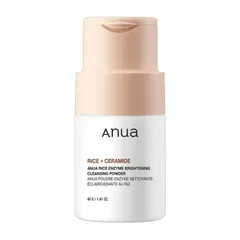
Anua Rice Enzyme Brightening Cleansing Powder is a multi-purpose exfoliating cleansing powder enriched with Rice Powder and Extract to even and brighten uneven dull skin tone.
Source: Lila Beauty
This product works by removing dirt and oil from the surface of the skin. It uses a combination of mild cleansing agents (sodium cocoyl isethionate, sodium lauroyl glutamate) and should be able to cleanse the skin gently. Still keep in mind that any cleansing can disrupt the skin barrier, and most people do not need to cleanse their skin more than once per day.
Helps water and oil mix together. Can be used as a cleansing agent
Used as a cleansing agent. It creates foam
Exfoliation
What does the product description say?
Anua Rice Enzyme Brightening Cleansing Powder is a multi-purpose exfoliating cleansing powder enriched with Rice Powder and Extract to even and brighten uneven dull skin tone.
Source: Lila Beauty
This product might help exfoliate the skin with tartaric acid, papain, but These ingredients is not the most effective.
An AHA (alpha-hydroxy acid). It oxidizes quickly which makes it less effective in skincare formulations. It can support skin's barrier and moisture levels
An enzyme extracted from papaya fruit. Can have an exfoliating effect on the skin. Can be irritating
Helps calm down inflammation in skin and can help reduce itching. Helps to repair the skin barrier and keep skin hydrated
An exfoliating and moisturizing alpha-hydroxy acid (AHA). Typically causes less irritation than other AHAs, for example, glycolic acid. At high concentrations (about 15%), lactic acid can help reduce lines and wrinkles. Recent studies show that lactic acid can support the "good" bacteria living on skin's surface (healthy skin microbiome)
How honest is this product?
| Promise | Can it deliver? |
|---|---|
| Cleansing | |
| Exfoliation |
Total Promises Fulfilled score: 75/100.
We receive a small commission for purchases made through these links at no cost for you. Thank you for your support! Learn more
Affiliate link · supports WIMJ at no cost to you
Potential irritants
Comedogenic ingredients
User reviews (0)
Averages from community submissions.
No reviews yet for this product.
Be the first to share your experience!
Tried this product?
Help capture what the ingredient list can't—texture, finish, pilling, scent, and more. Answer what you can, skip the rest.
Takes ~30 seconds.
Reviews are shown in aggregate. No personal details.
| Product | Similarity | Price | Irritancy |
|---|---|---|---|
 Anua Rice Enzyme Brightening Cleansing Powder 40g | Current | $23.95 | |
 Anua Store | Gentle yet Effective Korean Skincare Rice Enzyme Brightening Cleansing Powder | 71% | - |
Key Actives
Helps calm down inflammation in skin and can help reduce itching. Helps to repair the skin barrier and keep skin hydrated
Helps calm down inflammation in skin and can help reduce itching. Helps to repair the skin barrier and keep skin hydrated
A type of lipid similar to ceramides naturally present in skin. Helps to soften the upper layer of the skin and supports the skin barrier function to keep it hydrated. Can help to prevent inflammation in skin
A type of lipid similar to ceramides naturally present in skin. Helps to soften the upper layer of the skin and supports the skin barrier function to keep it hydrated. Can help to prevent inflammation in skin
An AHA (alpha-hydroxy acid). It oxidizes quickly which makes it less effective in skincare formulations. It can support skin's barrier and moisture levels
A type of clay that consists mainly of aluminum silicate. Helps absorb oil and creates a thicker product consistency. Can be used to add a white color
Helps water and oil mix together. Can be used as a cleansing agent
Used as a cleansing agent. It creates foam
Helps attract water to the upper layer of the skin
Helps water and oil mix together. Can be used as a cleansing agent
Used as a cleansing agent. It creates foam
Helps attract water to the upper layer of the skin
Used to create a gel-like product texture, as well as to stabilize emulsions
Might help reduce hyperpigmentation when used regularly over a long period of time. Is more effective than beta-arbutin
One of the best moisturizing ingredients. Naturally present in skin. It attracts water to the upper layer of the skin working as a humectant
Potential irritants
An enzyme extracted from papaya fruit. Can have an exfoliating effect on the skin. Can be irritating
An enzyme extracted from papaya fruit. Can have an exfoliating effect on the skin. Can be irritating
The most well-researched antioxidant that works in skin. Helps neutralize free radicals supporting collagen production, helping to even out the skin tone and preventing early signs of aging
An enzyme extracted from papaya fruit. Can have an exfoliating effect on the skin. Can be irritating
Used to thicken the product's consistency
Helps water and oil mix together. Can be used as a cleansing agent
Used to thicken the product's consistency
Helps water and oil mix together. Can be used as a cleansing agent
Can work as an exfoliant but is typically used to adjust the product pH
Might help reduce hyperpigmentation when used regularly over a long period of time. Is more effective than beta-arbutin
Helps preserve products and creates a nice product texture
Can work as an exfoliant but is typically used to adjust the product pH
An AHA (alpha-hydroxy acid). It oxidizes quickly which makes it less effective in skincare formulations. It can support skin's barrier and moisture levels
An exfoliating and moisturizing alpha-hydroxy acid (AHA). Typically causes less irritation than other AHAs, for example, glycolic acid. At high concentrations (about 15%), lactic acid can help reduce lines and wrinkles. Recent studies show that lactic acid can support the "good" bacteria living on skin's surface (healthy skin microbiome)
Comedogenic ingredients
Used to thicken the product's consistency
Used to thicken the product's consistency
All ingredients
Used to thicken the product's consistency
Helps water and oil mix together. Can be used as a cleansing agent
Helps calm down inflammation in skin and can help reduce itching. Helps to repair the skin barrier and keep skin hydrated
Used to stabilize the product formulation and can help absorb oil
An enzyme extracted from papaya fruit. Can have an exfoliating effect on the skin. Can be irritating
A type of clay that consists mainly of aluminum silicate. Helps absorb oil and creates a thicker product consistency. Can be used to add a white color
Used to thicken the product's consistency
Helps water and oil mix together. Can be used as a cleansing agent
Helps calm down inflammation in skin and can help reduce itching. Helps to repair the skin barrier and keep skin hydrated
Used to stabilize the product formulation and can help absorb oil
An enzyme extracted from papaya fruit. Can have an exfoliating effect on the skin. Can be irritating
Can work as an exfoliant but is typically used to adjust the product pH
Used to create a gel-like product texture, as well as to stabilize emulsions
Might be somewhat helpful for attracting water to the upper layer of the skin
A grain extract that helps to create a thicker product consistency. It might have some anti-oxidant properties and help attract water to the upper layer of the skin
Used to create a nice product texture and help delivery of other ingredients. Might be somewhat helpful in attracting water to the upper layer of the skin
Helps to dissolve other ingredients in a formulation. Slows down the rate of product drying
A grain extract that helps to create a thicker product consistency. It might have some anti-oxidant properties and help attract water to the upper layer of the skin
Helps attract water to the upper layer of the skin. Might have some anti-oxidant properties
A type of lipid similar to ceramides naturally present in skin. Helps to soften the upper layer of the skin and supports the skin barrier function to keep it hydrated. Can help to prevent inflammation in skin
A type of lipid similar to ceramides naturally present in skin. Helps to soften the upper layer of the skin and supports the skin barrier function to keep it hydrated. Can help to prevent inflammation in skin
The most well-researched antioxidant that works in skin. Helps neutralize free radicals supporting collagen production, helping to even out the skin tone and preventing early signs of aging
Might help reduce hyperpigmentation when used regularly over a long period of time. Is more effective than beta-arbutin
Used to create a nice product texture and help delivery of other ingredients. Might be somewhat helpful in attracting water to the upper layer of the skin
Helps preserve products and creates a nice product texture
Helps attract water to the upper layer of the skin. Could be helpful in restoring the skin barrier function
An enzyme extracted from papaya fruit. Can have an exfoliating effect on the skin. Can be irritating
One of the best moisturizing ingredients. Naturally present in skin. It attracts water to the upper layer of the skin working as a humectant
Can work as an exfoliant but is typically used to adjust the product pH
An AHA (alpha-hydroxy acid). It oxidizes quickly which makes it less effective in skincare formulations. It can support skin's barrier and moisture levels
An exfoliating and moisturizing alpha-hydroxy acid (AHA). Typically causes less irritation than other AHAs, for example, glycolic acid. At high concentrations (about 15%), lactic acid can help reduce lines and wrinkles. Recent studies show that lactic acid can support the "good" bacteria living on skin's surface (healthy skin microbiome)
Ingredient list view
Zea mays starch, Sodium cocoyl isethionate, Sodium lauroyl glutamate, Diglycerin, Allantoin, Maltodextrin, Papain, Kaolin, Zea mays starch, Sodium cocoyl isethionate, Sodium lauroyl glutamate, Diglycerin, Allantoin, Maltodextrin, Papain, Sodium bicarbonate, Citric acid, Sodium polyacrylate, Water, Oryza sativa powder, Oryza sativa lees extract, Oryza sativa bran water, 1,2-hexanediol, Oryza sativa extract, Water, Butylene glycol, 1,2-hexanediol, Dipropylene glycol, Oryza sativa extract, Hydrolyzed rice protein, Oryza sativa seed protein, Ceramide np, Ceramide np, Ascorbic acid, Alpha-arbutin, Protease, Butylene glycol, 1,2-hexanediol, Caprylyl glycol, Glucose, Papain, Glycerin, Water, Citric acid, Tartaric acid, Lactic acid
- Final Report on the Safety Assessment of Sodium Cocoyl Isethionate
- Profile of wound healing process induced by allantoin
- The influence of alkane chain length on the skin irritation potential of 1,2-alkanediols
- Antioxidant and Anti-Inflammatory Properties of Anthocyanins Extracted from Oryza sativa L. in Primary Dermal Fibroblasts
- Rice antioxidants: phenolic acids, flavonoids, anthocyanins, proanthocyanidins, tocopherols, tocotrienols, c-oryzanol, and phytic acid
- Protection Against Free Radicals (UVB Irradiation) of a Water-Soluble Enzymatic Extract from Rice Bran. Study Using Human Keratinocyte Monolayer and Reconstructed Human Epidermis
- Amended final report on the safety assessment of Oryza Sativa (rice) Bran Oil, Oryza Sativa (rice) Germ Oil, Rice Bran Acid,Oryza Sativa (rice) Bran Wax, Hydrogenated Rice Bran Wax, Oryza Sativa (rice)Bran Extract, Oryza Sativa (rice) Extract, Oryza Sativa (rice) Germ Powder, Oryza Sativa (rice) Starch, Oryza Sativa (rice) Bran, Hydrolyzed Rice Bran Extract, Hydrolyzed Rice Bran Protein, Hydrolyzed Rice Extract, and Hydrolyzed Rice Protein
- Skin hydration is significantly increased by a cream formulated to mimic the skin’s own natural moisturizing systems
- Topically Applied Ceramides Interact with the Stratum Corneum Lipid Matrix in Compromised Ex Vivo Skin
- Topical Glucose Induces Claudin-1 and Filaggrin Expression in a Mouse Model of Atopic Dermatitis and in Keratinocyte Culture, Exerting Anti-inflammatory Effects by Repairing Skin Barrier Function
- Glycerol and the skin: holistic approach to its origin and functions
- Control of keratinization with á-hydroxy acids and related compounds: I. Topical treatment of ichthyotic disorders
- Dual Effects of Alpha-Hydroxy Acids on the Skin
- Method of treating wrinkles using tartaric acid
- Impact of the condition of storage of tartaric acid solutions on the production and stability of glyoxylic acid
- Epidermal and dermal effects of topical lactic acid
- Dual Effects of Alpha-Hydroxy Acids on the Skin