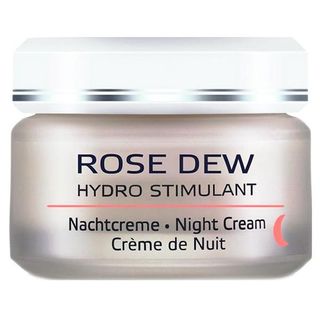
Annemarie Borlind Rose Dew Night Cream
Works for
1 of 1 advertised claim delivered
Moisturizing21 ingredients credited for this claimStrong support
“Rose Dew Night Cream”
This product can help improve hydration of the skin with the two types of ingredients.
The first type is called “humectants”:
these ingredients help attract water.
When humectants are on the surface of the skin, they “pull in” the moisture from the outside environment, or from
within deeper layers of the skin. The following ingredients in this product do the job:
glycerin, glycine.
This product also contains ingredients called “occlusives”. They help reduce the speed with which our skin loses moisture to the outside environment. These ingredients also help soften the upper layer of the skin, so it feels less tight and nicer to the touch. The following ingredients in this product do the job: beeswax, butyrospermum parkii butter.
The following ingredients in this product are especially good for supporting the skin barrier and helping with the hydration level: urea
Anti-oxidationNot advertised by the brand · 9 ingredients credited for this claimModerate support
This product contains antioxidants (ginkgo biloba leaf extract) that might be able to help neutralize free radicals in skin to lessen the damage it gets from the UV light (sun). There is not enough evidence to confirm their effectiveness in skin though.
Can it cause trouble?
Irritancy14 strong irritants: Alcohol, Rosa centifolia flower wax + 12 more — patch-test recommendedHigh risk
Comedogenic3 ingredients rated 2 or more on the 0–5 pore-clogging scale3 flagged

User reviews
Be the first — your take helps the next person decide.
Ingredients
Filter by role to see what each ingredient is doing.
Water~40–60%
Ethylhexyl stearate~3.9–5.9%
- Irritation risk
- Low
Helps soften the upper layer of the skin
More about Ethylhexyl stearateSqualane~3.7–5.6%
- Irritation risk
- Low
An oil naturally present in skin. Works as an emollient to soften the skin and form a protective layer on its surface without a greasy feeling.
More about SqualaneZea mays oil~2.1–3.1%
- Irritation risk
- Low
- Comedogenicity
- 3/5
A good moisturizing plant oil. Due to the high linoleic acid content, it helps soften the upper layer of the skin, reduce water loss and support skin barrier function
More about Zea mays oilPolyglyceryl-3 oleate~1.7–2.6%
- Irritation risk
- Medium
Helps oil and water mix together
More about Polyglyceryl-3 oleateGlycerin~1.5–2.2%
- Irritation risk
- Low
One of the best moisturizing ingredients. Naturally present in skin. It attracts water to the upper layer of the skin working as a humectant
More about GlycerinButyrospermum parkii butter~1.2–1.7%
- Irritation risk
- Low
- Comedogenicity
- 3/5
A great moisturising ingredient that softens the skin and reduces water loss from its upper layer. It also can be helpful in protecting skin from free radicals
More about Butyrospermum parkii butterPersea gratissima oil~1.1–1.6%
- Irritation risk
- Medium
An emollient that helps soften the skin and could be helpful in repairing its barrier function
More about Persea gratissima oilPolyglyceryl-3 polyricinoleate~0.8–1.2%
- Irritation risk
- Medium
Helps oil and water mix together
More about Polyglyceryl-3 polyricinoleateTribehenin~0.5–1.1%
- Irritation risk
- Low
Used to create a thicker product consistency and soften the upper layer of the skin
More about TribeheninGlycine~0.4–0.95%
- Irritation risk
- Low
Helps to attract water to the upper layer of the skin and can help restore the skin barrier function
More about GlycineMagnesium sulfate~0.35–0.85%
Sorbitol~0.2–0.75%
- Irritation risk
- Low
Helps attract water to the upper layer of the skin and improves the product texture
More about SorbitolTriticum vulgare germ oil~0.2–0.75%
- Irritation risk
- Low
- Comedogenicity
- 3/5
A good emoillient. Contains vitamin E which can help neutralise free radicals, however the oil is unstable. Avoid if you have gluten or wheat sensitivity (including food allergies).
More about Triticum vulgare germ oilUrea~0.15–0.6%
- Irritation risk
- Low
Naturally present in skin (urea makes up about 7% of natural moisturizing factors in skin). Attracts water to the upper layer of the skin. Also has a positive effect on the skin barrier beyond the humectant action. Can enhance penetration of other ingredients. Is an exfoliating ingredient when used in high concentrations
More about UreaPhenoxyethanol~0.15–0.65%
- Irritation risk
- Low
A preservative. It helps prevent bacterial growth in cosmetic products
More about PhenoxyethanolCera alba~0.3–0.75%
- Irritation risk
- Medium
Forms a protective barrier that holds water and keeps dry skin hydrated. Keeps an emulsion from separating into its oil and liquid components, and increases the thickness of a product. Can be an allergen
More about Cera albaBeeswax~0.15–0.7%
- Irritation risk
- Low
Forms a protective barrier that holds water and keeps dry skin hydrated. Keeps an emulsion from separating into its oil and liquid components, and increases the thickness of a product. Can be an allergen
More about BeeswaxBenzyl alcohol~0.1–0.5%
- Irritation risk
- High
A preservative. Can be used to mask unpleasant smell. Can be irritating
More about Benzyl alcoholPanthenol~0.1–0.45%
- Irritation risk
- Low
Helps attract water to the upper layer of the skin and can help improve skin barrier function
More about PanthenolTocopheryl acetate~0.1–0.45%
- Irritation risk
- Medium
A more stable but less bio-available form of vitamin E compared to Tocopherol. Might help moisturize and protect the skin from free radicals, but mostly used in low concentrations to stabilize other ingredients.
More about Tocopheryl acetateZinc oxide~0.2–0.75%
- Irritation risk
- Low
A broad spectrum sunblock (protects from both UVA and UVB rays). Is suitable for most sensitive skins. In small concentrations, can be used as a colorant
More about Zinc oxideAlcohol~0.1–0.45%
- Irritation risk
- High
Can be drying and contribute to skin irritation. Used in formulars to dissolve other ingredients, create a thinner product consistency or for its antibacterial properties
More about AlcoholAllantoin~0.1–0.35%
- Irritation risk
- Low
Helps calm down inflammation in skin and can help reduce itching. Helps to repair the skin barrier and keep skin hydrated
More about AllantoinBrassica campestris extract~0.1–0.4%
- Irritation risk
- Low
Ascorbyl dipalmitate~0.1–0.4%
- Irritation risk
- Low
Rosa centifolia flower wax~0.1–0.4%
- Irritation risk
- High
Is likely to contain an essential oil that can be irritating. Typically used for its fragrance and to create a thicker product consistency
More about Rosa centifolia flower waxCitronellol~0.1–0.35%
Persea gratissima fruit extract~0.1–0.45%
Phytantriol~0.1–0.45%
- Irritation risk
- Low
Geraniol~0.1–0.35%
Mica~0.1–0.4%
- Irritation risk
- Low
Creates an illusion of smoother and more radiant skin tone. Adds shimmer to the skin by reflecting light
More about MicaAroma~0.1–0.4%
Parfum~0.1–0.35%
- Irritation risk
- High
An aromatic blend of unspecified and possibly irritating ingredients
More about ParfumHumulus lupulus extract~0.1–0.4%
- Irritation risk
- High
Hops extract. Can contain common irritants and allergens geraniol, limonene, linalool
More about Humulus lupulus extractAchillea millefolium extract~0.1–0.5%
- Irritation risk
- High
Plant extract that can help neutralize free radicals in skin. Can be used as a fragrance. Can be irritating
More about Achillea millefolium extractCucumis sativus fruit extract~0.1–0.4%
- Irritation risk
- Medium
Might be somewhat helpful in reducing hyperpigmentation and neutralizing free radicals but its typical concentration in a product is too low for having an effect
More about Cucumis sativus fruit extractEquisetum arvense extract~0.1–0.4%
- Irritation risk
- High
A plant extract that might have anti-oxidant properties. Can be irritating
More about Equisetum arvense extractSalvia officinalis leaf extract~0.1–0.45%
- Irritation risk
- High
Sage leaf extract. It can be irritating
More about Salvia officinalis leaf extractCi 77491~0.1–0.4%
- Irritation risk
- Low
A red colorant made of iron oxide. Typically is not irritating
More about Ci 77491Iron oxides~0.1–0.35%
- Irritation risk
- Low
An umbrella term for the following three colorants: CI 77491, CI 77492, CI 77499. They might be able to offer some protection against visible light, but the degree of the protection is not clear
More about Iron oxidesGinkgo biloba leaf extract~0.1–0.35%
- Irritation risk
- High
A plant extract that might help neutralize free radicals and reduce inflammation in skin. It can be irritating
More about Ginkgo biloba leaf extractLinalool~0.1–0.3%
Ascorbyl palmitate~0.1–0.3%
- Irritation risk
- Medium
Being a lipid soluble form of vitamin C, it is more stable and can penetrate the skin better than L-Ascorbic acid. It is effective in protecting the skin from free radicals, as well as evening the skin tone, but is less effective in stimulating collagen production compared to L-Ascorbic acid.
More about Ascorbyl palmitateHydrogenated palm glycerides citrate~0.1–0.35%
- Irritation risk
- Low
Helps soften the upper layer of the skin
More about Hydrogenated palm glycerides citrateTocopherol~0.05–0.25%
- Irritation risk
- Low
Pure form of vitamin E. Can help moisturise and protect the skin from free radicals. Often used to help stabilise other ingredients or the formula itself
More about TocopherolLimonene~0.05–0.25%
- Irritation risk
- High
A common frangrance that can easily irritate skin, especially if exposed to air, light or heat
More about LimoneneRosa damascena flower water~0.05–0.2%
- Irritation risk
- High
Used to add a nice rose smell to the product. Might help attract water to the upper layer of the skin and have some anti-oxidant effect. Can be irritating
More about Rosa damascena flower waterEugenol~0.01–0.05%
Lecithin~0.05–0.2%
- Irritation risk
- Low
Used mostly for creating emulsions - helping oil and water mix together. Helps soften the upper layer of the skin
More about LecithinIngredient list view
Water, Ethylhexyl stearate, Squalane, Zea mays oil, Polyglyceryl-3 oleate, Glycerin, Butyrospermum parkii butter, Persea gratissima oil, Polyglyceryl-3 polyricinoleate, Tribehenin, Glycine, Magnesium sulfate, Sorbitol, Triticum vulgare germ oil, Urea, Phenoxyethanol, Cera alba, Beeswax, Benzyl alcohol, Panthenol, Tocopheryl acetate, Zinc oxide, Alcohol, Allantoin, Brassica campestris extract, Ascorbyl dipalmitate, Rosa centifolia flower wax, Citronellol, Persea gratissima fruit extract, Phytantriol, Geraniol, Mica, Aroma, Parfum, Humulus lupulus extract, Achillea millefolium extract, Cucumis sativus fruit extract, Equisetum arvense extract, Salvia officinalis leaf extract, Ci 77491, Iron oxides, Ginkgo biloba leaf extract, Linalool, Ascorbyl palmitate, Hydrogenated palm glycerides citrate, Tocopherol, Limonene, Rosa damascena flower water, Eugenol, Lecithin
Compare prices
Retailers ranked by price — lowest first.
Affiliate links · prices updated regularly · As an Amazon Associate, WIMJ earns from qualifying purchases.
Worth comparing, line by line.
Match % combines shared ingredients, the first five ingredients, shared actives and hero ingredients, irritancy (lower counts in the alternative's favour), texture and body area. Only products in the same routine step are compared.
| Annemarie BorlindRose Dew Night CreamYOUR PRODUCT | BABORSkinovage Argan Cream | BepantholFace and eye cream | ManufakturaAnti-Pollution Night Face Cream with Daisy | |
|---|---|---|---|---|
| Match | — | 60% | 56% | 56% |
| Price | $47.99 | $57.71+$9.72 | $33.70−$14.29 | — |
| Shared key ingredients | — | 7 of 13 | 6 of 13 | 6 of 13 |
| Key difference | — | Niacinamide | Niacinamide | Niacinamide |
| Irritancy | High | Medium | Medium | Medium |
| Drying alcohol | Contains drying alcohol | Contains drying alcohol | — | — |
| View product | Shop | Shop | Shop |


Product summary
Based on the ingredient list, "Annemarie Borlind - Rose Dew Night Cream" can work well for skin moisturization. The formulation is based on a combination of good humectants and emollients. Both are needed to increase the skin hydration level. Urea, glycerin, glycine and sorbitol in this product (humectants) attract water molecules to the upper layer of the skin (the water comes from the outside air or from the deeper layers of the skin if the air is dry). Persea gratissima fruit extract, persea gratissima oil, triticum vulgare germ oil, beeswax and butyrospermum parkii butter in this product help decrease the water evoporation from the skin, so that it stays hydrated for longer. These ingredients also soften the skin and take away the feeling of tightness and dryness.
This product contains ingredients that could be beneficial, but their concentrations are too low in this formulation: lecithin, vitamin e, allantoin and zinc oxideIrritation risk
This moisturizer contains a bunch of common irritants, including ingredients that do not provide any known benefit for the skin. It might not be the best choice if your skin is sensitive. We assess the overall irritancy of this moisturizer to be high. For a detailed overview of all potential irritants: click here
You can see the detailed formula review with the breakdown of all actives in the product and the full ingredient list with estimated concentrations in the tables below.
Sources cited in this review
Every concentration estimate and effectiveness label is anchored to one of these 22 studies and safety reviews.
- 1Content of fatty acids in corn (Zea mays L.) oil from Ecuadorresearchgate.net
- 2
- 3
- 4Functional glycine receptor in cultured human keratinocytesonlinelibrary.wiley.com
- 5Safety Assessment of Magnesium Sulfate as Used in Cosmeticsncbi.nlm.nih.gov
- 6Topical urea in skincare: A reviewpubmed.ncbi.nlm.nih.gov

Affiliate links · As an Amazon Associate, WIMJ earns from qualifying purchases.