Works for
1 of 1 advertised claim delivered
Moisturizing15 ingredients credited for this claimStrong support
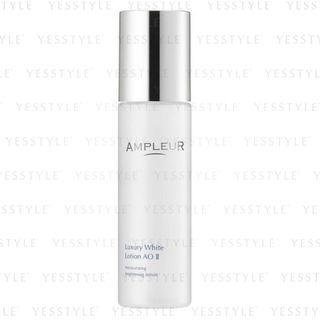
“Brand from Japan AMPLEUR. With rich concentrated beauty ingredients such as new stabilized hydroquinone and triple ceramides, this lotion can penetrate deep into the skin and keep it firm and moisturized.”
This product can help improve hydration of the skin with the two types of ingredients.
The first type is called “humectants”:
these ingredients help attract water.
When humectants are on the surface of the skin, they “pull in” the moisture from the outside environment, or from
within deeper layers of the skin. The following ingredients in this product do the job:
arginine, glycerin.
This product also contains ingredients called “occlusives”. They help reduce the speed with which our skin loses moisture to the outside environment. These ingredients also help soften the upper layer of the skin, so it feels less tight and nicer to the touch. The following ingredients in this product do the job: arginine, cholesterol.
The following ingredients in this product are especially good for supporting the skin barrier and helping with the hydration level: ceramide 1, ceramide 2, ceramide 3
Anti-oxidationNot advertised by the brand · 5 ingredients credited for this claimStrong support
This product contains antioxidants (ferulic acid, resveratrol, thioctic acid) that can help neutralize free radicals in skin. By doing so, they can lessen the damage the skin gets from the UV light (sun).
Evens skin toneNot advertised by the brand · 4 ingredients credited for this claimStrong support
This product can help reduce hypepigmentation and even out the skin tone because it contains the following effective ingredients: hydroquinone.
The following ingredient (ingredients) in this product might be helpful, but there is no evidence to confirm that it actually can help even out the skin tone: ferulic acid, resveratrol.
Keep in mind that you would need to apply any topical skincare targetted at hypigmentation consistently for a couple of months to get a result. No topical skincare product can help get rid of hyperpigmentation (including post-acne marks and age spots) instantly.
Anti-agingNot advertised by the brand · 5 ingredients credited for this claimModerate support
This product contains ferulic acid, lysine, resveratrol. These ingredients might be able to help reduce and prevent fine lines and wrinkles, improve skin elasticity and firmness, but there is not enough evidence that it actually works.
Can it cause trouble?
Irritancy3 strong irritants: Hydroquinone, Alcohol + 1 more — patch-test recommendedHigh risk
ComedogenicClean of flagged comedogenic ingredientsNone flagged
User reviews
Be the first — your take helps the next person decide.
Ingredients
Filter by role to see what each ingredient is doing.
Water~45–55%
Raffinose~3.8–4.7%
- Irritation risk
- Low
Polysorbate 60~3.4–4.2%
Butylene glycol~2.9–3.6%
- Irritation risk
- Low
Used to create a nice product texture and help delivery of other ingredients. Might be somewhat helpful in attracting water to the upper layer of the skin
More about Butylene glycolPentylene glycol~2.3–2.8%
- Irritation risk
- Medium
Used to preserve products, dissolve other ingredients and create a nice product texture
More about Pentylene glycolGlycerin~1.9–2.4%
- Irritation risk
- Low
One of the best moisturizing ingredients. Naturally present in skin. It attracts water to the upper layer of the skin working as a humectant
More about GlycerinAcrylates/c10-30 alkyl acrylate crosspolymer~1.6–2%
- Irritation risk
- Medium
Maintains the texture of skincare products. Allows the product to spread evenly. Helps oil and water mix together
More about Acrylates/c10-30 alkyl acrylate crosspolymerArginine~1.4–1.7%
- Irritation risk
- Low
An amino acid that is naturally present in skin and helps keep it hydrated. When used together with AHAs, it can reduce their irritating effect on the skin
More about ArginineMannitol~1.1–1.4%
- Irritation risk
- Low
Helps to attract water to the upper layer of the skin
More about MannitolSodium gluconate~0.9–1.1%
Sodium lauroyl lactylate~0.7–1.05%
- Irritation risk
- Medium
Helps water and oil mix together
More about Sodium lauroyl lactylateSodium pca~0.6–0.9%
- Irritation risk
- Low
Naturally present in skin and helps to attract water to its upper layer
More about Sodium pcaHydrolyzed collagen~0.6–0.85%
- Irritation risk
- Low
A typically plant-derived compound that is supposed mimic human collagen. Cannot penetrate the skin barrier so is not particularly useful in skincare products beyond attracting water to the upper layer of the skin
More about Hydrolyzed collagenHydroquinone~0.5–0.75%
- Irritation risk
- High
A potent anti-pigmentation active. It can have serious side-effects though and ideally is used under supervision of a doctor. It should not be used over a long period of time (over a year).
More about HydroquinoneLysine~0.45–0.7%
- Irritation risk
- Low
An amino-acid that helps to attract water to the upper layer of the skin. In combination with other amino-acids, might help to reduce fine lines and wrinkles
More about LysineRoe extract~0.45–0.7%
- Irritation risk
- Low
Glucosylrutin~0.45–0.7%
- Irritation risk
- Low
Placental extract~0.45–0.65%
- Irritation risk
- Low
Aloe vera leaf extract~0.45–0.7%
- Irritation risk
- Low
Glycyrrhizic acid~0.3–0.6%
- Irritation risk
- Low
Cholesterol~0.4–0.65%
- Irritation risk
- Low
An emollient that is naturally found in skin
More about CholesterolHydrogenated lecithin~0.35–0.6%
- Irritation risk
- Low
Helps to retain moisture by creating a protective barrier on the skin. Rich in fatty acids. Improves product texture and helps with the penetration of other ingredients.
More about Hydrogenated lecithinCeramide 1~0.35–0.6%
- Irritation risk
- Low
A type of lipid similar to ceramides naturally present in skin. Helps to soften the upper layer of the skin and supports the skin barrier function to keep it hydrated. Can help to prevent inflammation in skin
More about Ceramide 1Ceramide 3~0.35–0.6%
- Irritation risk
- Low
A type of lipid similar to ceramides naturally present in skin. Helps to soften the upper layer of the skin and supports the skin barrier function to keep it hydrated. Can help to prevent inflammation in skin
More about Ceramide 3Ceramide 2~0.3–0.6%
- Irritation risk
- Low
A type of lipid similar to ceramides naturally present in skin. Helps to soften the upper layer of the skin and supports the skin barrier function to keep it hydrated. Can help to prevent inflammation in skin
More about Ceramide 2Phytol~0.3–0.6%
- Irritation risk
- High
Might be helpful in attracting water to the upper layer of the skin. Is claimed by the manufacturer to have other skin benefits but any evidence is lacking. Can be irritating
More about PhytolFerulic acid~0.3–0.55%
- Irritation risk
- Low
A potent anti-oxidant that has been shown to be effective in neutralizing free radicals in skin. There seem to have a synergetic effect of ferulic acid, vitamin E and C, meaning that when the ingredients are used together, they enhance each other's ability protect the skin against free radicals. Ferulic acid also helps to stabilize other ingredients - including vitamins C and E. It can help to even out the skin tone. Ferulic acid is approved for use as a sunscreen ingredient in Japan in concentrations up to 10%
More about Ferulic acidWaltheria indica leaf extract~0.3–0.5%
- Irritation risk
- Low
Xanthan gum~0.3–0.55%
- Irritation risk
- Low
Used to create a thicker product consistency
More about Xanthan gumGlycine soja sterols~0.35–0.6%
- Irritation risk
- Low
An emollient that helps soften the skin
More about Glycine soja sterols3-o-ethyl ascorbic acid~0.3–0.5%
- Irritation risk
- High
A vitamin C derivative that is more stable but less potent than pure form of vitamin C. Can help neutralize free radicals and help reduce hyperpigmentation, but the required concentration is likely to be much higher than for the pure form of vitamin C, limiting the ingredient's effectiveness in products
More about 3-o-ethyl ascorbic acidAristotelia chilensis fruit extract~0.3–0.5%
- Irritation risk
- High
A plant extract that might have some anti-oxidant properties. Can be used as a fragrance
More about Aristotelia chilensis fruit extractVitis vinifera~0.3–0.55%
- Irritation risk
- Low
A plant extract that contains resveratrol and other anti-oxidant compounds that can help neutralize free radicals, reduce inflammation in skin and even out its tone. Can be also used to stabilize the product formulation
More about Vitis viniferaPigskin extract~0.3–0.55%
- Irritation risk
- Low
Resveratrol~0.3–0.55%
- Irritation risk
- Medium
Helps neutralize free radicals in skin and might help reduce fine lines and wrinkles, as well as even out the skin tone
More about ResveratrolRoe extract~0.25–0.5%
- Irritation risk
- Low
Thioctic acid~0.25–0.5%
Carbomer~0.25–0.45%
- Irritation risk
- Low
Helps create a thicker or gel-like product texture. It is not a surfactant but can be used in gentle cleansing formulations
More about CarbomerCyclodextrin~0.25–0.45%
- Irritation risk
- Low
A type of sugar that is used to support delivery of active ingredients and can enhance their penetration into the skin without disrupting the skin's barrier
More about CyclodextrinDextrin~0.25–0.45%
- Irritation risk
- Low
A sugar that is used to stabilize the product formulation. Can help attract water to the upper layer of the skin
More about DextrinCetalkonium chloride~0.2–0.35%
- Irritation risk
- Low
Citric acid~0.2–0.35%
- Irritation risk
- Medium
Can work as an exfoliant but is typically used to adjust the product pH
More about Citric acidSodium citrate~0.15–0.3%
- Irritation risk
- Medium
Helps to control the skin's pH level. Maintains the skin's natural film of amino-lactic acids and oils. Helps to preserve products
More about Sodium citrateAlcohol~0.15–0.25%
- Irritation risk
- High
Can be drying and contribute to skin irritation. Used in formulars to dissolve other ingredients, create a thinner product consistency or for its antibacterial properties
More about AlcoholPhenoxyethanol~0.1–0.2%
- Irritation risk
- Low
A preservative. It helps prevent bacterial growth in cosmetic products
More about PhenoxyethanolMethylparaben~0.1–0.2%
Ethylparaben~0.1–0.2%
Propylparaben~0.1–0.15%
Parfum~0.05–0.1%
- Irritation risk
- High
An aromatic blend of unspecified and possibly irritating ingredients
More about ParfumIngredient list view
Water, Raffinose, Polysorbate 60, Butylene glycol, Pentylene glycol, Glycerin, Acrylates/c10-30 alkyl acrylate crosspolymer, Arginine, Mannitol, Sodium gluconate, Sodium lauroyl lactylate, Sodium pca, Hydrolyzed collagen, Hydroquinone, Unknown, Lysine, Roe extract, Glucosylrutin, Placental extract, Aloe vera leaf extract, Glycyrrhizic acid, Unknown, Cholesterol, Hydrogenated lecithin, Ceramide 1, Ceramide 3, Ceramide 2, Phytol, Ferulic acid, Waltheria indica leaf extract, Xanthan gum, Glycine soja sterols, 3-o-ethyl ascorbic acid, Aristotelia chilensis fruit extract, Vitis vinifera, Unknown, Pigskin extract, Resveratrol, Roe extract, Thioctic acid, Carbomer, Cyclodextrin, Dextrin, Cetalkonium chloride, Citric acid, Sodium citrate, Alcohol, Phenoxyethanol, Methylparaben, Ethylparaben, Propylparaben, Parfum
Compare prices
Retailers ranked by price — lowest first.

Affiliate links · prices updated regularly
Product summary
"AMPLEUR - Luxury White Lotion AO II" has a good moisturizing formula. This moisturizer uses a good combo of humectants and emollients. These both types of ingredients are essentials for improving the skin hydration and keeping the skin barrier healthy. Humectants in this product (arginine, glycerin, hydrolyzed collagen, mannitol and sodium pca) help to increase the water content in the upper layer of the skin. (These ingredients do so by "capturing" water molecules from the outside air or from within the deeper layers of the skin). Emollients in this formulation (ceramide 1, ceramide 2, ceramide 3, cholesterol and glycine soja sterols) help to reduce the moisture loss from the skin. They also soften the skin surface and relieve the feeling of dryness and tightness.
Ingredient callouts
- As a plus, this moisturizer also contains Ceramides (ceramide 2 0.30% - 0.60%, ceramide 3 0.35% - 0.60% and ceramide 1 0.35% - 0.60%). Ceramides are a type of lipids that our skin produces itself. They are a building block of the skin's barrier. Ceramides used in skincare are synthetic or extracted from plants. They work well for softening the skin surface and "patch holes" in the skin's barrier.
Irritation risk
There are some common irritants in this product, including ingredients that do not have benefits for the skin. We assess the overall irritancy of this moisturizer to be high. For a detailed overview of all potential irritants: click here
You can see the detailed formula review with the breakdown of all actives in the product and the full ingredient list with estimated concentrations in the tables below.
Price
The product retails for 60.75$ in the United States.
For a detailed price comparison: click here.
Sources cited in this review
Every concentration estimate and effectiveness label is anchored to one of these 17 studies and safety reviews.
- 1
- 2Topical palmitoyl pentapeptide provides improvement in photoaged human facial skinonlinelibrary.wiley.com
- 3
- 4
- 5
- 6

Affiliate links · As an Amazon Associate, WIMJ earns from qualifying purchases.