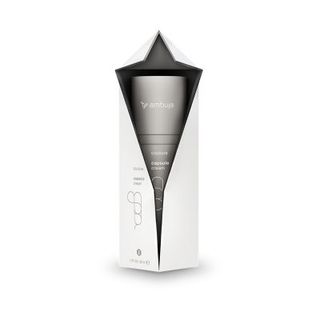
Works for
1 of 2 advertised claims delivered
Moisturizing12 ingredients credited for this claimGood support
“for extra moisture infusion and smoothness.”
This product can help improve hydration of the skin with the two types of ingredients.
The first type is called “humectants”:
these ingredients help attract water.
When humectants are on the surface of the skin, they “pull in” the moisture from the outside environment, or from
within deeper layers of the skin. The following ingredients in this product do the job:
glycerin, sodium hyaluronate.
This product also contains ingredients called “occlusives”. They help reduce the speed with which our skin loses moisture to the outside environment. These ingredients also help soften the upper layer of the skin, so it feels less tight and nicer to the touch. The following ingredients in this product do the job: caprylic/capric triglyceride, cocos nucifera oil.
Anti-aging2 ingredients credited for this claimWeak support
“Opulent anti-ageing cream and age defence shield improves elasticity, helps tighten, firm and restructure the skin.”
Effective ingredients missing or their concentration is too low.
Can it cause trouble?
Irritancy11 strong irritants: Alcohol, Rosa moschata seed oil + 9 more — patch-test recommendedHigh risk
Comedogenic3 ingredients rated 2 or more on the 0–5 pore-clogging scale3 flagged
User reviews
Be the first — your take helps the next person decide.
Ingredients
Filter by role to see what each ingredient is doing.
Cocos nucifera fruit juice~22–33%
- Irritation risk
- Low
Isoamyl laurate~4.3–6.4%
- Irritation risk
- Medium
Helps stabilize emulsions and create a nice product texture
More about Isoamyl lauratePersea gratissima oil~4.4–6.6%
- Irritation risk
- Medium
An emollient that helps soften the skin and could be helpful in repairing its barrier function
More about Persea gratissima oilSimmondsia chinensis seed oil~3.8–5.7%
- Irritation risk
- Medium
Softens the upper layer of skin and helps restore the healthy skin barrier. Has shown to help calm down inflammation in skin. It is a stable oil, meaning that it retains its properties even when exposed to air.
More about Simmondsia chinensis seed oilCaprylic/capric triglyceride~2.9–4.4%
- Irritation risk
- Medium
A good mix of fatty acids that forms a protective layer on the skin. Improves the shelf life of products. Derived from coconut and glycerin
More about Caprylic/capric triglycerideAlcohol~1.9–2.9%
- Irritation risk
- High
Can be drying and contribute to skin irritation. Used in formulars to dissolve other ingredients, create a thinner product consistency or for its antibacterial properties
More about AlcoholGlycerin~1.6–2.4%
- Irritation risk
- Low
One of the best moisturizing ingredients. Naturally present in skin. It attracts water to the upper layer of the skin working as a humectant
More about GlycerinGlyceryl stearate citrate~1.4–2.1%
- Irritation risk
- Low
Helps oil and water mix together while softening the upper layer of the skin
More about Glyceryl stearate citrateNelumbo nucifera root water~1.1–1.6%
- Irritation risk
- Low
Cocos nucifera oil~0.95–1.4%
- Irritation risk
- Low
- Comedogenicity
- 3/5
An emollient. Found to be as effective as a moisturizer for dry skin as mineral oil. Could be comedogenic
More about Cocos nucifera oilButyrospermum parkii butter~0.6–1.4%
- Irritation risk
- Low
- Comedogenicity
- 3/5
A great moisturising ingredient that softens the skin and reduces water loss from its upper layer. It also can be helpful in protecting skin from free radicals
More about Butyrospermum parkii butterAcacia decurrens/jojoba/sunflower seed cera/polyglyceryl-3 esters~0.5–1.2%
- Irritation risk
- Low
Rosa moschata seed oil~0.45–1.05%
- Irritation risk
- High
Cetearyl alcohol~0.5–1.1%
- Irritation risk
- Low
- Comedogenicity
- 2/5
A non-drying alcohol. Works as an emollient. Helps water and oil mix together and creates a nice product texture
More about Cetearyl alcoholPunica granatum seed extract~0.35–0.8%
Polygonum fagopyrum seed extract~0.35–0.8%
- Irritation risk
- Low
Hexapeptide-10~0.35–0.75%
- Irritation risk
- Low
Sodium hyaluronate~0.3–0.7%
- Irritation risk
- Low
One of the best moisturizing ingredients. Attracts water into the upper layer of the skin
More about Sodium hyaluronateHelianthus annuus seed oil~0.35–0.8%
- Irritation risk
- Low
A great emollient due to its high linoleic acid content. One of the most effective plant oils in helping skin hydration and repairing skin barrier function
More about Helianthus annuus seed oilRosmarinus officinalis leaf extract~0.15–0.65%
- Irritation risk
- High
Can be helpful in reducing inflammation in skin, including inflamed acne. It can be irritating
More about Rosmarinus officinalis leaf extractCalendula officinalis extract~0.15–0.7%
- Irritation risk
- High
A plant extract that might help neutralize free radicals in skin
More about Calendula officinalis extractCalendula officinalis flower extract~0.15–0.65%
- Irritation risk
- High
A plant extract that has some anti-oxidant and anti-bacterial properties. Can be irritating
More about Calendula officinalis flower extractSodium stearoyl lactylate~0.15–0.65%
- Irritation risk
- Medium
Helps oil and water mix together
More about Sodium stearoyl lactylateCyclodextrin~0.15–0.6%
- Irritation risk
- Low
A type of sugar that is used to support delivery of active ingredients and can enhance their penetration into the skin without disrupting the skin's barrier
More about CyclodextrinXanthan gum~0.15–0.6%
- Irritation risk
- Low
Used to create a thicker product consistency
More about Xanthan gumGlyceryl caprate~0.2–0.8%
- Irritation risk
- Low
Lactic acid~0.15–0.6%
- Irritation risk
- Medium
An exfoliating and moisturizing alpha-hydroxy acid (AHA). Typically causes less irritation than other AHAs, for example, glycolic acid. At high concentrations (about 15%), lactic acid can help reduce lines and wrinkles. Recent studies show that lactic acid can support the "good" bacteria living on skin's surface (healthy skin microbiome)
More about Lactic acidSodium levulinate~0.15–0.6%
Sodium anisate~0.15–0.55%
Parfum~0.1–0.45%
- Irritation risk
- High
An aromatic blend of unspecified and possibly irritating ingredients
More about ParfumBenzyl benzoate~0.1–0.4%
- Irritation risk
- High
Fragrance with sweet balsamic smell. Help to preserve products and dissolve other ingredients. Could trigger allergic reactions and be irritating
More about Benzyl benzoateLinalool~0.1–0.4%
Citronellol~0.1–0.35%
Limonene~0.1–0.3%
- Irritation risk
- High
A common frangrance that can easily irritate skin, especially if exposed to air, light or heat
More about LimoneneEugenol~0.05–0.25%
Ingredient list view
Cocos nucifera fruit juice, Isoamyl laurate, Persea gratissima oil, Simmondsia chinensis seed oil, Caprylic/capric triglyceride, Alcohol, Glycerin, Glyceryl stearate citrate, Nelumbo nucifera root water, Cocos nucifera oil, Butyrospermum parkii butter, Acacia decurrens/jojoba/sunflower seed cera/polyglyceryl-3 esters, Rosa moschata seed oil, Cetearyl alcohol, Punica granatum seed extract, Polygonum fagopyrum seed extract, Hexapeptide-10, Sodium hyaluronate, Helianthus annuus seed oil, Rosmarinus officinalis leaf extract, Calendula officinalis extract, Calendula officinalis flower extract, Sodium stearoyl lactylate, Cyclodextrin, Xanthan gum, Glyceryl caprate, Lactic acid, Sodium levulinate, Sodium anisate, Parfum, Benzyl benzoate, Linalool, Citronellol, Limonene, Eugenol
Compare prices
Retailers ranked by price — lowest first.
Sources cited in this review
Every concentration estimate and effectiveness label is anchored to one of these 18 studies and safety reviews.
- 1
- 2Hyaluronic acid: A key molecule in skin agingncbi.nlm.nih.gov
- 3
- 4
- 5
- 6Effect of topically applied lipids on surfactant-irritated skinonlinelibrary.wiley.com

Affiliate links · As an Amazon Associate, WIMJ earns from qualifying purchases.