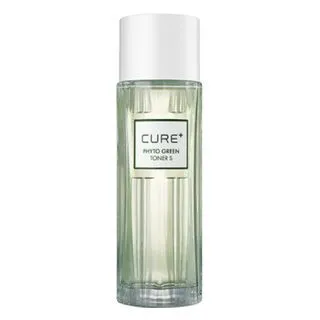
ALOE for CURE Phyto Green Toner S

ALOE for CURE Phyto Green Toner S

Efficacy100/100IrritancyHigh

Works for

Moisturizing
Niacinamide, Panthenol + 18 more
Works well
What the product description says
“This is a slightly dense toner infused with Aloe Oil, which helps to smooth the skin texture and prepare a moisturized base for your skin.”
Source: Yesstyle

This product can help improve hydration of the skin with the two types of ingredients.

The first type is called “humectants”:
these ingredients help attract water. When humectants are on the surface of the skin, they “pull in” the moisture from the outside environment, or from within deeper layers of the skin. The following ingredients in this product do the job: fructooligosaccharides, glycerin.

This product also contains ingredients called “occlusives”. They help reduce the speed with which our skin loses moisture to the outside environment. These ingredients also help soften the upper layer of the skin, so it feels less tight and nicer to the touch. The following ingredients in this product do the job: hydrolyzed collagen, phytosterols.

The following ingredients in this product are especially good for supporting the skin barrier and helping with the hydration level: niacinamide, panthenol

NiacinamideHeroEffect: HighIs proven to be effective in reducing blemishes, evening out skin tone and helping to improve lines and wrinkles. It helps the skin to repair sun damage, calm down inflammation and keep maintain good levels of moisture. The concentration of about 2% is effective for supporting the skin barrier and evening out the skin tone. Concentration of 4-6% is better for helping with acne and balancing the sebum production~1.9–2.8%
PanthenolHero· HumectantEffect: HighHelps attract water to the upper layer of the skin and can help improve skin barrier function~0.3–0.7%
GlycerinKey active· HumectantEffect: HighOne of the best moisturizing ingredients. Naturally present in skin. It attracts water to the upper layer of the skin working as a humectant~3.3–4.9%
AdenosineKey activeEffect: MediumMight help improve cell turnover and reduce inflammation in skin. One study shows that the ingredients might be able to help reduce dynamic wrinkles (for example, in the corners of the eyes or on the forehead)~0.45–1.05%
Hydrolyzed collagenKey active· Humectant, EmollientEffect: HighA typically plant-derived compound that is supposed mimic human collagen. Cannot penetrate the skin barrier so is not particularly useful in skincare products beyond attracting water to the upper layer of the skin~0.35–0.8%
Hydrolyzed hyaluronic acidKey active· HumectantEffect: HighOne of the best moisturizing ingredients. Attracts water into the upper layer of the skin. A version of it is naturally present in skin~0.2–0.75%
Hydrolyzed glycosaminoglycansKey active· HumectantEffect: HighLong sugars that help attract water to the upper layer of the skin~0.15–0.65%
PhytosterolsKey active· EmollientEffect: HighLipids that work as an emollient and can be helpful in repairing skin barrier function~0.15–0.65%
Sodium hyaluronateKey active· HumectantEffect: HighOne of the best moisturizing ingredients. Attracts water into the upper layer of the skin~0.15–0.65%
Sodium hyaluronate crosspolymerKey active· HumectantEffect: HighAttracts water into the upper layer of the skin~0.15–0.65%
Centella asiatica extractKey activeEffect: HighA plant extract that has been shown to be able to reduce inflammation in skin, support restoration of skin barrier function, as well as support collagen production. Contains active compounds called centelloids: asiaticoside, madecasosside, asiatic acid and madecassic acid. Might be helpful in preventing stretch marks. It can be itself be irritating though.~0.15–0.65%
FructooligosaccharidesKey active· HumectantEffect: HighHelp attract water to the upper layer of the skin~0.15–0.5%
Sodium acetylated hyaluronateKey active· HumectantEffect: HighA type of hyaluronic acid that works as an excellent moisturizer by attracting water into the upper layer of the skin. Is typically feels less sticky on the skin compared to the usual hyaluronic acid~0.1–0.35%
Aloe barbadensis leaf juice· HumectantEffect: LowTraditionally used to treat sunburns, dermatitis and inflammation, but evidence for its effectiveness is lacking. The extract can contain humectants that help attract water into the skin~23–34%
Butylene glycol· HumectantEffect: LowUsed to create a nice product texture and help delivery of other ingredients. Might be somewhat helpful in attracting water to the upper layer of the skin~4.2–6.2%
Dextrin· HumectantEffect: LowA sugar that is used to stabilize the product formulation. Can help attract water to the upper layer of the skin~0.2–0.75%
Caprylyl glycol· Humectant, EmollientEffect: LowHelps preserve products and creates a nice product texture~0.2–0.8%
BiotinEffect: LowMight have some moisturising properties. Is not effective when applied topically beyond some moisturizing effect~0.15–0.7%
Camellia sinensis leaf extractEffect: LowCan contain potent anti-oxidant compounds (abbreviated ECG, GCG, EGC, and EGCG) that might help protect the skin from free radicals. Can help calm down inflammation and has some anti-bacterial properties. Unfortunately, these antioxidants are unstable and lose their effectiveness very quickly in products. The concentration of the antioxidant compounds in the extract also tends to be low to be effective in topical formulation~0.15–0.65%
LecithinEffect: Low, below effective doseUsed mostly for creating emulsions - helping oil and water mix together. Helps soften the upper layer of the skin~0.15–0.7%
Anti-aging
Niacinamide, Adenosine + 3 more
Works well
What the product description says
“Helps to diminish wrinkles and improve skin elasticity.”
Source: Yesstyle

This product can help reduce and prevent fine lines and wrinkles, improve skin elasticity and firmness because it contains adenosine, niacinamide.

These ingredients in the product can also be helpful, even though there is less evidence for their effectiveness: centella asiatica extract.

Keep in mind that it typically takes at least 6 weeks to notice any results because the changes that are needed to improve fine lines and elasticity happen in the deeper layers of the skin. No topical anti-aging product can “erase” wrinkles or fully reverse signs of aging.

NiacinamideKey activeEffect: HighIs proven to be effective in reducing blemishes, evening out skin tone and helping to improve lines and wrinkles. It helps the skin to repair sun damage, calm down inflammation and keep maintain good levels of moisture. The concentration of about 2% is effective for supporting the skin barrier and evening out the skin tone. Concentration of 4-6% is better for helping with acne and balancing the sebum production~1.9–2.8%
AdenosineKey activeEffect: HighMight help improve cell turnover and reduce inflammation in skin. One study shows that the ingredients might be able to help reduce dynamic wrinkles (for example, in the corners of the eyes or on the forehead)~0.45–1.05%
Centella asiatica extractKey activeEffect: MediumA plant extract that has been shown to be able to reduce inflammation in skin, support restoration of skin barrier function, as well as support collagen production. Contains active compounds called centelloids: asiaticoside, madecasosside, asiatic acid and madecassic acid. Might be helpful in preventing stretch marks. It can be itself be irritating though.~0.15–0.65%
Aloe barbadensis leaf juiceEffect: LowTraditionally used to treat sunburns, dermatitis and inflammation, but evidence for its effectiveness is lacking. The extract can contain humectants that help attract water into the skin~23–34%
Camellia sinensis leaf extractEffect: LowCan contain potent anti-oxidant compounds (abbreviated ECG, GCG, EGC, and EGCG) that might help protect the skin from free radicals. Can help calm down inflammation and has some anti-bacterial properties. Unfortunately, these antioxidants are unstable and lose their effectiveness very quickly in products. The concentration of the antioxidant compounds in the extract also tends to be low to be effective in topical formulation~0.15–0.65%
Anti-blemish
Side benefit · Niacinamide, Aloe barbadensis leaf juice + 3 more
Works well

This product can help reduce breakouts and clogged pores because it contains the following ingredient: niacinamide. This ingredient is used for treating acne and can have a noticeable effect.

NiacinamideHeroEffect: HighIs proven to be effective in reducing blemishes, evening out skin tone and helping to improve lines and wrinkles. It helps the skin to repair sun damage, calm down inflammation and keep maintain good levels of moisture. The concentration of about 2% is effective for supporting the skin barrier and evening out the skin tone. Concentration of 4-6% is better for helping with acne and balancing the sebum production~1.9–2.8%
Aloe barbadensis leaf juiceEffect: LowTraditionally used to treat sunburns, dermatitis and inflammation, but evidence for its effectiveness is lacking. The extract can contain humectants that help attract water into the skin~23–34%
Melia azadirachta leaf extractEffect: LowA plant extract that has anti-bacterial properties. Can be used to preserve the product. Can be irritating~0.3–0.7%
Centella asiatica extractEffect: LowA plant extract that has been shown to be able to reduce inflammation in skin, support restoration of skin barrier function, as well as support collagen production. Contains active compounds called centelloids: asiaticoside, madecasosside, asiatic acid and madecassic acid. Might be helpful in preventing stretch marks. It can be itself be irritating though.~0.15–0.65%
Camellia sinensis leaf extractEffect: LowCan contain potent anti-oxidant compounds (abbreviated ECG, GCG, EGC, and EGCG) that might help protect the skin from free radicals. Can help calm down inflammation and has some anti-bacterial properties. Unfortunately, these antioxidants are unstable and lose their effectiveness very quickly in products. The concentration of the antioxidant compounds in the extract also tends to be low to be effective in topical formulation~0.15–0.65%
Evens skin tone
Side benefit · Niacinamide, Camellia sinensis leaf extract
Works well

This product can help reduce hypepigmentation and even out the skin tone because it contains the following effective ingredients: niacinamide

Keep in mind that you would need to apply any topical skincare targetted at hypigmentation consistently for a couple of months to get a result. No topical skincare product can help get rid of hyperpigmentation (including post-acne marks and age spots) instantly.

NiacinamideKey activeEffect: HighIs proven to be effective in reducing blemishes, evening out skin tone and helping to improve lines and wrinkles. It helps the skin to repair sun damage, calm down inflammation and keep maintain good levels of moisture. The concentration of about 2% is effective for supporting the skin barrier and evening out the skin tone. Concentration of 4-6% is better for helping with acne and balancing the sebum production~1.9–2.8%
Camellia sinensis leaf extractEffect: LowCan contain potent anti-oxidant compounds (abbreviated ECG, GCG, EGC, and EGCG) that might help protect the skin from free radicals. Can help calm down inflammation and has some anti-bacterial properties. Unfortunately, these antioxidants are unstable and lose their effectiveness very quickly in products. The concentration of the antioxidant compounds in the extract also tends to be low to be effective in topical formulation~0.15–0.65%
Anti-oxidation
Side benefit · Camellia sinensis leaf extract, Centella asiatica extract + 4 more
May help

This product contains antioxidants (camellia sinensis leaf extract, centella asiatica extract) that can help neutralize free radicals in skin to lessen the damage it gets from the UV light (sun). There is some human evidence for this effect in skin, though it is smaller or less consistent than the evidence for the best antioxidants.

Camellia sinensis leaf extractKey activeEffect: MediumCan contain potent anti-oxidant compounds (abbreviated ECG, GCG, EGC, and EGCG) that might help protect the skin from free radicals. Can help calm down inflammation and has some anti-bacterial properties. Unfortunately, these antioxidants are unstable and lose their effectiveness very quickly in products. The concentration of the antioxidant compounds in the extract also tends to be low to be effective in topical formulation~0.15–0.65%
Centella asiatica extractKey activeEffect: MediumA plant extract that has been shown to be able to reduce inflammation in skin, support restoration of skin barrier function, as well as support collagen production. Contains active compounds called centelloids: asiaticoside, madecasosside, asiatic acid and madecassic acid. Might be helpful in preventing stretch marks. It can be itself be irritating though.~0.15–0.65%
AdenosineEffect: LowMight help improve cell turnover and reduce inflammation in skin. One study shows that the ingredients might be able to help reduce dynamic wrinkles (for example, in the corners of the eyes or on the forehead)~0.45–1.05%
Rosmarinus officinalis leaf oilEffect: LowA plant oil with high content of volatile compounds that can irritate the skin. Can be used as a fragrance. Has anti-bacterial properties and might help neutralize free radicals on the surface of the skin~0.3–0.75%
Pelargonium graveolens flower oilEffect: LowAn essential oil. Can be irritating. Can become an allergen with oxidation~0.3–0.75%
Melia azadirachta flower extractEffect: LowA plant extract that might be helpful to neutralize free radicals in skin~0.2–0.75%

Can it cause trouble?

Irritancy
4 strong irritants: Citrus aurantium dulcis peel oil, Rosmarinus officinalis leaf oil + 2 more — patch-test recommended
High risk
We flagged 17 ingredients with irritancy potential. Severity depends on your sensitivity threshold; the table lists the worst offenders first.
IngredientFunctionIrritationEst. amount
Citrus aurantium dulcis peel oilAn essentil oil from orange peel. Potential allergen and can be irritatingHigh~0.55–1.25%est.
Melia azadirachta leaf extractA plant extract that has anti-bacterial properties. Can be used to preserve the product. Can be irritatingHigh~0.3–0.7%est.
Rosmarinus officinalis leaf oilA plant oil with high content of volatile compounds that can irritate the skin. Can be used as a fragrance. Has anti-bacterial properties and might help neutralize free radicals on the surface of the skinHigh~0.3–0.75%est.
Pelargonium graveolens flower oilAn essential oil. Can be irritating. Can become an allergen with oxidationHigh~0.3–0.75%est.
LimoneneA common frangrance that can easily irritate skin, especially if exposed to air, light or heatHigh~0.1–0.35%est.
Aloe barbadensis leaf juiceTraditionally used to treat sunburns, dermatitis and inflammation, but evidence for its effectiveness is lacking. The extract can contain humectants that help attract water into the skinMedium~23–34%est.
1,2-hexanediolA preservativeMedium~1.5–2.2%est.
Ppg-13-decyltetradeceth-24Helps oil and water mix togetherMedium~1.5–2.2%est.
Acrylates/c10-30 alkyl acrylate crosspolymerMaintains the texture of skincare products. Allows the product to spread evenly. Helps oil and water mix togetherMedium~1.2–1.8%est.
Centella asiatica extractA plant extract that has been shown to be able to reduce inflammation in skin, support restoration of skin barrier function, as well as support collagen production. Contains active compounds called centelloids: asiaticoside, madecasosside, asiatic acid and madecassic acid. Might be helpful in preventing stretch marks. It can be itself be irritating though.Medium~0.15–0.65%est.
Disodium edtaStabilizes the product formulationMedium~0.3–0.75%est.
Melia azadirachta flower extractA plant extract that might be helpful to neutralize free radicals in skinMedium~0.2–0.75%est.
Benzyl glycolHelps dissolve other ingredients and preserve productsMedium~0.15–0.65%est.
Caprylyl glycolHelps preserve products and creates a nice product textureMedium~0.2–0.8%est.
Sodium hyaluronate crosspolymerAttracts water into the upper layer of the skinMedium~0.15–0.65%est.
EthylhexylglycerinA preservativeMedium~0.15–0.6%est.
PhytosterolsLipids that work as an emollient and can be helpful in repairing skin barrier functionMedium~0.15–0.65%est.
Comedogenic
1 ingredient rated 2 or more on the 0–5 pore-clogging scale
1 flagged
These ingredients have a comedogenic rating of 2 or more on a 0–5 scale; the table shows each one's rating. In leave-on products they can clog pores in acne-prone skin.
IngredientFunctionRatingEst. amount
Theobroma cacao extract—3/5~0.15–0.6%est.

User reviews

Would you recommend?
No community reviews yet.

Be the first — your take helps the next person decide.

Ingredients

Filter by role to see what each ingredient is doing.

Aloe barbadensis leaf juice~23–34%
Irritant · medium
Irritation risk
Medium
Works for
MoisturizingAntibacterialAnti-inflammatoryReduces rednessReduces irritationAnti-blemishAnti-aging

Traditionally used to treat sunburns, dermatitis and inflammation, but evidence for its effectiveness is lacking. The extract can contain humectants that help attract water into the skin

More about Aloe barbadensis leaf juice
Glycerin~3.3–4.9%
Key active
Irritation risk
Low
Works for
Moisturizing

One of the best moisturizing ingredients. Naturally present in skin. It attracts water to the upper layer of the skin working as a humectant

More about Glycerin
Butylene glycol~4.2–6.2%
Formula
Irritation risk
Low
Works for
Moisturizing

Used to create a nice product texture and help delivery of other ingredients. Might be somewhat helpful in attracting water to the upper layer of the skin

More about Butylene glycol
Dipropylene glycol~3.3–4.9%
Formula
Irritation risk
Low

Helps to dissolve other ingredients in a formulation. Slows down the rate of product drying

More about Dipropylene glycol
1,2-hexanediol~1.5–2.2%
Irritant · medium
Irritation risk
Medium

A preservative

More about 1,2-hexanediol
Niacinamide~1.9–2.8%
Hero · Moisturizing, Anti-blemish
Irritation risk
Low
Works for
Anti-agingEvens skin toneMoisturizingAnti-blemishReduces irritationAntibacterialReduces rednessAnti-inflammatory

Is proven to be effective in reducing blemishes, evening out skin tone and helping to improve lines and wrinkles. It helps the skin to repair sun damage, calm down inflammation and keep maintain good levels of moisture. The concentration of about 2% is effective for supporting the skin barrier and evening out the skin tone. Concentration of 4-6% is better for helping with acne and balancing the sebum production

More about Niacinamide
Ppg-13-decyltetradeceth-24~1.5–2.2%
Irritant · medium
Irritation risk
Medium
Works for
Cleansing

Helps oil and water mix together

More about Ppg-13-decyltetradeceth-24
Water~1.3–1.9%
Formula
Irritation risk
Low

Plain old water

More about Water
Acrylates/c10-30 alkyl acrylate crosspolymer~1.2–1.8%
Irritant · medium
Irritation risk
Medium

Maintains the texture of skincare products. Allows the product to spread evenly. Helps oil and water mix together

More about Acrylates/c10-30 alkyl acrylate crosspolymer
Tromethamine~0.9–1.35%
Formula
Irritation risk
Low

Helps adjust pH in products

More about Tromethamine
Citrus aurantium dulcis peel oil~0.55–1.25%
Irritant · high
Irritation risk
High

An essentil oil from orange peel. Potential allergen and can be irritating

More about Citrus aurantium dulcis peel oil
Adenosine~0.45–1.05%
Key active
Irritation risk
Low
Works for
Anti-agingMoisturizingAnti-oxidation

Might help improve cell turnover and reduce inflammation in skin. One study shows that the ingredients might be able to help reduce dynamic wrinkles (for example, in the corners of the eyes or on the forehead)

More about Adenosine
Centella asiatica extract~0.15–0.65%
Key activeIrritant · medium
Irritation risk
Medium
Works for
Reduces irritationReduces rednessMoisturizingAnti-inflammatoryAnti-agingAnti-oxidationAnti-blemish

A plant extract that has been shown to be able to reduce inflammation in skin, support restoration of skin barrier function, as well as support collagen production. Contains active compounds called centelloids: asiaticoside, madecasosside, asiatic acid and madecassic acid. Might be helpful in preventing stretch marks. It can be itself be irritating though.

More about Centella asiatica extract
Disodium edta~0.3–0.75%
Irritant · medium
Irritation risk
Medium

Stabilizes the product formulation

More about Disodium edta
Propanediol~0.3–0.75%
Formula
Irritation risk
Low

Acts as a solvent for other ingredients. Speeds up the absorption of other ingredients into the skin

More about Propanediol
Panthenol~0.3–0.7%
Hero · Moisturizing
Irritation risk
Low
Works for
Reduces rednessMoisturizingReduces irritation

Helps attract water to the upper layer of the skin and can help improve skin barrier function

More about Panthenol
Melia azadirachta leaf extract~0.3–0.7%
Irritant · high
Irritation risk
High
Works for
AntibacterialAnti-blemish

A plant extract that has anti-bacterial properties. Can be used to preserve the product. Can be irritating

More about Melia azadirachta leaf extract
Rosmarinus officinalis leaf oil~0.3–0.75%
Irritant · high
Irritation risk
High
Works for
Anti-oxidationAntibacterial

A plant oil with high content of volatile compounds that can irritate the skin. Can be used as a fragrance. Has anti-bacterial properties and might help neutralize free radicals on the surface of the skin

More about Rosmarinus officinalis leaf oil
Pelargonium graveolens flower oil~0.3–0.75%
Irritant · high
Irritation risk
High
Works for
Anti-oxidation

An essential oil. Can be irritating. Can become an allergen with oxidation

More about Pelargonium graveolens flower oil
Melia azadirachta flower extract~0.2–0.75%
Irritant · medium
Irritation risk
Medium
Works for
Anti-oxidation

A plant extract that might be helpful to neutralize free radicals in skin

More about Melia azadirachta flower extract
Dextrin~0.2–0.75%
Formula
Irritation risk
Low
Works for
Moisturizing

A sugar that is used to stabilize the product formulation. Can help attract water to the upper layer of the skin

More about Dextrin
Biotin~0.15–0.7%
Formula
Irritation risk
Low
Works for
Moisturizing

Might have some moisturising properties. Is not effective when applied topically beyond some moisturizing effect

More about Biotin
Theobroma cacao extract~0.15–0.6%
Comedogenic 3/5
Irritation risk
Low
Comedogenicity
3/5
More about Theobroma cacao extract
Hydrolyzed collagen~0.35–0.8%
Key active
Irritation risk
Low
Works for
Moisturizing

A typically plant-derived compound that is supposed mimic human collagen. Cannot penetrate the skin barrier so is not particularly useful in skincare products beyond attracting water to the upper layer of the skin

More about Hydrolyzed collagen
Aloe arborescens leaf peel oil
Not recognized
Benzyl glycol~0.15–0.65%
Irritant · medium
Irritation risk
Medium

Helps dissolve other ingredients and preserve products

More about Benzyl glycol
Hydrolyzed glycosaminoglycans~0.15–0.65%
Key active
Irritation risk
Low
Works for
Moisturizing

Long sugars that help attract water to the upper layer of the skin

More about Hydrolyzed glycosaminoglycans
Sodium hyaluronate~0.15–0.65%
Key active
Irritation risk
Low
Works for
Moisturizing

One of the best moisturizing ingredients. Attracts water into the upper layer of the skin

More about Sodium hyaluronate
Aloe arborescens leaf extract~0.15–0.5%
Formula
Camellia sinensis leaf extract~0.15–0.65%
Key active
Irritation risk
Low
Works for
AntibacterialAnti-oxidationAnti-agingAnti-blemishEvens skin toneMoisturizing

Can contain potent anti-oxidant compounds (abbreviated ECG, GCG, EGC, and EGCG) that might help protect the skin from free radicals. Can help calm down inflammation and has some anti-bacterial properties. Unfortunately, these antioxidants are unstable and lose their effectiveness very quickly in products. The concentration of the antioxidant compounds in the extract also tends to be low to be effective in topical formulation

More about Camellia sinensis leaf extract
Caprylyl glycol~0.2–0.8%
Irritant · medium
Irritation risk
Medium
Works for
Moisturizing

Helps preserve products and creates a nice product texture

More about Caprylyl glycol
Sodium hyaluronate crosspolymer~0.15–0.65%
Key activeIrritant · medium
Irritation risk
Medium
Works for
Moisturizing

Attracts water into the upper layer of the skin

More about Sodium hyaluronate crosspolymer
Hydrolyzed hyaluronic acid~0.2–0.75%
Key active
Irritation risk
Low
Works for
Moisturizing

One of the best moisturizing ingredients. Attracts water into the upper layer of the skin. A version of it is naturally present in skin

More about Hydrolyzed hyaluronic acid
Ethylhexylglycerin~0.15–0.6%
Irritant · medium
Irritation risk
Medium

A preservative

More about Ethylhexylglycerin
Xylose~0.15–0.6%
Formula
Irritation risk
Low
More about Xylose
Hydrolyzed pea protein~0.2–0.75%
Formula
Fructooligosaccharides~0.15–0.5%
Key active
Irritation risk
Low
Works for
Moisturizing

Help attract water to the upper layer of the skin

More about Fructooligosaccharides
Phytosterols~0.15–0.65%
Key activeIrritant · medium
Irritation risk
Medium
Works for
Moisturizing

Lipids that work as an emollient and can be helpful in repairing skin barrier function

More about Phytosterols
Lecithin~0.15–0.7%
Formula
Irritation risk
Low
Works for
CleansingMoisturizing

Used mostly for creating emulsions - helping oil and water mix together. Helps soften the upper layer of the skin

More about Lecithin
Sodium acetylated hyaluronate~0.1–0.35%
Key active
Irritation risk
Low
Works for
Moisturizing

A type of hyaluronic acid that works as an excellent moisturizer by attracting water into the upper layer of the skin. Is typically feels less sticky on the skin compared to the usual hyaluronic acid

More about Sodium acetylated hyaluronate
Limonene~0.1–0.35%
Irritant · high
Irritation risk
High

A common frangrance that can easily irritate skin, especially if exposed to air, light or heat

More about Limonene
Ingredient list view

Aloe barbadensis leaf juice, Glycerin, Butylene glycol, Dipropylene glycol, 1,2-hexanediol, Niacinamide, Ppg-13-decyltetradeceth-24, Water, Acrylates/c10-30 alkyl acrylate crosspolymer, Tromethamine, Citrus aurantium dulcis peel oil, Adenosine, Centella asiatica extract, Disodium edta, Propanediol, Panthenol, Melia azadirachta leaf extract, Rosmarinus officinalis leaf oil, Pelargonium graveolens flower oil, Melia azadirachta flower extract, Dextrin, Biotin, Theobroma cacao extract, Hydrolyzed collagen, Unknown, Benzyl glycol, Hydrolyzed glycosaminoglycans, Sodium hyaluronate, Aloe arborescens leaf extract, Camellia sinensis leaf extract, Caprylyl glycol, Sodium hyaluronate crosspolymer, Hydrolyzed hyaluronic acid, Ethylhexylglycerin, Xylose, Hydrolyzed pea protein, Fructooligosaccharides, Phytosterols, Lecithin, Sodium acetylated hyaluronate, Limonene

Worth comparing, line by line.

Match % combines shared ingredients, the first five ingredients, shared actives and hero ingredients, irritancy (lower counts in the alternative's favour), texture and body area. Only products in the same routine step are compared.

Side-by-side comparison of this product against its closest alternatives
ALOE for CUREPhyto Green Toner SYOUR PRODUCTTIRTIRCica Care EssencePYUNKANG YULBlack Tea Deep Infusion TonerThe SaemMervie Actibiome Ampoule Essence
Match—95%94%93%
Price—$38.10$21.71$17.80
Shared key ingredients—10 of 1510 of 1510 of 15
Key difference—MadecassosideMadecassosideCaprylic/Capric Triglyceride
Irritancy High Medium Medium Medium
Drying alcohol————
View product Shop Shop Shop

More alternatives: TOSOWOONG Ceramide TonerMEDI-PEEL Derma Maison EGF Triple Repair Toner

Cheaper alternatives? See how this stacks up against similar formulas.
We compare ingredient profiles across our catalog — pick the closest match for your budget.
Open dupe finder

Product summary

"ALOE for CURE - Phyto Green Toner S" is effective for: Anti-blemish, Evens skin tone, Anti-aging and Moisturizing

Ingredient callouts

  • A good concentration of Niacinamide (1.90% - 2.80%). Niacinamide is a well-studied multi-tasking active. It is stable, and can work well in almost any hydrating formulation. There is solid evidence that Niacinamide can help support skin barrier, regulate oil production and reduce acne and clogged pores. It also helps to fight photodamage and improve the skin tone, reducing pigmentation marks.
  • Adenosine 0.45% - 1.05%. It is a compound that in involved in many biological processes inside the skin cells. According one high-quality clinical trial, topical Adenosine in low concentrations can somewhat help improve "deep wrinkles" - the wrinkles that appear with age in places where our faces are most dynamic (for example, on the forehead or in the corners of the eyes).
  • Humectants (sodium acetylated hyaluronate 0.10% - 0.35%, fructooligosaccharides 0.15% - 0.50%, hydrolyzed hyaluronic acid 0.20% - 0.75%, sodium hyaluronate crosspolymer 0.15% - 0.65%, sodium hyaluronate 0.15% - 0.65%, hydrolyzed collagen 0.35% - 0.80%, panthenol 0.30% - 0.70% and glycerin 3.30% - 4.90%). These ingredients help attract water to the upper layer of the skin and improve the skin hydration.

Price

The product retails for 25.30$ in the United States.

For a detailed price comparison: click here.

Sources cited in this review

Every concentration estimate and effectiveness label is anchored to one of these 29 studies and safety reviews.

  1. 1
  2. 2
  3. 3
  4. 4
  5. 5
  6. 6
ALOE for CURE Phyto Green Toner S
ALOE for CUREPhyto Green Toner S