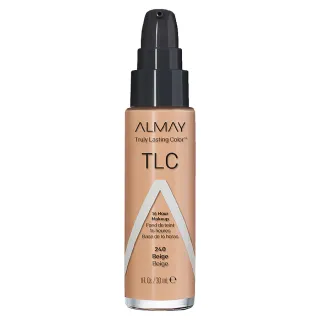
Almay Smart Shade 16 Hour Makeup, SPF 15, Beige
Works for
0 of 1 advertised claim delivered
Sun protectionSPF 15 · 2 UV filters · Broad spectrumWeak protectionSPF under 30
This product offers broad spectrum sun protection, but it is weak. We recommend to use a broad spectrum sunscreen with at least SPF 30.
This product can be considered "reef safe" because it does not contain the UV filters (oxybenzone and octinoxate) that can be harmful to coral reefs when present in the water in high concentrations.
Anti-oxidationNot advertised by the brand · 7 ingredients credited for this claimModerate support
This product contains antioxidants (camellia sinensis leaf extract) that might be able to help neutralize free radicals in skin to lessen the damage it gets from the UV light (sun). There is not enough evidence to confirm their effectiveness in skin though.
MoisturizingNot advertised by the brand · 20 ingredients credited for this claimGood support
This product can help improve hydration of the skin with the two types of ingredients.
The first type is called “humectants”:
these ingredients help attract water.
When humectants are on the surface of the skin, they “pull in” the moisture from the outside environment, or from
within deeper layers of the skin. The following ingredients in this product do the job:
cyclomethicone, hyaluronic acid.
This product also contains ingredients called “occlusives”. They help reduce the speed with which our skin loses moisture to the outside environment. These ingredients also help soften the upper layer of the skin, so it feels less tight and nicer to the touch. The following ingredients in this product do the job: dimethicone, methicone.
Can it cause trouble?
Irritancy2 strong irritants: Citrus limon peel extract, Sorbitan sesquioleateMedium risk
Comedogenic2 ingredients rated 2 or more on the 0–5 pore-clogging scale2 flagged
User reviews
Be the first — your take helps the next person decide.
Ingredients
Filter by role to see what each ingredient is doing.
Titanium dioxide3.3%
- Irritation risk
- Low
Works as a UV filter when used in high concentrations. It is photostable and is effective mostly against the UVB light, with some protection in the UVA range. In small concentrations, used for its ability to improve the color of cosmetic products. Is usually well tolerated by the skin
More about Titanium dioxideZinc oxide~44–54%
- Irritation risk
- Low
A broad spectrum sunblock (protects from both UVA and UVB rays). Is suitable for most sensitive skins. In small concentrations, can be used as a colorant
More about Zinc oxideWater~12–14%
Cyclomethicone~6.3–7.7%
- Irritation risk
- Low
A type of silicone that leaves a nice silky finish on the skin and can help soften its upper layer
More about CyclomethiconeDimethicone~4.8–5.9%
- Irritation risk
- Low
A silicone that helps to reduce water loss from the surface of the skin. Can temporarily "fill in" lines and wrinkles, absorb oil, and create a nice product finish
More about DimethiconeTrimethylsiloxysilicate~3.7–4.5%
- Irritation risk
- Low
A type of silicone that helps create a nice product consistency and support the delivery of other ingredients
More about TrimethylsiloxysilicateButylene glycol~3.1–3.7%
- Irritation risk
- Low
Used to create a nice product texture and help delivery of other ingredients. Might be somewhat helpful in attracting water to the upper layer of the skin
More about Butylene glycolPotassium nitrate~2.7–3.2%
- Irritation risk
- Low
Peg/ppg-18/18 dimethicone~2.2–2.7%
- Irritation risk
- Low
A silicone that mixes with water creating nice light-weight product texture
More about Peg/ppg-18/18 dimethiconeHdi/trimethylol hexyllactone crosspolymer~1.6–2%
- Irritation risk
- Low
Used to create a silky product texture and add volume to products
More about Hdi/trimethylol hexyllactone crosspolymerLac~1.3–1.6%
- Irritation risk
- Low
Helps form a film on the surface of the skin and disperse other ingredients (like colorants) in cosmetics. Lac is a resinous substance secreted by parasite insects living on trees
More about LacTalc~1.4–1.7%
Nylon-12~1.1–1.4%
Cetyl peg/ppg-10/1 dimethicone~0.95–1.2%
- Irritation risk
- Low
A type of silicone that helps water and oil mix together. Can help to soften upper layer of the skin
More about Cetyl peg/ppg-10/1 dimethiconePhenyl trimethicone~0.95–1.2%
- Irritation risk
- Low
A type of silicone that can decrease loss of moisture from the skin surface. It helps create a nice product texture
More about Phenyl trimethiconeSodium chloride~0.95–1.15%
- Irritation risk
- Low
Used to stabilize mixtures of oil and water, and create thicker, gel-like product textures
More about Sodium chlorideTrisiloxane~0.9–1.1%
Hydrolyzed rice protein~0.75–1.1%
- Irritation risk
- Low
Helps attract water to the upper layer of the skin. Might have some anti-oxidant properties
More about Hydrolyzed rice proteinPrunus amygdalus dulcis seed extract~0.75–1.1%
- Irritation risk
- Low
Almond extract (oil) - helps soften the upper layer of the skin
More about Prunus amygdalus dulcis seed extractPrunus amygdalus dulcis oil~0.8–1.15%
- Irritation risk
- Low
An emollient that softens the skin
More about Prunus amygdalus dulcis oilLaminaria japonica extract~0.65–1%
- Irritation risk
- Low
- Comedogenicity
- 3/5
Seaweed extract that might help to attract water to the upper layer of the skin and have some anti-oxidant properties
More about Laminaria japonica extractNereocystis leutkeana extract~0.65–0.95%
- Irritation risk
- Low
Macrocystis pyrifera extract~0.6–0.95%
- Irritation risk
- Low
- Comedogenicity
- 3/5
Trihydroxystearin~0.6–0.95%
- Irritation risk
- Low
Helps soften the upper layer of the skin and improve the product texture
More about TrihydroxystearinCitrus limon peel extract~0.6–0.85%
Camellia sinensis leaf extract~0.65–1%
- Irritation risk
- Low
Can contain potent anti-oxidant compounds (abbreviated ECG, GCG, EGC, and EGCG) that might help protect the skin from free radicals. Can help calm down inflammation and has some anti-bacterial properties. Unfortunately, these antioxidants are unstable and lose their effectiveness very quickly in products. The concentration of the antioxidant compounds in the extract also tends to be low to be effective in topical formulation
More about Camellia sinensis leaf extractAspalathus linearis leaf extract~0.6–0.9%
- Irritation risk
- Low
Plant extract that might have help to neutralize free radicals in skin, but evidence of effectiveness is skin is lacking
More about Aspalathus linearis leaf extractAloe barbadensis extract~0.6–0.9%
- Irritation risk
- Medium
Traditionally used to treat sunburns, dermatitis and inflammation, but evidence for its effectiveness is lacking. The extract can contain humectants that help attract water into the skin
More about Aloe barbadensis extractTocopheryl acetate~0.65–0.95%
- Irritation risk
- Medium
A more stable but less bio-available form of vitamin E compared to Tocopherol. Might help moisturize and protect the skin from free radicals, but mostly used in low concentrations to stabilize other ingredients.
More about Tocopheryl acetateTocopherol~0.65–0.95%
- Irritation risk
- Low
Pure form of vitamin E. Can help moisturise and protect the skin from free radicals. Often used to help stabilise other ingredients or the formula itself
More about TocopherolSodium ascorbyl phosphate~0.65–0.95%
- Irritation risk
- Medium
A stable derivative of vitamin C. It is oil-soluble which means it is more likely to penetrate the skin compared to the pure form of vitamin C (which is water-soluble), but it is less bio-available and is way less effective in stimulating collagen and reducing wrinkles compared to the pure form of vitamin C (L-ascorbic acid) and its other derivatives (for example, magnesium ascorbyl phosphate). At the same time, this vitamin C derivative has been shown in studies to be effective in reducing acne, blemishes and clogged pores. It is less irritating then the pure form of vitamin C
More about Sodium ascorbyl phosphateMethicone~0.65–1%
- Irritation risk
- Low
A type of silicone that helps soften the upper layer of the skin and reduces the water loss from the skin surface
More about MethiconeTribehenin~0.7–1.05%
- Irritation risk
- Low
Used to create a thicker product consistency and soften the upper layer of the skin
More about TribeheninHydrogenated lecithin~0.65–0.95%
- Irritation risk
- Low
Helps to retain moisture by creating a protective barrier on the skin. Rich in fatty acids. Improves product texture and helps with the penetration of other ingredients.
More about Hydrogenated lecithinTriethoxycaprylylsilane~0.6–0.9%
- Irritation risk
- Low
A type of silicone that helps oil and water mix well together. Helps to disperse other ingredients, e.g. pigments, evenly in a formulation
More about TriethoxycaprylylsilaneAlumina~0.6–0.95%
- Irritation risk
- Low
The same compound that is used safely in dental implants and bone cements. In cosmetics, it is used to improve the consistency of products
More about AluminaSilica~0.65–0.95%
Hydrolyzed glycosaminoglycans~0.5–0.75%
- Irritation risk
- Low
Long sugars that help attract water to the upper layer of the skin
More about Hydrolyzed glycosaminoglycansSodium hyaluronate~0.5–0.75%
- Irritation risk
- Low
One of the best moisturizing ingredients. Attracts water into the upper layer of the skin
More about Sodium hyaluronateHyaluronic acid~0.45–0.7%
- Irritation risk
- Low
One of the best moisturizing ingredients. Attracts water into the upper layer of the skin. Naturally present in skin. Typically has large molecule size unless advertised otherwise on the product label. Helps support skin's barrier function and may help to reduce inflammation
More about Hyaluronic acidSorbitan sesquioleate~0.5–0.75%
- Irritation risk
- High
Used to help oil and water mix together. Can be irritating
More about Sorbitan sesquioleatePalmitoyl hydroxypropyltrimonium amylopectin/glycerin crosspolymer~0.45–0.65%
Sorbitol~0.4–0.6%
- Irritation risk
- Low
Helps attract water to the upper layer of the skin and improves the product texture
More about SorbitolTetrasodium edta~0.35–0.65%
Phenoxyethanol~0.3–0.5%
- Irritation risk
- Low
A preservative. It helps prevent bacterial growth in cosmetic products
More about PhenoxyethanolMethylparaben~0.15–0.3%
Ethylparaben~0.15–0.3%
Propylparaben~0.2–0.35%
Iron oxides~0.2–0.35%
- Irritation risk
- Low
An umbrella term for the following three colorants: CI 77491, CI 77492, CI 77499. They might be able to offer some protection against visible light, but the degree of the protection is not clear
More about Iron oxidesCi 77491~0.15–0.25%
- Irritation risk
- Low
A red colorant made of iron oxide. Typically is not irritating
More about Ci 77491Ingredient list view
Titanium dioxide, Zinc oxide, Water, Cyclomethicone, Dimethicone, Trimethylsiloxysilicate, Butylene glycol, Unknown, Potassium nitrate, Peg/ppg-18/18 dimethicone, Hdi/trimethylol hexyllactone crosspolymer, Unknown, Lac, Talc, Nylon-12, Cetyl peg/ppg-10/1 dimethicone, Phenyl trimethicone, Sodium chloride, Trisiloxane, Hydrolyzed rice protein, Prunus amygdalus dulcis seed extract, Prunus amygdalus dulcis oil, Laminaria japonica extract, Nereocystis leutkeana extract, Macrocystis pyrifera extract, Unknown, Trihydroxystearin, Citrus limon peel extract, Camellia sinensis leaf extract, Aspalathus linearis leaf extract, Aloe barbadensis extract, Tocopheryl acetate, Tocopherol, Sodium ascorbyl phosphate, Methicone, Tribehenin, Hydrogenated lecithin, Triethoxycaprylylsilane, Alumina, Silica, Hydrolyzed glycosaminoglycans, Sodium hyaluronate, Hyaluronic acid, Sorbitan sesquioleate, Palmitoyl hydroxypropyltrimonium amylopectin/glycerin crosspolymer, Sorbitol, Tetrasodium edta, Phenoxyethanol, Methylparaben, Ethylparaben, Propylparaben, Iron oxides, Ci 77491, Unknown
Compare prices
Retailers ranked by price — lowest first.

Product summary
"Almay Smart Shade - 16 Hour Makeup, SPF 15, Beige" "is a broad spectrum sunscreen meaning that it protects both from UVB rays (" burning "- they cause sunburn) and UVA rays (" aging "- they don't cause sunburn but lead to premature aging and pigmentation issues). However, it does not offer enough sun protection. We recommend to use a sunscreen with at least SPF 30 daily.
It should also be hydrating enough to use without an additional moisturizer during the day.
Sunscreen filters
This product is a mineral sunscreen. It uses titanium dioxide and zinc oxide for sun protection. Both titanium dioxide and zinc oxide almost never irritate even the most sensitive skin and eyes, but can leave a white cast.
Irritation risk
There are some common irritants in this product, including ingredients that do not have benefits for the skin. We assess the overall irritancy of it to be medium. For a detailed overview of all potential irritants: click here
You can see the detailed formula review with the breakdown of all actives in the product and the full ingredient list with estimated concentrations in the tables below.
Price
The product retails from 16.29$ up to 17.99$ in the United States.
For a detailed price comparison: click here.
Sources cited in this review
Every concentration estimate and effectiveness label is anchored to one of these 27 studies and safety reviews.
- 1A review of inorganic UV filters zinc oxide and titanium dioxideonlinelibrary.wiley.com
- 2
- 3
- 4
- 5
- 6

Affiliate links · As an Amazon Associate, WIMJ earns from qualifying purchases.