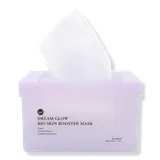
ALLNA ORGANIC Face mask

ALLNA ORGANIC Face mask

Efficacy100/100IrritancyHigh

Works for

Moisturizing
Ceramide np, Cyclopentasiloxane + 29 more
Works well

This product can help improve hydration of the skin with the two types of ingredients.

The first type is called “humectants”:
these ingredients help attract water. When humectants are on the surface of the skin, they “pull in” the moisture from the outside environment, or from within deeper layers of the skin. The following ingredients in this product do the job: glycerin, hydrolyzed collagen.

This product also contains ingredients called “occlusives”. They help reduce the speed with which our skin loses moisture to the outside environment. These ingredients also help soften the upper layer of the skin, so it feels less tight and nicer to the touch. The following ingredients in this product do the job: caprylic/capric triglyceride, dimethicone.

The following ingredients in this product are especially good for supporting the skin barrier and helping with the hydration level: ceramide np

Ceramide npHero· EmollientEffect: HighA type of lipid similar to ceramides naturally present in skin. Helps to soften the upper layer of the skin and supports the skin barrier function to keep it hydrated. Can help to prevent inflammation in skin~0.6–0.95%
CyclopentasiloxaneKey active· EmollientEffect: MediumA silicone that helps improve the product texture and spreadability. Can absorb oil creating a short-term mattifying effect on the skin~4.4–5.4%
GlycerinKey active· HumectantEffect: HighOne of the best moisturizing ingredients. Naturally present in skin. It attracts water to the upper layer of the skin working as a humectant~1.2–1.5%
Hydrolyzed collagenKey active· Humectant, EmollientEffect: HighA typically plant-derived compound that is supposed mimic human collagen. Cannot penetrate the skin barrier so is not particularly useful in skincare products beyond attracting water to the upper layer of the skin~1–1.2%
Soluble collagenKey active· HumectantEffect: HighA typically plant-derived compound that is supposed mimic human collagen. Cannot penetrate the skin barrier so is not particularly useful in skincare products beyond attracting water to the upper layer of the skin~1–1.2%
Caprylic/capric triglycerideKey active· Emollient, OcclusiveEffect: HighA good mix of fatty acids that forms a protective layer on the skin. Improves the shelf life of products. Derived from coconut and glycerin~1–1.3%
Hydrolyzed hyaluronic acidKey active· HumectantEffect: HighOne of the best moisturizing ingredients. Attracts water into the upper layer of the skin. A version of it is naturally present in skin~0.65–1%
Sodium hyaluronateKey active· HumectantEffect: HighOne of the best moisturizing ingredients. Attracts water into the upper layer of the skin~0.65–0.95%
Sodium acetylated hyaluronateKey active· HumectantEffect: HighA type of hyaluronic acid that works as an excellent moisturizer by attracting water into the upper layer of the skin. Is typically feels less sticky on the skin compared to the usual hyaluronic acid~0.6–0.9%
Centella asiatica extractKey activeEffect: HighA plant extract that has been shown to be able to reduce inflammation in skin, support restoration of skin barrier function, as well as support collagen production. Contains active compounds called centelloids: asiaticoside, madecasosside, asiatic acid and madecassic acid. Might be helpful in preventing stretch marks. It can be itself be irritating though.~0.6–0.9%
Althaea officinalis root extractKey activeEffect: HighA plant extract that can help attract water to the upper layer of the skin and might help to reduce inflammation~0.55–0.8%
Ribes nigrum seed oilKey active· EmollientEffect: HighAn emollient. Can be helpful for restoring skin barrier function.~0.55–0.8%
Olea europaea fruit oilKey active· EmollientEffect: MediumAn emollient that helps soften the skin but is not effective for restoring its barrier function. Might be helpful to calm down inflammation~0.5–0.8%
Stearyl glycyrrhetinateKey activeEffect: MediumA fatty acid derived from licorice. Works as an emollient and can help calm down inflammation~0.5–0.8%
MethiconeKey active· Emollient, OcclusiveEffect: HighA type of silicone that helps soften the upper layer of the skin and reduces the water loss from the skin surface~0.4–0.6%
DimethiconeKey active· Emollient, OcclusiveEffect: HighA silicone that helps to reduce water loss from the surface of the skin. Can temporarily "fill in" lines and wrinkles, absorb oil, and create a nice product finish~0.35–0.65%
Peg/ppg-18/18 dimethiconeKey activeEffect: HighA silicone that mixes with water creating nice light-weight product texture~0.3–0.5%
Sodium hyaluronate crosspolymerKey active· HumectantEffect: HighAttracts water into the upper layer of the skin~0.15–0.3%
Diphenylsiloxy phenyl trimethiconeEffect: LowHelp improve the product's texture~3.3–4.1%
Caprylyl methiconeEffect: LowA type of silicone that helps to soften the upper layer of the skin and create a nice product finish on the skin~2.4–3%
Pentylene glycol· EmollientEffect: LowUsed to preserve products, dissolve other ingredients and create a nice product texture~0.9–1.1%
Butylene glycol· HumectantEffect: LowUsed to create a nice product texture and help delivery of other ingredients. Might be somewhat helpful in attracting water to the upper layer of the skin~0.75–1.15%
Camellia sinensis leaf extractEffect: LowCan contain potent anti-oxidant compounds (abbreviated ECG, GCG, EGC, and EGCG) that might help protect the skin from free radicals. Can help calm down inflammation and has some anti-bacterial properties. Unfortunately, these antioxidants are unstable and lose their effectiveness very quickly in products. The concentration of the antioxidant compounds in the extract also tends to be low to be effective in topical formulation~0.6–0.85%
Octyldodecanol· EmollientEffect: LowAn emollient that helps to soften the skin and create a pleasant product texture and stabilize the formulation~0.55–0.8%
Scutellaria baicalensis root extract· HumectantEffect: LowA plant extract that might contain a compound baicalin that could be helpful in neutralizing free radicals and reducing inflammation in skin. The baicalin concentration in skincare products is often too low for an effective action. Can be used for its fragrant properties~0.5–0.8%
Stearic acidEffect: Low, below effective doseHelps oil and water mix together and works as an emollient~0.65–0.95%
Cucumis sativus fruit extractEffect: Low, below effective doseMight be somewhat helpful in reducing hyperpigmentation and neutralizing free radicals but its typical concentration in a product is too low for having an effect~0.55–0.8%
TocopherolEffect: Low, below effective dosePure form of vitamin E. Can help moisturise and protect the skin from free radicals. Often used to help stabilise other ingredients or the formula itself~0.35–0.65%
Butyrospermum parkii butterUnder-dosedA great moisturising ingredient that softens the skin and reduces water loss from its upper layer. It also can be helpful in protecting skin from free radicals~0.6–0.85%
Argania spinosa kernel oilUnder-dosedAn emollient that helps soften the upper layer of the skin. Might have some weak anti-oxidant properties~0.55–0.85%
Dipotassium glycyrrhizateUnder-dosedA salt derived from licorice. Works as an emollient to soften the upper layer of the skin and can help calm down inflammation. Might be helpful for skin lightening~0.5–0.8%
Anti-aging
Side benefit · Centella asiatica extract, Camellia sinensis leaf extract + 5 more
May help

This product contains centella asiatica extract. This ingredient might be able to help reduce and prevent fine lines and wrinkles, improve skin elasticity and firmness, but there is not enough evidence that it actually works.

Centella asiatica extractKey activeEffect: MediumA plant extract that has been shown to be able to reduce inflammation in skin, support restoration of skin barrier function, as well as support collagen production. Contains active compounds called centelloids: asiaticoside, madecasosside, asiatic acid and madecassic acid. Might be helpful in preventing stretch marks. It can be itself be irritating though.~0.6–0.9%
Camellia sinensis leaf extractEffect: LowCan contain potent anti-oxidant compounds (abbreviated ECG, GCG, EGC, and EGCG) that might help protect the skin from free radicals. Can help calm down inflammation and has some anti-bacterial properties. Unfortunately, these antioxidants are unstable and lose their effectiveness very quickly in products. The concentration of the antioxidant compounds in the extract also tends to be low to be effective in topical formulation~0.6–0.85%
Butyrospermum parkii butterEffect: Low, below effective doseA great moisturising ingredient that softens the skin and reduces water loss from its upper layer. It also can be helpful in protecting skin from free radicals~0.6–0.85%
Magnesium ascorbyl phosphateEffect: Low, below effective doseA derivative of vitamin C that is more stable, but less bioavailable than the pure form of vitamin C. It does not penetrate the skin well, but has been shown to convert to pure vitamin C once in skin. It can be helpful in stimulating collagen production and lightening the skin tone, but the required concentration is likely to be very high~0.55–0.8%
TocopherolEffect: Low, below effective dosePure form of vitamin E. Can help moisturise and protect the skin from free radicals. Often used to help stabilise other ingredients or the formula itself~0.35–0.65%
Ascorbyl glucosideUnder-dosedA vitamin C derivative that is more stable but less potent than pure form of vitamin C. Has a potential to boost collagen production, nutralise free radicals and reduce hyperpigmentation, but the required concentration is likely to be much higher than for the pure form of vitamin C, limiting the ingredient's effectiveness in products~0.55–0.8%
Tetrahexyldecyl ascorbateUnder-dosedBeing a lipid soluble form of vitamin C, it is more stable than ascorbic acid, but still degrades quickly and needs to be stabilized in a formulation with another ingredient. It is claimed to penetrate skin better than pure vitamin C and have the the similar benefits, but solid studies of its effectiveness are lacking. Is likely to require a higher concentration in a product than pure vitamin C to be effective. It might be able to help reduce pore clogging.~0.5–0.7%
Evens skin tone
Side benefit · Stearyl glycyrrhetinate, Camellia sinensis leaf extract + 5 more
May help

The following ingredient (ingredients) in this product might be helpful, but there is no evidence to confirm that it actually works: glycyrrhiza glabra root extract, stearyl glycyrrhetinate.

Stearyl glycyrrhetinateKey activeEffect: MediumA fatty acid derived from licorice. Works as an emollient and can help calm down inflammation~0.5–0.8%
Camellia sinensis leaf extractEffect: LowCan contain potent anti-oxidant compounds (abbreviated ECG, GCG, EGC, and EGCG) that might help protect the skin from free radicals. Can help calm down inflammation and has some anti-bacterial properties. Unfortunately, these antioxidants are unstable and lose their effectiveness very quickly in products. The concentration of the antioxidant compounds in the extract also tends to be low to be effective in topical formulation~0.6–0.85%
Glycyrrhiza glabra root extractEffect: LowA plant extract that can help lighten the skin and calm down inflammation. Might be helpful in neutralizing free radicals~0.55–0.8%
Magnesium ascorbyl phosphateEffect: Low, below effective doseA derivative of vitamin C that is more stable, but less bioavailable than the pure form of vitamin C. It does not penetrate the skin well, but has been shown to convert to pure vitamin C once in skin. It can be helpful in stimulating collagen production and lightening the skin tone, but the required concentration is likely to be very high~0.55–0.8%
Dipotassium glycyrrhizateEffect: Low, below effective doseA salt derived from licorice. Works as an emollient to soften the upper layer of the skin and can help calm down inflammation. Might be helpful for skin lightening~0.5–0.8%
Ascorbyl glucosideUnder-dosedA vitamin C derivative that is more stable but less potent than pure form of vitamin C. Has a potential to boost collagen production, nutralise free radicals and reduce hyperpigmentation, but the required concentration is likely to be much higher than for the pure form of vitamin C, limiting the ingredient's effectiveness in products~0.55–0.8%
Tetrahexyldecyl ascorbateUnder-dosedBeing a lipid soluble form of vitamin C, it is more stable than ascorbic acid, but still degrades quickly and needs to be stabilized in a formulation with another ingredient. It is claimed to penetrate skin better than pure vitamin C and have the the similar benefits, but solid studies of its effectiveness are lacking. Is likely to require a higher concentration in a product than pure vitamin C to be effective. It might be able to help reduce pore clogging.~0.5–0.7%
Anti-oxidation
Side benefit · Centella asiatica extract, Camellia sinensis leaf extract + 20 more
May help

This product contains antioxidants (camellia sinensis leaf extract, centella asiatica extract) that might be able to help neutralize free radicals in skin to lessen the damage it gets from the UV light (sun). There is not enough evidence to confirm their effectiveness in skin though.

Centella asiatica extractKey activeEffect: MediumA plant extract that has been shown to be able to reduce inflammation in skin, support restoration of skin barrier function, as well as support collagen production. Contains active compounds called centelloids: asiaticoside, madecasosside, asiatic acid and madecassic acid. Might be helpful in preventing stretch marks. It can be itself be irritating though.~0.6–0.9%
Camellia sinensis leaf extractKey activeEffect: MediumCan contain potent anti-oxidant compounds (abbreviated ECG, GCG, EGC, and EGCG) that might help protect the skin from free radicals. Can help calm down inflammation and has some anti-bacterial properties. Unfortunately, these antioxidants are unstable and lose their effectiveness very quickly in products. The concentration of the antioxidant compounds in the extract also tends to be low to be effective in topical formulation~0.6–0.85%
Glycyrrhiza glabra root extractEffect: LowA plant extract that can help lighten the skin and calm down inflammation. Might be helpful in neutralizing free radicals~0.55–0.8%
Rosa roxburghii fruit extractEffect: LowA fruit extract that might help neutralize free radicals in skin, but evidence of effectiveness is missing~0.55–0.8%
Althaea officinalis root extractEffect: LowA plant extract that can help attract water to the upper layer of the skin and might help to reduce inflammation~0.55–0.8%
Centaurea cyanus flower extractEffect: LowA plant extract that might have antibacterial effect and help neutralize free radicals~0.55–0.8%
Hypericum perforatum flower/leaf/stem extractEffect: LowA plant extract (perforate St John's-wort) that might have some anti-oxidant effect. Can be used as a fragrance and be irritating~0.55–0.8%
Ribes nigrum seed oilEffect: LowAn emollient. Can be helpful for restoring skin barrier function.~0.55–0.8%
Citrus reticulata peel extractEffect: LowA likely irritant. Might have some anti-oxidant activity, but is mostly used as a fragrance in cosmetic products~0.55–0.8%
Scutellaria baicalensis root extractEffect: LowA plant extract that might contain a compound baicalin that could be helpful in neutralizing free radicals and reducing inflammation in skin. The baicalin concentration in skincare products is often too low for an effective action. Can be used for its fragrant properties~0.5–0.8%
Rosmarinus officinalis leaf oilEffect: LowA plant oil with high content of volatile compounds that can irritate the skin. Can be used as a fragrance. Has anti-bacterial properties and might help neutralize free radicals on the surface of the skin~0.5–0.75%
Calendula officinalis flower extractEffect: LowA plant extract that has some anti-oxidant and anti-bacterial properties. Can be irritating~0.5–0.75%
Butyrospermum parkii butterEffect: Low, below effective doseA great moisturising ingredient that softens the skin and reduces water loss from its upper layer. It also can be helpful in protecting skin from free radicals~0.6–0.85%
Cucumis sativus fruit extractEffect: Low, below effective doseMight be somewhat helpful in reducing hyperpigmentation and neutralizing free radicals but its typical concentration in a product is too low for having an effect~0.55–0.8%
Polygonum cuspidatum root extractEffect: Low, below effective doseA plant extract that can contain resveratrol, an antioxidant that can help neutralize free radicals in skin. The effectiveness depends on the extract quality and concentration in the product~0.55–0.85%
Argania spinosa kernel oilEffect: Low, below effective doseAn emollient that helps soften the upper layer of the skin. Might have some weak anti-oxidant properties~0.55–0.85%
Magnesium ascorbyl phosphateEffect: Low, below effective doseA derivative of vitamin C that is more stable, but less bioavailable than the pure form of vitamin C. It does not penetrate the skin well, but has been shown to convert to pure vitamin C once in skin. It can be helpful in stimulating collagen production and lightening the skin tone, but the required concentration is likely to be very high~0.55–0.8%
Rosmarinus officinalis leaf extractEffect: Low, below effective doseCan be helpful in reducing inflammation in skin, including inflamed acne. It can be irritating~0.5–0.75%
Tocopheryl acetateEffect: Low, below effective doseA more stable but less bio-available form of vitamin E compared to Tocopherol. Might help moisturize and protect the skin from free radicals, but mostly used in low concentrations to stabilize other ingredients.~0.35–0.6%
Ascorbyl glucosideUnder-dosedA vitamin C derivative that is more stable but less potent than pure form of vitamin C. Has a potential to boost collagen production, nutralise free radicals and reduce hyperpigmentation, but the required concentration is likely to be much higher than for the pure form of vitamin C, limiting the ingredient's effectiveness in products~0.55–0.8%
Tetrahexyldecyl ascorbateUnder-dosedBeing a lipid soluble form of vitamin C, it is more stable than ascorbic acid, but still degrades quickly and needs to be stabilized in a formulation with another ingredient. It is claimed to penetrate skin better than pure vitamin C and have the the similar benefits, but solid studies of its effectiveness are lacking. Is likely to require a higher concentration in a product than pure vitamin C to be effective. It might be able to help reduce pore clogging.~0.5–0.7%
TocopherolUnder-dosedPure form of vitamin E. Can help moisturise and protect the skin from free radicals. Often used to help stabilise other ingredients or the formula itself~0.35–0.65%

Can it cause trouble?

Irritancy
13 strong irritants: Lavandula angustifolia oil, Rosmarinus officinalis leaf oil + 11 more — patch-test recommended
High risk
We flagged 36 ingredients with irritancy potential. Severity depends on your sensitivity threshold; the table lists the worst offenders first.
IngredientFunctionIrritationEst. amount
Lavandula angustifolia oilAn essential oil. Potential allergen and can be irritating. It has some anti-bacterial propertiesHigh~0.5–0.75%est.
Rosmarinus officinalis leaf oilA plant oil with high content of volatile compounds that can irritate the skin. Can be used as a fragrance. Has anti-bacterial properties and might help neutralize free radicals on the surface of the skinHigh~0.5–0.75%est.
Citrus aurantium dulcis oilUsed as a fragrance. It can be irritating and cause photosensitivityHigh~0.5–0.75%est.
Lavandula angustifolia flower extractEssential oil that can be irritatingHigh~0.6–0.85%est.
Rosmarinus officinalis leaf extractCan be helpful in reducing inflammation in skin, including inflamed acne. It can be irritatingHigh~0.5–0.75%est.
Citrus reticulata peel extractA likely irritant. Might have some anti-oxidant activity, but is mostly used as a fragrance in cosmetic productsHigh~0.55–0.8%est.
Citrus junos fruit extractContains essential oil. Can be irritating and lead to photosensitivityHigh~0.55–0.8%est.
Chamomilla recutita flower extractPlant extract that can have healing and anti-inflammatory properties. It is a potential allergen and can be irritatingHigh~0.55–0.8%est.
Scutellaria baicalensis root extractA plant extract that might contain a compound baicalin that could be helpful in neutralizing free radicals and reducing inflammation in skin. The baicalin concentration in skincare products is often too low for an effective action. Can be used for its fragrant propertiesHigh~0.5–0.8%est.
Calendula officinalis flower extractA plant extract that has some anti-oxidant and anti-bacterial properties. Can be irritatingHigh~0.5–0.75%est.
Rosa multiflora fruit extractUsed in cosmetics for its fragranceHigh~0.55–0.8%est.
Althaea officinalis root extractA plant extract that can help attract water to the upper layer of the skin and might help to reduce inflammationHigh~0.55–0.8%est.
Hypericum perforatum flower/leaf/stem extractA plant extract (perforate St John's-wort) that might have some anti-oxidant effect. Can be used as a fragrance and be irritatingHigh~0.55–0.8%est.
Tilia cordata flower extract—High~0.55–0.8%est.
Centaurea cyanus flower extractA plant extract that might have antibacterial effect and help neutralize free radicalsHigh~0.55–0.8%est.
Anthemis nobilis flower extractA plant extract that one one hand, can contain compounds that can help calm down skin irritation, but, on the other hand, its other compounds (especially fragrant ones) can themselves be irritatingHigh~0.5–0.75%est.
Geranium thunbergii extractUsed as a fragrance and to hide smell of other ingredientsHigh~0.55–0.8%est.
AlcoholCan be drying and contribute to skin irritation. Used in formulars to dissolve other ingredients, create a thinner product consistency or for its antibacterial propertiesHigh~0.15–0.3%est.
Caprylic/capric triglycerideA good mix of fatty acids that forms a protective layer on the skin. Improves the shelf life of products. Derived from coconut and glycerinMedium~1–1.3%est.
Pentylene glycolUsed to preserve products, dissolve other ingredients and create a nice product textureMedium~0.9–1.1%est.
Olea europaea fruit oilAn emollient that helps soften the skin but is not effective for restoring its barrier function. Might be helpful to calm down inflammationMedium~0.5–0.8%est.
Ribes nigrum seed oilAn emollient. Can be helpful for restoring skin barrier function.Medium~0.55–0.8%est.
Centella asiatica extractA plant extract that has been shown to be able to reduce inflammation in skin, support restoration of skin barrier function, as well as support collagen production. Contains active compounds called centelloids: asiaticoside, madecasosside, asiatic acid and madecassic acid. Might be helpful in preventing stretch marks. It can be itself be irritating though.Medium~0.6–0.9%est.
Polygonum cuspidatum root extractA plant extract that can contain resveratrol, an antioxidant that can help neutralize free radicals in skin. The effectiveness depends on the extract quality and concentration in the productMedium~0.55–0.85%est.
Glycyrrhiza glabra root extractA plant extract that can help lighten the skin and calm down inflammation. Might be helpful in neutralizing free radicalsMedium~0.55–0.8%est.
Rosa roxburghii fruit extractA fruit extract that might help neutralize free radicals in skin, but evidence of effectiveness is missingMedium~0.55–0.8%est.
Cucumis sativus fruit extractMight be somewhat helpful in reducing hyperpigmentation and neutralizing free radicals but its typical concentration in a product is too low for having an effectMedium~0.55–0.8%est.
Argania spinosa kernel oilAn emollient that helps soften the upper layer of the skin. Might have some weak anti-oxidant propertiesMedium~0.55–0.85%est.
Magnesium ascorbyl phosphateA derivative of vitamin C that is more stable, but less bioavailable than the pure form of vitamin C. It does not penetrate the skin well, but has been shown to convert to pure vitamin C once in skin. It can be helpful in stimulating collagen production and lightening the skin tone, but the required concentration is likely to be very highMedium~0.55–0.8%est.
Ascorbyl glucosideA vitamin C derivative that is more stable but less potent than pure form of vitamin C. Has a potential to boost collagen production, nutralise free radicals and reduce hyperpigmentation, but the required concentration is likely to be much higher than for the pure form of vitamin C, limiting the ingredient's effectiveness in productsMedium~0.55–0.8%est.
Stearyl glycyrrhetinateA fatty acid derived from licorice. Works as an emollient and can help calm down inflammationMedium~0.5–0.8%est.
Tetrahexyldecyl ascorbateBeing a lipid soluble form of vitamin C, it is more stable than ascorbic acid, but still degrades quickly and needs to be stabilized in a formulation with another ingredient. It is claimed to penetrate skin better than pure vitamin C and have the the similar benefits, but solid studies of its effectiveness are lacking. Is likely to require a higher concentration in a product than pure vitamin C to be effective. It might be able to help reduce pore clogging.Medium~0.5–0.7%est.
Tocopheryl acetateA more stable but less bio-available form of vitamin E compared to Tocopherol. Might help moisturize and protect the skin from free radicals, but mostly used in low concentrations to stabilize other ingredients.Medium~0.35–0.6%est.
Ceteth-10Helps water and oil mix together and is used as a cleansing agentMedium~0.3–0.55%est.
Sodium hyaluronate crosspolymerAttracts water into the upper layer of the skinMedium~0.15–0.3%est.
Comedogenic
1 ingredient rated 2 or more on the 0–5 pore-clogging scale
1 flagged
These ingredients have a comedogenic rating of 2 or more on a 0–5 scale; the table shows each one's rating. In leave-on products they can clog pores in acne-prone skin.
IngredientFunctionRatingEst. amount
Butyrospermum parkii butterA great moisturising ingredient that softens the skin and reduces water loss from its upper layer. It also can be helpful in protecting skin from free radicals3/5~0.6–0.85%est.

User reviews

Would you recommend?
No community reviews yet.

Be the first — your take helps the next person decide.

Ingredients

Filter by role to see what each ingredient is doing.

Mica~25–30%
Formula
Irritation risk
Low

Creates an illusion of smoother and more radiant skin tone. Adds shimmer to the skin by reflecting light

More about Mica
Water~12–15%
Formula
Irritation risk
Low

Plain old water

More about Water
Zinc oxide~6.1–7.5%
Formula
Irritation risk
Low
Works for
Sun protection

A broad spectrum sunblock (protects from both UVA and UVB rays). Is suitable for most sensitive skins. In small concentrations, can be used as a colorant

More about Zinc oxide
Cyclopentasiloxane~4.4–5.4%
Key active
Irritation risk
Low
Works for
MattifyingMoisturizing

A silicone that helps improve the product texture and spreadability. Can absorb oil creating a short-term mattifying effect on the skin

More about Cyclopentasiloxane
Diphenylsiloxy phenyl trimethicone~3.3–4.1%
Formula
Irritation risk
Low
Works for
Moisturizing

Help improve the product's texture

More about Diphenylsiloxy phenyl trimethicone
Caprylyl methicone~2.4–3%
Formula
Irritation risk
Low
Works for
Moisturizing

A type of silicone that helps to soften the upper layer of the skin and create a nice product finish on the skin

More about Caprylyl methicone
Tridecyl isononanoate~1.9–2.4%
Formula
Titanium dioxide~2.1–2.5%
Formula
Irritation risk
Low
Works for
Sun protection

Works as a UV filter when used in high concentrations. It is photostable and is effective mostly against the UVB light, with some protection in the UVA range. In small concentrations, used for its ability to improve the color of cosmetic products. Is usually well tolerated by the skin

More about Titanium dioxide
Lauryl peg-10 tris(trimethylsiloxy)silylethyl dimethicone~1.4–1.7%
Formula
Glycerin~1.2–1.5%
Key active
Irritation risk
Low
Works for
Moisturizing

One of the best moisturizing ingredients. Naturally present in skin. It attracts water to the upper layer of the skin working as a humectant

More about Glycerin
Caprylic/capric triglyceride~1–1.3%
Key activeIrritant · medium
Irritation risk
Medium
Works for
Moisturizing

A good mix of fatty acids that forms a protective layer on the skin. Improves the shelf life of products. Derived from coconut and glycerin

More about Caprylic/capric triglyceride
Butylene glycol~0.75–1.15%
Formula
Irritation risk
Low
Works for
Moisturizing

Used to create a nice product texture and help delivery of other ingredients. Might be somewhat helpful in attracting water to the upper layer of the skin

More about Butylene glycol
Pentylene glycol~0.9–1.1%
Irritant · medium
Irritation risk
Medium
Works for
Moisturizing

Used to preserve products, dissolve other ingredients and create a nice product texture

More about Pentylene glycol
Soluble collagen~1–1.2%
Key active
Irritation risk
Low
Works for
Moisturizing

A typically plant-derived compound that is supposed mimic human collagen. Cannot penetrate the skin barrier so is not particularly useful in skincare products beyond attracting water to the upper layer of the skin

More about Soluble collagen
Hydrolyzed collagen~1–1.2%
Key active
Irritation risk
Low
Works for
Moisturizing

A typically plant-derived compound that is supposed mimic human collagen. Cannot penetrate the skin barrier so is not particularly useful in skincare products beyond attracting water to the upper layer of the skin

More about Hydrolyzed collagen
Hydrolyzed hyaluronic acid~0.65–1%
Key active
Irritation risk
Low
Works for
Moisturizing

One of the best moisturizing ingredients. Attracts water into the upper layer of the skin. A version of it is naturally present in skin

More about Hydrolyzed hyaluronic acid
Sodium hyaluronate~0.65–0.95%
Key active
Irritation risk
Low
Works for
Moisturizing

One of the best moisturizing ingredients. Attracts water into the upper layer of the skin

More about Sodium hyaluronate
Sodium acetylated hyaluronate~0.6–0.9%
Key active
Irritation risk
Low
Works for
Moisturizing

A type of hyaluronic acid that works as an excellent moisturizer by attracting water into the upper layer of the skin. Is typically feels less sticky on the skin compared to the usual hyaluronic acid

More about Sodium acetylated hyaluronate
Ceramide np~0.6–0.95%
Hero · Moisturizing
Irritation risk
Low
Works for
MoisturizingAnti-inflammatoryReduces irritation

A type of lipid similar to ceramides naturally present in skin. Helps to soften the upper layer of the skin and supports the skin barrier function to keep it hydrated. Can help to prevent inflammation in skin

More about Ceramide np
Succinoyl atelocollagen~0.55–0.8%
Formula
Butyrospermum parkii butter~0.6–0.85%
Under-dosedComedogenic 3/5
Irritation risk
Low
Comedogenicity
3/5
Works for
MoisturizingAnti-agingAnti-oxidation

A great moisturising ingredient that softens the skin and reduces water loss from its upper layer. It also can be helpful in protecting skin from free radicals

More about Butyrospermum parkii butter
Lavandula angustifolia oil~0.5–0.75%
Irritant · high
Irritation risk
High

An essential oil. Potential allergen and can be irritating. It has some anti-bacterial properties

More about Lavandula angustifolia oil
Rosmarinus officinalis leaf oil~0.5–0.75%
Irritant · high
Irritation risk
High
Works for
Anti-oxidationAntibacterial

A plant oil with high content of volatile compounds that can irritate the skin. Can be used as a fragrance. Has anti-bacterial properties and might help neutralize free radicals on the surface of the skin

More about Rosmarinus officinalis leaf oil
Citrus aurantium dulcis oil~0.5–0.75%
Irritant · high
Irritation risk
High

Used as a fragrance. It can be irritating and cause photosensitivity

More about Citrus aurantium dulcis oil
Olea europaea fruit oil~0.5–0.8%
Key activeIrritant · medium
Irritation risk
Medium
Works for
Moisturizing

An emollient that helps soften the skin but is not effective for restoring its barrier function. Might be helpful to calm down inflammation

More about Olea europaea fruit oil
Ribes nigrum seed oil~0.55–0.8%
Key activeIrritant · medium
Irritation risk
Medium
Works for
MoisturizingAnti-oxidation

An emollient. Can be helpful for restoring skin barrier function.

More about Ribes nigrum seed oil
Lavandula angustifolia flower extract~0.6–0.85%
Irritant · high
Irritation risk
High

Essential oil that can be irritating

More about Lavandula angustifolia flower extract
Rosmarinus officinalis leaf extract~0.5–0.75%
Irritant · high
Irritation risk
High
Works for
Anti-blemishAnti-oxidationAntibacterial

Can be helpful in reducing inflammation in skin, including inflamed acne. It can be irritating

More about Rosmarinus officinalis leaf extract
Citrus reticulata peel extract~0.55–0.8%
Irritant · high
Irritation risk
High
Works for
Anti-oxidation

A likely irritant. Might have some anti-oxidant activity, but is mostly used as a fragrance in cosmetic products

More about Citrus reticulata peel extract
Citrus junos fruit extract~0.55–0.8%
Irritant · high
Irritation risk
High

Contains essential oil. Can be irritating and lead to photosensitivity

More about Citrus junos fruit extract
Paeonia suffruticosa extract~0.55–0.8%
Formula
Solidago virgaurea extract~0.55–0.8%
Formula
Centella asiatica extract~0.6–0.9%
Key activeIrritant · medium
Irritation risk
Medium
Works for
Reduces irritationAnti-inflammatoryReduces rednessMoisturizingAnti-agingAnti-oxidationAnti-blemish

A plant extract that has been shown to be able to reduce inflammation in skin, support restoration of skin barrier function, as well as support collagen production. Contains active compounds called centelloids: asiaticoside, madecasosside, asiatic acid and madecassic acid. Might be helpful in preventing stretch marks. It can be itself be irritating though.

More about Centella asiatica extract
Chamomilla recutita flower extract~0.55–0.8%
Irritant · high
Irritation risk
High
Works for
Anti-inflammatory

Plant extract that can have healing and anti-inflammatory properties. It is a potential allergen and can be irritating

More about Chamomilla recutita flower extract
ユキノシタエキス
Not recognized
Scutellaria baicalensis root extract~0.5–0.8%
Irritant · high
Irritation risk
High
Works for
Anti-inflammatoryAnti-oxidationMoisturizingReduces irritationAntibacterial

A plant extract that might contain a compound baicalin that could be helpful in neutralizing free radicals and reducing inflammation in skin. The baicalin concentration in skincare products is often too low for an effective action. Can be used for its fragrant properties

More about Scutellaria baicalensis root extract
Polygonum cuspidatum root extract~0.55–0.85%
Irritant · medium
Irritation risk
Medium
Works for
Anti-oxidation

A plant extract that can contain resveratrol, an antioxidant that can help neutralize free radicals in skin. The effectiveness depends on the extract quality and concentration in the product

More about Polygonum cuspidatum root extract
Calendula officinalis flower extract~0.5–0.75%
Irritant · high
Irritation risk
High
Works for
Anti-oxidation

A plant extract that has some anti-oxidant and anti-bacterial properties. Can be irritating

More about Calendula officinalis flower extract
Prunus yedoensis leaf extract~0.55–0.8%
Formula
Rosa multiflora fruit extract~0.55–0.8%
Irritant · high
Irritation risk
High

Used in cosmetics for its fragrance

More about Rosa multiflora fruit extract
Glycyrrhiza glabra root extract~0.55–0.8%
Irritant · medium
Irritation risk
Medium
Works for
Anti-inflammatoryAnti-oxidationEvens skin toneReduces rednessAntibacterial

A plant extract that can help lighten the skin and calm down inflammation. Might be helpful in neutralizing free radicals

More about Glycyrrhiza glabra root extract
Camellia sinensis leaf extract~0.6–0.85%
Key active
Irritation risk
Low
Works for
Anti-oxidationAntibacterialAnti-agingAnti-blemishEvens skin toneMoisturizing

Can contain potent anti-oxidant compounds (abbreviated ECG, GCG, EGC, and EGCG) that might help protect the skin from free radicals. Can help calm down inflammation and has some anti-bacterial properties. Unfortunately, these antioxidants are unstable and lose their effectiveness very quickly in products. The concentration of the antioxidant compounds in the extract also tends to be low to be effective in topical formulation

More about Camellia sinensis leaf extract
Althaea officinalis root extract~0.55–0.8%
Key activeIrritant · high
Irritation risk
High
Works for
MoisturizingAnti-oxidation

A plant extract that can help attract water to the upper layer of the skin and might help to reduce inflammation

More about Althaea officinalis root extract
Rosa roxburghii fruit extract~0.55–0.8%
Irritant · medium
Irritation risk
Medium
Works for
Anti-oxidation

A fruit extract that might help neutralize free radicals in skin, but evidence of effectiveness is missing

More about Rosa roxburghii fruit extract
Hypericum perforatum flower/leaf/stem extract~0.55–0.8%
Irritant · high
Irritation risk
High
Works for
Anti-oxidation

A plant extract (perforate St John's-wort) that might have some anti-oxidant effect. Can be used as a fragrance and be irritating

More about Hypericum perforatum flower/leaf/stem extract
Tilia cordata flower extract~0.55–0.8%
Irritant · high
Centaurea cyanus flower extract~0.55–0.8%
Irritant · high
Irritation risk
High
Works for
Anti-oxidationAnti-inflammatory

A plant extract that might have antibacterial effect and help neutralize free radicals

More about Centaurea cyanus flower extract
Anthemis nobilis flower extract~0.5–0.75%
Irritant · high
Irritation risk
High
Works for
Reduces irritationAnti-inflammatory

A plant extract that one one hand, can contain compounds that can help calm down skin irritation, but, on the other hand, its other compounds (especially fragrant ones) can themselves be irritating

More about Anthemis nobilis flower extract
Geranium thunbergii extract~0.55–0.8%
Irritant · high
Irritation risk
High

Used as a fragrance and to hide smell of other ingredients

More about Geranium thunbergii extract
Cucumis sativus fruit extract~0.55–0.8%
Irritant · medium
Irritation risk
Medium
Works for
MoisturizingAnti-oxidation

Might be somewhat helpful in reducing hyperpigmentation and neutralizing free radicals but its typical concentration in a product is too low for having an effect

More about Cucumis sativus fruit extract
Argania spinosa kernel oil~0.55–0.85%
Under-dosedIrritant · medium
Irritation risk
Medium
Works for
MoisturizingAnti-oxidation

An emollient that helps soften the upper layer of the skin. Might have some weak anti-oxidant properties

More about Argania spinosa kernel oil
Dipotassium glycyrrhizate~0.5–0.8%
Under-dosed
Irritation risk
Low
Works for
MoisturizingAnti-inflammatoryEvens skin tone

A salt derived from licorice. Works as an emollient to soften the upper layer of the skin and can help calm down inflammation. Might be helpful for skin lightening

More about Dipotassium glycyrrhizate
Magnesium ascorbyl phosphate~0.55–0.8%
Irritant · medium
Irritation risk
Medium
Works for
Evens skin toneAnti-agingAnti-oxidation

A derivative of vitamin C that is more stable, but less bioavailable than the pure form of vitamin C. It does not penetrate the skin well, but has been shown to convert to pure vitamin C once in skin. It can be helpful in stimulating collagen production and lightening the skin tone, but the required concentration is likely to be very high

More about Magnesium ascorbyl phosphate
Ascorbyl glucoside~0.55–0.8%
Under-dosedIrritant · medium
Irritation risk
Medium
Works for
Anti-oxidationAnti-agingEvens skin tone

A vitamin C derivative that is more stable but less potent than pure form of vitamin C. Has a potential to boost collagen production, nutralise free radicals and reduce hyperpigmentation, but the required concentration is likely to be much higher than for the pure form of vitamin C, limiting the ingredient's effectiveness in products

More about Ascorbyl glucoside
Stearic acid~0.65–0.95%
Formula
Irritation risk
Low
Works for
CleansingMoisturizing

Helps oil and water mix together and works as an emollient

More about Stearic acid
ステアリン酸イヌリン
Not recognized
Stearyl glycyrrhetinate~0.5–0.8%
Key activeIrritant · medium
Irritation risk
Medium
Works for
Evens skin toneMoisturizingReduces rednessAnti-inflammatory

A fatty acid derived from licorice. Works as an emollient and can help calm down inflammation

More about Stearyl glycyrrhetinate
Octyldodecyl oleate~0.6–0.85%
Formula
Octyldodecyl stearoyl stearate~0.6–0.85%
Formula
Octyldodecanol~0.55–0.8%
Formula
Irritation risk
Low
Works for
Moisturizing

An emollient that helps to soften the skin and create a pleasant product texture and stabilize the formulation

More about Octyldodecanol
Tetrahexyldecyl ascorbate~0.5–0.7%
Under-dosedIrritant · medium
Irritation risk
Medium
Works for
Anti-agingEvens skin toneAnti-oxidation

Being a lipid soluble form of vitamin C, it is more stable than ascorbic acid, but still degrades quickly and needs to be stabilized in a formulation with another ingredient. It is claimed to penetrate skin better than pure vitamin C and have the the similar benefits, but solid studies of its effectiveness are lacking. Is likely to require a higher concentration in a product than pure vitamin C to be effective. It might be able to help reduce pore clogging.

More about Tetrahexyldecyl ascorbate
Trisodium ascorbyl palmitate phosphate~0.35–0.65%
Irritant · high
Isostearic acid~0.5–0.7%
Formula
Irritation risk
Low
Works for
Cleansing

Used to create a nice product texture

More about Isostearic acid
Tocopherol~0.35–0.65%
Under-dosed
Irritation risk
Low
Works for
Anti-oxidationAnti-agingAnti-inflammatoryMoisturizing

Pure form of vitamin E. Can help moisturise and protect the skin from free radicals. Often used to help stabilise other ingredients or the formula itself

More about Tocopherol
Methicone~0.4–0.6%
Key active
Irritation risk
Low
Works for
Moisturizing

A type of silicone that helps soften the upper layer of the skin and reduces the water loss from the skin surface

More about Methicone
Tocopheryl acetate~0.35–0.6%
Irritant · medium
Irritation risk
Medium
Works for
Anti-oxidation

A more stable but less bio-available form of vitamin E compared to Tocopherol. Might help moisturize and protect the skin from free radicals, but mostly used in low concentrations to stabilize other ingredients.

More about Tocopheryl acetate
ダイマージリノール酸ダイマージリノレイルビス(ベヘニル/イソステアリル/フィトステリル)
Not recognized
Ceteth-10~0.3–0.55%
Irritant · medium
Irritation risk
Medium
Works for
Cleansing

Helps water and oil mix together and is used as a cleansing agent

More about Ceteth-10
Dimethicone~0.35–0.65%
Key active
Irritation risk
Low
Works for
MoisturizingMattifying

A silicone that helps to reduce water loss from the surface of the skin. Can temporarily "fill in" lines and wrinkles, absorb oil, and create a nice product finish

More about Dimethicone
Peg/ppg-18/18 dimethicone~0.3–0.5%
Key active
Irritation risk
Low
Works for
MoisturizingCleansing

A silicone that mixes with water creating nice light-weight product texture

More about Peg/ppg-18/18 dimethicone
Peg/ppg-19/19 dimethicone~0.25–0.45%
Formula
Irritation risk
Low
Works for
Cleansing
More about Peg/ppg-19/19 dimethicone
Sodium hyaluronate crosspolymer~0.15–0.3%
Key activeIrritant · medium
Irritation risk
Medium
Works for
Moisturizing

Attracts water into the upper layer of the skin

More about Sodium hyaluronate crosspolymer
Alcohol~0.15–0.3%
Irritant · high
Irritation risk
High
Works for
Antibacterial

Can be drying and contribute to skin irritation. Used in formulars to dissolve other ingredients, create a thinner product consistency or for its antibacterial properties

More about Alcohol
Aluminum hydroxide~0.25–0.45%
Formula
Irritation risk
Low

Is used to add opaque (non-transparent) appearance to formulations. Can be used to coat other ingredients for even dispersion. This is a different ingredient compared to the ones used in antipersperants (aluminium chloride and aluminium chlorohydrate)

More about Aluminum hydroxide
Magnesium sulfate~0.1–0.2%
Formula
Irritation risk
Low

Used to create a thicker product consistency

More about Magnesium sulfate
Iron oxides~0.1–0.15%
Formula
Irritation risk
Low
Works for
Sun protection

An umbrella term for the following three colorants: CI 77491, CI 77492, CI 77499. They might be able to offer some protection against visible light, but the degree of the protection is not clear

More about Iron oxides
Phenoxyethanol~0.15–0.25%
Formula
Irritation risk
Low

A preservative. It helps prevent bacterial growth in cosmetic products

More about Phenoxyethanol
Ingredient list view

Mica, Water, Zinc oxide, Cyclopentasiloxane, Diphenylsiloxy phenyl trimethicone, Caprylyl methicone, Tridecyl isononanoate, Titanium dioxide, Lauryl peg-10 tris(trimethylsiloxy)silylethyl dimethicone, Glycerin, Caprylic/capric triglyceride, Butylene glycol, Pentylene glycol, Soluble collagen, Hydrolyzed collagen, Hydrolyzed hyaluronic acid, Sodium hyaluronate, Sodium acetylated hyaluronate, Ceramide np, Succinoyl atelocollagen, Butyrospermum parkii butter, Lavandula angustifolia oil, Rosmarinus officinalis leaf oil, Citrus aurantium dulcis oil, Olea europaea fruit oil, Ribes nigrum seed oil, Lavandula angustifolia flower extract, Rosmarinus officinalis leaf extract, Citrus reticulata peel extract, Citrus junos fruit extract, Paeonia suffruticosa extract, Solidago virgaurea extract, Centella asiatica extract, Chamomilla recutita flower extract, Unknown, Scutellaria baicalensis root extract, Polygonum cuspidatum root extract, Calendula officinalis flower extract, Prunus yedoensis leaf extract, Rosa multiflora fruit extract, Glycyrrhiza glabra root extract, Camellia sinensis leaf extract, Althaea officinalis root extract, Rosa roxburghii fruit extract, Hypericum perforatum flower/leaf/stem extract, Tilia cordata flower extract, Centaurea cyanus flower extract, Anthemis nobilis flower extract, Geranium thunbergii extract, Cucumis sativus fruit extract, Argania spinosa kernel oil, Dipotassium glycyrrhizate, Magnesium ascorbyl phosphate, Ascorbyl glucoside, Stearic acid, Unknown, Stearyl glycyrrhetinate, Octyldodecyl oleate, Octyldodecyl stearoyl stearate, Octyldodecanol, Tetrahexyldecyl ascorbate, Trisodium ascorbyl palmitate phosphate, Isostearic acid, Tocopherol, Methicone, Tocopheryl acetate, Unknown, Ceteth-10, Dimethicone, Peg/ppg-18/18 dimethicone, Peg/ppg-19/19 dimethicone, Sodium hyaluronate crosspolymer, Alcohol, Aluminum hydroxide, Magnesium sulfate, Iron oxides, Phenoxyethanol

Compare prices

Retailers ranked by price — lowest first.

No pricing data available yet for this product.

Worth comparing, line by line.

Match % combines shared ingredients, the first five ingredients, shared actives and hero ingredients, irritancy (lower counts in the alternative's favour), texture and body area. Only products in the same routine step are compared.

Side-by-side comparison of this product against its closest alternatives
ALLNA ORGANICFace maskYOUR PRODUCTNACIFICPhyto Niacin Brightening Sleeping MaskGlowiestDream Glow Bio Skin Booster Maske.l.f. CosmeticsGame Up Rez-Me Awakening Face Mask
Match—45%43%43%
Price—$15.82$24.99—
Shared key ingredients—12 of 279 of 278 of 27
Key difference—NiacinamideNiacinamidePalmitoyl Tripeptide-1
Irritancy High Medium Medium Medium
Drying alcohol Contains drying alcohol ———
View product Shop Shop Shop

More alternatives: Dermedecine Retinol Detox High Potency MaskISNTREE Hyaluronic Acid Water Sleeping Mask

Cheaper alternatives? Browse formulas in the same category.
We compare ingredient profiles across our catalog — pick the closest match for your budget.
Open dupe finder

Product summary

Sources cited in this review

Every concentration estimate and effectiveness label is anchored to one of these 63 studies and safety reviews.

  1. 1
  2. 2
  3. 3
  4. 4
  5. 5
  6. 6
ALLNA ORGANIC Face mask
ALLNA ORGANICFace mask

Affiliate links · As an Amazon Associate, WIMJ earns from qualifying purchases.

As an Amazon Associate, WIMJ earns from qualifying purchases.