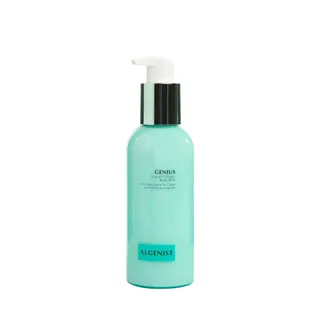
Algenist GENIUS Liquid Collagen Body Mylk

Algenist GENIUS Liquid Collagen Body Mylk

Efficacy100/100IrritancyMedium

Works for

Moisturizing
Niacinamide, Glycerin + 16 more
Works well
What the product description says
“Skin Type Normal, Dry, Combination, and Oily Skincare Concerns Dryness, Dullness and Uneven Texture, and Loss of Firmness and Elasticity Formulation Lightweight Lotion Highlighted Ingredients , Alguronic Acid Clinically demonstrated to provide anti-aging and anti-wrinkle benefits.”
Source: Sephora CA

This product can help improve hydration of the skin with the two types of ingredients.

The first type is called “humectants”:
these ingredients help attract water. When humectants are on the surface of the skin, they “pull in” the moisture from the outside environment, or from within deeper layers of the skin. The following ingredients in this product do the job: aphanizomenon flos-aquae extract, glycerin.

This product also contains ingredients called “occlusives”. They help reduce the speed with which our skin loses moisture to the outside environment. These ingredients also help soften the upper layer of the skin, so it feels less tight and nicer to the touch. The following ingredients in this product do the job: butyrospermum parkii butter, caprylic/capric triglyceride.

The following ingredients in this product are especially good for supporting the skin barrier and helping with the hydration level: niacinamide

NiacinamideHeroEffect: HighIs proven to be effective in reducing blemishes, evening out skin tone and helping to improve lines and wrinkles. It helps the skin to repair sun damage, calm down inflammation and keep maintain good levels of moisture. The concentration of about 2% is effective for supporting the skin barrier and evening out the skin tone. Concentration of 4-6% is better for helping with acne and balancing the sebum production~2.3–2.9%
GlycerinKey active· HumectantEffect: HighOne of the best moisturizing ingredients. Naturally present in skin. It attracts water to the upper layer of the skin working as a humectant~4.7–5.7%
Caprylic/capric triglycerideKey active· Emollient, OcclusiveEffect: HighA good mix of fatty acids that forms a protective layer on the skin. Improves the shelf life of products. Derived from coconut and glycerin~3.2–3.9%
Butyrospermum parkii butterKey active· Emollient, OcclusiveEffect: HighA great moisturising ingredient that softens the skin and reduces water loss from its upper layer. It also can be helpful in protecting skin from free radicals~2–2.5%
Persea gratissima oilKey active· EmollientEffect: HighAn emollient that helps soften the skin and could be helpful in repairing its barrier function~1.7–2.1%
CollagenKey activeEffect: MediumCannot penetrate the skin barrier so is not particularly useful in skincare products~1.5–1.8%
Simmondsia chinensis seed oilKey active· Emollient, OcclusiveEffect: HighSoftens the upper layer of skin and helps restore the healthy skin barrier. Has shown to help calm down inflammation in skin. It is a stable oil, meaning that it retains its properties even when exposed to air.~1.3–1.6%
Chlorella protothecoides oilKey active· Emollient, OcclusiveEffect: HighAn emollient. Is unlikely to have additional benefits for the skin~0.5–0.75%
Parachlorella beijerinckii exopolysaccharidesKey active· HumectantEffect: HighCompounds extracted from green algae that could help neutralize free radicals, but evidence of effectiveness in skincare products (topical applicaiton) is missing. Helps moisturize the skin by attracting water to its upper layer~0.5–0.75%
Collagen amino acidsKey activeEffect: HighHelp attract water to the upper layer of the skin, soften it and support the skin barrier function~0.45–0.65%
SqualeneKey active· Emollient, OcclusiveEffect: HighAn oil that is naturally part of skin sebum that helps to soften its upper layer, reduce water loss and neutralize free radicals. It might be comedogenic. Avoid applying large concentrations (or pure oil) before sun exposure as oxidized squalene can clog pores and lead to skin irritation. Today squalene is mostly derived from vegetable oils or synthetized by yeast~0.4–0.65%
Limnanthes alba seed oilKey active· EmollientEffect: HighThis oil's cmposition is closest to rapeseed oil. It is a very stable oil and serves as an emoillient~0.35–0.65%
Hydrogenated starch hydrolysateKey active· HumectantEffect: MediumHelps to attract water to the upper layer of the skin. Can add sweet taste to lip products~0.15–0.3%
Aphanizomenon flos-aquae extractKey active· HumectantEffect: HighAn extract from ablue-green algae. Can help attract water to the upper layer of the skin and might help to neutralize free radicals~0.05–0.1%
Butylene glycol· HumectantEffect: LowUsed to create a nice product texture and help delivery of other ingredients. Might be somewhat helpful in attracting water to the upper layer of the skin~4–4.9%
Stearic acid· EmollientEffect: LowHelps oil and water mix together and works as an emollient~1.1–1.3%
Aloe barbadensis leaf juiceEffect: Low, below effective doseTraditionally used to treat sunburns, dermatitis and inflammation, but evidence for its effectiveness is lacking. The extract can contain humectants that help attract water into the skin~0.25–0.5%
Lactic acidUnder-dosedAn exfoliating and moisturizing alpha-hydroxy acid (AHA). Typically causes less irritation than other AHAs, for example, glycolic acid. At high concentrations (about 15%), lactic acid can help reduce lines and wrinkles. Recent studies show that lactic acid can support the "good" bacteria living on skin's surface (healthy skin microbiome)~0.5–0.8%
Anti-aging
Niacinamide, Butyrospermum parkii butter + 3 more
Works well
What the product description says
“Skin Type Normal, Dry, Combination, and Oily Skincare Concerns Dryness, Dullness and Uneven Texture, and Loss of Firmness and Elasticity Formulation Lightweight Lotion Highlighted Ingredients , Alguronic Acid Clinically demonstrated to provide anti-aging and anti-wrinkle benefits.”
Source: Sephora CA

This product can help reduce and prevent fine lines and wrinkles, improve skin elasticity and firmness because it contains niacinamide.

Keep in mind that it typically takes at least 6 weeks to notice any results because the changes that are needed to improve fine lines and elasticity happen in the deeper layers of the skin. No topical anti-aging product can “erase” wrinkles or fully reverse signs of aging.

NiacinamideKey activeEffect: HighIs proven to be effective in reducing blemishes, evening out skin tone and helping to improve lines and wrinkles. It helps the skin to repair sun damage, calm down inflammation and keep maintain good levels of moisture. The concentration of about 2% is effective for supporting the skin barrier and evening out the skin tone. Concentration of 4-6% is better for helping with acne and balancing the sebum production~2.3–2.9%
Butyrospermum parkii butterEffect: LowA great moisturising ingredient that softens the skin and reduces water loss from its upper layer. It also can be helpful in protecting skin from free radicals~2–2.5%
Limnanthes alba seed oilEffect: LowThis oil's cmposition is closest to rapeseed oil. It is a very stable oil and serves as an emoillient~0.35–0.65%
Aloe barbadensis leaf juiceEffect: Low, below effective doseTraditionally used to treat sunburns, dermatitis and inflammation, but evidence for its effectiveness is lacking. The extract can contain humectants that help attract water into the skin~0.25–0.5%
Lactic acidUnder-dosedAn exfoliating and moisturizing alpha-hydroxy acid (AHA). Typically causes less irritation than other AHAs, for example, glycolic acid. At high concentrations (about 15%), lactic acid can help reduce lines and wrinkles. Recent studies show that lactic acid can support the "good" bacteria living on skin's surface (healthy skin microbiome)~0.5–0.8%
Evens skin tone
Niacinamide, Lactic acid
Works well
What the product description says
“, Lactic Acid Revitalizes skin and evens skin tone.”
Source: Sephora CA

This product can help reduce hypepigmentation and even out the skin tone because it contains the following effective ingredients: niacinamide

Keep in mind that you would need to apply any topical skincare targetted at hypigmentation consistently for a couple of months to get a result. No topical skincare product can help get rid of hyperpigmentation (including post-acne marks and age spots) instantly.

NiacinamideKey activeEffect: HighIs proven to be effective in reducing blemishes, evening out skin tone and helping to improve lines and wrinkles. It helps the skin to repair sun damage, calm down inflammation and keep maintain good levels of moisture. The concentration of about 2% is effective for supporting the skin barrier and evening out the skin tone. Concentration of 4-6% is better for helping with acne and balancing the sebum production~2.3–2.9%
Lactic acidUnder-dosedAn exfoliating and moisturizing alpha-hydroxy acid (AHA). Typically causes less irritation than other AHAs, for example, glycolic acid. At high concentrations (about 15%), lactic acid can help reduce lines and wrinkles. Recent studies show that lactic acid can support the "good" bacteria living on skin's surface (healthy skin microbiome)~0.5–0.8%
Anti-oxidation
Side benefit · Squalene, Aphanizomenon flos-aquae extract + 4 more
May help

This product contains antioxidants (aphanizomenon flos-aquae extract, squalene) that might be able to help neutralize free radicals in skin to lessen the damage it gets from the UV light (sun). There is not enough evidence to confirm their effectiveness in skin though.

SqualeneKey activeEffect: MediumAn oil that is naturally part of skin sebum that helps to soften its upper layer, reduce water loss and neutralize free radicals. It might be comedogenic. Avoid applying large concentrations (or pure oil) before sun exposure as oxidized squalene can clog pores and lead to skin irritation. Today squalene is mostly derived from vegetable oils or synthetized by yeast~0.4–0.65%
Aphanizomenon flos-aquae extractKey activeEffect: MediumAn extract from ablue-green algae. Can help attract water to the upper layer of the skin and might help to neutralize free radicals~0.05–0.1%
Butyrospermum parkii butterEffect: LowA great moisturising ingredient that softens the skin and reduces water loss from its upper layer. It also can be helpful in protecting skin from free radicals~2–2.5%
Parachlorella beijerinckii exopolysaccharidesEffect: LowCompounds extracted from green algae that could help neutralize free radicals, but evidence of effectiveness in skincare products (topical applicaiton) is missing. Helps moisturize the skin by attracting water to its upper layer~0.5–0.75%
Limnanthes alba seed oilEffect: LowThis oil's cmposition is closest to rapeseed oil. It is a very stable oil and serves as an emoillient~0.35–0.65%
Tocopheryl acetateEffect: Low, below effective doseA more stable but less bio-available form of vitamin E compared to Tocopherol. Might help moisturize and protect the skin from free radicals, but mostly used in low concentrations to stabilize other ingredients.~0.15–0.3%

Can it cause trouble?

Irritancy
2 strong irritants: Parfum, Coumarin
Medium risk
We flagged 12 ingredients with irritancy potential. Severity depends on your sensitivity threshold; the table lists the worst offenders first.
IngredientFunctionIrritationEst. amount
Benzyl alcoholA preservative. Can be used to mask unpleasant smell. Can be irritatingHigh~0.4–0.6%est.
ParfumAn aromatic blend of unspecified and possibly irritating ingredientsHigh~0.2–0.4%est.
CoumarinA fragrance. Is a likely skin allergen and can be irritatingHigh~0.1–0.2%est.
Caprylic/capric triglycerideA good mix of fatty acids that forms a protective layer on the skin. Improves the shelf life of products. Derived from coconut and glycerinMedium~3.2–3.9%est.
Persea gratissima oilAn emollient that helps soften the skin and could be helpful in repairing its barrier functionMedium~1.7–2.1%est.
Simmondsia chinensis seed oilSoftens the upper layer of skin and helps restore the healthy skin barrier. Has shown to help calm down inflammation in skin. It is a stable oil, meaning that it retains its properties even when exposed to air.Medium~1.3–1.6%est.
Lactic acidAn exfoliating and moisturizing alpha-hydroxy acid (AHA). Typically causes less irritation than other AHAs, for example, glycolic acid. At high concentrations (about 15%), lactic acid can help reduce lines and wrinkles. Recent studies show that lactic acid can support the "good" bacteria living on skin's surface (healthy skin microbiome)Medium~0.5–0.8%est.
Aloe barbadensis leaf juiceTraditionally used to treat sunburns, dermatitis and inflammation, but evidence for its effectiveness is lacking. The extract can contain humectants that help attract water into the skinMedium~0.25–0.5%est.
Potassium sorbateA preservativeMedium~0.25–0.5%est.
Tocopheryl acetateA more stable but less bio-available form of vitamin E compared to Tocopherol. Might help moisturize and protect the skin from free radicals, but mostly used in low concentrations to stabilize other ingredients.Medium~0.15–0.3%est.
BhtA preservativeMedium~0.1–0.2%est.
Leuconostoc/radish root ferment filtrateA preservative that comes from radishes fermented by a bacteria. New research suggests that the preservation properties in the ingredient come from an ammonium salt that is not present naturally in radish root but used in its cultivation. Is problematic because the exact amount of the preservative agents is difficult to determineMedium~0.1–0.15%est.
Comedogenic
3 ingredients rated 2 or more on the 0–5 pore-clogging scale
3 flagged
These ingredients have a comedogenic rating of 2 or more on a 0–5 scale; the table shows each one's rating. In leave-on products they can clog pores in acne-prone skin.
IngredientFunctionRatingEst. amount
Butyrospermum parkii butterA great moisturising ingredient that softens the skin and reduces water loss from its upper layer. It also can be helpful in protecting skin from free radicals3/5~2–2.5%est.
Chlorella protothecoides oilAn emollient. Is unlikely to have additional benefits for the skin3/5~0.5–0.75%est.
SqualeneAn oil that is naturally part of skin sebum that helps to soften its upper layer, reduce water loss and neutralize free radicals. It might be comedogenic. Avoid applying large concentrations (or pure oil) before sun exposure as oxidized squalene can clog pores and lead to skin irritation. Today squalene is mostly derived from vegetable oils or synthetized by yeast2/5~0.4–0.65%est.

User reviews

Would you recommend?
No community reviews yet.

Be the first — your take helps the next person decide.

Ingredients

Filter by role to see what each ingredient is doing.

Water~45–55%
Formula
Irritation risk
Low

Plain old water

More about Water
Glycerin~4.7–5.7%
Key active
Irritation risk
Low
Works for
Moisturizing

One of the best moisturizing ingredients. Naturally present in skin. It attracts water to the upper layer of the skin working as a humectant

More about Glycerin
Butylene glycol~4–4.9%
Formula
Irritation risk
Low
Works for
Moisturizing

Used to create a nice product texture and help delivery of other ingredients. Might be somewhat helpful in attracting water to the upper layer of the skin

More about Butylene glycol
Caprylic/capric triglyceride~3.2–3.9%
Key activeIrritant · medium
Irritation risk
Medium
Works for
Moisturizing

A good mix of fatty acids that forms a protective layer on the skin. Improves the shelf life of products. Derived from coconut and glycerin

More about Caprylic/capric triglyceride
Niacinamide~2.3–2.9%
Hero · Moisturizing
Irritation risk
Low
Works for
Anti-agingEvens skin toneMoisturizingAnti-blemishReduces irritationAntibacterialReduces rednessAnti-inflammatory

Is proven to be effective in reducing blemishes, evening out skin tone and helping to improve lines and wrinkles. It helps the skin to repair sun damage, calm down inflammation and keep maintain good levels of moisture. The concentration of about 2% is effective for supporting the skin barrier and evening out the skin tone. Concentration of 4-6% is better for helping with acne and balancing the sebum production

More about Niacinamide
Butyrospermum parkii butter~2–2.5%
Key activeComedogenic 3/5
Irritation risk
Low
Comedogenicity
3/5
Works for
MoisturizingAnti-agingAnti-oxidation

A great moisturising ingredient that softens the skin and reduces water loss from its upper layer. It also can be helpful in protecting skin from free radicals

More about Butyrospermum parkii butter
Persea gratissima oil~1.7–2.1%
Key activeIrritant · medium
Irritation risk
Medium
Works for
Moisturizing

An emollient that helps soften the skin and could be helpful in repairing its barrier function

More about Persea gratissima oil
Collagen~1.5–1.8%
Key active
Irritation risk
Low
Works for
Moisturizing

Cannot penetrate the skin barrier so is not particularly useful in skincare products

More about Collagen
Simmondsia chinensis seed oil~1.3–1.6%
Key activeIrritant · medium
Irritation risk
Medium
Works for
Moisturizing

Softens the upper layer of skin and helps restore the healthy skin barrier. Has shown to help calm down inflammation in skin. It is a stable oil, meaning that it retains its properties even when exposed to air.

More about Simmondsia chinensis seed oil
Stearic acid~1.1–1.3%
Formula
Irritation risk
Low
Works for
CleansingMoisturizing

Helps oil and water mix together and works as an emollient

More about Stearic acid
Xylitol~0.7–1.05%
Formula
Irritation risk
Low

Helps attract water to the upper layer of the skin and repair the skin barrier function

More about Xylitol
Silica~0.95–1.2%
Formula
Irritation risk
Low

Used to absorb oil and can temporarily mattify skin

More about Silica
Lactic acid~0.5–0.8%
Under-dosedIrritant · medium
Irritation risk
Medium
Works for
ExfoliationEvens skin toneMoisturizingAnti-aging

An exfoliating and moisturizing alpha-hydroxy acid (AHA). Typically causes less irritation than other AHAs, for example, glycolic acid. At high concentrations (about 15%), lactic acid can help reduce lines and wrinkles. Recent studies show that lactic acid can support the "good" bacteria living on skin's surface (healthy skin microbiome)

More about Lactic acid
Parachlorella beijerinckii exopolysaccharides~0.5–0.75%
Key active
Irritation risk
Low
Works for
MoisturizingAnti-oxidation

Compounds extracted from green algae that could help neutralize free radicals, but evidence of effectiveness in skincare products (topical applicaiton) is missing. Helps moisturize the skin by attracting water to its upper layer

More about Parachlorella beijerinckii exopolysaccharides
Chlorella protothecoides oil~0.5–0.75%
Key activeComedogenic 3/5
Irritation risk
Low
Comedogenicity
3/5
Works for
Moisturizing

An emollient. Is unlikely to have additional benefits for the skin

More about Chlorella protothecoides oil
Collagen amino acids~0.45–0.65%
Key active
Irritation risk
Low
Works for
Moisturizing

Help attract water to the upper layer of the skin, soften it and support the skin barrier function

More about Collagen amino acids
Benzyl alcohol~0.4–0.6%
Irritant · high
Irritation risk
High

A preservative. Can be used to mask unpleasant smell. Can be irritating

More about Benzyl alcohol
Hydrogenated lecithin~0.45–0.65%
Formula
Irritation risk
Low
Works for
Cleansing

Helps to retain moisture by creating a protective barrier on the skin. Rich in fatty acids. Improves product texture and helps with the penetration of other ingredients.

More about Hydrogenated lecithin
Squalene~0.4–0.65%
Key activeComedogenic 2/5
Irritation risk
Low
Comedogenicity
2/5
Works for
MoisturizingAnti-oxidation

An oil that is naturally part of skin sebum that helps to soften its upper layer, reduce water loss and neutralize free radicals. It might be comedogenic. Avoid applying large concentrations (or pure oil) before sun exposure as oxidized squalene can clog pores and lead to skin irritation. Today squalene is mostly derived from vegetable oils or synthetized by yeast

More about Squalene
Limnanthes alba seed oil~0.35–0.65%
Key active
Irritation risk
Low
Works for
MoisturizingAnti-agingAnti-oxidation

This oil's cmposition is closest to rapeseed oil. It is a very stable oil and serves as an emoillient

More about Limnanthes alba seed oil
Xanthan gum~0.3–0.55%
Formula
Irritation risk
Low
Works for
Cleansing

Used to create a thicker product consistency

More about Xanthan gum
Aloe barbadensis leaf juice~0.25–0.5%
Irritant · medium
Irritation risk
Medium
Works for
MoisturizingAntibacterialAnti-inflammatoryReduces rednessReduces irritationAnti-blemishAnti-aging

Traditionally used to treat sunburns, dermatitis and inflammation, but evidence for its effectiveness is lacking. The extract can contain humectants that help attract water into the skin

More about Aloe barbadensis leaf juice
Sodium benzoate~0.25–0.5%
Formula
Irritation risk
Low

A preservative

More about Sodium benzoate
Potassium sorbate~0.25–0.5%
Irritant · medium
Irritation risk
Medium

A preservative

More about Potassium sorbate
Parfum~0.2–0.4%
Irritant · high
Irritation risk
High

An aromatic blend of unspecified and possibly irritating ingredients

More about Parfum
Tromethamine~0.25–0.45%
Formula
Irritation risk
Low

Helps adjust pH in products

More about Tromethamine
Sodium polyacrylate~0.25–0.5%
Formula
Irritation risk
Low
Works for
Mattifying

Used to create a gel-like product texture, as well as to stabilize emulsions

More about Sodium polyacrylate
Phenoxyethanol~0.2–0.35%
Formula
Irritation risk
Low

A preservative. It helps prevent bacterial growth in cosmetic products

More about Phenoxyethanol
Hydrogenated starch hydrolysate~0.15–0.3%
Key active
Irritation risk
Low
Works for
Moisturizing

Helps to attract water to the upper layer of the skin. Can add sweet taste to lip products

More about Hydrogenated starch hydrolysate
Tocopheryl acetate~0.15–0.3%
Irritant · medium
Irritation risk
Medium
Works for
Anti-oxidation

A more stable but less bio-available form of vitamin E compared to Tocopherol. Might help moisturize and protect the skin from free radicals, but mostly used in low concentrations to stabilize other ingredients.

More about Tocopheryl acetate
Bht~0.1–0.2%
Irritant · medium
Irritation risk
Medium

A preservative

More about Bht
Coumarin~0.1–0.2%
Irritant · high
Irritation risk
High

A fragrance. Is a likely skin allergen and can be irritating

More about Coumarin
Leuconostoc/radish root ferment filtrate~0.1–0.15%
Irritant · medium
Irritation risk
Medium

A preservative that comes from radishes fermented by a bacteria. New research suggests that the preservation properties in the ingredient come from an ammonium salt that is not present naturally in radish root but used in its cultivation. Is problematic because the exact amount of the preservative agents is difficult to determine

More about Leuconostoc/radish root ferment filtrate
Aphanizomenon flos-aquae extract~0.05–0.1%
Key active
Irritation risk
Low
Works for
MoisturizingAnti-oxidation

An extract from ablue-green algae. Can help attract water to the upper layer of the skin and might help to neutralize free radicals

More about Aphanizomenon flos-aquae extract
Ingredient list view

Water, Glycerin, Butylene glycol, Caprylic/capric triglyceride, Niacinamide, Butyrospermum parkii butter, Persea gratissima oil, Collagen, Simmondsia chinensis seed oil, Stearic acid, Xylitol, Silica, Lactic acid, Parachlorella beijerinckii exopolysaccharides, Chlorella protothecoides oil, Collagen amino acids, Benzyl alcohol, Hydrogenated lecithin, Squalene, Limnanthes alba seed oil, Xanthan gum, Aloe barbadensis leaf juice, Sodium benzoate, Potassium sorbate, Parfum, Tromethamine, Sodium polyacrylate, Phenoxyethanol, Hydrogenated starch hydrolysate, Tocopheryl acetate, Bht, Coumarin, Leuconostoc/radish root ferment filtrate, Aphanizomenon flos-aquae extract

Compare prices

Retailers ranked by price — lowest first.

Amazon US
Price unavailable Out of stock
Check

Affiliate links · As an Amazon Associate, WIMJ earns from qualifying purchases.

Worth comparing, line by line.

Match % combines shared ingredients, the first five ingredients, shared actives and hero ingredients, irritancy (lower counts in the alternative's favour), texture and body area. Only products in the same routine step are compared.

Side-by-side comparison of this product against its closest alternatives
AlgenistGENIUS Liquid Collagen Body MylkYOUR PRODUCTDr Sam'sFlawless Body TherapyThe Perfect VVV Beauty MistSkincare by Dr VBODY SMOOTHING EXFOLIATOR
Match—79%77%75%
Price—$45.45—$40.04
Shared key ingredients—3 of 143 of 145 of 14
Key difference—BakuchiolCaffeineVitamin C
Irritancy Medium Low Medium Medium
Drying alcohol—— Contains drying alcohol —
View product Shop Shop Shop

More alternatives: Urban Skin Rx Even Tone Smoothing Body TreatmentNécessaire The Body Lotion

Cheaper alternatives? See how this stacks up against similar formulas.
We compare ingredient profiles across our catalog — pick the closest match for your budget.
Open dupe finder

Product summary

"Algenist - GENIUS Liquid Collagen Body Mylk" is effective for: Moisturizing, Anti-aging and Evens skin tone

Ingredient callouts

  • A good concentration of Niacinamide (2.30% - 2.90%). Niacinamide is a well-studied multi-tasking active. It is stable, and can work well in almost any hydrating formulation. There is solid evidence that Niacinamide can help support skin barrier, regulate oil production and reduce acne and clogged pores. It also helps to fight photodamage and improve the skin tone, reducing pigmentation marks.
  • Humectants (aphanizomenon flos-aquae extract 0.05% - 0.10%, parachlorella beijerinckii exopolysaccharides 0.50% - 0.75% and glycerin 4.70% - 5.70%). These ingredients help attract water to the upper layer of the skin and improve the skin hydration.

Price

The product retails for 56.00£ in the United Kingdom, from 45.00$ up to 56.00$ in the United States and for 84.00CA$ in Canada.

For a detailed price comparison: click here.

Algenist GENIUS Liquid Collagen Body Mylk
AlgenistGENIUS Liquid Collagen Body Mylk

Affiliate links · As an Amazon Associate, WIMJ earns from qualifying purchases.

As an Amazon Associate, WIMJ earns from qualifying purchases.