Airyday Golden Glow SPF50+ Dreamscreen
Works for
2 of 2 advertised claims delivered
Sun protectionSPF 50 · 6 UV filtersBroad spectrum
This product offers a good level of protection against both UVB and UVA rays.
This sunscreen uses organic (so-called "chemical") sunscreen filters. Organic, or "chemical" filters usually provide reliable sun protection and rarely leave a white cast. Sunscreens with organic filters can sting eyes.
This product can be considered "reef safe" because it does not contain the UV filters (oxybenzone and octinoxate) that can be harmful to coral reefs when present in the water in high concentrations.
Anti-aging3 ingredients credited for this claimStrong support
“Offering maximum glow and protection in a single tube, this sheer tinted glow is loaded with Vegan Collagen, Niacinamide, Blue Light Protection and Vitamin C, E and F for anti-ageing goodness.”
This product can help prevent early signs of skin aging because it offers a good level of broad spectrum sun protection. Sun damage is the main cause of premature skin aging, and protecting your skin from the sun is the best anti-aging strategy.
Evens skin toneNot advertised by the brand · 4 ingredients credited for this claimStrong support
This product offers broad spectrum sun protection. It means that it can prevent hyperpigmentation and help keep the skin tone even (sun damage is the main factor causing age spots, darkening of post-acne marks and other discolorations).
Anti-blemishNot advertised by the brand · 2 ingredients credited for this claimGood support
This product might be able to help reduce blemishes and clogged pores because it contains ethyl linoleate.
MoisturizingNot advertised by the brand · 13 ingredients credited for this claimGood support
This product can help improve hydration of the skin with the two types of ingredients.
The first type is called “humectants”:
these ingredients help attract water.
When humectants are on the surface of the skin, they “pull in” the moisture from the outside environment, or from
within deeper layers of the skin. The following ingredients in this product do the job:
sodium hyaluronate, hydrolyzed soy protein.
This product also contains ingredients called “occlusives”. They help reduce the speed with which our skin loses moisture to the outside environment. These ingredients also help soften the upper layer of the skin, so it feels less tight and nicer to the touch. The following ingredients in this product do the job: ethyl linoleate, glycine soja oil.
Can it cause trouble?
Irritancy4 strong irritants: Parfum, Benzyl salicylate + 2 more — patch-test recommendedHigh risk
Comedogenic3 ingredients rated 2 or more on the 0–5 pore-clogging scale3 flagged
User reviews
Be the first — your take helps the next person decide.
Ingredients
Filter by role to see what each ingredient is doing.
Homosalate6%
- Irritation risk
- Medium
A weak sunscreen that offers some protection against the sun rays that cause sunburn (UVB), but does not offer meaningful protection against protect against the most aging sun rays (UVA). It loses its effectiveness quickly when exposed to sunlight. It is an organic, or so called "chemical" sunscreen. When used in low concentrations, helps to stabilize the product formulation
More about HomosalateOctocrylene6%
- Irritation risk
- Medium
A weak sunscreen that protects against the sun rays that cause sunburn (UVB) and is somewhat effective against the UVA rays. It is quite stable and can help stabilize other, more vulnerable, sunscreen ingredients like Avobenzone. It is an organic, or so called "chemical" sunscreen
More about OctocryleneButyl methoxydibenzoylmethane3%
- Irritation risk
- Medium
Avobenzone. An organic, or so-called "chemical" UV filter. Protects against both UVA and UVB rays. Needs to be combined with other filters in a formulation to be stable.
More about Butyl methoxydibenzoylmethaneEthylhexyl salicylate3%
- Irritation risk
- Low
Octisalate. A UV filter. It offers some protection against the sun rays that cause sunburn (UVB), but does not protect against the most aging sun rays (UVA). It loses its effectiveness quickly when exposed to sunlight. It is an organic, or so called "chemical" sunscreen
More about Ethylhexyl salicylatePhenoxyethanol~0.5–1%
- Irritation risk
- Low
A preservative. It helps prevent bacterial growth in cosmetic products
More about PhenoxyethanolEthylhexylglycerin~4.1–6.2%
Water~4.6–6.9%
Butyloctyl salicylate~3.7–5.5%
- Irritation risk
- Medium
A synthetic ester of salicylic acid that is used to help disperse pigments and boost effectiveness of sunscreen ingredients. It is able to absorb UV light (working as an organic, or chemical filter), but is not approved as a sunscreen ingredient on its own
More about Butyloctyl salicylatePropanediol~2.7–4%
- Irritation risk
- Low
Acts as a solvent for other ingredients. Speeds up the absorption of other ingredients into the skin
More about PropanediolCoco-caprylate/caprate~2.1–3.2%
- Irritation risk
- Low
Helps to soften the upper layer of the skin without creating a greasy texture
More about Coco-caprylate/caprateGlyceryl stearate citrate~1.7–2.5%
- Irritation risk
- Low
Helps oil and water mix together while softening the upper layer of the skin
More about Glyceryl stearate citrateTitanium dioxide~1.7–2.6%
- Irritation risk
- Low
Works as a UV filter when used in high concentrations. It is photostable and is effective mostly against the UVB light, with some protection in the UVA range. In small concentrations, used for its ability to improve the color of cosmetic products. Is usually well tolerated by the skin
More about Titanium dioxideCyclopentasiloxane~1.2–1.8%
- Irritation risk
- Low
A silicone that helps improve the product texture and spreadability. Can absorb oil creating a short-term mattifying effect on the skin
More about CyclopentasiloxaneMica~1.1–1.6%
- Irritation risk
- Low
Creates an illusion of smoother and more radiant skin tone. Adds shimmer to the skin by reflecting light
More about MicaGlyceryl stearate~0.85–1.3%
- Irritation risk
- Low
An emollient that softens the skin and forms a protective layer on its surface. Helps water and oil mix together
More about Glyceryl stearateHydroxyapatite~0.9–1.35%
- Irritation risk
- Low
Decyl glucoside~0.6–1.4%
- Irritation risk
- High
Helps oil and water mix together. Can be irritating
More about Decyl glucosideParfum~0.4–1%
- Irritation risk
- High
An aromatic blend of unspecified and possibly irritating ingredients
More about ParfumCyclohexasiloxane~0.45–1.1%
- Irritation risk
- Low
A silicone that serves as an emollient. Helps create a nice non-greasy feels
More about CyclohexasiloxanePhenoxyethanol~0.4–0.95%
- Irritation risk
- Low
A preservative. It helps prevent bacterial growth in cosmetic products
More about PhenoxyethanolTocopheryl acetate~0.45–1.05%
- Irritation risk
- Medium
A more stable but less bio-available form of vitamin E compared to Tocopherol. Might help moisturize and protect the skin from free radicals, but mostly used in low concentrations to stabilize other ingredients.
More about Tocopheryl acetateHydroxyacetophenone~0.35–0.85%
Potassium cetyl phosphate~0.35–0.85%
- Irritation risk
- Medium
Helps oil and water mix together
More about Potassium cetyl phosphateButyrospermum parkii butter~0.4–0.95%
- Irritation risk
- Low
- Comedogenicity
- 3/5
A great moisturising ingredient that softens the skin and reduces water loss from its upper layer. It also can be helpful in protecting skin from free radicals
More about Butyrospermum parkii butterCarbomer~0.3–0.75%
- Irritation risk
- Low
Helps create a thicker or gel-like product texture. It is not a surfactant but can be used in gentle cleansing formulations
More about CarbomerNiacinamide~0.3–0.75%
- Irritation risk
- Low
Is proven to be effective in reducing blemishes, evening out skin tone and helping to improve lines and wrinkles. It helps the skin to repair sun damage, calm down inflammation and keep maintain good levels of moisture. The concentration of about 2% is effective for supporting the skin barrier and evening out the skin tone. Concentration of 4-6% is better for helping with acne and balancing the sebum production
More about NiacinamidePotassium hydroxide~0.3–0.7%
Glycine soja oil~0.35–0.8%
- Irritation risk
- Medium
- Comedogenicity
- 2/5
A good emollient that helps soften the skin and helps repair its barrier function. It can clog pores if used in high concentrations.
More about Glycine soja oilEthylhexylglycerin~0.2–0.8%
Disodium edta~0.2–0.8%
Polyglyceryl-3 diisostearate~0.3–0.75%
- Irritation risk
- Medium
- Comedogenicity
- 3/5
Helps oil and water mix together
More about Polyglyceryl-3 diisostearateHydrolyzed soy protein~0.2–0.75%
- Irritation risk
- Low
Helps attract water to the upper layer of the skin. Might have some anti-aging, anti-oxidant, and skin lightening properties, but solid evidence is missing
More about Hydrolyzed soy proteinOryza sativa germ extract~0.35–0.8%
- Irritation risk
- Low
Oryza sativa extract~0.3–0.75%
- Irritation risk
- Low
A grain extract that helps to create a thicker product consistency. It might have some anti-oxidant properties and help attract water to the upper layer of the skin
More about Oryza sativa extractEthyl linoleate~0.3–0.75%
- Irritation risk
- Medium
Helps reduce acne and blemishes. Helps to soften the upper layer of the skin and reduce inflammation. Might be helpful in reducing hyperpigmentation and evening out the skin tone, but evidence of effectiveness in skin are lacking
More about Ethyl linoleateSodium hyaluronate~0.2–0.75%
- Irritation risk
- Low
One of the best moisturizing ingredients. Attracts water into the upper layer of the skin
More about Sodium hyaluronateAscorbyl tetraisopalmitate~0.4–0.9%
- Irritation risk
- Medium
A vitamin C derivative. Studies show that is might be effective in reducing hyperpigmentation, but there are no studies confirming that it is effectively converted into the bioavailable form of Vitamin C in skin. It is not clear how this derivative compares in effectiveness to the topical application of bioavailable form of vitamin C (L-ascorbic acid)
More about Ascorbyl tetraisopalmitateSodium benzoate~0.25–0.5%
Benzyl alcohol~0.2–0.8%
- Irritation risk
- High
A preservative. Can be used to mask unpleasant smell. Can be irritating
More about Benzyl alcoholPotassium sorbate~0.3–0.6%
Benzyl salicylate~0.15–0.55%
Limonene~0.15–0.5%
- Irritation risk
- High
A common frangrance that can easily irritate skin, especially if exposed to air, light or heat
More about LimoneneLinalool~0.1–0.4%
Linalyl acetate~0.1–0.4%
- Irritation risk
- Low
Tetramethyl acetyloctahydronaphthalenes~0.1–0.45%
- Irritation risk
- Low
Ci 77492~0.1–0.4%
Ci 77491~0.1–0.3%
- Irritation risk
- Low
A red colorant made of iron oxide. Typically is not irritating
More about Ci 77491Ci 77499~0.1–0.3%
Ingredient list view
Homosalate, Octocrylene, Butyl methoxydibenzoylmethane, Ethylhexyl salicylate, Phenoxyethanol, Ethylhexylglycerin, Water, Butyloctyl salicylate, Propanediol, Coco-caprylate/caprate, Glyceryl stearate citrate, Titanium dioxide, Cyclopentasiloxane, Mica, Glyceryl stearate, Hydroxyapatite, Decyl glucoside, Parfum, Cyclohexasiloxane, Phenoxyethanol, Tocopheryl acetate, Hydroxyacetophenone, Potassium cetyl phosphate, Butyrospermum parkii butter, Carbomer, Niacinamide, Potassium hydroxide, Glycine soja oil, Ethylhexylglycerin, Disodium edta, Polyglyceryl-3 diisostearate, Hydrolyzed soy protein, Oryza sativa germ extract, Oryza sativa extract, Ethyl linoleate, Sodium hyaluronate, Ascorbyl tetraisopalmitate, Sodium benzoate, Benzyl alcohol, Potassium sorbate, Benzyl salicylate, Limonene, Linalool, Linalyl acetate, Tetramethyl acetyloctahydronaphthalenes, Ci 77492, Ci 77491, Ci 77499
Compare prices
Retailers ranked by price — lowest first.

Affiliate links · prices updated regularly
Worth comparing, line by line.
Match % combines shared ingredients, the first five ingredients, shared actives and hero ingredients, irritancy (lower counts in the alternative's favour), texture and body area. Only products in the same routine step are compared.
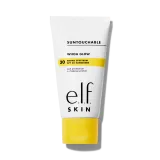
| AirydayGolden Glow SPF50+ DreamscreenYOUR PRODUCT | e.l.f.SUNTOUCHABLE! WHOA GLOW SPF 30 | CetaphilDaily Oil-Free Facial Moisturizer With Sunscreen Spf 35 For Sensitive, Combination Skin, 3 Ounces | Supergoop!Glowscreen SPF 40 Shade: Golden Hour [brown] | |
|---|---|---|---|---|
| Match | — | 78% | 77% | 76% |
| Price | — | $7.99 | $14.92 | $38.00 |
| Shared key ingredients | — | 5 of 11 | 4 of 11 | 6 of 11 |
| Key difference | — | Panthenol | Adenosine | Ferulic Acid |
| Irritancy | High | Low | Medium | Medium |
| SPF | SPF 50 | SPF 30 | SPF 35 | SPF 40 |
| Drying alcohol | — | — | — | — |
| View product | Shop | Shop | Shop |



Product summary
Based on the ingredients included, we believe that "Airyday - Golden Glow SPF50+ Dreamscreen" can offer reliable sun protection. We love that it can protect from both UVA and UVB rays (not all sunscreens with SPF ratings give UVA protection. UVA rays do not cause sunburn, but still damage our skin and lead to early aging).
Its formula is also hydrating, so you might not need an additional moistruizer during the day. Like all broad-spectrum sunscreens, this product helps prevent early signs of aging.
Sunscreen filters
This sunscreen uses a mixture of both mineral and organic (so-called "chemical") UV filters. The organic filters in the product are: avobenzone, butyloctyl salicylate, octisalate, homosalate and octocrylene. As for the mineral filters, this sunscreen uses titanium dioxide.
Irritation risk
This product contains a bunch of common irritants, including ingredients that do not provide any known benefit for the skin. It might not be the best choice if your skin is sensitive. We assess the overall irritancy of it to be high. For a detailed overview of all potential irritants: click here
You can see the detailed formula review with the breakdown of all actives in the product and the full ingredient list with estimated concentrations in the tables below.
Sources cited in this review
Every concentration estimate and effectiveness label is anchored to one of these 19 studies and safety reviews.
- 1
- 2
- 3Safety Assessment of Alkyl Esters as Used in Cosmeticscir-safety.org
- 4
- 5
- 6

Affiliate links · As an Amazon Associate, WIMJ earns from qualifying purchases.