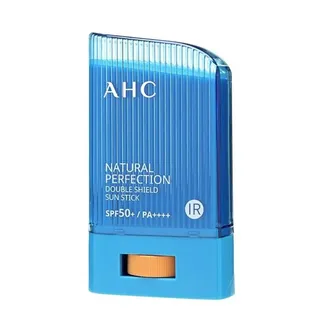
AHC Natural Perfection Double Shield Sun Stick

AHC Natural Perfection Double Shield Sun Stick

Efficacy100/100IrritancyHigh

Works for

Moisturizing
Ceramide np, Acetyl tetrapeptide-2 + 50 more
Works well
What the product description says
“5 kinds of natural water including deep sea water, glacier water and carbonated water deliver ample refreshing moisture for dewy skin.”
Source: Lila Beauty

This product can help improve hydration of the skin with the two types of ingredients.

The first type is called “humectants”:
these ingredients help attract water. When humectants are on the surface of the skin, they “pull in” the moisture from the outside environment, or from within deeper layers of the skin. The following ingredients in this product do the job: alanine, anhydroxylitol.

This product also contains ingredients called “occlusives”. They help reduce the speed with which our skin loses moisture to the outside environment. These ingredients also help soften the upper layer of the skin, so it feels less tight and nicer to the touch. The following ingredients in this product do the job: arginine, cocos nucifera oil.

The following ingredients in this product are especially good for supporting the skin barrier and helping with the hydration level: acetyl hexapeptide-8, acetyl tetrapeptide-2, ceramide np, dipeptide diaminobutyroyl benzylamide diacetate, palmitoyl tripeptide-5, panthenol

Ceramide npHero· EmollientEffect: HighA type of lipid similar to ceramides naturally present in skin. Helps to soften the upper layer of the skin and supports the skin barrier function to keep it hydrated. Can help to prevent inflammation in skin~0.35–0.8%
Acetyl tetrapeptide-2HeroEffect: HighA type of peptide. Peptides are excellent moisturizers and might be able support collagen production reducing fine lines and wrinkles~0.2–0.75%
Dipeptide diaminobutyroyl benzylamide diacetateHeroEffect: HighA type of peptide. Peptides are excellent moisturizers and might be able support collagen production reducing fine lines and wrinkles~0.2–0.75%
Acetyl hexapeptide-8Hero· HumectantEffect: HighA type of peptide. Peptides are excellent moisturizers and might be able support collagen production reducing fine lines and wrinkles~0.2–0.75%
Palmitoyl tripeptide-5HeroEffect: HighA type of peptide. Peptides are excellent moisturizers and might be able support collagen production reducing fine lines and wrinkles~0.2–0.75%
PanthenolHero· HumectantEffect: HighHelps attract water to the upper layer of the skin and can help improve skin barrier function~0.2–0.75%
Diisostearyl malateKey active· EmollientEffect: MediumHelps to soften the upper layer of the skin~0.5–1.15%
C12-15 alkyl benzoateKey active· EmollientEffect: MediumEnhances the product texture and makes it more spreadable. Helps reduce water loss from the outer layer of skin. Extands the shelf life by preventing bacteria growth~0.5–1.2%
Helianthus annuus seed oilKey active· Emollient, OcclusiveEffect: HighA great emollient due to its high linoleic acid content. One of the most effective plant oils in helping skin hydration and repairing skin barrier function~0.45–1%
Centella asiatica extractKey activeEffect: HighA plant extract that has been shown to be able to reduce inflammation in skin, support restoration of skin barrier function, as well as support collagen production. Contains active compounds called centelloids: asiaticoside, madecasosside, asiatic acid and madecassic acid. Might be helpful in preventing stretch marks. It can be itself be irritating though.~0.35–0.75%
SqualaneKey active· Emollient, OcclusiveEffect: HighAn oil naturally present in skin. Works as an emollient to soften the skin and form a protective layer on its surface without a greasy feeling.~0.35–0.8%
PhytosterolsKey active· EmollientEffect: HighLipids that work as an emollient and can be helpful in repairing skin barrier function~0.35–0.8%
Oryza sativa germ oilKey active· EmollientEffect: Medium~0.35–0.8%
ThreonineKey activeEffect: HighAn amino-acid that helps to attract water to the upper layer of the skin. In combination with other amino-acids, might help to reduce fine lines and wrinkles~0.3–0.7%
Aspartic acidKey active· HumectantEffect: HighAn amino-acid that helps increase skin hydration and might help to slightly improve skin firmness, potentially reducing lines and wrinkles~0.3–0.7%
AlanineKey active· HumectantEffect: HighAn amino-acid that helps to attract water to the upper layer of the skin and might help to lighten the skin, but solid evidence is lacking~0.3–0.7%
TyrosineKey activeEffect: High~0.3–0.7%
Glutamic acidKey active· HumectantEffect: HighAn amino-acid that helps attract water to the upper layer of the skin~0.3–0.7%
GlycerinKey active· HumectantEffect: HighOne of the best moisturizing ingredients. Naturally present in skin. It attracts water to the upper layer of the skin working as a humectant~0.3–0.7%
GlycineKey active· HumectantEffect: HighHelps to attract water to the upper layer of the skin and can help restore the skin barrier function~0.3–0.7%
Cocos nucifera oilKey active· Emollient, OcclusiveEffect: HighAn emollient. Found to be as effective as a moisturizer for dry skin as mineral oil. Could be comedogenic~0.3–0.7%
LysineKey activeEffect: HighAn amino-acid that helps to attract water to the upper layer of the skin. In combination with other amino-acids, might help to reduce fine lines and wrinkles~0.3–0.7%
Corallina officinalis extractKey activeEffect: HighRed algae extract that helps attract water to the upper layer of the skin and might contain antioxidants~0.3–0.7%
SerineKey activeEffect: HighAn amino-acid that helps to attract water to the upper layer of the skin. In combination with other amino-acids, might help to reduce fine lines and wrinkles~0.3–0.7%
ProlineKey activeEffect: Medium~0.3–0.7%
Olea europaea fruit oilKey active· EmollientEffect: MediumAn emollient that helps soften the skin but is not effective for restoring its barrier function. Might be helpful to calm down inflammation~0.3–0.75%
XylitylglucosideKey active· HumectantEffect: HighHelps attract water to the upper layer of the skin and repair the skin barrier function~0.2–0.75%
ArginineKey active· Humectant, OcclusiveEffect: HighAn amino acid that is naturally present in skin and helps keep it hydrated. When used together with AHAs, it can reduce their irritating effect on the skin~0.2–0.75%
AnhydroxylitolKey active· HumectantEffect: HighHelps attract water to the upper layer of the skin and repair the skin barrir function~0.2–0.75%
Tetradecyl aminobutyroylvalylaminobutyric urea trifluoroacetateKey activeEffect: HighA peptide. It helps attract water to the upper layer of the skin, support skin's barrier function and might have some slight anti-aging effect through stimulating skin's own production of hyaluronic acid~0.2–0.75%
Hydrolyzed hyaluronic acidKey active· HumectantEffect: HighOne of the best moisturizing ingredients. Attracts water into the upper layer of the skin. A version of it is naturally present in skin~0.2–0.75%
HistidineKey active· HumectantEffect: High~0.15–0.65%
IsoleucineKey activeEffect: HighAn amino acid that can help attract water to the upper layer of the skin and support skin's barrier function~0.15–0.65%
CysteineKey activeEffect: HighMight help neutralize free radicals in skin and might be helpful against hyperpigmentation~0.15–0.6%
Sesamum indicum seed extractKey activeEffect: HighPlant oil that due to its high content of linoleic acid can help support skin's barrier function improving its hydration~0.05–0.25%
Dicaprylyl carbonate· EmollientEffect: LowHelps products spread more easily and works as an emollient to soften skin~1.3–2%
Caprylyl methiconeEffect: LowA type of silicone that helps to soften the upper layer of the skin and create a nice product finish on the skin~0.5–1.15%
Caprylyl glycol· Humectant, EmollientEffect: LowHelps preserve products and creates a nice product texture~0.35–0.75%
BiotinEffect: LowMight have some moisturising properties. Is not effective when applied topically beyond some moisturizing effect~0.2–0.75%
Polyglyceryl-10 stearateEffect: LowHelps water and oil mix together and softens the upper layer of the skin~0.2–0.75%
Propylene glycol· HumectantEffect: LowHelps oil and water mix together and can enhance the penetration of other ingredients into the skin. It can be irritating~0.2–0.7%
Scutellaria baicalensis root extract· HumectantEffect: LowA plant extract that might contain a compound baicalin that could be helpful in neutralizing free radicals and reducing inflammation in skin. The baicalin concentration in skincare products is often too low for an effective action. Can be used for its fragrant properties~0.2–0.7%
Butylene glycol· HumectantEffect: LowUsed to create a nice product texture and help delivery of other ingredients. Might be somewhat helpful in attracting water to the upper layer of the skin~0.2–0.75%
Camellia sinensis leaf extractEffect: LowCan contain potent anti-oxidant compounds (abbreviated ECG, GCG, EGC, and EGCG) that might help protect the skin from free radicals. Can help calm down inflammation and has some anti-bacterial properties. Unfortunately, these antioxidants are unstable and lose their effectiveness very quickly in products. The concentration of the antioxidant compounds in the extract also tends to be low to be effective in topical formulation~0.2–0.8%
Hydrogenated polyisobutene· Emollient, OcclusiveEffect: LowUsed to improve the product consistency and soften the upper layer of the skin~0.1–0.45%
Stearic acidEffect: Low, below effective doseHelps oil and water mix together and works as an emollient~0.4–0.9%
LecithinEffect: Low, below effective doseUsed mostly for creating emulsions - helping oil and water mix together. Helps soften the upper layer of the skin~0.35–0.8%
Simmondsia chinensis seed oilUnder-dosedSoftens the upper layer of skin and helps restore the healthy skin barrier. Has shown to help calm down inflammation in skin. It is a stable oil, meaning that it retains its properties even when exposed to air.~0.4–0.9%
Caprylic/capric triglycerideUnder-dosedA good mix of fatty acids that forms a protective layer on the skin. Improves the shelf life of products. Derived from coconut and glycerin~0.35–0.85%
Butyrospermum parkii butterUnder-dosedA great moisturising ingredient that softens the skin and reduces water loss from its upper layer. It also can be helpful in protecting skin from free radicals~0.35–0.8%
Argania spinosa kernel oilUnder-dosedAn emollient that helps soften the upper layer of the skin. Might have some weak anti-oxidant properties~0.35–0.8%
Oleanolic acidUnder-dosedMight be helpful against blemishes, work as an anti-oxidant, reduce inflammation and improve skin's ability to hold on to moisture, but more research is needed to confirm its effectiveness when applied topically to human skin~0.2–0.75%
Anti-oxidation
Side benefit · Centella asiatica extract, Camellia japonica flower extract + 27 more
May help

This product contains antioxidants (camellia japonica flower extract, camellia sinensis leaf extract, centella asiatica extract, cysteine) that can help neutralize free radicals in skin to lessen the damage it gets from the UV light (sun). There is some human evidence for this effect in skin, though it is smaller or less consistent than the evidence for the best antioxidants.

Centella asiatica extractKey activeEffect: MediumA plant extract that has been shown to be able to reduce inflammation in skin, support restoration of skin barrier function, as well as support collagen production. Contains active compounds called centelloids: asiaticoside, madecasosside, asiatic acid and madecassic acid. Might be helpful in preventing stretch marks. It can be itself be irritating though.~0.35–0.75%
Camellia japonica flower extractKey activeEffect: MediumA plant extract that might help neutralize free radicals in skin~0.35–0.8%
Camellia sinensis leaf extractKey activeEffect: MediumCan contain potent anti-oxidant compounds (abbreviated ECG, GCG, EGC, and EGCG) that might help protect the skin from free radicals. Can help calm down inflammation and has some anti-bacterial properties. Unfortunately, these antioxidants are unstable and lose their effectiveness very quickly in products. The concentration of the antioxidant compounds in the extract also tends to be low to be effective in topical formulation~0.2–0.8%
CysteineKey activeEffect: MediumMight help neutralize free radicals in skin and might be helpful against hyperpigmentation~0.15–0.6%
Tocopheryl acetateEffect: LowA more stable but less bio-available form of vitamin E compared to Tocopherol. Might help moisturize and protect the skin from free radicals, but mostly used in low concentrations to stabilize other ingredients.~2.6–3.9%
Aloe barbadensis flower extractEffect: LowA plant extract that might have some anti-oxidant effect~0.35–0.85%
Melia azadirachta flower extractEffect: LowA plant extract that might be helpful to neutralize free radicals in skin~0.3–0.7%
Ocimum sanctum leaf extractEffect: LowA plant extract that is rich in a fragrance compound eugenol that is a frequent allergen and can be irritating. It might also contain anti-oxidants to help neutralize free radicals~0.3–0.7%
Solanum melongena fruit extractEffect: LowEggplant fruit extract. Might have some anti-oxidant effect~0.3–0.7%
Coccinia indica fruit extractEffect: LowA plant extract that might have some anti-oxidant effect helping neutralize free radicals in skin~0.3–0.7%
Corallina officinalis extractEffect: LowRed algae extract that helps attract water to the upper layer of the skin and might contain antioxidants~0.3–0.7%
Lithospermum erythrorhizon root extractEffect: LowA plant extract that might help neutralize free radicals in skin. Can be used for its fragrance~0.3–0.7%
Punica granatum fruit extractEffect: LowA fruit extract that is used to add a fragrance to the product. It might have some antioxidant properties~0.3–0.7%
Schisandra chinensis fruit extractEffect: LowA berry extract that might help neutralize free radicals on the surface of the skin~0.2–0.75%
Enantia chlorantha bark extractEffect: LowA bark extract that might help clam down inflammation and neutralize free radicals , but evidence of effectiveness in skin is lacking~0.2–0.75%
Glycyrrhiza inflata root extractEffect: LowA plant extract that can help lighten the skin and calm down inflammation. Might be helpful in neutralizing free radicals~0.2–0.75%
Scutellaria baicalensis root extractEffect: LowA plant extract that might contain a compound baicalin that could be helpful in neutralizing free radicals and reducing inflammation in skin. The baicalin concentration in skincare products is often too low for an effective action. Can be used for its fragrant properties~0.2–0.7%
Pelargonium graveolens flower oilEffect: LowAn essential oil. Can be irritating. Can become an allergen with oxidation~0.2–0.75%
Paeonia lactiflora root extractEffect: LowA plant extract that might help neutralize free radicals and reduce hyperpigmentation, but the research on its effectiveness in skin is lacking~0.15–0.6%
Morus alba bark extractEffect: LowA plant extract that might have anti-oxidant properties and help even out skin tone, but solid evidence is lacking~0.1–0.4%
Anemarrhena asphodeloides root extractEffect: LowA plant extract that might have some anti-oxidant properties~0.05–0.25%
BisabololEffect: Low, below effective doseAn active component of chamomile plant that historically has been used to calm down irritated skin. A recent study shows that bisabolol indeed can have some anti-inflammatory effect on skin, even though conclusive data is lacking. Bisabolol has a sweet floral scent and can be added to products for its aromatic properties~0.4–0.95%
Butyrospermum parkii butterEffect: Low, below effective doseA great moisturising ingredient that softens the skin and reduces water loss from its upper layer. It also can be helpful in protecting skin from free radicals~0.35–0.8%
Panax ginseng root extractEffect: Low, below effective doseA plant extract that might have some anti-inflammatory properties, but solid evidence is lacking. It can be irritating~0.35–0.75%
Argania spinosa kernel oilEffect: Low, below effective doseAn emollient that helps soften the upper layer of the skin. Might have some weak anti-oxidant properties~0.35–0.8%
Polygonum cuspidatum root extractEffect: Low, below effective doseA plant extract that can contain resveratrol, an antioxidant that can help neutralize free radicals in skin. The effectiveness depends on the extract quality and concentration in the product~0.2–0.8%
Rosmarinus officinalis leaf extractEffect: Low, below effective doseCan be helpful in reducing inflammation in skin, including inflamed acne. It can be irritating~0.15–0.7%
Sodium ascorbyl phosphateUnder-dosedA stable derivative of vitamin C. It is oil-soluble which means it is more likely to penetrate the skin compared to the pure form of vitamin C (which is water-soluble), but it is less bio-available and is way less effective in stimulating collagen and reducing wrinkles compared to the pure form of vitamin C (L-ascorbic acid) and its other derivatives (for example, magnesium ascorbyl phosphate). At the same time, this vitamin C derivative has been shown in studies to be effective in reducing acne, blemishes and clogged pores. It is less irritating then the pure form of vitamin C~0.2–0.75%
Oleanolic acidUnder-dosedMight be helpful against blemishes, work as an anti-oxidant, reduce inflammation and improve skin's ability to hold on to moisture, but more research is needed to confirm its effectiveness when applied topically to human skin~0.2–0.75%
Evens skin tone
Side benefit · Retinyl palmitate, Alanine + 5 more
May help

The following ingredient (ingredients) in this product might be helpful, but there is no evidence to confirm that it actually works: alanine, cysteine, glycyrrhiza inflata root extract, morus alba bark extract, paeonia lactiflora root extract, retinyl palmitate.

Retinyl palmitateKey activeEffect: MediumThree steps removed from the active form of vitamin A - retinoic acid. To have an effect in the skin, it first needs to be converted twice to become the retinoic acid. This means it is less potent than retinol, but could also be less irritating. Once converted to the retinoic acid in the skin, it helps against all signs of aging, improves skin cell turnover and helps fight blemishes and clogged pores. However, in many cosmetic formulations, it is used in a concentration that is too low to have the full effect~0.2–0.7%
AlanineEffect: LowAn amino-acid that helps to attract water to the upper layer of the skin and might help to lighten the skin, but solid evidence is lacking~0.3–0.7%
Glycyrrhiza inflata root extractEffect: LowA plant extract that can help lighten the skin and calm down inflammation. Might be helpful in neutralizing free radicals~0.2–0.75%
Camellia sinensis leaf extractEffect: LowCan contain potent anti-oxidant compounds (abbreviated ECG, GCG, EGC, and EGCG) that might help protect the skin from free radicals. Can help calm down inflammation and has some anti-bacterial properties. Unfortunately, these antioxidants are unstable and lose their effectiveness very quickly in products. The concentration of the antioxidant compounds in the extract also tends to be low to be effective in topical formulation~0.2–0.8%
CysteineEffect: LowMight help neutralize free radicals in skin and might be helpful against hyperpigmentation~0.15–0.6%
Paeonia lactiflora root extractEffect: LowA plant extract that might help neutralize free radicals and reduce hyperpigmentation, but the research on its effectiveness in skin is lacking~0.15–0.6%
Morus alba bark extractEffect: LowA plant extract that might have anti-oxidant properties and help even out skin tone, but solid evidence is lacking~0.1–0.4%
Anti-aging
Side benefit · Centella asiatica extract, Aspartic acid + 13 more
May help

This product contains acetyl hexapeptide-8, acetyl tetrapeptide-2, aspartic acid, centella asiatica extract, dipeptide diaminobutyroyl benzylamide diacetate, lysine, palmitoyl tripeptide-5, retinyl palmitate, serine, tetradecyl aminobutyroylvalylaminobutyric urea trifluoroacetate, threonine. There is some human evidence that these ingredients help reduce and prevent fine lines and wrinkles and improve skin elasticity and firmness, though it is smaller or less consistent than the evidence for the best anti-aging ingredients.

Centella asiatica extractKey activeEffect: MediumA plant extract that has been shown to be able to reduce inflammation in skin, support restoration of skin barrier function, as well as support collagen production. Contains active compounds called centelloids: asiaticoside, madecasosside, asiatic acid and madecassic acid. Might be helpful in preventing stretch marks. It can be itself be irritating though.~0.35–0.75%
Aspartic acidKey activeEffect: MediumAn amino-acid that helps increase skin hydration and might help to slightly improve skin firmness, potentially reducing lines and wrinkles~0.3–0.7%
ThreonineKey activeEffect: MediumAn amino-acid that helps to attract water to the upper layer of the skin. In combination with other amino-acids, might help to reduce fine lines and wrinkles~0.3–0.7%
SerineKey activeEffect: MediumAn amino-acid that helps to attract water to the upper layer of the skin. In combination with other amino-acids, might help to reduce fine lines and wrinkles~0.3–0.7%
LysineKey activeEffect: MediumAn amino-acid that helps to attract water to the upper layer of the skin. In combination with other amino-acids, might help to reduce fine lines and wrinkles~0.3–0.7%
Acetyl hexapeptide-8Key activeEffect: MediumA type of peptide. Peptides are excellent moisturizers and might be able support collagen production reducing fine lines and wrinkles~0.2–0.75%
Tetradecyl aminobutyroylvalylaminobutyric urea trifluoroacetateKey activeEffect: MediumA peptide. It helps attract water to the upper layer of the skin, support skin's barrier function and might have some slight anti-aging effect through stimulating skin's own production of hyaluronic acid~0.2–0.75%
Acetyl tetrapeptide-2Key activeEffect: MediumA type of peptide. Peptides are excellent moisturizers and might be able support collagen production reducing fine lines and wrinkles~0.2–0.75%
Retinyl palmitateKey activeEffect: MediumThree steps removed from the active form of vitamin A - retinoic acid. To have an effect in the skin, it first needs to be converted twice to become the retinoic acid. This means it is less potent than retinol, but could also be less irritating. Once converted to the retinoic acid in the skin, it helps against all signs of aging, improves skin cell turnover and helps fight blemishes and clogged pores. However, in many cosmetic formulations, it is used in a concentration that is too low to have the full effect~0.2–0.7%
Palmitoyl tripeptide-5Key activeEffect: MediumA type of peptide. Peptides are excellent moisturizers and might be able support collagen production reducing fine lines and wrinkles~0.2–0.75%
Dipeptide diaminobutyroyl benzylamide diacetateKey activeEffect: MediumA type of peptide. Peptides are excellent moisturizers and might be able support collagen production reducing fine lines and wrinkles~0.2–0.75%
Camellia sinensis leaf extractEffect: LowCan contain potent anti-oxidant compounds (abbreviated ECG, GCG, EGC, and EGCG) that might help protect the skin from free radicals. Can help calm down inflammation and has some anti-bacterial properties. Unfortunately, these antioxidants are unstable and lose their effectiveness very quickly in products. The concentration of the antioxidant compounds in the extract also tends to be low to be effective in topical formulation~0.2–0.8%
Butyrospermum parkii butterEffect: Low, below effective doseA great moisturising ingredient that softens the skin and reduces water loss from its upper layer. It also can be helpful in protecting skin from free radicals~0.35–0.8%
Sodium ascorbyl phosphateEffect: Low, below effective doseA stable derivative of vitamin C. It is oil-soluble which means it is more likely to penetrate the skin compared to the pure form of vitamin C (which is water-soluble), but it is less bio-available and is way less effective in stimulating collagen and reducing wrinkles compared to the pure form of vitamin C (L-ascorbic acid) and its other derivatives (for example, magnesium ascorbyl phosphate). At the same time, this vitamin C derivative has been shown in studies to be effective in reducing acne, blemishes and clogged pores. It is less irritating then the pure form of vitamin C~0.2–0.75%
Oleanolic acidUnder-dosedMight be helpful against blemishes, work as an anti-oxidant, reduce inflammation and improve skin's ability to hold on to moisture, but more research is needed to confirm its effectiveness when applied topically to human skin~0.2–0.75%

Can it cause trouble?

Irritancy
13 strong irritants: Citrus paradisi peel oil, Litsea cubeba fruit oil + 11 more — patch-test recommended
High risk
We flagged 55 ingredients with irritancy potential. Severity depends on your sensitivity threshold; the table lists the worst offenders first.
IngredientFunctionIrritationEst. amount
Ethylhexyl methoxycinnamateOctinoxate. When used in higher concentrations, works as a sunscreen protecting the skin from UVB rays. When used in lower concentration, helps to preserve the product formulation. Is shown to be harmful to coral reefs - consider avoiding bathing in coral reef areas when wearing a product with this ingredient. It can be irritatingHigh~4–6%est.
Citrus paradisi peel oilUsed as a fragrance. Can be irritatingHigh~0.2–0.8%est.
Litsea cubeba fruit oilAn essential oil with a lemon-like smell that is extracted from a fruit grown in Asia. Used as a fragranceHigh~0.15–0.7%est.
Pelargonium graveolens flower oilAn essential oil. Can be irritating. Can become an allergen with oxidationHigh~0.2–0.75%est.
Salvia officinalis oil—High~0.2–0.75%est.
Propylene glycolHelps oil and water mix together and can enhance the penetration of other ingredients into the skin. It can be irritatingHigh~0.2–0.7%est.
Anthemis nobilis flower extractA plant extract that one one hand, can contain compounds that can help calm down skin irritation, but, on the other hand, its other compounds (especially fragrant ones) can themselves be irritatingHigh~0.15–0.7%est.
Enantia chlorantha bark extractA bark extract that might help clam down inflammation and neutralize free radicals , but evidence of effectiveness in skin is lackingHigh~0.2–0.75%est.
Thymus vulgaris extract—High~0.15–0.7%est.
Camellia japonica flower extractA plant extract that might help neutralize free radicals in skinHigh~0.35–0.8%est.
Panax ginseng root extractA plant extract that might have some anti-inflammatory properties, but solid evidence is lacking. It can be irritatingHigh~0.35–0.75%est.
Scutellaria baicalensis root extractA plant extract that might contain a compound baicalin that could be helpful in neutralizing free radicals and reducing inflammation in skin. The baicalin concentration in skincare products is often too low for an effective action. Can be used for its fragrant propertiesHigh~0.2–0.7%est.
Citrus unshiu peel extract—High~0.2–0.75%est.
Rosmarinus officinalis leaf extractCan be helpful in reducing inflammation in skin, including inflamed acne. It can be irritatingHigh~0.15–0.7%est.
Mentha rotundifolia leaf extractUsed as a fragrance and can be irritatingHigh~0.2–0.75%est.
Thymus vulgaris leaf extractPlant extract that has some anti-bacterial properties. Can be used as a fragrance. Can be irritatingHigh~0.2–0.75%est.
Retinyl palmitateThree steps removed from the active form of vitamin A - retinoic acid. To have an effect in the skin, it first needs to be converted twice to become the retinoic acid. This means it is less potent than retinol, but could also be less irritating. Once converted to the retinoic acid in the skin, it helps against all signs of aging, improves skin cell turnover and helps fight blemishes and clogged pores. However, in many cosmetic formulations, it is used in a concentration that is too low to have the full effectHigh~0.2–0.7%est.
Aloe barbadensis flower extractA plant extract that might have some anti-oxidant effectHigh~0.35–0.85%est.
Ocimum sanctum leaf extractA plant extract that is rich in a fragrance compound eugenol that is a frequent allergen and can be irritating. It might also contain anti-oxidants to help neutralize free radicalsHigh~0.3–0.7%est.
Curcuma longa root extractA plant extract that can contain an active compound curcumin, that may have some anti-inflammatory properties when applied to the skin, but solid research is lacking and the typical concentration used in skincare products is too low. Can be an irritantHigh~0.2–0.8%est.
Melia azadirachta leaf extractA plant extract that has anti-bacterial properties. Can be used to preserve the product. Can be irritatingHigh~0.3–0.7%est.
Punica granatum fruit extractA fruit extract that is used to add a fragrance to the product. It might have some antioxidant propertiesHigh~0.3–0.7%est.
Lithospermum erythrorhizon root extractA plant extract that might help neutralize free radicals in skin. Can be used for its fragranceHigh~0.3–0.7%est.
Cinnamomum cassia bark extractUsed as a fragrance. Can be irritatingHigh~0.35–0.8%est.
Chrysanthellum indicum extractUsed as a fragranceHigh~0.3–0.7%est.
Morus alba bark extractA plant extract that might have anti-oxidant properties and help even out skin tone, but solid evidence is lackingHigh~0.1–0.4%est.
Tocopheryl acetateA more stable but less bio-available form of vitamin E compared to Tocopherol. Might help moisturize and protect the skin from free radicals, but mostly used in low concentrations to stabilize other ingredients.Medium~2.6–3.9%est.
Diethylamino hydroxybenzoyl hexyl benzoateUvinul A Plus. A new generation broad spectrum sunscreen that offers an effective protection especially in the UVA range. It is stable in formulations. Unfortunately, is not approved by the FDA (US) yetMedium~1.4–2.1%est.
Butyloctyl salicylateA synthetic ester of salicylic acid that is used to help disperse pigments and boost effectiveness of sunscreen ingredients. It is able to absorb UV light (working as an organic, or chemical filter), but is not approved as a sunscreen ingredient on its ownMedium~0.9–1.35%est.
Bis-ethylhexyloxyphenol methoxyphenyl triazineTinosorb S. One of the most effective broad spectrum sunscreen ingredients. Protects from both UVA and UVB rays. It is photostable. Approved by the US FDA in 2026 (listed as bemotrizinol on US labels).Medium~1.1–1.6%est.
Diisostearyl malateHelps to soften the upper layer of the skinMedium~0.5–1.15%est.
Polyhydroxystearic acidUsed to create a thicker product consistency and stabilize the formulationMedium~0.3–0.75%est.
Caprylyl glycolHelps preserve products and creates a nice product textureMedium~0.35–0.75%est.
EthylhexylglycerinA preservativeMedium~0.2–0.75%est.
Caprylic/capric triglycerideA good mix of fatty acids that forms a protective layer on the skin. Improves the shelf life of products. Derived from coconut and glycerinMedium~0.35–0.85%est.
Argania spinosa kernel oilAn emollient that helps soften the upper layer of the skin. Might have some weak anti-oxidant propertiesMedium~0.35–0.8%est.
Schisandra chinensis fruit extractA berry extract that might help neutralize free radicals on the surface of the skinMedium~0.2–0.75%est.
Centella asiatica extractA plant extract that has been shown to be able to reduce inflammation in skin, support restoration of skin barrier function, as well as support collagen production. Contains active compounds called centelloids: asiaticoside, madecasosside, asiatic acid and madecassic acid. Might be helpful in preventing stretch marks. It can be itself be irritating though.Medium~0.35–0.75%est.
1,2-hexanediolA preservativeMedium~0.2–0.75%est.
Glycyrrhiza inflata root extractA plant extract that can help lighten the skin and calm down inflammation. Might be helpful in neutralizing free radicalsMedium~0.2–0.75%est.
PhytosterolsLipids that work as an emollient and can be helpful in repairing skin barrier functionMedium~0.35–0.8%est.
Polyglyceryl-10 stearateHelps water and oil mix together and softens the upper layer of the skinMedium~0.2–0.75%est.
Polygonum cuspidatum root extractA plant extract that can contain resveratrol, an antioxidant that can help neutralize free radicals in skin. The effectiveness depends on the extract quality and concentration in the productMedium~0.2–0.8%est.
Sodium ascorbyl phosphateA stable derivative of vitamin C. It is oil-soluble which means it is more likely to penetrate the skin compared to the pure form of vitamin C (which is water-soluble), but it is less bio-available and is way less effective in stimulating collagen and reducing wrinkles compared to the pure form of vitamin C (L-ascorbic acid) and its other derivatives (for example, magnesium ascorbyl phosphate). At the same time, this vitamin C derivative has been shown in studies to be effective in reducing acne, blemishes and clogged pores. It is less irritating then the pure form of vitamin CMedium~0.2–0.75%est.
Olea europaea fruit oilAn emollient that helps soften the skin but is not effective for restoring its barrier function. Might be helpful to calm down inflammationMedium~0.3–0.75%est.
Glyceryl linoleateHelps oil and water mix togetherMedium~0.35–0.8%est.
Glyceryl arachidonateHelps water and oil mix togetherMedium~0.35–0.8%est.
HydroxyacetophenoneUsed to increase effectiveness of preservativesMedium~0.2–0.75%est.
Disodium edtaStabilizes the product formulationMedium~0.2–0.75%est.
Citric acidCan work as an exfoliant but is typically used to adjust the product pHMedium~0.3–0.75%est.
Solanum melongena fruit extractEggplant fruit extract. Might have some anti-oxidant effectMedium~0.3–0.7%est.
Simmondsia chinensis seed oilSoftens the upper layer of skin and helps restore the healthy skin barrier. Has shown to help calm down inflammation in skin. It is a stable oil, meaning that it retains its properties even when exposed to air.Medium~0.4–0.9%est.
Melia azadirachta flower extractA plant extract that might be helpful to neutralize free radicals in skinMedium~0.3–0.7%est.
Coccinia indica fruit extractA plant extract that might have some anti-oxidant effect helping neutralize free radicals in skinMedium~0.3–0.7%est.
Paeonia lactiflora root extractA plant extract that might help neutralize free radicals and reduce hyperpigmentation, but the research on its effectiveness in skin is lackingMedium~0.15–0.6%est.
Comedogenic
4 ingredients rated 2 or more on the 0–5 pore-clogging scale
4 flagged
These ingredients have a comedogenic rating of 2 or more on a 0–5 scale; the table shows each one's rating. In leave-on products they can clog pores in acne-prone skin.
IngredientFunctionRatingEst. amount
Butyrospermum parkii butterA great moisturising ingredient that softens the skin and reduces water loss from its upper layer. It also can be helpful in protecting skin from free radicals3/5~0.35–0.8%est.
Cocos nucifera oilAn emollient. Found to be as effective as a moisturizer for dry skin as mineral oil. Could be comedogenic3/5~0.3–0.7%est.
Gossypium herbaceum seed extract—3/5~0.2–0.75%est.
Corallina officinalis extractRed algae extract that helps attract water to the upper layer of the skin and might contain antioxidants3/5~0.3–0.7%est.
Did this help you decide?

User reviews

Would you recommend?
No community reviews yet.

Be the first — your take helps the next person decide.

Ingredients

Filter by role to see what each ingredient is doing.

Propylene glycol dicaprylate/dicaprate~23–34%
Formula
Polyethylene~4.7–7%
Formula
Irritation risk
Low

Used to thicken the product's texture

More about Polyethylene
Vinyl dimethicone/methicone silsesquioxane crosspolymer~4.9–7.4%
Formula
Irritation risk
Low

A type of silicone that create a smooth product finish and can create an optical soft-focus effect on the skin. Helps to thicken the product consistency

More about Vinyl dimethicone/methicone silsesquioxane crosspolymer
Ethylhexyl methoxycinnamate~4–6%
Irritant · high
Irritation risk
High
Works for
Sun protection

Octinoxate. When used in higher concentrations, works as a sunscreen protecting the skin from UVB rays. When used in lower concentration, helps to preserve the product formulation. Is shown to be harmful to coral reefs - consider avoiding bathing in coral reef areas when wearing a product with this ingredient. It can be irritating

More about Ethylhexyl methoxycinnamate
Tocopheryl acetate~2.6–3.9%
Irritant · medium
Irritation risk
Medium
Works for
Anti-oxidation

A more stable but less bio-available form of vitamin E compared to Tocopherol. Might help moisturize and protect the skin from free radicals, but mostly used in low concentrations to stabilize other ingredients.

More about Tocopheryl acetate
Titanium dioxide~2.5–3.7%
Formula
Irritation risk
Low
Works for
Sun protection

Works as a UV filter when used in high concentrations. It is photostable and is effective mostly against the UVB light, with some protection in the UVA range. In small concentrations, used for its ability to improve the color of cosmetic products. Is usually well tolerated by the skin

More about Titanium dioxide
Ci 77891~1.7–2.6%
Formula
Irritation risk
Low
More about Ci 77891
Dicaprylyl carbonate~1.3–2%
Formula
Irritation risk
Low
Works for
Moisturizing

Helps products spread more easily and works as an emollient to soften skin

More about Dicaprylyl carbonate
Diethylamino hydroxybenzoyl hexyl benzoate~1.4–2.1%
Irritant · medium
Irritation risk
Medium
Works for
Sun protection

Uvinul A Plus. A new generation broad spectrum sunscreen that offers an effective protection especially in the UVA range. It is stable in formulations. Unfortunately, is not approved by the FDA (US) yet

More about Diethylamino hydroxybenzoyl hexyl benzoate
Butyloctyl salicylate~0.9–1.35%
Irritant · medium
Irritation risk
Medium

A synthetic ester of salicylic acid that is used to help disperse pigments and boost effectiveness of sunscreen ingredients. It is able to absorb UV light (working as an organic, or chemical filter), but is not approved as a sunscreen ingredient on its own

More about Butyloctyl salicylate
Bis-ethylhexyloxyphenol methoxyphenyl triazine~1.1–1.6%
Irritant · medium
Irritation risk
Medium
Works for
Sun protection

Tinosorb S. One of the most effective broad spectrum sunscreen ingredients. Protects from both UVA and UVB rays. It is photostable. Approved by the US FDA in 2026 (listed as bemotrizinol on US labels).

More about Bis-ethylhexyloxyphenol methoxyphenyl triazine
Caprylyl methicone~0.5–1.15%
Formula
Irritation risk
Low
Works for
Moisturizing

A type of silicone that helps to soften the upper layer of the skin and create a nice product finish on the skin

More about Caprylyl methicone
C12-15 alkyl benzoate~0.5–1.2%
Key active
Irritation risk
Low
Works for
Moisturizing

Enhances the product texture and makes it more spreadable. Helps reduce water loss from the outer layer of skin. Extands the shelf life by preventing bacteria growth

More about C12-15 alkyl benzoate
Diisostearyl malate~0.5–1.15%
Key activeIrritant · medium
Irritation risk
Medium
Works for
CleansingMoisturizing

Helps to soften the upper layer of the skin

More about Diisostearyl malate
Bisabolol~0.4–0.95%
Formula
Irritation risk
Low
Works for
Reduces irritationAnti-inflammatoryAnti-oxidation

An active component of chamomile plant that historically has been used to calm down irritated skin. A recent study shows that bisabolol indeed can have some anti-inflammatory effect on skin, even though conclusive data is lacking. Bisabolol has a sweet floral scent and can be added to products for its aromatic properties

More about Bisabolol
Euphorbia cerifera wax~0.55–1.35%
Formula
Helianthus annuus seed oil~0.45–1%
Key active
Irritation risk
Low
Works for
Moisturizing

A great emollient due to its high linoleic acid content. One of the most effective plant oils in helping skin hydration and repairing skin barrier function

More about Helianthus annuus seed oil
Aluminum hydroxide~0.4–1%
Formula
Irritation risk
Low

Is used to add opaque (non-transparent) appearance to formulations. Can be used to coat other ingredients for even dispersion. This is a different ingredient compared to the ones used in antipersperants (aluminium chloride and aluminium chlorohydrate)

More about Aluminum hydroxide
Propanediol~0.35–0.8%
Formula
Irritation risk
Low

Acts as a solvent for other ingredients. Speeds up the absorption of other ingredients into the skin

More about Propanediol
Citrus paradisi peel oil~0.2–0.8%
Irritant · high
Irritation risk
High

Used as a fragrance. Can be irritating

More about Citrus paradisi peel oil
Polyhydroxystearic acid~0.3–0.75%
Irritant · medium
Irritation risk
Medium
Works for
Cleansing

Used to create a thicker product consistency and stabilize the formulation

More about Polyhydroxystearic acid
Stearic acid~0.4–0.9%
Formula
Irritation risk
Low
Works for
CleansingMoisturizing

Helps oil and water mix together and works as an emollient

More about Stearic acid
Caprylyl glycol~0.35–0.75%
Irritant · medium
Irritation risk
Medium
Works for
Moisturizing

Helps preserve products and creates a nice product texture

More about Caprylyl glycol
Ethylhexylglycerin~0.2–0.75%
Irritant · medium
Irritation risk
Medium

A preservative

More about Ethylhexylglycerin
Zinc oxide~0.4–0.9%
Formula
Irritation risk
Low
Works for
Sun protection

A broad spectrum sunblock (protects from both UVA and UVB rays). Is suitable for most sensitive skins. In small concentrations, can be used as a colorant

More about Zinc oxide
Ci 77947~0.15–0.7%
Formula
Irritation risk
Low
More about Ci 77947
Litsea cubeba fruit oil~0.15–0.7%
Irritant · high
Irritation risk
High
Works for
Antibacterial

An essential oil with a lemon-like smell that is extracted from a fruit grown in Asia. Used as a fragrance

More about Litsea cubeba fruit oil
Pelargonium graveolens flower oil~0.2–0.75%
Irritant · high
Irritation risk
High
Works for
Anti-oxidation

An essential oil. Can be irritating. Can become an allergen with oxidation

More about Pelargonium graveolens flower oil
Salvia officinalis oil~0.2–0.75%
Irritant · high
Water~0.2–0.75%
Formula
Irritation risk
Low

Plain old water

More about Water
Glycerin~0.3–0.7%
Key active
Irritation risk
Low
Works for
Moisturizing

One of the best moisturizing ingredients. Naturally present in skin. It attracts water to the upper layer of the skin working as a humectant

More about Glycerin
Butylene glycol~0.2–0.75%
Formula
Irritation risk
Low
Works for
Moisturizing

Used to create a nice product texture and help delivery of other ingredients. Might be somewhat helpful in attracting water to the upper layer of the skin

More about Butylene glycol
Caprylic/capric triglyceride~0.35–0.85%
Under-dosedIrritant · medium
Irritation risk
Medium
Works for
Moisturizing

A good mix of fatty acids that forms a protective layer on the skin. Improves the shelf life of products. Derived from coconut and glycerin

More about Caprylic/capric triglyceride
Squalane~0.35–0.8%
Key active
Irritation risk
Low
Works for
Moisturizing

An oil naturally present in skin. Works as an emollient to soften the skin and form a protective layer on its surface without a greasy feeling.

More about Squalane
Argania spinosa kernel oil~0.35–0.8%
Under-dosedIrritant · medium
Irritation risk
Medium
Works for
MoisturizingAnti-oxidation

An emollient that helps soften the upper layer of the skin. Might have some weak anti-oxidant properties

More about Argania spinosa kernel oil
Mallotus japonicus bark extract~0.2–0.75%
Formula
Magnolia sieboldii extract~0.2–0.75%
Formula
Bletilla striata root extract~0.2–0.75%
Formula
Propylene glycol~0.2–0.7%
Irritant · high
Irritation risk
High
Works for
Moisturizing

Helps oil and water mix together and can enhance the penetration of other ingredients into the skin. It can be irritating

More about Propylene glycol
Bambusa vulgaris extract~0.2–0.75%
Formula
Xylitylglucoside~0.2–0.75%
Key active
Irritation risk
Low
Works for
Moisturizing

Helps attract water to the upper layer of the skin and repair the skin barrier function

More about Xylitylglucoside
Anhydroxylitol~0.2–0.75%
Key active
Irritation risk
Low
Works for
Moisturizing

Helps attract water to the upper layer of the skin and repair the skin barrir function

More about Anhydroxylitol
Schisandra chinensis fruit extract~0.2–0.75%
Irritant · medium
Irritation risk
Medium
Works for
Anti-oxidation

A berry extract that might help neutralize free radicals on the surface of the skin

More about Schisandra chinensis fruit extract
Centella asiatica extract~0.35–0.75%
Key activeIrritant · medium
Irritation risk
Medium
Works for
Reduces irritationMoisturizingReduces rednessAnti-inflammatoryAnti-agingAnti-oxidationAnti-blemish

A plant extract that has been shown to be able to reduce inflammation in skin, support restoration of skin barrier function, as well as support collagen production. Contains active compounds called centelloids: asiaticoside, madecasosside, asiatic acid and madecassic acid. Might be helpful in preventing stretch marks. It can be itself be irritating though.

More about Centella asiatica extract
Xylitol~0.2–0.7%
Formula
Irritation risk
Low

Helps attract water to the upper layer of the skin and repair the skin barrier function

More about Xylitol
Hydrolyzed hyaluronic acid~0.2–0.75%
Key active
Irritation risk
Low
Works for
Moisturizing

One of the best moisturizing ingredients. Attracts water into the upper layer of the skin. A version of it is naturally present in skin

More about Hydrolyzed hyaluronic acid
1,2-hexanediol~0.2–0.75%
Irritant · medium
Irritation risk
Medium

A preservative

More about 1,2-hexanediol
Nymphaea caerulea flower extract~0.2–0.75%
Formula
Leontopodium alpinum extract~0.2–0.75%
Formula
Glycyrrhiza inflata root extract~0.2–0.75%
Irritant · medium
Irritation risk
Medium
Works for
Evens skin toneAnti-oxidation

A plant extract that can help lighten the skin and calm down inflammation. Might be helpful in neutralizing free radicals

More about Glycyrrhiza inflata root extract
Anthemis nobilis flower extract~0.15–0.7%
Irritant · high
Irritation risk
High
Works for
Reduces irritationAnti-inflammatory

A plant extract that one one hand, can contain compounds that can help calm down skin irritation, but, on the other hand, its other compounds (especially fragrant ones) can themselves be irritating

More about Anthemis nobilis flower extract
Phytosterols~0.35–0.8%
Key activeIrritant · medium
Irritation risk
Medium
Works for
Moisturizing

Lipids that work as an emollient and can be helpful in repairing skin barrier function

More about Phytosterols
Enantia chlorantha bark extract~0.2–0.75%
Irritant · high
Irritation risk
High
Works for
Anti-oxidationAnti-inflammatory

A bark extract that might help clam down inflammation and neutralize free radicals , but evidence of effectiveness in skin is lacking

More about Enantia chlorantha bark extract
Fructan~0.2–0.75%
Formula
Irritation risk
Low
More about Fructan
Lecithin~0.35–0.8%
Formula
Irritation risk
Low
Works for
CleansingMoisturizing

Used mostly for creating emulsions - helping oil and water mix together. Helps soften the upper layer of the skin

More about Lecithin
Hydrogenated lecithin~0.2–0.8%
Formula
Irritation risk
Low
Works for
Cleansing

Helps to retain moisture by creating a protective barrier on the skin. Rich in fatty acids. Improves product texture and helps with the penetration of other ingredients.

More about Hydrogenated lecithin
Buddleja davidii extract~0.2–0.75%
Formula
Thymus vulgaris extract~0.15–0.7%
Irritant · high
Sparassis crispa extract~0.2–0.7%
Formula
Disodium phosphate~0.2–0.75%
Formula
Irritation risk
Low

Helps adjust the product pH and stabilize the formulation

More about Disodium phosphate
Glycine soja sprout extract~0.35–0.8%
Formula
Camellia japonica flower extract~0.35–0.8%
Key activeIrritant · high
Irritation risk
High
Works for
Anti-oxidation

A plant extract that might help neutralize free radicals in skin

More about Camellia japonica flower extract
Aralia elata root extract~0.2–0.75%
Formula
Magnolia kobus bark extract~0.2–0.75%
Formula
Panax ginseng root extract~0.35–0.75%
Irritant · high
Irritation risk
High
Works for
Anti-inflammatoryAnti-oxidation

A plant extract that might have some anti-inflammatory properties, but solid evidence is lacking. It can be irritating

More about Panax ginseng root extract
Andrographis paniculata extract~0.2–0.75%
Formula
Polyglyceryl-10 stearate~0.2–0.75%
Irritant · medium
Irritation risk
Medium
Works for
Moisturizing

Helps water and oil mix together and softens the upper layer of the skin

More about Polyglyceryl-10 stearate
Polygonum cuspidatum root extract~0.2–0.8%
Irritant · medium
Irritation risk
Medium
Works for
Anti-oxidation

A plant extract that can contain resveratrol, an antioxidant that can help neutralize free radicals in skin. The effectiveness depends on the extract quality and concentration in the product

More about Polygonum cuspidatum root extract
Scutellaria baicalensis root extract~0.2–0.7%
Irritant · high
Irritation risk
High
Works for
Reduces irritationAnti-inflammatoryAntibacterialAnti-oxidationMoisturizing

A plant extract that might contain a compound baicalin that could be helpful in neutralizing free radicals and reducing inflammation in skin. The baicalin concentration in skincare products is often too low for an effective action. Can be used for its fragrant properties

More about Scutellaria baicalensis root extract
Citrus unshiu peel extract~0.2–0.75%
Irritant · high
Camellia sinensis leaf extract~0.2–0.8%
Key active
Irritation risk
Low
Works for
Anti-oxidationAntibacterialAnti-agingAnti-blemishEvens skin toneMoisturizing

Can contain potent anti-oxidant compounds (abbreviated ECG, GCG, EGC, and EGCG) that might help protect the skin from free radicals. Can help calm down inflammation and has some anti-bacterial properties. Unfortunately, these antioxidants are unstable and lose their effectiveness very quickly in products. The concentration of the antioxidant compounds in the extract also tends to be low to be effective in topical formulation

More about Camellia sinensis leaf extract
Forsythia suspensa fruit extract~0.2–0.75%
Formula
Panthenol~0.2–0.75%
Hero · Moisturizing
Irritation risk
Low
Works for
MoisturizingReduces rednessReduces irritation

Helps attract water to the upper layer of the skin and can help improve skin barrier function

More about Panthenol
Sodium phosphate~0.2–0.75%
Formula
Irritation risk
Low

Helps stabilize the product formulation

More about Sodium phosphate
Dipeptide diaminobutyroyl benzylamide diacetate~0.2–0.75%
Hero · Moisturizing
Irritation risk
Low
Works for
MoisturizingAnti-aging

A type of peptide. Peptides are excellent moisturizers and might be able support collagen production reducing fine lines and wrinkles

More about Dipeptide diaminobutyroyl benzylamide diacetate
Rosmarinus officinalis leaf extract~0.15–0.7%
Irritant · high
Irritation risk
High
Works for
Anti-blemishAnti-oxidationAntibacterial

Can be helpful in reducing inflammation in skin, including inflamed acne. It can be irritating

More about Rosmarinus officinalis leaf extract
Sodium ascorbyl phosphate~0.2–0.75%
Under-dosedIrritant · medium
Irritation risk
Medium
Works for
Anti-blemishAnti-oxidationAnti-aging

A stable derivative of vitamin C. It is oil-soluble which means it is more likely to penetrate the skin compared to the pure form of vitamin C (which is water-soluble), but it is less bio-available and is way less effective in stimulating collagen and reducing wrinkles compared to the pure form of vitamin C (L-ascorbic acid) and its other derivatives (for example, magnesium ascorbyl phosphate). At the same time, this vitamin C derivative has been shown in studies to be effective in reducing acne, blemishes and clogged pores. It is less irritating then the pure form of vitamin C

More about Sodium ascorbyl phosphate
Veronica officinalis extract~0.2–0.75%
Formula
Mentha rotundifolia leaf extract~0.2–0.75%
Irritant · high
Irritation risk
High

Used as a fragrance and can be irritating

More about Mentha rotundifolia leaf extract
Sanguisorba officinalis root extract~0.3–0.7%
Formula
Xanthan gum~0.2–0.75%
Formula
Irritation risk
Low
Works for
Cleansing

Used to create a thicker product consistency

More about Xanthan gum
Thymus vulgaris leaf extract~0.2–0.75%
Irritant · high
Irritation risk
High
Works for
Antibacterial

Plant extract that has some anti-bacterial properties. Can be used as a fragrance. Can be irritating

More about Thymus vulgaris leaf extract
Tetradecyl aminobutyroylvalylaminobutyric urea trifluoroacetate~0.2–0.75%
Key active
Irritation risk
Low
Works for
MoisturizingAnti-aging

A peptide. It helps attract water to the upper layer of the skin, support skin's barrier function and might have some slight anti-aging effect through stimulating skin's own production of hyaluronic acid

More about Tetradecyl aminobutyroylvalylaminobutyric urea trifluoroacetate
Hydrolyzed pea protein~0.35–0.8%
Formula
Olea europaea fruit oil~0.3–0.75%
Key activeIrritant · medium
Irritation risk
Medium
Works for
Moisturizing

An emollient that helps soften the skin but is not effective for restoring its barrier function. Might be helpful to calm down inflammation

More about Olea europaea fruit oil
Sea water~0.2–0.75%
Formula
Irritation risk
Low

Dissolves other ingredients. It does not have additional skin benefits compared to plain water

More about Sea water
Palmitoyl tripeptide-5~0.2–0.75%
Hero · Moisturizing
Irritation risk
Low
Works for
MoisturizingAnti-aging

A type of peptide. Peptides are excellent moisturizers and might be able support collagen production reducing fine lines and wrinkles

More about Palmitoyl tripeptide-5
Magnesium chloride~0.2–0.75%
Formula
Irritation risk
Low

Helps thicken the product formulation

More about Magnesium chloride
Ceramide np~0.35–0.8%
Hero · Moisturizing
Irritation risk
Low
Works for
MoisturizingReduces irritationAnti-inflammatory

A type of lipid similar to ceramides naturally present in skin. Helps to soften the upper layer of the skin and supports the skin barrier function to keep it hydrated. Can help to prevent inflammation in skin

More about Ceramide np
Butyrospermum parkii butter~0.35–0.8%
Under-dosedComedogenic 3/5
Irritation risk
Low
Comedogenicity
3/5
Works for
MoisturizingAnti-oxidationAnti-aging

A great moisturising ingredient that softens the skin and reduces water loss from its upper layer. It also can be helpful in protecting skin from free radicals

More about Butyrospermum parkii butter
Acetyl tetrapeptide-2~0.2–0.75%
Hero · Moisturizing
Irritation risk
Low
Works for
MoisturizingAnti-aging

A type of peptide. Peptides are excellent moisturizers and might be able support collagen production reducing fine lines and wrinkles

More about Acetyl tetrapeptide-2
Acetyl hexapeptide-8~0.2–0.75%
Hero · Moisturizing
Irritation risk
Low
Works for
MoisturizingAnti-aging

A type of peptide. Peptides are excellent moisturizers and might be able support collagen production reducing fine lines and wrinkles

More about Acetyl hexapeptide-8
Glyceryl linoleate~0.35–0.8%
Irritant · medium
Irritation risk
Medium
Works for
Cleansing

Helps oil and water mix together

More about Glyceryl linoleate
Glyceryl arachidonate~0.35–0.8%
Irritant · medium
Irritation risk
Medium
Works for
Cleansing

Helps water and oil mix together

More about Glyceryl arachidonate
Oleanolic acid~0.2–0.75%
Under-dosed
Irritation risk
Low
Works for
Anti-blemishAnti-inflammatoryAnti-oxidationMoisturizingAnti-aging

Might be helpful against blemishes, work as an anti-oxidant, reduce inflammation and improve skin's ability to hold on to moisture, but more research is needed to confirm its effectiveness when applied topically to human skin

More about Oleanolic acid
Retinyl palmitate~0.2–0.7%
Key activeIrritant · high
Irritation risk
High
Works for
Anti-agingEvens skin toneAnti-blemishExfoliation

Three steps removed from the active form of vitamin A - retinoic acid. To have an effect in the skin, it first needs to be converted twice to become the retinoic acid. This means it is less potent than retinol, but could also be less irritating. Once converted to the retinoic acid in the skin, it helps against all signs of aging, improves skin cell turnover and helps fight blemishes and clogged pores. However, in many cosmetic formulations, it is used in a concentration that is too low to have the full effect

More about Retinyl palmitate
Biotin~0.2–0.75%
Formula
Irritation risk
Low
Works for
Moisturizing

Might have some moisturising properties. Is not effective when applied topically beyond some moisturizing effect

More about Biotin
Oxygen~0.2–0.75%
Formula
Irritation risk
Low

Oxygen molecules that are abundant in normal air. In cosmetic formulas typically comes as a perfluorohexane oxygen emulsion. There is no evidence for benefits of the oxygen emulsion in topical creams, lotions or serums. There is a study available confirming a positive impact of oxygen therapy for skin wound healing, but it used an emulsion stored under high pressure using special equipment

More about Oxygen
Candida bombicola/glucose/methyl rapeseedate ferment~0.35–0.75%
Formula
Irritation risk
Low
Works for
Cleansing

Helps water and oil mix together and preserve the product formulation

More about Candida bombicola/glucose/methyl rapeseedate ferment
Oryza sativa germ oil~0.35–0.8%
Key active
Irritation risk
Low
Works for
Moisturizing
More about Oryza sativa germ oil
Cocos nucifera oil~0.3–0.7%
Key activeComedogenic 3/5
Irritation risk
Low
Comedogenicity
3/5
Works for
Moisturizing

An emollient. Found to be as effective as a moisturizer for dry skin as mineral oil. Could be comedogenic

More about Cocos nucifera oil
Glycolipids~0.2–0.75%
Formula
Irritation risk
Low
More about Glycolipids
Hydroxyacetophenone~0.2–0.75%
Irritant · medium
Irritation risk
Medium

Used to increase effectiveness of preservatives

More about Hydroxyacetophenone
Gossypium herbaceum seed extract~0.2–0.75%
Comedogenic 3/5
Irritation risk
Low
Comedogenicity
3/5
More about Gossypium herbaceum seed extract
Disodium edta~0.2–0.75%
Irritant · medium
Irritation risk
Medium

Stabilizes the product formulation

More about Disodium edta
Opuntia ficus-indica stem extract~0.3–0.7%
Formula
Citric acid~0.3–0.75%
Irritant · medium
Irritation risk
Medium

Can work as an exfoliant but is typically used to adjust the product pH

More about Citric acid
Solanum melongena fruit extract~0.3–0.7%
Irritant · medium
Irritation risk
Medium
Works for
Anti-oxidation

Eggplant fruit extract. Might have some anti-oxidant effect

More about Solanum melongena fruit extract
Aloe barbadensis flower extract~0.35–0.85%
Irritant · high
Irritation risk
High
Works for
Anti-oxidation

A plant extract that might have some anti-oxidant effect

More about Aloe barbadensis flower extract
Simmondsia chinensis seed oil~0.4–0.9%
Under-dosedIrritant · medium
Irritation risk
Medium
Works for
Moisturizing

Softens the upper layer of skin and helps restore the healthy skin barrier. Has shown to help calm down inflammation in skin. It is a stable oil, meaning that it retains its properties even when exposed to air.

More about Simmondsia chinensis seed oil
Ocimum sanctum leaf extract~0.3–0.7%
Irritant · high
Irritation risk
High
Works for
Anti-oxidation

A plant extract that is rich in a fragrance compound eugenol that is a frequent allergen and can be irritating. It might also contain anti-oxidants to help neutralize free radicals

More about Ocimum sanctum leaf extract
Curcuma longa root extract~0.2–0.8%
Irritant · high
Irritation risk
High
Works for
Anti-inflammatory

A plant extract that can contain an active compound curcumin, that may have some anti-inflammatory properties when applied to the skin, but solid research is lacking and the typical concentration used in skincare products is too low. Can be an irritant

More about Curcuma longa root extract
Corallina officinalis extract~0.3–0.7%
Key activeComedogenic 3/5
Irritation risk
Low
Comedogenicity
3/5
Works for
MoisturizingAnti-oxidation

Red algae extract that helps attract water to the upper layer of the skin and might contain antioxidants

More about Corallina officinalis extract
Melia azadirachta flower extract~0.3–0.7%
Irritant · medium
Irritation risk
Medium
Works for
Anti-oxidation

A plant extract that might be helpful to neutralize free radicals in skin

More about Melia azadirachta flower extract
Melia azadirachta leaf extract~0.3–0.7%
Irritant · high
Irritation risk
High
Works for
AntibacterialAnti-blemish

A plant extract that has anti-bacterial properties. Can be used to preserve the product. Can be irritating

More about Melia azadirachta leaf extract
Coccinia indica fruit extract~0.3–0.7%
Irritant · medium
Irritation risk
Medium
Works for
Anti-oxidation

A plant extract that might have some anti-oxidant effect helping neutralize free radicals in skin

More about Coccinia indica fruit extract
Punica granatum fruit extract~0.3–0.7%
Irritant · high
Irritation risk
High
Works for
Anti-oxidation

A fruit extract that is used to add a fragrance to the product. It might have some antioxidant properties

More about Punica granatum fruit extract
Papaver rhoeas petal extract~0.35–0.85%
Formula
Ziziphus jujuba fruit extract~0.2–0.75%
Formula
Trifolium pratense leaf extract~0.3–0.75%
Formula
Cimicifuga racemosa root extract~0.35–0.85%
Formula
Lithospermum erythrorhizon root extract~0.3–0.7%
Irritant · high
Irritation risk
High
Works for
Anti-oxidation

A plant extract that might help neutralize free radicals in skin. Can be used for its fragrance

More about Lithospermum erythrorhizon root extract
Dioscorea japonica root extract~0.3–0.7%
Formula
Chaenomeles sinensis fruit extract~0.35–0.85%
Formula
Diospyros kaki leaf extract~0.3–0.7%
Formula
Cinnamomum cassia bark extract~0.35–0.8%
Irritant · high
Irritation risk
High

Used as a fragrance. Can be irritating

More about Cinnamomum cassia bark extract
Artemisia princeps leaf extract~0.3–0.7%
Formula
Chrysanthellum indicum extract~0.3–0.7%
Irritant · high
Irritation risk
High

Used as a fragrance

More about Chrysanthellum indicum extract
Glycine~0.3–0.7%
Key active
Irritation risk
Low
Works for
Moisturizing

Helps to attract water to the upper layer of the skin and can help restore the skin barrier function

More about Glycine
Serine~0.3–0.7%
Key active
Irritation risk
Low
Works for
MoisturizingAnti-aging

An amino-acid that helps to attract water to the upper layer of the skin. In combination with other amino-acids, might help to reduce fine lines and wrinkles

More about Serine
Glutamic acid~0.3–0.7%
Key active
Irritation risk
Low
Works for
Moisturizing

An amino-acid that helps attract water to the upper layer of the skin

More about Glutamic acid
Aspartic acid~0.3–0.7%
Key active
Irritation risk
Low
Works for
MoisturizingAnti-aging

An amino-acid that helps increase skin hydration and might help to slightly improve skin firmness, potentially reducing lines and wrinkles

More about Aspartic acid
Leucine~0.3–0.7%
Formula
Irritation risk
Low
More about Leucine
Alanine~0.3–0.7%
Key active
Irritation risk
Low
Works for
MoisturizingEvens skin tone

An amino-acid that helps to attract water to the upper layer of the skin and might help to lighten the skin, but solid evidence is lacking

More about Alanine
Lysine~0.3–0.7%
Key active
Irritation risk
Low
Works for
MoisturizingAnti-aging

An amino-acid that helps to attract water to the upper layer of the skin. In combination with other amino-acids, might help to reduce fine lines and wrinkles

More about Lysine
Arginine~0.2–0.75%
Key active
Irritation risk
Low
Works for
Moisturizing

An amino acid that is naturally present in skin and helps keep it hydrated. When used together with AHAs, it can reduce their irritating effect on the skin

More about Arginine
Tyrosine~0.3–0.7%
Key active
Irritation risk
Low
Works for
Moisturizing
More about Tyrosine
Phenylalanine~0.3–0.75%
Formula
Irritation risk
Low
More about Phenylalanine
Threonine~0.3–0.7%
Key active
Irritation risk
Low
Works for
MoisturizingAnti-aging

An amino-acid that helps to attract water to the upper layer of the skin. In combination with other amino-acids, might help to reduce fine lines and wrinkles

More about Threonine
Proline~0.3–0.7%
Key active
Irritation risk
Low
Works for
Moisturizing
More about Proline
Valine~0.15–0.6%
Formula
Irritation risk
Low
More about Valine
Isoleucine~0.15–0.65%
Key active
Irritation risk
Low
Works for
Moisturizing

An amino acid that can help attract water to the upper layer of the skin and support skin's barrier function

More about Isoleucine
Histidine~0.15–0.65%
Key active
Irritation risk
Low
Works for
Moisturizing
More about Histidine
Methionine~0.15–0.65%
Formula
Irritation risk
Low
More about Methionine
Cysteine~0.15–0.6%
Key active
Irritation risk
Low
Works for
MoisturizingAnti-oxidationEvens skin tone

Might help neutralize free radicals in skin and might be helpful against hyperpigmentation

More about Cysteine
Paeonia lactiflora root extract~0.15–0.6%
Irritant · medium
Irritation risk
Medium
Works for
Anti-oxidationEvens skin tone

A plant extract that might help neutralize free radicals and reduce hyperpigmentation, but the research on its effectiveness in skin is lacking

More about Paeonia lactiflora root extract
Paeonia albiflora root extract~0.15–0.55%
Formula
Polygonum multiflorum root extract~0.15–0.5%
Formula
Phellinus linteus extract~0.1–0.5%
Formula
Morus alba bark extract~0.1–0.4%
Irritant · high
Irritation risk
High
Works for
Evens skin toneAnti-oxidation

A plant extract that might have anti-oxidant properties and help even out skin tone, but solid evidence is lacking

More about Morus alba bark extract
Sophora flavescens root extract~0.1–0.35%
Formula
Sesamum indicum seed extract~0.05–0.25%
Key active
Irritation risk
Low
Works for
Moisturizing

Plant oil that due to its high content of linoleic acid can help support skin's barrier function improving its hydration

More about Sesamum indicum seed extract
Angelica gigas root extract~0.05–0.3%
Formula
Hydrogenated polyisobutene~0.1–0.45%
Formula
Irritation risk
Low
Works for
Moisturizing

Used to improve the product consistency and soften the upper layer of the skin

More about Hydrogenated polyisobutene
Anemarrhena asphodeloides root extract~0.05–0.25%
Formula
Irritation risk
Low
Works for
Anti-oxidation

A plant extract that might have some anti-oxidant properties

More about Anemarrhena asphodeloides root extract
Water~0.05–0.2%
Formula
Irritation risk
Low

Plain old water

More about Water
Ingredient list view

Propylene glycol dicaprylate/dicaprate, Polyethylene, Vinyl dimethicone/methicone silsesquioxane crosspolymer, Ethylhexyl methoxycinnamate, Tocopheryl acetate, Titanium dioxide, Ci 77891, Dicaprylyl carbonate, Diethylamino hydroxybenzoyl hexyl benzoate, Butyloctyl salicylate, Bis-ethylhexyloxyphenol methoxyphenyl triazine, Caprylyl methicone, C12-15 alkyl benzoate, Diisostearyl malate, Bisabolol, Euphorbia cerifera wax, Helianthus annuus seed oil, Aluminum hydroxide, Propanediol, Citrus paradisi peel oil, Polyhydroxystearic acid, Stearic acid, Caprylyl glycol, Ethylhexylglycerin, Zinc oxide, Ci 77947, Litsea cubeba fruit oil, Pelargonium graveolens flower oil, Salvia officinalis oil, Water, Glycerin, Butylene glycol, Caprylic/capric triglyceride, Squalane, Argania spinosa kernel oil, Mallotus japonicus bark extract, Magnolia sieboldii extract, Bletilla striata root extract, Propylene glycol, Bambusa vulgaris extract, Xylitylglucoside, Anhydroxylitol, Schisandra chinensis fruit extract, Centella asiatica extract, Xylitol, Hydrolyzed hyaluronic acid, 1,2-hexanediol, Nymphaea caerulea flower extract, Leontopodium alpinum extract, Glycyrrhiza inflata root extract, Anthemis nobilis flower extract, Phytosterols, Enantia chlorantha bark extract, Fructan, Lecithin, Hydrogenated lecithin, Buddleja davidii extract, Thymus vulgaris extract, Sparassis crispa extract, Disodium phosphate, Glycine soja sprout extract, Camellia japonica flower extract, Aralia elata root extract, Magnolia kobus bark extract, Panax ginseng root extract, Andrographis paniculata extract, Polyglyceryl-10 stearate, Polygonum cuspidatum root extract, Scutellaria baicalensis root extract, Citrus unshiu peel extract, Camellia sinensis leaf extract, Forsythia suspensa fruit extract, Panthenol, Sodium phosphate, Dipeptide diaminobutyroyl benzylamide diacetate, Rosmarinus officinalis leaf extract, Sodium ascorbyl phosphate, Veronica officinalis extract, Mentha rotundifolia leaf extract, Sanguisorba officinalis root extract, Xanthan gum, Thymus vulgaris leaf extract, Tetradecyl aminobutyroylvalylaminobutyric urea trifluoroacetate, Hydrolyzed pea protein, Olea europaea fruit oil, Sea water, Palmitoyl tripeptide-5, Magnesium chloride, Ceramide np, Butyrospermum parkii butter, Acetyl tetrapeptide-2, Acetyl hexapeptide-8, Glyceryl linoleate, Glyceryl arachidonate, Oleanolic acid, Retinyl palmitate, Biotin, Oxygen, Candida bombicola/glucose/methyl rapeseedate ferment, Oryza sativa germ oil, Cocos nucifera oil, Glycolipids, Hydroxyacetophenone, Gossypium herbaceum seed extract, Disodium edta, Opuntia ficus-indica stem extract, Citric acid, Solanum melongena fruit extract, Aloe barbadensis flower extract, Simmondsia chinensis seed oil, Ocimum sanctum leaf extract, Curcuma longa root extract, Corallina officinalis extract, Melia azadirachta flower extract, Melia azadirachta leaf extract, Coccinia indica fruit extract, Punica granatum fruit extract, Papaver rhoeas petal extract, Ziziphus jujuba fruit extract, Trifolium pratense leaf extract, Cimicifuga racemosa root extract, Lithospermum erythrorhizon root extract, Dioscorea japonica root extract, Chaenomeles sinensis fruit extract, Diospyros kaki leaf extract, Cinnamomum cassia bark extract, Artemisia princeps leaf extract, Chrysanthellum indicum extract, Glycine, Serine, Glutamic acid, Aspartic acid, Leucine, Alanine, Lysine, Arginine, Tyrosine, Phenylalanine, Threonine, Proline, Valine, Isoleucine, Histidine, Methionine, Cysteine, Paeonia lactiflora root extract, Paeonia albiflora root extract, Polygonum multiflorum root extract, Phellinus linteus extract, Morus alba bark extract, Sophora flavescens root extract, Sesamum indicum seed extract, Angelica gigas root extract, Hydrogenated polyisobutene, Anemarrhena asphodeloides root extract, Water

Compare prices

Retailers ranked by price — lowest first.

🇦🇺 Lila Beauty (AU)22 g
≈ $16.00 Out of stock
Check

Affiliate links · As an Amazon Associate, WIMJ earns from qualifying purchases.

Worth comparing, line by line.

Match % combines shared ingredients, the first five ingredients, shared actives and hero ingredients, irritancy (lower counts in the alternative's favour), texture and body area. Only products in the same routine step are compared.

Side-by-side comparison of this product against its closest alternatives
AHCNatural Perfection Double Shield Sun StickYOUR PRODUCTMary&MayVegan Peptide Bakuchiol Sun StickURIIDCollagen Multi Ampoule StickManyoHyaluron Hydrating Sun Stick
Match—36%34%31%
Price—$11.96$18.84$13.23
Shared key ingredients—7 of 4616 of 469 of 46
Key difference—Dipeptide-4Oligopeptide-32Uvinul T
Irritancy High Medium Medium Medium
Drying alcohol————
View product Shop Shop Shop

More alternatives: Glow Hub Beauty THE BARRIER BUILDERThe Saem Snail Essential EX Wrinkle Solution Multi Stick

Cheaper alternatives? See how this stacks up against similar formulas.
We compare ingredient profiles across our catalog — pick the closest match for your budget.
Open dupe finder

Product summary

"AHC - Buy AHC Natural Perfection Double Shield Sun Stick in Australia - Korean Skin Care and Cosmetics" is effective for: Moisturizing

This product could be helpful for: Anti-aging, but its actives are not the most effective or are not well-studied.

Ingredient callouts

  • this product includes a form of Retinoids (vitamin A) - retinyl palmitate 0.20% - 0.70%, but this type of vitamin A is not very effective. It could in theory help with fine lines and wrinkles, but the effect is most likely minimal.
  • Ceramides (ceramide np 0.35% - 0.80%). Ceramides are a type of lipids that our skin produces itself. They are a building block of the skin's barrier. Ceramides used in skincare are synthetic or extracted from plants. They work well for softening the skin surface and "patch holes" in the skin's barrier.
  • Peptides (acetyl hexapeptide-8 0.20% - 0.75%, acetyl tetrapeptide-2 0.20% - 0.75%, palmitoyl tripeptide-5 0.20% - 0.75% and dipeptide diaminobutyroyl benzylamide diacetate 0.20% - 0.75%). There are many different kind of Peptides and they are naturally present in our skin. They all are a combination of aminoacids. Some of them work as natural antibiotics, promote wound-healing and production of collagen. The science is still not settled on how effective Peptides are in skincare, but it is very likely that they have a benefit. They might help restore the skin barrier and fight the signs of aging. At the very least, Peptides work as humectants: they attract water to the upper layer of the skin and improve its hydration.
  • Humectants (histidine 0.15% - 0.65%, arginine 0.20% - 0.75%, alanine 0.30% - 0.70%, aspartic acid 0.30% - 0.70%, glutamic acid 0.30% - 0.70%, glycine 0.30% - 0.70%, acetyl hexapeptide-8 0.20% - 0.75%, hydrolyzed hyaluronic acid 0.20% - 0.75%, anhydroxylitol 0.20% - 0.75%, xylitylglucoside 0.20% - 0.75% and glycerin 0.30% - 0.70%). These ingredients help attract water to the upper layer of the skin and improve the skin hydration.

Price

The product retails for 24.00A$ in Australia.

For a detailed price comparison: click here.

Sources cited in this review

Every concentration estimate and effectiveness label is anchored to one of these 77 studies and safety reviews.

  1. 1
  2. 2
  3. 3
  4. 4
  5. 5
  6. 6
AHC Natural Perfection Double Shield Sun Stick
AHCNatural Perfection Double Shield Sun Stick

Affiliate links · As an Amazon Associate, WIMJ earns from qualifying purchases.

As an Amazon Associate, WIMJ earns from qualifying purchases.