Works for
CleansingPalmitic acid, Stearic acid + 6 moreCleanses gently
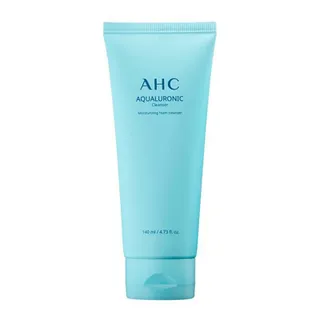
“Aqualuronic Cleanser”
This product works by removing dirt and oil from the surface of the skin. It uses a combination of mild cleansing agents (arachidic acid, cholesterol, cocamidopropyl betaine, hydrogenated lecithin, lauric acid, myristic acid, palmitic acid, stearic acid) and should be able to cleanse the skin gently. Still keep in mind that any cleansing can disrupt the skin barrier, and most people do not need to cleanse their skin more than once per day.
Even though this formulation is mild, the following cleansing agents could trigger an irritation or allergy for some people: cocamidopropyl betaine
Can it cause trouble?
Irritancy3 strong irritants: Parfum, Citrus paradisi fruit extract + 1 more — patch-test recommendedHigh risk
Comedogenic4 ingredients rated 2 or more on the 0–5 pore-clogging scale4 flagged


User reviews
Be the first — your take helps the next person decide.
Ingredients
Filter by role to see what each ingredient is doing.
Water~45–55%
Glycerin~4.6–5.6%
- Irritation risk
- Low
One of the best moisturizing ingredients. Naturally present in skin. It attracts water to the upper layer of the skin working as a humectant
More about GlycerinPalmitic acid~3.8–4.7%
- Irritation risk
- Low
An emollient that is naturally present in skin and helps soften it
More about Palmitic acidStearic acid~2.8–3.4%
- Irritation risk
- Low
Helps oil and water mix together and works as an emollient
More about Stearic acidMyristic acid~2.2–2.7%
- Irritation risk
- Medium
- Comedogenicity
- 3/5
Helps oil and water mix together. Could be comedogenic
More about Myristic acidPotassium hydroxide~1.8–2.2%
Lauric acid~1.6–2%
- Irritation risk
- Medium
- Comedogenicity
- 3/5
Helps water and oil mix together. Has anti-bacterial properties that might be helpful in preventing blemishes
More about Lauric acidCocamidopropyl betaine~1.9–2.3%
- Irritation risk
- High
Helps water and oil mix together. Used as a cleansing ingredient. Could be an allergen
More about Cocamidopropyl betaineEnteromorpha compressa extract~1.1–1.4%
- Irritation risk
- Low
- Comedogenicity
- 3/5
Codium tomentosum extract~0.8–1.2%
- Irritation risk
- Low
Sodium chloride~0.7–1.05%
- Irritation risk
- Low
Used to stabilize mixtures of oil and water, and create thicker, gel-like product textures
More about Sodium chlorideUndaria pinnatifida extract~0.5–0.75%
- Irritation risk
- Low
A seaweed extract that helps attract water to the upper layer of the skin and might have an anti-oxidant effect
More about Undaria pinnatifida extractParfum~0.45–0.7%
- Irritation risk
- High
An aromatic blend of unspecified and possibly irritating ingredients
More about ParfumButylene glycol~0.45–0.65%
- Irritation risk
- Low
Used to create a nice product texture and help delivery of other ingredients. Might be somewhat helpful in attracting water to the upper layer of the skin
More about Butylene glycolSodium benzoate~0.25–0.5%
Potassium sorbate~0.4–0.6%
Acrylates/c10-30 alkyl acrylate crosspolymer~0.4–0.6%
- Irritation risk
- Medium
Maintains the texture of skincare products. Allows the product to spread evenly. Helps oil and water mix together
More about Acrylates/c10-30 alkyl acrylate crosspolymerPeg-14m~0.3–0.6%
- Irritation risk
- Low
Arachidic acid~0.45–0.65%
Cellulose gum~0.3–0.55%
- Irritation risk
- Low
Used to create thicker product consistency and stabilize emulsions
More about Cellulose gum1,2-hexanediol~0.25–0.45%
Disodium edta~0.25–0.45%
Silica~0.35–0.6%
Citrus paradisi fruit extract~0.25–0.4%
- Irritation risk
- High
Saponaria officinalis leaf/root extract~0.25–0.4%
- Irritation risk
- Low
Maris aqua~0.25–0.45%
Caprylic/capric triglyceride~0.3–0.55%
- Irritation risk
- Medium
A good mix of fatty acids that forms a protective layer on the skin. Improves the shelf life of products. Derived from coconut and glycerin
More about Caprylic/capric triglycerideHydrogenated lecithin~0.25–0.45%
- Irritation risk
- Low
Helps to retain moisture by creating a protective barrier on the skin. Rich in fatty acids. Improves product texture and helps with the penetration of other ingredients.
More about Hydrogenated lecithinButyrospermum parkii butter~0.25–0.5%
- Irritation risk
- Low
- Comedogenicity
- 3/5
A great moisturising ingredient that softens the skin and reduces water loss from its upper layer. It also can be helpful in protecting skin from free radicals
More about Butyrospermum parkii butterSodium hyaluronate~0.2–0.4%
- Irritation risk
- Low
One of the best moisturizing ingredients. Attracts water into the upper layer of the skin
More about Sodium hyaluronateCeramide np~0.25–0.45%
- Irritation risk
- Low
A type of lipid similar to ceramides naturally present in skin. Helps to soften the upper layer of the skin and supports the skin barrier function to keep it hydrated. Can help to prevent inflammation in skin
More about Ceramide npCeramide ap~0.25–0.45%
- Irritation risk
- Low
A type of lipid similar to ceramides naturally present in skin. Helps to soften the upper layer of the skin and supports the skin barrier function to keep it hydrated. Can help to prevent inflammation in skin
More about Ceramide apCeramide ns~0.25–0.45%
- Irritation risk
- Low
A type of lipid similar to ceramides naturally present in skin. Helps to soften the upper layer of the skin and supports the skin barrier function to keep it hydrated. Can help to prevent inflammation in skin
More about Ceramide nsCholesterol~0.25–0.45%
- Irritation risk
- Low
An emollient that is naturally found in skin
More about CholesterolCeramide as~0.2–0.35%
- Irritation risk
- Low
A type of lipid similar to ceramides naturally present in skin. Helps to soften the upper layer of the skin and supports the skin barrier function to keep it hydrated. Can help to prevent inflammation in skin
More about Ceramide asEucalyptus globulus leaf extract~0.15–0.25%
- Irritation risk
- High
Used as a fragrance. Can be irritating
More about Eucalyptus globulus leaf extractMadecassic acid~0.1–0.25%
- Irritation risk
- Medium
An active compound of Centella Asiatica plant extract. In combination with other active compounds of Centella Asiatica extract (asiaticoside, madecasosside and asiatic acid), madecassic acid has been shown to be helpful in wound-healing, restoring skin barrier function and supporting collagen production in skin. It can, however, itself be irritating
More about Madecassic acidPhytosphingosine~0.15–0.3%
- Irritation risk
- Low
A type of lipid that is naturally present in skin. It might help in repairing skin barrier function and has anti-bacterial effect
More about PhytosphingosineAsiatic acid~0.1–0.15%
- Irritation risk
- Medium
An active compound of Centella Asiatica plant extract. In combination with other active compounds of Centella Asiatica extract (asiaticoside, madecasosside and madecassic acid) asiatic acid has been shown to be helpful in wound-healing, restoring skin barrier function and supporting collagen production in skin. It can, however, itself be irritating
More about Asiatic acidAsiaticoside~0.05%
- Irritation risk
- Medium
An active compound of Centella Asiatica plant extract. In combination with other active compounds of Centella Asiatica extract (madecasosside, asiatic acid and madecassic acid), asiaticoside has been shown to be helpful in wound-healing, restoring skin barrier function and supporting collagen production in skin. It can, however, itself be irritating
More about AsiaticosideCeramide eop~0.1–0.2%
- Irritation risk
- Low
A type of lipid similar to ceramides naturally present in skin. Helps to soften the upper layer of the skin and supports the skin barrier function to keep it hydrated. Can help to prevent inflammation in skin
More about Ceramide eopIngredient list view
Water, Glycerin, Palmitic acid, Stearic acid, Myristic acid, Potassium hydroxide, Lauric acid, Cocamidopropyl betaine, Enteromorpha compressa extract, Codium tomentosum extract, Sodium chloride, Undaria pinnatifida extract, Parfum, Butylene glycol, Sodium benzoate, Potassium sorbate, Acrylates/c10-30 alkyl acrylate crosspolymer, Peg-14m, Arachidic acid, Cellulose gum, 1,2-hexanediol, Disodium edta, Silica, Citrus paradisi fruit extract, Saponaria officinalis leaf/root extract, Maris aqua, Caprylic/capric triglyceride, Hydrogenated lecithin, Butyrospermum parkii butter, Sodium hyaluronate, Ceramide np, Ceramide ap, Ceramide ns, Cholesterol, Ceramide as, Eucalyptus globulus leaf extract, Madecassic acid, Phytosphingosine, Asiatic acid, Asiaticoside, Ceramide eop
Compare prices
Retailers ranked by price — lowest first.
Worth comparing, line by line.
Match % combines shared ingredients, the first five ingredients, shared actives and hero ingredients, irritancy (lower counts in the alternative's favour), texture and body area. Only products in the same routine step are compared.
| AHCAqualuronic CleanserYOUR PRODUCT | MAXCLINICCica Biome Oil Foam | the Torriden StoreBalanceful Cica Cleansing Gel | LeadersCalming Biotics Gel Cleanser | |
|---|---|---|---|---|
| Match | — | 54% | 51% | 50% |
| Price | — | $9.70 | $4.09 | $22.00 |
| Shared key ingredients | — | 10 of 22 | 7 of 22 | 5 of 22 |
| Key difference | — | Niacinamide | Madecassoside | Madecassoside |
| Irritancy | High | High | Medium | Medium |
| Drying alcohol | — | — | — | Contains drying alcohol |
| View product | Shop | Shop | Shop |

More alternatives: SCINIC Cica Blemish Clear Bubble Foamskintific Niacinamide Brightening Cleanser Face Wash
Sources cited in this review
Every concentration estimate and effectiveness label is anchored to one of these 13 studies and safety reviews.
- 1
- 2
- 3
- 4Hyaluronic acid: A key molecule in skin agingncbi.nlm.nih.gov
- 5
- 6

Affiliate links · As an Amazon Associate, WIMJ earns from qualifying purchases.