Works for
MoisturizingEthylhexyl palmitate, Glycerin + 18 moreWorks
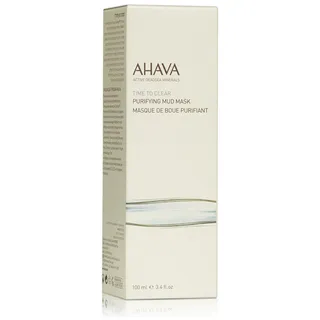
“Formulated with a unique blend of Dead Sea Mud, minerals and botanical extracts, the face mask unclogs pores and absorbs excess oil whilst adding an intense dosage of hydration.”
This product can help improve hydration of the skin with the two types of ingredients.
The first type is called “humectants”:
these ingredients help attract water.
When humectants are on the surface of the skin, they “pull in” the moisture from the outside environment, or from
within deeper layers of the skin. The following ingredients in this product do the job:
glycerin, sodium lactate.
This product also contains ingredients called “occlusives”. They help reduce the speed with which our skin loses moisture to the outside environment. These ingredients also help soften the upper layer of the skin, so it feels less tight and nicer to the touch. The following ingredients in this product do the job: dimethicone, helianthus annuus seed oil.
Anti-blemishKaolin, AllantoinNot delivered
“Controls sebum and breakouts, has antiseptic actions.”
Effective ingredients missing or their concentration is too low.
Evens skin toneLactic acid ~0.25–0.5%, below the ~2% it needsUnder-dosed
“Enriched with Jojoba Oil and Horsetail extract, skin is left feeling moisturized, refined and smoother with a more even tone.”
Effective ingredients missing or their concentration is too low
Anti-oxidationSide benefit · Squalene, Dunaliella salina extract + 2 moreMay help
This product contains antioxidants (squalene) that might be able to help neutralize free radicals in skin to lessen the damage it gets from the UV light (sun). There is not enough evidence to confirm their effectiveness in skin though.
Can it cause trouble?
Irritancy14 flagged ingredientsMedium risk
Comedogenic4 ingredients rated 2 or more on the 0–5 pore-clogging scale4 flagged
User reviews
Be the first — your take helps the next person decide.
Ingredients
Filter by role to see what each ingredient is doing.
Water~45–55%
Kaolin~4.2–5.1%
- Irritation risk
- Low
A type of clay that consists mainly of aluminum silicate. Helps absorb oil and creates a thicker product consistency. Can be used to add a white color
More about KaolinSea silt~4.2–5.1%
- Irritation risk
- Low
Propanediol~3–3.7%
- Irritation risk
- Low
Acts as a solvent for other ingredients. Speeds up the absorption of other ingredients into the skin
More about PropanediolGlyceryl stearate~2.3–2.8%
- Irritation risk
- Low
An emollient that softens the skin and forms a protective layer on its surface. Helps water and oil mix together
More about Glyceryl stearateEthylhexyl palmitate~1.9–2.4%
- Irritation risk
- Low
- Comedogenicity
- 3/5
An emollient that helps soften the skin and create a nice product texture
More about Ethylhexyl palmitateSodium trideceth sulfate~1.9–2.3%
Glycerin~1.5–1.8%
- Irritation risk
- Low
One of the best moisturizing ingredients. Naturally present in skin. It attracts water to the upper layer of the skin working as a humectant
More about GlycerinSimmondsia chinensis seed oil~1.2–1.5%
- Irritation risk
- Medium
Softens the upper layer of skin and helps restore the healthy skin barrier. Has shown to help calm down inflammation in skin. It is a stable oil, meaning that it retains its properties even when exposed to air.
More about Simmondsia chinensis seed oilZinc oxide~1.5–1.8%
- Irritation risk
- Low
A broad spectrum sunblock (protects from both UVA and UVB rays). Is suitable for most sensitive skins. In small concentrations, can be used as a colorant
More about Zinc oxideSodium lauroamphoacetate~1.1–1.3%
Cetearyl alcohol~0.65–1%
- Irritation risk
- Low
- Comedogenicity
- 2/5
A non-drying alcohol. Works as an emollient. Helps water and oil mix together and creates a nice product texture
More about Cetearyl alcoholPhenoxyethanol~0.5–0.75%
- Irritation risk
- Low
A preservative. It helps prevent bacterial growth in cosmetic products
More about PhenoxyethanolPropylene glycol~0.45–0.65%
- Irritation risk
- High
Helps oil and water mix together and can enhance the penetration of other ingredients into the skin. It can be irritating
More about Propylene glycolSodium lactate~0.4–0.65%
- Irritation risk
- Medium
Helps attract water to the upper layer of the skin. Is often used to adjust the pH level of the product
More about Sodium lactateStearyl alcohol~0.5–0.75%
- Irritation risk
- Low
An emollient that helps soften the skin
More about Stearyl alcoholCocamide mea~0.45–0.65%
Ceteareth-30~0.5–0.7%
Peg-40 stearate~0.35–0.65%
Magnesium aluminum silicate~0.3–0.55%
- Irritation risk
- Low
Might be helpful in restoring skin barrier function and, when combined with zinc carbonate and malonic acid, reducing fine lines and wrinkles by stimulating elastin production. Also helps stabilize the product formulation
More about Magnesium aluminum silicateHydroxyethylcellulose~0.3–0.55%
- Irritation risk
- Low
Used to thicken product formulations and create gel-like textures
More about HydroxyethylcelluloseLactic acid~0.25–0.5%
- Irritation risk
- Medium
An exfoliating and moisturizing alpha-hydroxy acid (AHA). Typically causes less irritation than other AHAs, for example, glycolic acid. At high concentrations (about 15%), lactic acid can help reduce lines and wrinkles. Recent studies show that lactic acid can support the "good" bacteria living on skin's surface (healthy skin microbiome)
More about Lactic acidCaprylyl glycol~0.3–0.5%
- Irritation risk
- Medium
Helps preserve products and creates a nice product texture
More about Caprylyl glycolChlorphenesin~0.16–0.32%
Dimethicone~0.3–0.55%
- Irritation risk
- Low
A silicone that helps to reduce water loss from the surface of the skin. Can temporarily "fill in" lines and wrinkles, absorb oil, and create a nice product finish
More about DimethiconeSorbitan tristearate~0.25–0.5%
- Irritation risk
- Medium
Helps oil and water mix together
More about Sorbitan tristearateXanthan gum~0.25–0.5%
- Irritation risk
- Low
Used to create a thicker product consistency
More about Xanthan gumSodium chloride~0.25–0.5%
- Irritation risk
- Low
Used to stabilize mixtures of oil and water, and create thicker, gel-like product textures
More about Sodium chlorideSodium benzoate~0.25–0.45%
Ascorbyl palmitate~0.25–0.45%
- Irritation risk
- Medium
Being a lipid soluble form of vitamin C, it is more stable and can penetrate the skin better than L-Ascorbic acid. It is effective in protecting the skin from free radicals, as well as evening the skin tone, but is less effective in stimulating collagen production compared to L-Ascorbic acid.
More about Ascorbyl palmitateGlycine soja oil~0.25–0.5%
- Irritation risk
- Medium
- Comedogenicity
- 2/5
A good emollient that helps soften the skin and helps repair its barrier function. It can clog pores if used in high concentrations.
More about Glycine soja oilLecithin~0.3–0.55%
- Irritation risk
- Low
Used mostly for creating emulsions - helping oil and water mix together. Helps soften the upper layer of the skin
More about LecithinHydrogenated vegetable glycerides citrate~0.3–0.55%
Beta-sitosterol~0.3–0.5%
- Irritation risk
- Low
A phytosterol that can support skin's barrier function and help the skin stay hydrated
More about Beta-sitosterolSqualene~0.3–0.55%
- Irritation risk
- Low
- Comedogenicity
- 2/5
An oil that is naturally part of skin sebum that helps to soften its upper layer, reduce water loss and neutralize free radicals. It might be comedogenic. Avoid applying large concentrations (or pure oil) before sun exposure as oxidized squalene can clog pores and lead to skin irritation. Today squalene is mostly derived from vegetable oils or synthetized by yeast
More about SqualenePotassium sorbate~0.25–0.45%
Citric acid~0.2–0.4%
- Irritation risk
- Medium
Can work as an exfoliant but is typically used to adjust the product pH
More about Citric acidHelianthus annuus seed oil~0.25–0.45%
- Irritation risk
- Low
A great emollient due to its high linoleic acid content. One of the most effective plant oils in helping skin hydration and repairing skin barrier function
More about Helianthus annuus seed oilTocopherol~0.2–0.4%
- Irritation risk
- Low
Pure form of vitamin E. Can help moisturise and protect the skin from free radicals. Often used to help stabilise other ingredients or the formula itself
More about TocopherolChamomilla recutita flower extract~0.2–0.35%
- Irritation risk
- High
Plant extract that can have healing and anti-inflammatory properties. It is a potential allergen and can be irritating
More about Chamomilla recutita flower extractAllantoin~0.15–0.3%
- Irritation risk
- Low
Helps calm down inflammation in skin and can help reduce itching. Helps to repair the skin barrier and keep skin hydrated
More about AllantoinAloe barbadensis leaf extract~0.25–0.4%
- Irritation risk
- Medium
Traditionally used to treat sunburns, dermatitis and inflammation, but evidence for its effectiveness is lacking. The extract can contain humectants that help attract water into the skin
More about Aloe barbadensis leaf extractPanthenol~0.15–0.25%
- Irritation risk
- Low
Helps attract water to the upper layer of the skin and can help improve skin barrier function
More about PanthenolMaris sal~0.15–0.3%
- Irritation risk
- Medium
Used to thicken the product formulation and might help to add minerals to the surface of the skin. It is used in scrubs as a physical exfoliant. Can increase sensitivity to other ingredients if left on the skin or used in high concentration
More about Maris salDunaliella salina extract~0.15–0.25%
- Irritation risk
- Low
A green micro-algae extract that might help neutralize free radicals in skin, but solid evidence is lacking. It helps to soften the upper layer of the skin
More about Dunaliella salina extractPhoenix dactylifera fruit extract~0.15–0.25%
- Irritation risk
- Low
Maris aqua~0.1–0.15%
Ingredient list view
Water, Kaolin, Sea silt, Propanediol, Glyceryl stearate, Ethylhexyl palmitate, Sodium trideceth sulfate, Glycerin, Simmondsia chinensis seed oil, Zinc oxide, Sodium lauroamphoacetate, Cetearyl alcohol, Phenoxyethanol, Propylene glycol, Sodium lactate, Stearyl alcohol, Cocamide mea, Ceteareth-30, Peg-40 stearate, Magnesium aluminum silicate, Hydroxyethylcellulose, Lactic acid, Caprylyl glycol, Chlorphenesin, Dimethicone, Sorbitan tristearate, Xanthan gum, Sodium chloride, Sodium benzoate, Ascorbyl palmitate, Glycine soja oil, Lecithin, Hydrogenated vegetable glycerides citrate, Beta-sitosterol, Squalene, Potassium sorbate, Citric acid, Helianthus annuus seed oil, Tocopherol, Chamomilla recutita flower extract, Allantoin, Aloe barbadensis leaf extract, Panthenol, Maris sal, Dunaliella salina extract, Phoenix dactylifera fruit extract, Maris aqua
Compare prices
Retailers ranked by price — lowest first.

Worth comparing, line by line.
Match % combines shared ingredients, the first five ingredients, shared actives and hero ingredients, irritancy (lower counts in the alternative's favour), texture and body area. Only products in the same routine step are compared.
| AhavaPurifying Mud MaskYOUR PRODUCT | REVOLUTION SKINCAREBlemish Recovery Mask | Holland & BarrettVitamin E mask | The INKEY List CAKaolin Clay Face Mask | |
|---|---|---|---|---|
| Match | — | 45% | 43% | 42% |
| Price | $42.00 | $10.65−$31.35 | — | $6.64−$35.36 |
| Shared key ingredients | — | 5 of 14 | 6 of 14 | 5 of 14 |
| Key difference | — | Urea | Retinyl Palmitate | Centella Asiatica Extract |
| Irritancy | Medium | Low | Medium | Medium |
| Drying alcohol | — | — | — | — |
| View product | Shop | Shop | Shop |


More alternatives: Liz Earle Cica Skin Restore Paste TubeDr. Barbara Sturm Clarifying Face Mask
Product summary
"Ahava - Purifying Mud Mask" is effective for: Anti-inflammatory
This product could be helpful for: Moisturizing, but its actives are not the most effective or are not well-studied.
Ingredient callouts
- Humectants (sodium lactate 0.15% - 0.60% and glycerin 0.30% - 0.75%). These ingredients help attract water to the upper layer of the skin and improve the skin hydration.
Price
The product retails for 44.95A$ in Australia, from 28.99$ up to 35.00$ in the United States and from 7.55£ up to 64.00£ in the United Kingdom.
For a detailed price comparison: click here.
Sources cited in this review
Every concentration estimate and effectiveness label is anchored to one of these 32 studies and safety reviews.
- 1
- 2A review of inorganic UV filters zinc oxide and titanium dioxideonlinelibrary.wiley.com
- 3
- 4
- 5
- 6

Affiliate links · As an Amazon Associate, WIMJ earns from qualifying purchases.