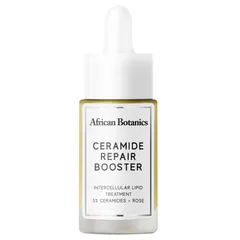
Works for:
based on ingredients and %- Moisturizing
- Anti-aging
- Anti-oxidation
Can it cause trouble?
- Irritation risk: high
- Comedogenic risk ingredients: 0
Key actives

Product Summary
"African Botanics - Ceramide Repair Booster" is effective for: Moisturizing
This product could be helpful for: Anti-aging, but its actives are not the most effective or are not well-studied.
Ingredient callouts
- this product includes a form of Retinoids (vitamin A) - retinyl palmitate 0.15% - 0.50%, but this type of vitamin A is not very effective. It could in theory help with fine lines and wrinkles, but the effect is most likely minimal.
- Ceramides (ceramide 1 2.40% - 3.60%). Ceramides are an important part of our natural skin barrier. The Ceramides used in skincare are synthetic or come from plants. They help soften the skin and can help "fill the gaps" in the skin barrier, keeping the skin hydrated and resilient for longer.
- Another helpful ingredient in this product is Linoleic Acid. It is one of the fatty acids naturally present in skin. It is part of the skin barrier. Preliminary research shows that it might be able to reduce clogged pores.
- Humectants (glycerin 0.30% - 0.70%). These ingredients help attract water to the upper layer of the skin and improve the skin hydration.
Price
The product retails for 100.00$ in the United States.
For a detailed price comparison: click here.
Works for
Anti-oxidation
This product contains antioxidants (ubiquinone) that can help neutralize free radicals in skin. By doing so, they can lessen the damage the skin gets from the UV light (sun).
The following ingredients - rubus idaeus seed oil also can have an antioxidant effect, but there is less evidence to confirm their effectiveness in skin.
Coenzyme Q10. It helps neutralize free radicals in skin, improves skin hydration and might be helpful agains fine lines and wrinkles. It can be an allergen
A plant oil that might be able to help neutralize free radicals in skin
Helps soften the upper layer of the skin and can support skin barrier function
A great emollient. Contains vitamin E (tocopherol) which may give it some anti-oxidant properties. Can contain volatile compounds and can be irritating
A plant oil that might have an antibacterial and some antioxidant effect. Is a common allergen and irritant
An emollient that helps to soften the skin. It has a high contetn of oleic acid that might weaken the skin barrier. Might have some anti-oxidant properties. It might be somewhat helpful against hyperpigmentation.
Helps attract water to the upper layer of the skin. Might have some anti-oxidant properties
Mostly used as a fragrance. Might have some anti-oxidant effect
Pure form of vitamin E. Can help moisturise and protect the skin from free radicals. Often used to help stabilise other ingredients or the formula itself
Moisturizing
What does the product description say?
Why we love it Featuring a unique waterless oil-cerate formula, this deeply emollient-rich treatment is powered by active Ceramides (5%), raspberry-derived plant-based lipids that mimic the naturally occurring ones found in the outer layer of skin, and Rose Flower Butter harnessed in an Olive Squalane base to fortify skin tissue, quench dry and dehydrated skin and seal in hydration.
Source: Credo Beauty
This product can help improve hydration of the skin with the two types of ingredients.
The first type is called “humectants”:
these ingredients help attract water.
When humectants are on the surface of the skin, they “pull in” the moisture from the outside environment, or from
within deeper layers of the skin. The following ingredients in this product do the job:
glycerin, hydrolyzed rice protein.
This product also contains ingredients called “occlusives”. They help reduce the speed with which our skin loses moisture to the outside environment. These ingredients also help soften the upper layer of the skin, so it feels less tight and nicer to the touch. The following ingredients in this product do the job: cera alba, squalane.
The following ingredients in this product are especially good for supporting the skin barrier and helping with the hydration level: ceramide 1, linoleic acid
Helps soften the upper layer of the skin and can support skin barrier function
A great emollient. Contains vitamin E (tocopherol) which may give it some anti-oxidant properties. Can contain volatile compounds and can be irritating
An oil naturally present in skin. Works as an emollient to soften the skin and form a protective layer on its surface without a greasy feeling.
Coenzyme Q10. It helps neutralize free radicals in skin, improves skin hydration and might be helpful agains fine lines and wrinkles. It can be an allergen
Forms a protective barrier that holds water and keeps dry skin hydrated. Keeps an emulsion from separating into its oil and liquid components, and increases the thickness of a product. Can be an allergen
A type of lipid similar to ceramides naturally present in skin. Helps to soften the upper layer of the skin and supports the skin barrier function to keep it hydrated. Can help to prevent inflammation in skin
One of the best moisturizing ingredients. Naturally present in skin. It attracts water to the upper layer of the skin working as a humectant
An excellent emollient. Helps soften the skin, restore its barrier function, and can help to calm down inflammation. It can be helpful to prevent blemishes and clogged pores
An emollient that helps soften the skin and calm down inflammation
Helps attract water to the upper layer of the skin. Might have some anti-oxidant properties
An emollient that helps to soften the skin. It has a high contetn of oleic acid that might weaken the skin barrier. Might have some anti-oxidant properties. It might be somewhat helpful against hyperpigmentation.
Helps soften the upper layer of the skin
An emollient that helps soften the skin but is not effective for restoring its barrier function. Might be helpful to calm down inflammation
Is likely to contain rose essential oil that can be irritating. Typically used for its fragrance and to create a thicker product consistency
Is likely to contain an essential oil that can be irritating. Typically used for its fragrance and to create a thicker product consistency
An emollient that helps soften the skin and could be helpful in repairing its barrier function
An exfoliating and moisturizing alpha-hydroxy acid (AHA). Typically causes less irritation than other AHAs, for example, glycolic acid. At high concentrations (about 15%), lactic acid can help reduce lines and wrinkles. Recent studies show that lactic acid can support the "good" bacteria living on skin's surface (healthy skin microbiome)
Pure form of vitamin E. Can help moisturise and protect the skin from free radicals. Often used to help stabilise other ingredients or the formula itself
Anti-aging
What does the product description say?
This luxe concentrate creates a nourishing and non-greasy layer to help keep hydration from escaping and also restore the skin barrier’s ability to retain moisture over time, improve cell strength and visible signs of aging and protect against environmental aggressors.
Source: Credo Beauty
This product contains ubiquinone. This ingredient help neutralize free radicals in skin. By doing so, they might be able to prevent early signs of aging (like fine lines and wrinkles), at least to some extent. These ingredients will not be able to "reverse" signs of aging.
Coenzyme Q10. It helps neutralize free radicals in skin, improves skin hydration and might be helpful agains fine lines and wrinkles. It can be an allergen
An exfoliating and moisturizing alpha-hydroxy acid (AHA). Typically causes less irritation than other AHAs, for example, glycolic acid. At high concentrations (about 15%), lactic acid can help reduce lines and wrinkles. Recent studies show that lactic acid can support the "good" bacteria living on skin's surface (healthy skin microbiome)
Three steps removed from the active form of vitamin A - retinoic acid. To have an effect in the skin, it first needs to be converted twice to become the retinoic acid. This means it is less potent than retinol, but could also be less irritating. Once converted to the retinoic acid in the skin, it helps against all signs of aging, improves skin cell turnover and helps fight blemishes and clogged pores. However, in many cosmetic formulations, it is used in a concentration that is too low to have the full effect
Pure form of vitamin E. Can help moisturise and protect the skin from free radicals. Often used to help stabilise other ingredients or the formula itself
How honest is this product?
| Promise | Can it deliver? |
|---|---|
| Moisturizing | |
| Anti-aging |
Total Promises Fulfilled score: 87/100.
We receive a small commission for purchases made through these links at no cost for you. Thank you for your support! Learn more
Potential irritants
Comedogenic ingredients
No comedogenic ingredients detected
User reviews (0)
Averages from community submissions.
No reviews yet for this product.
Be the first to share your experience!
Tried this product?
Help capture what the ingredient list can't—texture, finish, pilling, scent, and more. Answer what you can, skip the rest.
Takes ~30 seconds.
Reviews are shown in aggregate. No personal details.
Key Actives
An emollient that helps soften the skin and calm down inflammation
Helps soften the upper layer of the skin and can support skin barrier function
Pure form of vitamin E. Can help moisturise and protect the skin from free radicals. Often used to help stabilise other ingredients or the formula itself
Three steps removed from the active form of vitamin A - retinoic acid. To have an effect in the skin, it first needs to be converted twice to become the retinoic acid. This means it is less potent than retinol, but could also be less irritating. Once converted to the retinoic acid in the skin, it helps against all signs of aging, improves skin cell turnover and helps fight blemishes and clogged pores. However, in many cosmetic formulations, it is used in a concentration that is too low to have the full effect
A type of lipid similar to ceramides naturally present in skin. Helps to soften the upper layer of the skin and supports the skin barrier function to keep it hydrated. Can help to prevent inflammation in skin
An excellent emollient. Helps soften the skin, restore its barrier function, and can help to calm down inflammation. It can be helpful to prevent blemishes and clogged pores
Coenzyme Q10. It helps neutralize free radicals in skin, improves skin hydration and might be helpful agains fine lines and wrinkles. It can be an allergen
A great emollient. Contains vitamin E (tocopherol) which may give it some anti-oxidant properties. Can contain volatile compounds and can be irritating
Forms a protective barrier that holds water and keeps dry skin hydrated. Keeps an emulsion from separating into its oil and liquid components, and increases the thickness of a product. Can be an allergen
An oil naturally present in skin. Works as an emollient to soften the skin and form a protective layer on its surface without a greasy feeling.
A plant oil that might be able to help neutralize free radicals in skin
An emollient that helps soften the skin and could be helpful in repairing its barrier function
One of the best moisturizing ingredients. Naturally present in skin. It attracts water to the upper layer of the skin working as a humectant
Potential irritants
Mostly used as a fragrance. Might have some anti-oxidant effect
Is likely to contain an essential oil that can be irritating. Typically used for its fragrance and to create a thicker product consistency
Is likely to contain rose essential oil that can be irritating. Typically used for its fragrance and to create a thicker product consistency
Three steps removed from the active form of vitamin A - retinoic acid. To have an effect in the skin, it first needs to be converted twice to become the retinoic acid. This means it is less potent than retinol, but could also be less irritating. Once converted to the retinoic acid in the skin, it helps against all signs of aging, improves skin cell turnover and helps fight blemishes and clogged pores. However, in many cosmetic formulations, it is used in a concentration that is too low to have the full effect
A plant oil that might have an antibacterial and some antioxidant effect. Is a common allergen and irritant
An emollient that helps soften the skin but is not effective for restoring its barrier function. Might be helpful to calm down inflammation
An emollient that helps to soften the skin. It has a high contetn of oleic acid that might weaken the skin barrier. Might have some anti-oxidant properties. It might be somewhat helpful against hyperpigmentation.
A great emollient. Contains vitamin E (tocopherol) which may give it some anti-oxidant properties. Can contain volatile compounds and can be irritating
A plant oil that might be able to help neutralize free radicals in skin
An emollient that helps soften the skin and calm down inflammation
Helps soften the upper layer of the skin and can support skin barrier function
An emollient that helps soften the skin and could be helpful in repairing its barrier function
An exfoliating and moisturizing alpha-hydroxy acid (AHA). Typically causes less irritation than other AHAs, for example, glycolic acid. At high concentrations (about 15%), lactic acid can help reduce lines and wrinkles. Recent studies show that lactic acid can support the "good" bacteria living on skin's surface (healthy skin microbiome)
Forms a protective barrier that holds water and keeps dry skin hydrated. Keeps an emulsion from separating into its oil and liquid components, and increases the thickness of a product. Can be an allergen
Comedogenic ingredients
We couldn't find any comedogenic ingredients in this product
All ingredients
An oil naturally present in skin. Works as an emollient to soften the skin and form a protective layer on its surface without a greasy feeling.
An emollient that helps soften the skin but is not effective for restoring its barrier function. Might be helpful to calm down inflammation
An emollient that helps to soften the skin. It has a high contetn of oleic acid that might weaken the skin barrier. Might have some anti-oxidant properties. It might be somewhat helpful against hyperpigmentation.
A great emollient. Contains vitamin E (tocopherol) which may give it some anti-oxidant properties. Can contain volatile compounds and can be irritating
A type of lipid similar to ceramides naturally present in skin. Helps to soften the upper layer of the skin and supports the skin barrier function to keep it hydrated. Can help to prevent inflammation in skin
A plant oil that might be able to help neutralize free radicals in skin
Mostly used as a fragrance. Might have some anti-oxidant effect
An excellent emollient. Helps soften the skin, restore its barrier function, and can help to calm down inflammation. It can be helpful to prevent blemishes and clogged pores
An emollient that helps soften the skin and calm down inflammation
Is likely to contain an essential oil that can be irritating. Typically used for its fragrance and to create a thicker product consistency
Is likely to contain rose essential oil that can be irritating. Typically used for its fragrance and to create a thicker product consistency
Helps soften the upper layer of the skin and can support skin barrier function
Helps attract water to the upper layer of the skin. Might have some anti-oxidant properties
Pure form of vitamin E. Can help moisturise and protect the skin from free radicals. Often used to help stabilise other ingredients or the formula itself
An emollient that helps soften the skin and could be helpful in repairing its barrier function
One of the best moisturizing ingredients. Naturally present in skin. It attracts water to the upper layer of the skin working as a humectant
Three steps removed from the active form of vitamin A - retinoic acid. To have an effect in the skin, it first needs to be converted twice to become the retinoic acid. This means it is less potent than retinol, but could also be less irritating. Once converted to the retinoic acid in the skin, it helps against all signs of aging, improves skin cell turnover and helps fight blemishes and clogged pores. However, in many cosmetic formulations, it is used in a concentration that is too low to have the full effect
A plant oil that might have an antibacterial and some antioxidant effect. Is a common allergen and irritant
Coenzyme Q10. It helps neutralize free radicals in skin, improves skin hydration and might be helpful agains fine lines and wrinkles. It can be an allergen
An exfoliating and moisturizing alpha-hydroxy acid (AHA). Typically causes less irritation than other AHAs, for example, glycolic acid. At high concentrations (about 15%), lactic acid can help reduce lines and wrinkles. Recent studies show that lactic acid can support the "good" bacteria living on skin's surface (healthy skin microbiome)
Forms a protective barrier that holds water and keeps dry skin hydrated. Keeps an emulsion from separating into its oil and liquid components, and increases the thickness of a product. Can be an allergen
Ingredient list view
Squalane, Olea europaea fruit oil, Sclerocarya birrea seed oil, Rosa canina fruit oil, Ceramide 1, Rubus idaeus seed oil, Rubus idaeus extract, Linoleic acid, Linolenic acid, Elaeis guineensis extract, Rosa centifolia flower wax, Rosa damascena flower wax, Citrullus lanatus seed oil, Oenothera biennis oil, Hydrolyzed rice protein, Tocopherol, Persea gratissima oil, Glycerin, Rosa centifolia flower oil, Retinyl palmitate, Calendula officinalis flower oil, Ubiquinone, Lactic acid, Crambe abyssinica seed oil, Cera alba
- Use of “natural” oils for moisturization: Review of olive, coconut, and sunflower seed oil
- Anti-aging potential of extracts from Sclerocarya birrea (A. Rich.) Hochst and its chemical profiling by UPLC-Q-TOF-MS
- Physico-chemical composition and characterisation of the seed and seed oil of Sclerocarya birrea
- Assessment of the potential irritancy of oleic acid on human skin: Evaluation in vitro and in vivo
- Topically Applied Ceramides Interact with the Stratum Corneum Lipid Matrix in Compromised Ex Vivo Skin
- The Permeability Barrier in Essential Fatty Acid Deficiency: Evidence for a Direct Role for Linoleic Acid in Barrier Function
- Digital image analysis of the effect of topically applied linoleic acid on acne microcomedones.
- Protection Against Free Radicals (UVB Irradiation) of a Water-Soluble Enzymatic Extract from Rice Bran. Study Using Human Keratinocyte Monolayer and Reconstructed Human Epidermis
- Amended final report on the safety assessment of Oryza Sativa (rice) Bran Oil, Oryza Sativa (rice) Germ Oil, Rice Bran Acid,Oryza Sativa (rice) Bran Wax, Hydrogenated Rice Bran Wax, Oryza Sativa (rice)Bran Extract, Oryza Sativa (rice) Extract, Oryza Sativa (rice) Germ Powder, Oryza Sativa (rice) Starch, Oryza Sativa (rice) Bran, Hydrolyzed Rice Bran Extract, Hydrolyzed Rice Bran Protein, Hydrolyzed Rice Extract, and Hydrolyzed Rice Protein
- Vitamin E in dermatology
- Vitamin E and Skin Health
- Glycerol and the skin: holistic approach to its origin and functions
- Epidermal and dermal effects of topical lactic acid
- Dual Effects of Alpha-Hydroxy Acids on the Skin
- Efficacy of barrier creams in comparison to skin care products in dental laboratory technicians--a controlled trial