Works for:
based on ingredients and %- Moisturizing
- Anti-aging
- Evens skin tone
- Anti-blemish
Can it cause trouble?
- Irritation risk: high
- Comedogenic risk ingredients: 2
Key actives


Anti-aging
This product can help reduce and prevent fine lines and wrinkles, improve skin elasticity and firmness because it contains niacinamide.
Keep in mind that it typically takes at least 6 weeks to notice any results because the changes that are needed to improve fine lines and elasticity happen in the deeper layers of the skin. No topical anti-aging product can “erase” wrinkles or fully reverse signs of aging.
Is proven to be effective in reducing blemishes, evening out skin tone and helping to improve lines and wrinkles. It helps the skin to repair sun damage, calm down inflammation and keep maintain good levels of moisture. The concentration of about 2% is effective for supporting the skin barrier and evening out the skin tone. Concentration of 4-6% is better for helping with acne and balancing the sebum production
A stable derivative of vitamin C. It is oil-soluble which means it is more likely to penetrate the skin compared to the pure form of vitamin C (which is water-soluble), but it is less bio-available and is way less effective in stimulating collagen and reducing wrinkles compared to the pure form of vitamin C (L-ascorbic acid) and its other derivatives (for example, magnesium ascorbyl phosphate). At the same time, this vitamin C derivative has been shown in studies to be effective in reducing acne, blemishes and clogged pores. It is less irritating then the pure form of vitamin C
Pure form of vitamin E. Can help moisturise and protect the skin from free radicals. Often used to help stabilise other ingredients or the formula itself
Anti-blemish
This product can help reduce breakouts and clogged pores because it contains the following ingredient: niacinamide. This ingredient is used for treating acne and can have a noticeable effect.
The following ingredient (ingredients) in this product might be helpful, but there is no evidence to confirm that it actually works: linoleic acid
Is proven to be effective in reducing blemishes, evening out skin tone and helping to improve lines and wrinkles. It helps the skin to repair sun damage, calm down inflammation and keep maintain good levels of moisture. The concentration of about 2% is effective for supporting the skin barrier and evening out the skin tone. Concentration of 4-6% is better for helping with acne and balancing the sebum production
An excellent emollient. Helps soften the skin, restore its barrier function, and can help to calm down inflammation. It can be helpful to prevent blemishes and clogged pores
A stable derivative of vitamin C. It is oil-soluble which means it is more likely to penetrate the skin compared to the pure form of vitamin C (which is water-soluble), but it is less bio-available and is way less effective in stimulating collagen and reducing wrinkles compared to the pure form of vitamin C (L-ascorbic acid) and its other derivatives (for example, magnesium ascorbyl phosphate). At the same time, this vitamin C derivative has been shown in studies to be effective in reducing acne, blemishes and clogged pores. It is less irritating then the pure form of vitamin C
Evens skin tone
This product can help reduce hypepigmentation and even out the skin tone because it contains the following effective ingredients: niacinamide
Keep in mind that you would need to apply any topical skincare targetted at hypigmentation consistently for a couple of months to get a result. No topical skincare product can help get rid of hyperpigmentation (including post-acne marks and age spots) instantly.
Is proven to be effective in reducing blemishes, evening out skin tone and helping to improve lines and wrinkles. It helps the skin to repair sun damage, calm down inflammation and keep maintain good levels of moisture. The concentration of about 2% is effective for supporting the skin barrier and evening out the skin tone. Concentration of 4-6% is better for helping with acne and balancing the sebum production
Moisturizing
What does the product description say?
Enhances luminosity and delivers sustained hydration
Source: Dermstore
This product can help improve hydration of the skin with the two types of ingredients.
The first type is called “humectants”:
these ingredients help attract water.
When humectants are on the surface of the skin, they “pull in” the moisture from the outside environment, or from
within deeper layers of the skin. The following ingredients in this product do the job:
glycerin, polyglycerin-3.
This product also contains ingredients called “occlusives”. They help reduce the speed with which our skin loses moisture to the outside environment. These ingredients also help soften the upper layer of the skin, so it feels less tight and nicer to the touch. The following ingredients in this product do the job: squalane, glycine soja oil.
The following ingredients in this product are especially good for supporting the skin barrier and helping with the hydration level: linoleic acid, niacinamide, panthenol
Helps to attract water to the upper layer of the skin
Helps attract water to the upper layer of the skin
An oil naturally present in skin. Works as an emollient to soften the skin and form a protective layer on its surface without a greasy feeling.
A good emollient that helps soften the skin and helps repair its barrier function. It can clog pores if used in high concentrations.
Helps soften the upper layer of the skin and support skin's barrier function while creating a thicker product consistency
An emollient made of jojoba oil. Helps soften the skin and support its barrier function
An excellent emollient. Helps soften the skin, restore its barrier function, and can help to calm down inflammation. It can be helpful to prevent blemishes and clogged pores
An emollient that helps soften the skin and calm down inflammation
Is proven to be effective in reducing blemishes, evening out skin tone and helping to improve lines and wrinkles. It helps the skin to repair sun damage, calm down inflammation and keep maintain good levels of moisture. The concentration of about 2% is effective for supporting the skin barrier and evening out the skin tone. Concentration of 4-6% is better for helping with acne and balancing the sebum production
Helps soften the upper layer of the skin
One of the best moisturizing ingredients. Naturally present in skin. It attracts water to the upper layer of the skin working as a humectant
Helps attract water to the upper layer of the skin and can help improve skin barrier function
Helps soften the upper layer of the skin. At the same time, it can weaken the skin's barrier enhancing penetration of other ingredients and increasing the risk of skin dryness
An emollient that is naturally present in skin and helps soften it
Helps oil and water mix together and works as an emollient
Pure form of vitamin E. Can help moisturise and protect the skin from free radicals. Often used to help stabilise other ingredients or the formula itself
How honest is this product?
| Promise | Can it deliver? |
|---|---|
| Moisturizing |
Total Promises Fulfilled score: 100/100.
We receive a small commission for purchases made through these links at no cost for you. Thank you for your support! Learn more
Potential irritants
Comedogenic ingredients
User reviews (0)
Averages from community submissions.
No reviews yet for this product.
Be the first to share your experience!
Tried this product?
Help capture what the ingredient list can't—texture, finish, pilling, scent, and more. Answer what you can, skip the rest.
Takes ~30 seconds.
Reviews are shown in aggregate. No personal details.
| Product | Similarity | Price | Irritancy |
|---|---|---|---|
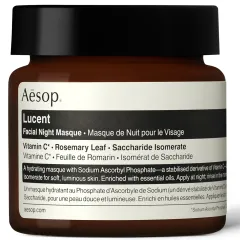
 Aesop Lucent Facial Night Masque | Current | $144.00 | |
Anua Peach 70 Niacin Serum Mask | 78% | ≈ $5.61 | |
BIODANCE Hydro Cera-nol Real Deep Mask - for Dryness Relief & Redness Soothing | 77% | $19.00 | |
 Too Cool For School Egg Cream Hydration Mask | 75% | ≈ $6.43 | |
 Arencia Red Collagen Jello Mask | 75% | ≈ $3.47 | |
PO:DL Rice Glutathione Tone-Up Hydro Mask | 74% | $12.99 |
Key Actives
Is proven to be effective in reducing blemishes, evening out skin tone and helping to improve lines and wrinkles. It helps the skin to repair sun damage, calm down inflammation and keep maintain good levels of moisture. The concentration of about 2% is effective for supporting the skin barrier and evening out the skin tone. Concentration of 4-6% is better for helping with acne and balancing the sebum production
Pure form of vitamin E. Can help moisturise and protect the skin from free radicals. Often used to help stabilise other ingredients or the formula itself
An emollient that helps soften the skin and calm down inflammation
A stable derivative of vitamin C. It is oil-soluble which means it is more likely to penetrate the skin compared to the pure form of vitamin C (which is water-soluble), but it is less bio-available and is way less effective in stimulating collagen and reducing wrinkles compared to the pure form of vitamin C (L-ascorbic acid) and its other derivatives (for example, magnesium ascorbyl phosphate). At the same time, this vitamin C derivative has been shown in studies to be effective in reducing acne, blemishes and clogged pores. It is less irritating then the pure form of vitamin C
An excellent emollient. Helps soften the skin, restore its barrier function, and can help to calm down inflammation. It can be helpful to prevent blemishes and clogged pores
An active component of chamomile plant that historically has been used to calm down irritated skin. A recent study shows that bisabolol indeed can have some anti-inflammatory effect on skin, even though conclusive data is lacking. Bisabolol has a sweet floral scent and can be added to products for its aromatic properties
Helps attract water to the upper layer of the skin and can help improve skin barrier function
One of the best moisturizing ingredients. Naturally present in skin. It attracts water to the upper layer of the skin working as a humectant
An oil naturally present in skin. Works as an emollient to soften the skin and form a protective layer on its surface without a greasy feeling.
Helps soften the upper layer of the skin
Helps attract water to the upper layer of the skin
A good emollient that helps soften the skin and helps repair its barrier function. It can clog pores if used in high concentrations.
An emollient made of jojoba oil. Helps soften the skin and support its barrier function
Helps soften the upper layer of the skin and support skin's barrier function while creating a thicker product consistency
Helps to attract water to the upper layer of the skin
Potential irritants
A plant oil with high content of volatile compounds that can irritate the skin. Can be used as a fragrance. Has anti-bacterial properties and might help neutralize free radicals on the surface of the skin
A common frangrance that can easily irritate skin, especially if exposed to air, light or heat
Helps soften the upper layer of the skin and improve the product texture. It can be comedogenic
A stable derivative of vitamin C. It is oil-soluble which means it is more likely to penetrate the skin compared to the pure form of vitamin C (which is water-soluble), but it is less bio-available and is way less effective in stimulating collagen and reducing wrinkles compared to the pure form of vitamin C (L-ascorbic acid) and its other derivatives (for example, magnesium ascorbyl phosphate). At the same time, this vitamin C derivative has been shown in studies to be effective in reducing acne, blemishes and clogged pores. It is less irritating then the pure form of vitamin C
Used to create a thicker product consistency
Can work as an exfoliant but is typically used to adjust the product pH
A good emollient that helps soften the skin and helps repair its barrier function. It can clog pores if used in high concentrations.
An emollient made of jojoba oil. Helps soften the skin and support its barrier function
Helps soften the upper layer of the skin. At the same time, it can weaken the skin's barrier enhancing penetration of other ingredients and increasing the risk of skin dryness
Helps to control the skin's pH level. Maintains the skin's natural film of amino-lactic acids and oils. Helps to preserve products
An emollient that helps soften the skin and calm down inflammation
Used to thicken the product formulation and might help to add minerals to the surface of the skin. It is used in scrubs as a physical exfoliant. Can increase sensitivity to other ingredients if left on the skin or used in high concentration
Comedogenic ingredients
Helps soften the upper layer of the skin and improve the product texture. It can be comedogenic
A good emollient that helps soften the skin and helps repair its barrier function. It can clog pores if used in high concentrations.
All ingredients
Helps soften the upper layer of the skin and improve the product texture. It can be comedogenic
One of the best moisturizing ingredients. Naturally present in skin. It attracts water to the upper layer of the skin working as a humectant
A stable derivative of vitamin C. It is oil-soluble which means it is more likely to penetrate the skin compared to the pure form of vitamin C (which is water-soluble), but it is less bio-available and is way less effective in stimulating collagen and reducing wrinkles compared to the pure form of vitamin C (L-ascorbic acid) and its other derivatives (for example, magnesium ascorbyl phosphate). At the same time, this vitamin C derivative has been shown in studies to be effective in reducing acne, blemishes and clogged pores. It is less irritating then the pure form of vitamin C
Is proven to be effective in reducing blemishes, evening out skin tone and helping to improve lines and wrinkles. It helps the skin to repair sun damage, calm down inflammation and keep maintain good levels of moisture. The concentration of about 2% is effective for supporting the skin barrier and evening out the skin tone. Concentration of 4-6% is better for helping with acne and balancing the sebum production
Used to create a thicker product consistency
An oil naturally present in skin. Works as an emollient to soften the skin and form a protective layer on its surface without a greasy feeling.
A preservative. It helps prevent bacterial growth in cosmetic products
Pure form of vitamin E. Can help moisturise and protect the skin from free radicals. Often used to help stabilise other ingredients or the formula itself
An excellent emollient. Helps soften the skin, restore its barrier function, and can help to calm down inflammation. It can be helpful to prevent blemishes and clogged pores
Can work as an exfoliant but is typically used to adjust the product pH
An active component of chamomile plant that historically has been used to calm down irritated skin. A recent study shows that bisabolol indeed can have some anti-inflammatory effect on skin, even though conclusive data is lacking. Bisabolol has a sweet floral scent and can be added to products for its aromatic properties
A good emollient that helps soften the skin and helps repair its barrier function. It can clog pores if used in high concentrations.
Helps attract water to the upper layer of the skin and can help improve skin barrier function
An emollient made of jojoba oil. Helps soften the skin and support its barrier function
Helps soften the upper layer of the skin and support skin's barrier function while creating a thicker product consistency
A plant oil with high content of volatile compounds that can irritate the skin. Can be used as a fragrance. Has anti-bacterial properties and might help neutralize free radicals on the surface of the skin
Helps soften the upper layer of the skin. At the same time, it can weaken the skin's barrier enhancing penetration of other ingredients and increasing the risk of skin dryness
An emollient that is naturally present in skin and helps soften it
Helps to control the skin's pH level. Maintains the skin's natural film of amino-lactic acids and oils. Helps to preserve products
An emollient that helps soften the skin and calm down inflammation
Used to thicken the product formulation and might help to add minerals to the surface of the skin. It is used in scrubs as a physical exfoliant. Can increase sensitivity to other ingredients if left on the skin or used in high concentration
A common frangrance that can easily irritate skin, especially if exposed to air, light or heat
Ingredient list view
Water, Isostearyl isostearate, Glycerin, Sodium ascorbyl phosphate, Niacinamide, Polyacrylate crosspolymer-6, Pentaerythrityl tetraisostearate, Squalane, Phenoxyethanol, Ethylhexyl olivate, Tocopherol, Saccharide isomerate, Caesalpinia spinosa gum, Hydroxyacetophenone, Silica, Sodium acrylates copolymer, Linoleic acid, Citric acid, Bisabolol, Glycine soja oil, Polyglyceryl-4 oleate, Boswellia carterii oil, Panthenol, Jojoba esters, Sodium gluconate, Helianthus annuus seed wax, Fusanus spicatus wood oil, Rosmarinus officinalis leaf oil, Oleic acid, Palmitic acid, Stearic acid, Polyglycerin-3, Acacia decurrens flower wax, Sodium carrageenan, Sodium citrate, Linolenic acid, Maris sal, Pinene, Limonene, Santalol, Beta-caryophyllene, Farnesol, Camphor, Terpineol, Alpha-terpinene, Linalool, Citral, Terpinolene, Carvone
- Glycerol and the skin: holistic approach to its origin and functions
- Sodium ascorbyl phosphate shows in vitro and in vivo efficacy in the prevention and treatment of acne vulgaris
- Sodium ascorbyl phosphate in topical microemulsions
- Final report of the safety assessment of L-Ascorbic Acid, Calcium Ascorbate, Magnesium Ascorbate, Magnesium Ascorbyl Phosphate, Sodium Ascorbate, and Sodium Ascorbyl Phosphate as used in cosmetics
- Regulation of collagen synthesis in human dermal fibroblasts by the sodium and magnesium salts of ascorbyl-2-phosphate
- Comparison of clinical efficacies of sodium ascorbyl phosphate, retinol and their combination in acne treatment
- Application of l-ascorbic acid and its derivatives (sodium ascorbyl phosphate and magnesium ascorbyl phosphate) in topical cosmetic formulations: stability studies
- Sodium L-ascorbyl-2-phosphate 5% lotion for the treatment of acne vulgaris: a randomized, double-blind, controlled trial
- Niacinamide - mechanisms of action and its topical use in dermatology
- Gehring, W. (2004). Nicotinic acid/niacinamide and the skin. Journal of Cosmetic Dermatology, 3(2), 88–93. doi:10.1111/j.1473-2130.2004.00115.x
- Safety Assessment of Pentaerythrityl Tetraesters as Used in Cosmetics
- Vitamin E in dermatology
- Vitamin E and Skin Health
- Final Report On the Safety Assessment of Galactomannans As Used in Cosmetics
- Final Report on the Safety Assessment of Acrylates Copolymer and 33 Related Cosmetic Ingredients
- The Permeability Barrier in Essential Fatty Acid Deficiency: Evidence for a Direct Role for Linoleic Acid in Barrier Function
- Digital image analysis of the effect of topically applied linoleic acid on acne microcomedones.
- α-(-)-Bisabolol Reduces Pro-Inflammatory Cytokine Production and Ameliorates Skin Inflammation
- Skin moisturizing effects of panthenol-based formulations
- Safety Assessment of Panthenol, Pantothenic Acid, and Derivatives as Used in Cosmetics
- Effect of Olive and Sunflower Seed Oil on the Adult Skin Barrier: Implications for Neonatal Skin Care
- Assessment report on Rosmarinus officinalis L., aetheroleum and Rosmarinus officinalis L., folium
- Screening of plant extracts for antimicrobial activity against bacteria and yeasts with dermatological relevance
- Occupational contact dermatitis due to essential oils
- The in vitro antimicrobial activity and chemometric modelling of 59 commercial essential oils against pathogens of dermatological relevance
- Antimicrobial and Antioxidant Properties of Rosemary and Sage (Rosmarinus officinalis L. and Salvia officinalis L., Lamiaceae) Essential Oils
- Chemical Composition, Plant Genetic Differences, Antimicrobial and Antifungal Activity Investigation of the Essential Oil of Rosmarinus officinalis L.
- Anti-Inflammatory and Skin Barrier Repair Effects of Topical Application of Some Plant Oils
- https://www.sciencedirect.com/science/article/pii/0168365995000887
- Final Report of the Safety Assessment of Acacia Catechu Gum, Acacia Concinna Fruit Extract, Acacia Dealbata Leaf Extract, Acacia Dealbata Leaf Wax, Acacia Decurrens Extract, Acacia Farnesiana Extract, Acacia Farnesiana Flower Wax, Acacia Farnesiana Gum, Acacia Senegal Extract, Acacia Senegal Gum, and Acacia Senegal Gum Extract1