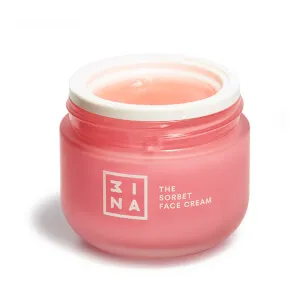
Works for
MoisturizingCyclopentasiloxane, Glycerin + 8 moreWorks
“This unique moisturiser features a sorbet-like texture, melting effortlessly into complexions with a helpful dose of hydration.”
This product can help improve hydration of the skin with the two types of ingredients.
The first type is called “humectants”:
these ingredients help attract water.
When humectants are on the surface of the skin, they “pull in” the moisture from the outside environment, or from
within deeper layers of the skin. The following ingredients in this product do the job:
glycerin, hydrogenated starch hydrolysate.
This product also contains ingredients called “occlusives”. They help reduce the speed with which our skin loses moisture to the outside environment. These ingredients also help soften the upper layer of the skin, so it feels less tight and nicer to the touch. The following ingredients in this product do the job: dimethiconol, squalene.
Anti-oxidationSide benefit · Squalene, Prunus amygdalus dulcis oil + 2 moreMay help
This product contains antioxidants (squalene) that can help neutralize free radicals in skin to lessen the damage it gets from the UV light (sun). There is some human evidence for this effect in skin, though it is smaller or less consistent than the evidence for the best antioxidants.
Can it cause trouble?
Irritancy3 strong irritants: Alcohol denat., Parfum + 1 more — patch-test recommendedHigh risk
Comedogenic2 ingredients rated 2 or more on the 0–5 pore-clogging scale2 flagged
User reviews
Be the first — your take helps the next person decide.
Ingredients
Filter by role to see what each ingredient is doing.
Water~40–60%
Cyclopentasiloxane~5.9–8.8%
- Irritation risk
- Low
A silicone that helps improve the product texture and spreadability. Can absorb oil creating a short-term mattifying effect on the skin
More about CyclopentasiloxaneGlycerin~3.4–5.1%
- Irritation risk
- Low
One of the best moisturizing ingredients. Naturally present in skin. It attracts water to the upper layer of the skin working as a humectant
More about GlycerinButylene glycol~2.7–4%
- Irritation risk
- Low
Used to create a nice product texture and help delivery of other ingredients. Might be somewhat helpful in attracting water to the upper layer of the skin
More about Butylene glycolAlcohol denat.~2.1–3.2%
- Irritation risk
- High
Produces temporary toning effect. Can help dissolve other ingredients or preserve products
More about Alcohol denat.Cetyl peg/ppg-10/1 dimethicone~1.7–2.6%
- Irritation risk
- Low
A type of silicone that helps water and oil mix together. Can help to soften upper layer of the skin
More about Cetyl peg/ppg-10/1 dimethiconeHydrogenated starch hydrolysate~1.4–2.2%
- Irritation risk
- Low
Helps to attract water to the upper layer of the skin. Can add sweet taste to lip products
More about Hydrogenated starch hydrolysateSodium chloride~1.3–1.9%
- Irritation risk
- Low
Used to stabilize mixtures of oil and water, and create thicker, gel-like product textures
More about Sodium chlorideDimethicone crosspolymer~0.95–1.45%
- Irritation risk
- Low
Used to create a thicker product texture. Helps soften the upper layer of the skin and might be able to prevent moisture loss from its surface
More about Dimethicone crosspolymerSodium polyacrylate~0.85–1.3%
- Irritation risk
- Low
Used to create a gel-like product texture, as well as to stabilize emulsions
More about Sodium polyacrylateSqualene~0.55–1.25%
- Irritation risk
- Low
- Comedogenicity
- 2/5
An oil that is naturally part of skin sebum that helps to soften its upper layer, reduce water loss and neutralize free radicals. It might be comedogenic. Avoid applying large concentrations (or pure oil) before sun exposure as oxidized squalene can clog pores and lead to skin irritation. Today squalene is mostly derived from vegetable oils or synthetized by yeast
More about SqualeneDisteardimonium hectorite~0.4–1%
- Irritation risk
- Low
A type of clay that is used to thicken the product consistency
More about Disteardimonium hectoritePhenoxyethanol~0.2–0.75%
- Irritation risk
- Low
A preservative. It helps prevent bacterial growth in cosmetic products
More about PhenoxyethanolPrunus amygdalus dulcis oil~0.3–0.75%
- Irritation risk
- Low
An emollient that softens the skin
More about Prunus amygdalus dulcis oilDimethiconol~0.3–0.75%
- Irritation risk
- Low
A silicone that makes products more spreadable and keeps skin smooth. Helps to add gloss to skin and may visually fill in fine lines/wrinkles for short time
More about DimethiconolParfum~0.15–0.55%
- Irritation risk
- High
An aromatic blend of unspecified and possibly irritating ingredients
More about ParfumArgania spinosa kernel oil~0.15–0.65%
- Irritation risk
- Medium
An emollient that helps soften the upper layer of the skin. Might have some weak anti-oxidant properties
More about Argania spinosa kernel oilTocopheryl acetate~0.1–0.4%
- Irritation risk
- Medium
A more stable but less bio-available form of vitamin E compared to Tocopherol. Might help moisturize and protect the skin from free radicals, but mostly used in low concentrations to stabilize other ingredients.
More about Tocopheryl acetatePunica granatum bark extract~0.1–0.3%
- Irritation risk
- Low
Ci 45410~0.05–0.25%
Ci 19140~0.05–0.2%
Sodium hydroxymethylglycinate~0.05–0.2%
Ingredient list view
Water, Cyclopentasiloxane, Glycerin, Butylene glycol, Alcohol denat., Cetyl peg/ppg-10/1 dimethicone, Hydrogenated starch hydrolysate, Sodium chloride, Dimethicone crosspolymer, Sodium polyacrylate, Squalene, Disteardimonium hectorite, Phenoxyethanol, Prunus amygdalus dulcis oil, Dimethiconol, Parfum, Argania spinosa kernel oil, Tocopheryl acetate, Punica granatum bark extract, Ci 45410, Ci 19140, Sodium hydroxymethylglycinate
Compare prices
Retailers ranked by price — lowest first.
Affiliate links · As an Amazon Associate, WIMJ earns from qualifying purchases.
Worth comparing, line by line.
Match % combines shared ingredients, the first five ingredients, shared actives and hero ingredients, irritancy (lower counts in the alternative's favour), texture and body area. Only products in the same routine step are compared.
| 3INA MakeupThe Sorbet Face CreamYOUR PRODUCT | AESTURAAto Barrier 365 Cream | Manuka DoctorApiNourish Repairing Skin Cream | SkinLabC Plus Brightening Vitamin Cream | |
|---|---|---|---|---|
| Match | — | 43% | 43% | 43% |
| Price | $20.59 | $13.23−$7.36 | — | $14.32−$6.27 |
| Shared key ingredients | — | 2 of 6 | 3 of 6 | 4 of 6 |
| Key difference | — | Niacinamide | Adenosine | Bisabolol |
| Irritancy | High | Low | Medium | Medium |
| Drying alcohol | Contains drying alcohol | — | — | Contains drying alcohol |
| View product | Shop | Shop | Shop |


More alternatives: SCINIC Pinktamin Tone-Up CreamZYMOGEN Ultra Facial Aqua Cream
Sources cited in this review
Every concentration estimate and effectiveness label is anchored to one of these 9 studies and safety reviews.
- 1
- 2Safety assessment of hydrogenated starch hydrolysatesncbi.nlm.nih.gov
- 3Squalene and its potential clinical useseuropepmc.org
- 4
- 5Enhanced comedo formation in rabbit ear skin by squalene and oleic acid peroxidesonlinelibrary.wiley.com
- 6

Affiliate links · As an Amazon Associate, WIMJ earns from qualifying purchases.