Works for
CleansingSodium lauroyl glutamate, Cocamidopropyl betaine + 2 moreCleanses gently
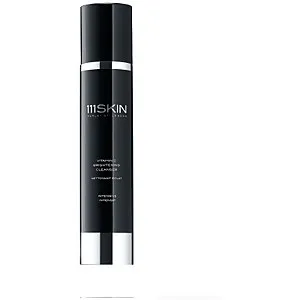
“Powered by Vitamin C for healthy-looking luminous skin, this brightening foaming cleanser gently cleanses away dirt and impurities while exfoliating and brightening dullness.”
This product works by removing dirt and oil from the surface of the skin. It uses a combination of mild cleansing agents (cocamidopropyl betaine, peg-40 hydrogenated castor oil, sodium lauroyl glutamate, xanthan gum) and should be able to cleanse the skin gently. Still keep in mind that any cleansing can disrupt the skin barrier, and most people do not need to cleanse their skin more than once per day.
Even though this formulation is mild, the following cleansing agents could trigger an irritation or allergy for some people: cocamidopropyl betaine
ExfoliationLactobionic acid, Lactic acidWorks well
“Powered by Vitamin C for healthy-looking luminous skin, this brightening foaming cleanser gently cleanses away dirt and impurities while exfoliating and brightening dullness.”
This product can help exfoliate the skin. In other words, it helps break down the bonds between dead cells on the surface of the skin and speed up the skin turnover. Skin often appears softer and brighter after exfoliation, but overdoing it can result in disrupted skin barrier. The following ingredient is doing the exfoliating job in this product: lactobionic acid.
Can it cause trouble?
Irritancy1 strong irritant: Eugenia caryophyllus leaf oilMedium risk
ComedogenicClean of flagged comedogenic ingredientsNone flagged

User reviews
Be the first — your take helps the next person decide.
Ingredients
Filter by role to see what each ingredient is doing.
Water~40–60%
Sodium lauroyl glutamate~6.5–9.7%
- Irritation risk
- Medium
Used as a cleansing agent. It creates foam
More about Sodium lauroyl glutamateGlycerin~3.5–5.3%
- Irritation risk
- Low
One of the best moisturizing ingredients. Naturally present in skin. It attracts water to the upper layer of the skin working as a humectant
More about GlycerinCocamidopropyl betaine~3.8–5.7%
- Irritation risk
- High
Helps water and oil mix together. Used as a cleansing ingredient. Could be an allergen
More about Cocamidopropyl betaineAcrylates/c10-30 alkyl acrylate crosspolymer~2.1–3.1%
- Irritation risk
- Medium
Maintains the texture of skincare products. Allows the product to spread evenly. Helps oil and water mix together
More about Acrylates/c10-30 alkyl acrylate crosspolymerPropanediol~1.7–2.5%
- Irritation risk
- Low
Acts as a solvent for other ingredients. Speeds up the absorption of other ingredients into the skin
More about PropanediolSodium hydroxide~1.4–2.1%
Lactobionic acid~1.3–1.9%
- Irritation risk
- Medium
A polyhydroxy acid (PHA) that helps shed dead cells from the surface of the skin revealing a smoother, more even skin. PHAs tend to be gentler on the skin compared to AHAs (for example, glycolic acid). It also has hydrating properties and helps attract water to the upper layer of the skin. It can help calm down inflammation in skin and support restoration of the barrier function. It has an anti-oxidant effect as well. It can help reduce fine line, wrinkles and improve skin elasticity
More about Lactobionic acidSodium chloride~1.1–1.6%
- Irritation risk
- Low
Used to stabilize mixtures of oil and water, and create thicker, gel-like product textures
More about Sodium chlorideCaprylyl glycol~0.8–1.2%
- Irritation risk
- Medium
Helps preserve products and creates a nice product texture
More about Caprylyl glycolEthylhexylglycerin~0.45–1.05%
Peg-40 hydrogenated castor oil~0.35–0.85%
- Irritation risk
- Medium
Helps oil and water mix together
More about Peg-40 hydrogenated castor oilSodium ascorbyl phosphate~0.2–0.8%
- Irritation risk
- Medium
A stable derivative of vitamin C. It is oil-soluble which means it is more likely to penetrate the skin compared to the pure form of vitamin C (which is water-soluble), but it is less bio-available and is way less effective in stimulating collagen and reducing wrinkles compared to the pure form of vitamin C (L-ascorbic acid) and its other derivatives (for example, magnesium ascorbyl phosphate). At the same time, this vitamin C derivative has been shown in studies to be effective in reducing acne, blemishes and clogged pores. It is less irritating then the pure form of vitamin C
More about Sodium ascorbyl phosphateDipotassium glycyrrhizate~0.15–0.65%
- Irritation risk
- Low
A salt derived from licorice. Works as an emollient to soften the upper layer of the skin and can help calm down inflammation. Might be helpful for skin lightening
More about Dipotassium glycyrrhizatePanthenol~0.15–0.65%
- Irritation risk
- Low
Helps attract water to the upper layer of the skin and can help improve skin barrier function
More about PanthenolSodium phytate~0.15–0.55%
Benzoic acid~0.15–0.5%
Eugenia caryophyllus leaf oil~0.1–0.45%
- Irritation risk
- High
An essential oil. Used as a fragrance. Can be irritating and sensitizing
More about Eugenia caryophyllus leaf oilGlycyrrhiza glabra root extract~0.1–0.45%
- Irritation risk
- Medium
A plant extract that can help lighten the skin and calm down inflammation. Might be helpful in neutralizing free radicals
More about Glycyrrhiza glabra root extractHaberlea rhodopensis leaf extract~0.1–0.4%
- Irritation risk
- Medium
A plant extract that if used in high concentration might help to neutralize free radicals in skin
More about Haberlea rhodopensis leaf extractDiamond powder~0.15–0.5%
- Irritation risk
- Low
Does not have known skin benefits. Might help create an optical illusion of smoother skin
More about Diamond powderXanthan gum~0.05–0.3%
- Irritation risk
- Low
Used to create a thicker product consistency
More about Xanthan gumSodium benzoate~0.05–0.25%
Lactic acid~0.05–0.15%
- Irritation risk
- Medium
An exfoliating and moisturizing alpha-hydroxy acid (AHA). Typically causes less irritation than other AHAs, for example, glycolic acid. At high concentrations (about 15%), lactic acid can help reduce lines and wrinkles. Recent studies show that lactic acid can support the "good" bacteria living on skin's surface (healthy skin microbiome)
More about Lactic acidPotassium sorbate~0.05–0.2%
Ingredient list view
Water, Sodium lauroyl glutamate, Glycerin, Cocamidopropyl betaine, Acrylates/c10-30 alkyl acrylate crosspolymer, Propanediol, Sodium hydroxide, Lactobionic acid, Sodium chloride, Caprylyl glycol, Ethylhexylglycerin, Peg-40 hydrogenated castor oil, Sodium ascorbyl phosphate, Dipotassium glycyrrhizate, Panthenol, Sodium phytate, Benzoic acid, Eugenia caryophyllus leaf oil, Glycyrrhiza glabra root extract, Haberlea rhodopensis leaf extract, Diamond powder, Xanthan gum, Sodium benzoate, Lactic acid, Potassium sorbate
Compare prices
Retailers ranked by price — lowest first.

Worth comparing, line by line.
Match % combines shared ingredients, the first five ingredients, shared actives and hero ingredients, irritancy (lower counts in the alternative's favour), texture and body area. Only products in the same routine step are compared.
| 111SKINVitamin C Brightening CleanserYOUR PRODUCT | MesoesteticPurifying Mousse Cleanser | ACWELLpH Balancing Soothing Cleansing Foam | RAWQUESTEchinacea Calming And Moisture Peeling Bubble Foam | |
|---|---|---|---|---|
| Match | — | 54% | 48% | 47% |
| Price | — | $42.66 | $13.16 | $9.99 |
| Shared key ingredients | — | 4 of 8 | 2 of 8 | 2 of 8 |
| Key difference | — | Lactic Acid | Salicylic Acid | Capryloyl Salicylic Acid |
| Irritancy | Medium | Medium | Medium | Medium |
| Drying alcohol | — | — | — | — |
| View product | Shop | Shop | Shop |


More alternatives: Gleamin Clarifying Brightening CleanserPerricone MD Neuropeptide Pore-Refining & Resurfacing Cream Cleanser
Sources cited in this review
Every concentration estimate and effectiveness label is anchored to one of these 20 studies and safety reviews.
- 1
- 2Lactobionic acidmdedge.com
- 3
- 4
- 5
- 6

Affiliate links · As an Amazon Associate, WIMJ earns from qualifying purchases.