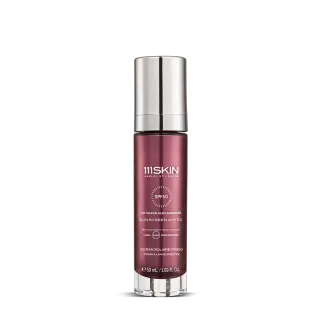
Works for
Sun protectionSPF 50 · 1 UV filter · Broad spectrumWeak protectionLow zinc dose
This product uses a single UV filter (zinc oxide) in a relatively low concentration and might not be able to provide a reliable sun protection.
This product can be considered "reef safe" because it does not contain the UV filters (oxybenzone and octinoxate) that can be harmful to coral reefs when present in the water in high concentrations.
Evens skin toneTetrahexyldecyl ascorbateNot delivered
“-Helps to tackle uneven skin tone.”
This product contains ingredients () that could help reduce hyperpigmentation (for example, post-acne marks or age spots) in theory, but there is not enough evidence that they actually work.
The biggest effect for evening out skin tone in this product comes from sun protection. Sun damage is the main factor causing age spots, darkening of post-acne marks and other discolorations. This is why sun protection is the best strategy for maintaining an even skin tone. We, however, do not recommend using this product as a sunscreen because the protection it offers is not strong enough).
MoisturizingSide benefit the brand mentions · Isododecane, Coco-caprylate/caprate + 15 moreWorks
“-Hydration: Potent actives ensure your skin feels hydrated, healthy, and smooth.”
This product can help improve hydration of the skin with the two types of ingredients.
The first type is called “humectants”:
these ingredients help attract water.
When humectants are on the surface of the skin, they “pull in” the moisture from the outside environment, or from
within deeper layers of the skin. The following ingredients in this product do the job:
glycerin, polyglutamic acid.
This product also contains ingredients called “occlusives”. They help reduce the speed with which our skin loses moisture to the outside environment. These ingredients also help soften the upper layer of the skin, so it feels less tight and nicer to the touch. The following ingredients in this product do the job: caprylic/capric triglyceride, dimethicone.
Can it cause trouble?
Irritancy3 strong irritants: Physalis pubescens fruit juice, Parfum + 1 more — patch-test recommendedHigh risk
Comedogenic2 ingredients rated 2 or more on the 0–5 pore-clogging scale2 flagged
User reviews
Be the first — your take helps the next person decide.
Ingredients
Filter by role to see what each ingredient is doing.
Isododecane~26–32%
- Irritation risk
- Low
An emollient that helps soften the skin and can decrease moisture loss. Helps create a nice product texture
More about IsododecaneZinc oxide~10–13%
- Irritation risk
- Low
A broad spectrum sunblock (protects from both UVA and UVB rays). Is suitable for most sensitive skins. In small concentrations, can be used as a colorant
More about Zinc oxideWater~6.4–7.8%
Coco-caprylate/caprate~5.2–6.3%
- Irritation risk
- Low
Helps to soften the upper layer of the skin without creating a greasy texture
More about Coco-caprylate/caprateCaprylyl methicone~4.1–5%
- Irritation risk
- Low
A type of silicone that helps to soften the upper layer of the skin and create a nice product finish on the skin
More about Caprylyl methiconePropanediol~3.2–3.9%
- Irritation risk
- Low
Acts as a solvent for other ingredients. Speeds up the absorption of other ingredients into the skin
More about PropanediolGlycerin~2.7–3.3%
- Irritation risk
- Low
One of the best moisturizing ingredients. Naturally present in skin. It attracts water to the upper layer of the skin working as a humectant
More about GlycerinPolyglyceryl-4 diisostearate/polyhydroxystearate/sebacate~2.2–2.6%
- Irritation risk
- Medium
Helps water and oil mix together
More about Polyglyceryl-4 diisostearate/polyhydroxystearate/sebacateCetyl peg/ppg-10/1 dimethicone~1.6–2%
- Irritation risk
- Low
A type of silicone that helps water and oil mix together. Can help to soften upper layer of the skin
More about Cetyl peg/ppg-10/1 dimethiconeMethyl dihydroabietate~1.3–1.6%
- Irritation risk
- Low
Helps soften the upper layer of the skin
More about Methyl dihydroabietateTapioca starch~1.1–1.4%
Argania spinosa kernel oil~1.1–1.3%
- Irritation risk
- Medium
An emollient that helps soften the upper layer of the skin. Might have some weak anti-oxidant properties
More about Argania spinosa kernel oilSodium chloride~1–1.2%
- Irritation risk
- Low
Used to stabilize mixtures of oil and water, and create thicker, gel-like product textures
More about Sodium chlorideTocopheryl acetate~0.95–1.15%
- Irritation risk
- Medium
A more stable but less bio-available form of vitamin E compared to Tocopherol. Might help moisturize and protect the skin from free radicals, but mostly used in low concentrations to stabilize other ingredients.
More about Tocopheryl acetateDimethicone~1–1.2%
- Irritation risk
- Low
A silicone that helps to reduce water loss from the surface of the skin. Can temporarily "fill in" lines and wrinkles, absorb oil, and create a nice product finish
More about DimethiconeEthyl ferulate~0.75–1.15%
- Irritation risk
- Low
Disteardimonium hectorite~0.75–1.1%
- Irritation risk
- Low
A type of clay that is used to thicken the product consistency
More about Disteardimonium hectoriteGlycine soja oil~0.75–1.1%
- Irritation risk
- Medium
- Comedogenicity
- 2/5
A good emollient that helps soften the skin and helps repair its barrier function. It can clog pores if used in high concentrations.
More about Glycine soja oilHydroxyacetophenone~0.7–1%
Isopentyldiol~0.65–0.95%
Zinc stearate~0.7–1%
- Irritation risk
- Low
Propylene carbonate~0.7–1%
- Irritation risk
- Low
Is used to dissolve other ingredients and create nice product texture
More about Propylene carbonatePhysalis pubescens fruit juice~0.6–0.95%
- Irritation risk
- High
1,2-hexanediol~0.6–0.9%
Caprylyl glycol~0.65–1%
- Irritation risk
- Medium
Helps preserve products and creates a nice product texture
More about Caprylyl glycolCaprylic/capric triglyceride~0.7–1.05%
- Irritation risk
- Medium
A good mix of fatty acids that forms a protective layer on the skin. Improves the shelf life of products. Derived from coconut and glycerin
More about Caprylic/capric triglycerideSodium gluconate~0.6–0.9%
Polyglyceryl-3 diisostearate~0.65–0.95%
- Irritation risk
- Medium
- Comedogenicity
- 3/5
Helps oil and water mix together
More about Polyglyceryl-3 diisostearateBisabolol~0.55–0.85%
- Irritation risk
- Low
An active component of chamomile plant that historically has been used to calm down irritated skin. A recent study shows that bisabolol indeed can have some anti-inflammatory effect on skin, even though conclusive data is lacking. Bisabolol has a sweet floral scent and can be added to products for its aromatic properties
More about BisabololEscin~0.6–0.85%
- Irritation risk
- High
A compound obtained from horse chestnut. It is claimed that this chemical can improve circulation, but there is no evidence available that it works in skin
More about EscinParfum~0.55–0.85%
- Irritation risk
- High
An aromatic blend of unspecified and possibly irritating ingredients
More about ParfumHydroxypropyl cyclodextrin~0.65–0.95%
- Irritation risk
- Medium
Used to stabilize product formulations and help soften the upper layer of the skin
More about Hydroxypropyl cyclodextrinMorus alba root extract~0.5–0.7%
- Irritation risk
- Low
Oryza sativa extract~0.5–0.75%
- Irritation risk
- Low
A grain extract that helps to create a thicker product consistency. It might have some anti-oxidant properties and help attract water to the upper layer of the skin
More about Oryza sativa extractOryza sativa germ extract~0.55–0.85%
- Irritation risk
- Low
Tetrahexyldecyl ascorbate~0.5–0.7%
- Irritation risk
- Medium
Being a lipid soluble form of vitamin C, it is more stable than ascorbic acid, but still degrades quickly and needs to be stabilized in a formulation with another ingredient. It is claimed to penetrate skin better than pure vitamin C and have the the similar benefits, but solid studies of its effectiveness are lacking. Is likely to require a higher concentration in a product than pure vitamin C to be effective. It might be able to help reduce pore clogging.
More about Tetrahexyldecyl ascorbatePolyglutamic acid~0.45–0.7%
- Irritation risk
- Low
Helps attract water to the upper layer of the skin.
More about Polyglutamic acidPolyglyceryl-6 laurate~0.5–0.75%
- Irritation risk
- Medium
Helps oil and water mix together
More about Polyglyceryl-6 lauratePolyglyceryl-10 oleate~0.45–0.65%
- Irritation risk
- Low
Helps soften the upper layer of the skin
More about Polyglyceryl-10 oleateTrifolium pratense flower extract~0.35–0.65%
- Irritation risk
- High
Red clover flower extract. Can contain anti-oxidants but also potential irritant compounds
More about Trifolium pratense flower extractSorbitan palmitate~0.35–0.65%
- Irritation risk
- Medium
Helps water and oil mix together and stabilize the product formulation
More about Sorbitan palmitateAcetyl cysteine~0.3–0.55%
- Irritation risk
- Low
Soy isoflavones~0.25–0.5%
- Irritation risk
- Low
Glycosphingolipids~0.3–0.55%
- Irritation risk
- Low
A type of lipids naturally present in skin. They can be converted to ceramides in skin
More about GlycosphingolipidsTetramethyl acetyloctahydronaphthalenes~0.2–0.35%
- Irritation risk
- Low
Geranyl acetate~0.15–0.25%
- Irritation risk
- Low
Terpineol~0.1–0.2%
- Irritation risk
- Low
Dimethyl phenethyl acetate~0.1–0.2%
- Irritation risk
- Low
Ingredient list view
Isododecane, Zinc oxide, Water, Coco-caprylate/caprate, Caprylyl methicone, Propanediol, Glycerin, Polyglyceryl-4 diisostearate/polyhydroxystearate/sebacate, Cetyl peg/ppg-10/1 dimethicone, Methyl dihydroabietate, Tapioca starch, Argania spinosa kernel oil, Sodium chloride, Tocopheryl acetate, Dimethicone, Ethyl ferulate, Disteardimonium hectorite, Glycine soja oil, Hydroxyacetophenone, Isopentyldiol, Zinc stearate, Propylene carbonate, Physalis pubescens fruit juice, 1,2-hexanediol, Caprylyl glycol, Caprylic/capric triglyceride, Sodium gluconate, Polyglyceryl-3 diisostearate, Bisabolol, Escin, Parfum, Hydroxypropyl cyclodextrin, Morus alba root extract, Oryza sativa extract, Oryza sativa germ extract, Tetrahexyldecyl ascorbate, Polyglutamic acid, Polyglyceryl-6 laurate, Polyglyceryl-10 oleate, Trifolium pratense flower extract, Sorbitan palmitate, Acetyl cysteine, Soy isoflavones, Glycosphingolipids, Tetramethyl acetyloctahydronaphthalenes, Geranyl acetate, Terpineol, Dimethyl phenethyl acetate
Compare prices
Retailers ranked by price — lowest first.

Worth comparing, line by line.
Match % combines shared ingredients, the first five ingredients, shared actives and hero ingredients, irritancy (lower counts in the alternative's favour), texture and body area. Only products in the same routine step are compared.
| 111SKINSunscreen SPF50YOUR PRODUCT | Good MoleculesSheer Mineral Sunscreen SPF 30 | Dr Dennis GrossAll Physical Lightweight Wrinkle Defense SPF | Dr. LorettaUniversal Glow Daily Defense Mineral Sunscreen Fluid SPF 40 | |
|---|---|---|---|---|
| Match | — | 43% | 40% | 40% |
| Price | $135.00 | $11.99−$123.01 | $42.06−$92.94 | $15.00−$120.00 |
| Shared key ingredients | — | 5 of 10 | 5 of 10 | 4 of 10 |
| Key difference | — | Acetyl Glucosamine | Ferulic Acid | Butyrospermum Parkii Butter |
| Irritancy | High | Low | Low | Medium |
| SPF | SPF 50 | SPF 30 | SPF 30 | SPF 40 |
| Drying alcohol | — | — | — | — |
| View product | Shop | Shop | Shop |


More alternatives: NassifMD Dermaceuticals Shield Smooth Mineral SPF 40 UntintedSkincare by Dr V InZincable SPF 50
Sources cited in this review
Every concentration estimate and effectiveness label is anchored to one of these 18 studies and safety reviews.
- 1A review of inorganic UV filters zinc oxide and titanium dioxideonlinelibrary.wiley.com
- 2
- 3
- 4
- 5
- 6Safety Assessment of Alkyl Esters as Used in Cosmeticscir-safety.org

Affiliate links · As an Amazon Associate, WIMJ earns from qualifying purchases.