Drometrizole Trisiloxane (Mexoryl XL)
In 51 skincare routines
Summary
Works for
- Sun protection
Irritancy risk
2
MediumMexoryl XL. A UV filter. Effective in the UVB and UVA range. It is stable. Unfortunately, not approved in the US yet
Products with Drometrizole Trisiloxane
 ISNTREEHyaluronic Acid Airy Body Sun Cream SPF 50
niacinamideadenosineTinosorb S +14 actives
Moisturizing Sun protection +3
Price unavailable
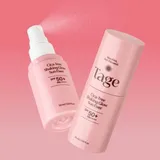 TageCica-Tree Shaking Glow Sun Fixer
niacinamideadenosineceramide np +19 actives
Anti-aging Evens skin tone +1
Price unavailable
 numbuzinNo.9 NAD+ Peptides Dewy Sun Essence
copper tripeptide-1tripeptide-1niacinamide +20 actives
Anti-aging Moisturizing +2
Price unavailable
 Dr. AltheaAqua Glowing Sunscreen
niacinamideadenosinepanthenol +9 actives
Moisturizing Anti-aging +2
Price unavailable
 mixsoonBean Sun Serum 50ml
niacinamideadenosinebutyloctyl salicylate +10 actives
Moisturizing Anti-blemish +3
Price unavailable
 innisfreeGreen Tea Hyaluronic Moist Sun Serum 50ml
madecassosideniacinamideacetyl tetrapeptide-2 +17 actives
Moisturizing Anti-aging +3
Price unavailable
 Dr.GPore Blur Up Sun
niacinamidebakuchioladenosine +26 actives
Anti-aging Evens skin tone +3
Price unavailable
COSRXUltra-Light Invisible Sunscreen PA++++ SPF 50niacinamideadenosineMexoryl XL +4 actives
Sun protection Anti-aging +3
Price unavailable
OmbrelleDaily UV Anti-AgingniacinamideAvobenzoneMexoryl XL +7 actives
Anti-aging Moisturizing +2
Alcohol
Price unavailable
La Roche-PosayAnthelios Oil Control + Gel-Cream SPF 50Tinosorb SAvobenzonedimethicone +8 actives
Sun protection Evens skin tone +2
Price unavailable
Similar ingredients
Butyl MethoxydibenzoylmethaneAvobenzone. An organic, or so-called "chemical" UV filter. Protects against both UVA and UVB rays. Needs to be combined with other filters in a formulation to be stable. OctocryleneA weak sunscreen that protects against the sun rays that cause sunburn (UVB) and is somewhat effective against the UVA rays. It is quite stable and can help stabilize other, more vulnerable, sunscreen ingredients like Avobenzone. It is an organic, or so called "chemical" sunscreenTitanium DioxideWorks as a UV filter when used in high concentrations. It is photostable and is effective mostly against the UVB light, with some protection in the UVA range. In small concentrations, used for its ability to improve the color of cosmetic products. Is usually well tolerated by the skinZinc OxideA broad spectrum sunblock (protects from both UVA and UVB rays). Is suitable for most sensitive skins. In small concentrations, can be used as a colorantBenzophenone-4Sulisobenzone. A UV filter. Is typically used to improve the product stability under exposure to UV light. It is effective against both UVA and UVB rays. It can be used is larger concentrations as a sun protection ingredient for the skin, but can be irritatingBis-Ethylhexyloxyphenol Methoxyphenyl TriazineTinosorb S. One of the most effective broad spectrum sunscreen ingredients. Protects from both UVA and UVB rays. It is photostable. Unfortunately, not approved by FDA (US) yet. Diethylamino Hydroxybenzoyl Hexyl BenzoateUvinul A Plus. A new generation broad spectrum sunscreen that offers an effective protection especially in the UVA range. It is stable in formulations. Unfortunately, is not approved by the FDA (US) yetDiethylhexyl Butamido TriazoneUvasorb HEB. A UV filter. Is effective against UVB and UVA II rays (but not UVA I). It is photostable. Unfortunately, is not approved by FDA (US) yetDisodium Phenyl Dibenzimidazole TetrasulfonateNeo Heliopan AP. A UV filter. Effective against UVA II rays. It is stable. It is water-soluble, which helps to create lightweight sunscreen formulations. Unfortunately, not approved by FDA (US) yetEthylhexyl Dimethyl PABAPadimate O. A UV filter. Effective against UVB rays. There are concerns about the safety of this sunscreen ingredient, but conclusive evidence in either direction is missing. Because of the safety concerns, it is rarely used in leave-in skincare