Works for:
based on ingredients and %- Moisturizing
- Anti-oxidation
Can it cause trouble?
- Irritation risk: low
- Comedogenic risk ingredients: 1
Key actives
Works for
Anti-oxidation
This product contains antioxidants (rubus idaeus seed oil) that might be able to help neutralize free radicals in skin to lessen the damage it gets from the UV light (sun). There is not enough evidence to confirm their effectiveness in skin though.
A plant oil that might be able to help neutralize free radicals in skin
A more stable but less bio-available form of vitamin E compared to Tocopherol. Might help moisturize and protect the skin from free radicals, but mostly used in low concentrations to stabilize other ingredients.
Helps to soften the upper layer of the skin and might have some anti-oxidant effect
An emollient that softens the skin
Moisturizing
What does the product description say?
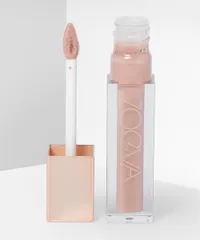
Infused with a blend of soothing ingredients, including mango butter, raspberry seed oil, and sweet almond oil, the lip gloss hydrates and nourishes the lips while leaving a weightless, non-sticky gloss and pure colour.
Source: Beauty Bay
This product can help soften the skin and reduce its moisture loss with emollients and occlusives: caprylic/capric triglyceride, solanum lycopersicum seed oil.
Keep in mind that this product does not contain effective ingredients to attract water to the upper layer of the skin. This is why an additional product with humectants like glycerin or hyaluronic acid can be helpful (apply it before this product for the best results).
A good mix of fatty acids that forms a protective layer on the skin. Improves the shelf life of products. Derived from coconut and glycerin
A good emollient that helps soften the upper layer of the skin and, due to the high linoleic acid content, can support the skin's barrier function
Helps to soften the upper layer of the skin and might have some anti-oxidant effect
An emollient that softens the skin
Used to improve the product consistency and soften the upper layer of the skin
An emollient that helps to soften the skin and create a pleasant product texture and stabilize the formulation
How honest is this product?
| Promise | Can it deliver? |
|---|---|
| Moisturizing |
Total Promises Fulfilled score: 75/100.
We receive a small commission for purchases made through these links at no cost for you. Thank you for your support! Learn more
Affiliate link · supports WIMJ at no cost to you
Potential irritants
Comedogenic ingredients
User reviews (0)
Averages from community submissions.
No reviews yet for this product.
Be the first to share your experience!
Tried this product?
Help capture what the ingredient list can't—texture, finish, pilling, scent, and more. Answer what you can, skip the rest.
Takes ~30 seconds.
Reviews are shown in aggregate. No personal details.
Key Actives
Helps to soften the upper layer of the skin and might have some anti-oxidant effect
A good mix of fatty acids that forms a protective layer on the skin. Improves the shelf life of products. Derived from coconut and glycerin
A good emollient that helps soften the upper layer of the skin and, due to the high linoleic acid content, can support the skin's barrier function
A plant oil that might be able to help neutralize free radicals in skin
Works as a UV filter when used in high concentrations. It is photostable and is effective mostly against the UVB light, with some protection in the UVA range. In small concentrations, used for its ability to improve the color of cosmetic products. Is usually well tolerated by the skin
Potential irritants
Helps to create a thicker product consistency
A good mix of fatty acids that forms a protective layer on the skin. Improves the shelf life of products. Derived from coconut and glycerin
A more stable but less bio-available form of vitamin E compared to Tocopherol. Might help moisturize and protect the skin from free radicals, but mostly used in low concentrations to stabilize other ingredients.
A plant oil that might be able to help neutralize free radicals in skin
Comedogenic ingredients
All ingredients
An emollient that helps to soften the skin and create a pleasant product texture and stabilize the formulation
Used to improve the product consistency and soften the upper layer of the skin
Creates a nice product texture and can support water-resistance of sunscreens
Helps to create a thicker product consistency
A good mix of fatty acids that forms a protective layer on the skin. Improves the shelf life of products. Derived from coconut and glycerin
A more stable but less bio-available form of vitamin E compared to Tocopherol. Might help moisturize and protect the skin from free radicals, but mostly used in low concentrations to stabilize other ingredients.
Used to increase stability of product formulations
A mineral that is used as an optical filter (makes the skin looks nicer through light reflection) and to improve the texture of cosmetic products
A good emollient that helps soften the upper layer of the skin and, due to the high linoleic acid content, can support the skin's barrier function
A plant oil that might be able to help neutralize free radicals in skin
Helps to soften the upper layer of the skin and might have some anti-oxidant effect
Works as a UV filter when used in high concentrations. It is photostable and is effective mostly against the UVB light, with some protection in the UVA range. In small concentrations, used for its ability to improve the color of cosmetic products. Is usually well tolerated by the skin
An umbrella term for the following three colorants: CI 77491, CI 77492, CI 77499. They might be able to offer some protection against visible light, but the degree of the protection is not clear
An umbrella term for the following three colorants: CI 77491, CI 77492, CI 77499. They might be able to offer some protection against visible light, but the degree of the protection is not clear
Ingredient list view
Polybutene, Octyldodecanol, Hydrogenated polyisobutene, Silica dimethyl silylate, Vp/hexadecene copolymer, Hydrogenated styrene/isoprene copolymer, Caprylic/capric triglyceride, Tocopheryl acetate, Pentaerythrityl tetra-di-t-butyl hydroxyhydrocinnamate, Synthetic fluorphlogopite, Solanum lycopersicum seed oil, Rubus idaeus seed oil, Prunus amygdalus dulcis oil, Mangifera indica seed butter, Talc, Ci 77891, Titanium dioxide, Ci 45410, Ci 77491, Iron oxides, Ci 77492, Iron oxides, Ci 42090, Blue 1 lake
- Final report of the cosmetic ingredient review expert panel on the safety assessment of Polyisobutene and Hydrogenated Polyisobutene as used in cosmetics
- Final report of the cosmetic ingredient review expert panel on the safety assessment of Polyisobutene and Hydrogenated Polyisobutene as used in cosmetics
- Safety Assessment of Pentaerythrityl Tetra-Di-t-Butyl Hydroxyhydrocinnamate as Used in Cosmetics
- Characteristics and composition of tomato seed oil
- Physicochemical characteristics and fatty acid composition of tomato seed oils from processing wastes
- Anti-Inflammatory and Skin Barrier Repair Effects of Topical Application of Some Plant Oils
- Extraction and Characteristics of Seed Kernel Oil from Mango
- Promising features of mango (Mangifera indica L.) kernel oil: a review
- Evaluation of the fatty acid composition of the seeds of Mangifera indica L. and their application
- Scientific Committee on Consumer Safety Opinion on Acid Red 92