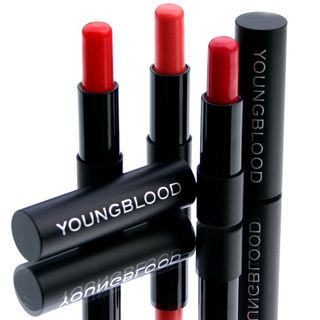
Youngblood Hydrating Lip Tint SPF 15 - Poppy
Works for
1 of 2 advertised claims delivered
Sun protectionSPF 15 · 3 UV filters · Broad spectrumWeak protectionSPF under 30
This product offers broad spectrum sun protection, but it is weak. We recommend to use a broad spectrum sunscreen with at least SPF 30.
Moisturizing16 ingredients credited for this claimStrong support
“Hydrating Lip Tint SPF 15 .”
This product can help soften the skin and reduce its moisture loss with emollients and occlusives: beeswax, ricinus communis seed oil.
Keep in mind that this product does not contain effective ingredients to attract water to the upper layer of the skin. This is why an additional product with humectants like glycerin or hyaluronic acid can be helpful (apply it before this product for the best results).
The following ingredients in this product are especially good for supporting the skin barrier and helping with the hydration level: ceramide 2, palmitoyl oligopeptide
Anti-agingNot advertised by the brand · 3 ingredients credited for this claimModerate support
This product contains palmitoyl oligopeptide. This ingredient might be able to help reduce and prevent fine lines and wrinkles, improve skin elasticity and firmness, but there is not enough evidence that it actually works. The biggest anti-aging effect in this product comes from sun protection. Sun damage is the main factor causing early signs of skin aging. We, however, do not recommend using this product as a sunscreen because the protection it offers is not strong enough).
Can it cause trouble?
Irritancy3 strong irritants: Citrus limon peel oil, Citrus aurantifolia oil + 1 more — patch-test recommendedHigh risk
Comedogenic1 ingredient rated 2 or more on the 0–5 pore-clogging scale1 flagged
User reviews
Be the first — your take helps the next person decide.
Ingredients
Filter by role to see what each ingredient is doing.
Ethylhexyl methoxycinnamate7.5%
- Irritation risk
- High
Octinoxate. When used in higher concentrations, works as a sunscreen protecting the skin from UVB rays. When used in lower concentration, helps to preserve the product formulation. Is shown to be harmful to coral reefs - consider avoiding bathing in coral reef areas when wearing a product with this ingredient. It can be irritating
More about Ethylhexyl methoxycinnamateEthylhexyl salicylate3.5%
- Irritation risk
- Low
Octisalate. A UV filter. It offers some protection against the sun rays that cause sunburn (UVB), but does not protect against the most aging sun rays (UVA). It loses its effectiveness quickly when exposed to sunlight. It is an organic, or so called "chemical" sunscreen
More about Ethylhexyl salicylateButyl methoxydibenzoylmethane3%
- Irritation risk
- Medium
Avobenzone. An organic, or so-called "chemical" UV filter. Protects against both UVA and UVB rays. Needs to be combined with other filters in a formulation to be stable.
More about Butyl methoxydibenzoylmethaneBeeswax~23–34%
- Irritation risk
- Low
Forms a protective barrier that holds water and keeps dry skin hydrated. Keeps an emulsion from separating into its oil and liquid components, and increases the thickness of a product. Can be an allergen
More about BeeswaxRicinus communis seed oil~4.8–7.2%
- Irritation risk
- Medium
A plant oil that can help soften the skin. It might be helpful in calming down inflammation, but solid research is lacking. Is often used in lip products to create the needed product consistency
More about Ricinus communis seed oilSimmondsia chinensis seed oil~4.6–6.8%
- Irritation risk
- Medium
Softens the upper layer of skin and helps restore the healthy skin barrier. Has shown to help calm down inflammation in skin. It is a stable oil, meaning that it retains its properties even when exposed to air.
More about Simmondsia chinensis seed oilOzokerite~3.6–5.3%
Hydrogenated soybean oil~2.7–4.1%
- Irritation risk
- Low
- Comedogenicity
- 2/5
Hydrogenated olive oil~1.9–2.9%
- Irritation risk
- Low
Hydrogenated jojoba oil~1.7–2.6%
- Irritation risk
- Low
Helps soften the upper layer of the skin
More about Hydrogenated jojoba oilGlycine soja lipids~1.3–1.9%
- Irritation risk
- Low
Phytosterols~1.1–1.7%
- Irritation risk
- Medium
Lipids that work as an emollient and can be helpful in repairing skin barrier function
More about PhytosterolsC12-15 alkyl benzoate~0.95–1.4%
- Irritation risk
- Low
Enhances the product texture and makes it more spreadable. Helps reduce water loss from the outer layer of skin. Extands the shelf life by preventing bacteria growth
More about C12-15 alkyl benzoateTribehenin~0.55–1.35%
- Irritation risk
- Low
Used to create a thicker product consistency and soften the upper layer of the skin
More about TribeheninCeramide 2~0.5–1.15%
- Irritation risk
- Low
A type of lipid similar to ceramides naturally present in skin. Helps to soften the upper layer of the skin and supports the skin barrier function to keep it hydrated. Can help to prevent inflammation in skin
More about Ceramide 2Peg-10 rapeseed sterol~0.55–1.25%
Palmitoyl oligopeptide~0.5–1.15%
- Irritation risk
- Low
A type of peptide. Peptides are excellent moisturizers and might be able support collagen production reducing fine lines and wrinkles
More about Palmitoyl oligopeptidePersea gratissima oil~0.4–0.9%
- Irritation risk
- Medium
An emollient that helps soften the skin and could be helpful in repairing its barrier function
More about Persea gratissima oilLimnanthes alba seed oil~0.45–1.05%
- Irritation risk
- Low
This oil's cmposition is closest to rapeseed oil. It is a very stable oil and serves as an emoillient
More about Limnanthes alba seed oilPrunus amygdalus dulcis seed~0.4–0.9%
- Irritation risk
- Low
Helps soften the upper layer of the skin
More about Prunus amygdalus dulcis seedMacadamia integrifolia seed oil~0.4–0.95%
- Irritation risk
- Low
A plant oil that helps soften the upper layer of the skin
More about Macadamia integrifolia seed oilArgania spinosa kernel oil~0.35–0.85%
- Irritation risk
- Medium
An emollient that helps soften the upper layer of the skin. Might have some weak anti-oxidant properties
More about Argania spinosa kernel oilOlea europaea fruit extract~0.3–0.7%
- Irritation risk
- Low
An emollient that helps soften the skin but is not effective for restoring its barrier function. Might be helpful to calm down inflammation
More about Olea europaea fruit extractLonicera caprifolium flower extract~0.15–0.55%
- Irritation risk
- High
A plant extract that might help neutralize free radicals in skin. Can contain volalite oils and be irritating
More about Lonicera caprifolium flower extractCitrus limon peel oil~0.1–0.4%
Citrus aurantifolia oil~0.15–0.6%
- Irritation risk
- High
Tocopherol~0.1–0.4%
- Irritation risk
- Low
Pure form of vitamin E. Can help moisturise and protect the skin from free radicals. Often used to help stabilise other ingredients or the formula itself
More about TocopherolParfum~0.05–0.25%
- Irritation risk
- High
An aromatic blend of unspecified and possibly irritating ingredients
More about ParfumTocopheryl acetate~0.05–0.3%
- Irritation risk
- Medium
A more stable but less bio-available form of vitamin E compared to Tocopherol. Might help moisturize and protect the skin from free radicals, but mostly used in low concentrations to stabilize other ingredients.
More about Tocopheryl acetateIngredient list view
Ethylhexyl methoxycinnamate, Ethylhexyl salicylate, Butyl methoxydibenzoylmethane, Beeswax, Ricinus communis seed oil, Simmondsia chinensis seed oil, Ozokerite, Hydrogenated soybean oil, Hydrogenated olive oil, Hydrogenated jojoba oil, Glycine soja lipids, Phytosterols, C12-15 alkyl benzoate, Tribehenin, Ceramide 2, Peg-10 rapeseed sterol, Palmitoyl oligopeptide, Persea gratissima oil, Limnanthes alba seed oil, Prunus amygdalus dulcis seed, Macadamia integrifolia seed oil, Argania spinosa kernel oil, Olea europaea fruit extract, Lonicera caprifolium flower extract, Citrus limon peel oil, Citrus aurantifolia oil, Tocopherol, Parfum, Tocopheryl acetate
Compare prices
Retailers ranked by price — lowest first.

Affiliate links · prices updated regularly
Product summary
"Youngblood - Hydrating Lip Tint SPF 15 - Poppy" "is a broad spectrum lip sunscreen meaning that it protects both from UVB rays (" burning "- they cause sunburn) and UVA rays (" aging "- they don't cause sunburn but lead to premature aging and pigmentation issues). However, it does not offer enough sun protection. We recommend to use a sunscreen with at least SPF 30 daily.
Sunscreen filters
This sunscreen uses so-called" chemical ", or organic UV filters (organic simply means that their molecules contain atoms of carbon). These filters typically give good sun protection and rarely leave a white cast, but they can be irritating for sensitive skin. These are the sun protection ingredients in this sunscreen: avobenzone 3.00% (declared), octinoxate 7.50% (declared) and octisalate 3.50% (declared).
Irritation risk
There are some common irritants in this product, including ingredients that do not have benefits for the skin. We assess the overall irritancy of this lip product to be high. For a detailed overview of all potential irritants: click here
You can see the detailed formula review with the breakdown of all actives in the product and the full ingredient list with estimated concentrations in the tables below.
About the brand
According to Cruelty-Free Kitty" Youngblood "is cruelty free and so is its parent company.
Price
The product retails for 24.86$ in the United States.
For a detailed price comparison: click here.
Sources cited in this review
Every concentration estimate and effectiveness label is anchored to one of these 9 studies and safety reviews.
- 1
- 2
- 3
- 4
- 5
- 6

Affiliate links · As an Amazon Associate, WIMJ earns from qualifying purchases.