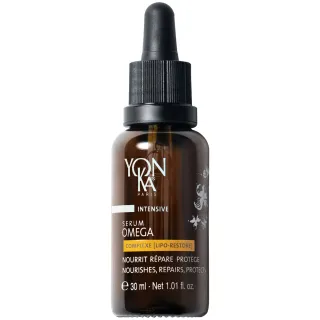
Works for
MoisturizingGlycine soja oil, Helianthus annuus seed oil + 2 moreWorks
“A dermatologist-tested oil-in-serum that strengthens and protects the skin barrier while delivering comfort to dry, reactive skin.”
This product can help soften the skin and reduce its moisture loss with emollients and occlusives: helianthus annuus seed oil, ethyl linoleate.
Keep in mind that this product does not contain effective ingredients to attract water to the upper layer of the skin. This is why an additional product with humectants like glycerin or hyaluronic acid can be helpful (apply it before this product for the best results).
Anti-blemishSide benefit · Ethyl linoleateMay help
This product might be able to help reduce blemishes and clogged pores because it contains ethyl linoleate.
Can it cause trouble?
Irritancy10 strong irritants: Lavandula angustifolia oil, Pelargonium graveolens leaf oil + 8 more — patch-test recommendedHigh risk
Comedogenic2 ingredients rated 2 or more on the 0–5 pore-clogging scale2 flagged
User reviews
Be the first — your take helps the next person decide.
Ingredients
Filter by role to see what each ingredient is doing.
Glycine soja oil~22–33%
- Irritation risk
- Medium
- Comedogenicity
- 2/5
A good emollient that helps soften the skin and helps repair its barrier function. It can clog pores if used in high concentrations.
More about Glycine soja oilZea mays germ oil~9.1–13.7%
- Irritation risk
- Low
- Comedogenicity
- 2/5
Helianthus annuus seed oil~5.3–7.9%
- Irritation risk
- Low
A great emollient due to its high linoleic acid content. One of the most effective plant oils in helping skin hydration and repairing skin barrier function
More about Helianthus annuus seed oilEthyl linoleate~3.8–5.7%
- Irritation risk
- Medium
Helps reduce acne and blemishes. Helps to soften the upper layer of the skin and reduce inflammation. Might be helpful in reducing hyperpigmentation and evening out the skin tone, but evidence of effectiveness in skin are lacking
More about Ethyl linoleateEthyl linolenate~2.9–4.4%
- Irritation risk
- Low
Lavandula angustifolia oil~2.1–3.1%
- Irritation risk
- High
An essential oil. Potential allergen and can be irritating. It has some anti-bacterial properties
More about Lavandula angustifolia oilPelargonium graveolens leaf oil~1.7–2.5%
- Irritation risk
- High
An essential oil used as a fragrance. Can be irritating
More about Pelargonium graveolens leaf oilRosmarinus officinalis leaf oil~1.5–2.2%
- Irritation risk
- High
A plant oil with high content of volatile compounds that can irritate the skin. Can be used as a fragrance. Has anti-bacterial properties and might help neutralize free radicals on the surface of the skin
More about Rosmarinus officinalis leaf oilCupressus sempervirens oil~1.2–1.8%
- Irritation risk
- Low
Thymus vulgaris flower/leaf oil~1–1.5%
- Irritation risk
- High
Ethyl oleate~0.8–1.2%
- Irritation risk
- Medium
Ethyl oleate is a long-chain fatty acid ethyl ester resulting from the formal condensation of the carboxy group of oleic acid with the hydroxy group of ethanol. It derives from an oleic acid. In skincare, it is used to soften the upper layer of the skin, improve the product texture and smell
More about Ethyl oleateTocopheryl acetate~0.5–1.2%
- Irritation risk
- Medium
A more stable but less bio-available form of vitamin E compared to Tocopherol. Might help moisturize and protect the skin from free radicals, but mostly used in low concentrations to stabilize other ingredients.
More about Tocopheryl acetateLinalool~0.4–0.95%
Citronellol~0.35–0.8%
Geraniol~0.15–0.7%
Limonene~0.15–0.5%
- Irritation risk
- High
A common frangrance that can easily irritate skin, especially if exposed to air, light or heat
More about LimoneneCoumarin~0.1–0.4%
Citral~0.05–0.3%
Ingredient list view
Glycine soja oil, Zea mays germ oil, Helianthus annuus seed oil, Ethyl linoleate, Ethyl linolenate, Lavandula angustifolia oil, Pelargonium graveolens leaf oil, Rosmarinus officinalis leaf oil, Cupressus sempervirens oil, Thymus vulgaris flower/leaf oil, Ethyl oleate, Tocopheryl acetate, Linalool, Citronellol, Geraniol, Limonene, Coumarin, Citral
Compare prices
Retailers ranked by price — lowest first.

Worth comparing, line by line.
Match % combines shared ingredients, the first five ingredients, shared actives and hero ingredients, irritancy (lower counts in the alternative's favour), texture and body area. Only products in the same routine step are compared.
| Yon-Ka ParisSerum OmegaYOUR PRODUCT | BYOMASensitive Retinol Oil | SEPHORA COLLECTIONLift & Firm - Recovery Firming Night Oil with Retinol | BAKELNutrioil Nourishing Serum | |
|---|---|---|---|---|
| Match | — | 38% | 36% | 36% |
| Price | $108.00 | $12.58−$95.42 | $25.00−$83.00 | $174.59+$66.59 |
| Shared key ingredients | — | 2 of 3 | 2 of 3 | 2 of 3 |
| Key difference | — | Hydroxypinacolone Retinoate | Retinol | Retinyl Palmitate |
| Irritancy | High | Medium | Medium | Medium |
| Drying alcohol | — | — | — | — |
| View product | Shop | Shop | Shop |
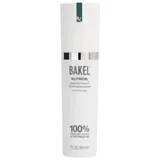
More alternatives: NassifMD Dermaceuticals Restore Firm Face Oil with CoQ10Naturopathica Holy Basil Retinol Ageless Night Oil
Sources cited in this review
Every concentration estimate and effectiveness label is anchored to one of these 13 studies and safety reviews.
- 1
- 2
- 3Effect of topically applied lipids on surfactant-irritated skinonlinelibrary.wiley.com
- 4
- 5
- 6

Affiliate links · As an Amazon Associate, WIMJ earns from qualifying purchases.