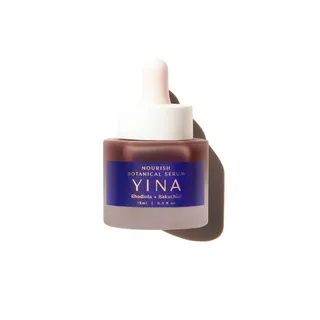
YINA NOURISH Botanical Serum

YINA NOURISH Botanical Serum

Efficacy87/100IrritancyHigh

Works for

Anti-aging
Bakuchiol, Ubiquinone
Works well
What the product description says
“Bakuchiol smooths the appearance of fine lines and wrinkles without irritation.”
Source: Yina

This product can help reduce and prevent fine lines and wrinkles, improve skin elasticity and firmness because it contains bakuchiol.

Keep in mind that it typically takes at least 6 weeks to notice any results because the changes that are needed to improve fine lines and elasticity happen in the deeper layers of the skin. No topical anti-aging product can “erase” wrinkles or fully reverse signs of aging.

BakuchiolKey activeEffect: HighA plant extract that is, though different in chemical structure, acts similar to retinoids. First studies show that it can help reduce fine lines and wrinkles, improve skin tone, reduce clogged pores and blemishes, and reduce inflammation. There is no conclusive evidence that bakuchiol is as effective as retinol however. The study that directly compared retinol with bakuchiol used bakuchiol applied twice daily compared to once per day for the retinol. According to this study, bakuchiol is less irritating than retinol. Bakuchiol is extracted from seeds of Babchi plant. Other parts of the plant contain coumarins that could cause allergic and irritant reactions. These compounds should be removed in the extraction process when bakuchiol is produced, but it is a good idea to be cautious and stay away from products that include the Babchi plant extracts other than purified bakuchiol to avoid irritation~0.4–0.9%
UbiquinoneEffect: LowCoenzyme Q10. It helps neutralize free radicals in skin, improves skin hydration and might be helpful agains fine lines and wrinkles. It can be an allergen~0.3–0.7%
Moisturizing
Camellia oleifera seed oil, Carthamus tinctorius seed oil + 3 more
Works
What the product description says
“Skin instantly feels deeply nourished, moisturized, and radiant with a soft, healthy glow.”
Source: Yina

This product can help soften the skin and reduce its moisture loss with emollients and occlusives: squalane, camellia oleifera seed oil.

Keep in mind that this product does not contain effective ingredients to attract water to the upper layer of the skin. This is why an additional product with humectants like glycerin or hyaluronic acid can be helpful (apply it before this product for the best results).

Camellia oleifera seed oilKey active· EmollientEffect: HighAn emollient that does not leave a greasy finish~22–34%
Carthamus tinctorius seed oilKey active· EmollientEffect: HighAn emollient that helps soften the skin and might help calm down inflammation~4–6%
SqualaneKey active· Emollient, OcclusiveEffect: HighAn oil naturally present in skin. Works as an emollient to soften the skin and form a protective layer on its surface without a greasy feeling.~1.2–1.8%
C12-15 alkyl benzoateKey active· EmollientEffect: MediumEnhances the product texture and makes it more spreadable. Helps reduce water loss from the outer layer of skin. Extands the shelf life by preventing bacteria growth~0.55–1.25%
UbiquinoneKey activeEffect: HighCoenzyme Q10. It helps neutralize free radicals in skin, improves skin hydration and might be helpful agains fine lines and wrinkles. It can be an allergen~0.3–0.7%
Anti-oxidation
Side benefit · Bakuchiol, Ubiquinone + 4 more
Works well

This product contains antioxidants (bakuchiol, ubiquinone) that can help neutralize free radicals in skin. By doing so, they can lessen the damage the skin gets from the UV light (sun).

BakuchiolKey activeEffect: HighA plant extract that is, though different in chemical structure, acts similar to retinoids. First studies show that it can help reduce fine lines and wrinkles, improve skin tone, reduce clogged pores and blemishes, and reduce inflammation. There is no conclusive evidence that bakuchiol is as effective as retinol however. The study that directly compared retinol with bakuchiol used bakuchiol applied twice daily compared to once per day for the retinol. According to this study, bakuchiol is less irritating than retinol. Bakuchiol is extracted from seeds of Babchi plant. Other parts of the plant contain coumarins that could cause allergic and irritant reactions. These compounds should be removed in the extraction process when bakuchiol is produced, but it is a good idea to be cautious and stay away from products that include the Babchi plant extracts other than purified bakuchiol to avoid irritation~0.4–0.9%
UbiquinoneKey activeEffect: HighCoenzyme Q10. It helps neutralize free radicals in skin, improves skin hydration and might be helpful agains fine lines and wrinkles. It can be an allergen~0.3–0.7%
Camellia oleifera seed oilEffect: LowAn emollient that does not leave a greasy finish~22–34%
Carthamus tinctorius seed oilEffect: LowAn emollient that helps soften the skin and might help calm down inflammation~4–6%
Tocopheryl acetateEffect: Low, below effective doseA more stable but less bio-available form of vitamin E compared to Tocopherol. Might help moisturize and protect the skin from free radicals, but mostly used in low concentrations to stabilize other ingredients.~0.4–0.9%
Rosmarinus officinalis leaf extractEffect: Low, below effective doseCan be helpful in reducing inflammation in skin, including inflamed acne. It can be irritating~0.15–0.6%
Evens skin tone
Side benefit · Bakuchiol, Glycyrrhiza uralensis root extract
Works well

This product can help reduce hypepigmentation and even out the skin tone because it contains the following effective ingredients: bakuchiol

The following ingredient (ingredients) in this product might be helpful, but there is no evidence to confirm that it actually can help even out the skin tone: glycyrrhiza uralensis root extract.

Keep in mind that you would need to apply any topical skincare targetted at hypigmentation consistently for a couple of months to get a result. No topical skincare product can help get rid of hyperpigmentation (including post-acne marks and age spots) instantly.

BakuchiolKey activeEffect: HighA plant extract that is, though different in chemical structure, acts similar to retinoids. First studies show that it can help reduce fine lines and wrinkles, improve skin tone, reduce clogged pores and blemishes, and reduce inflammation. There is no conclusive evidence that bakuchiol is as effective as retinol however. The study that directly compared retinol with bakuchiol used bakuchiol applied twice daily compared to once per day for the retinol. According to this study, bakuchiol is less irritating than retinol. Bakuchiol is extracted from seeds of Babchi plant. Other parts of the plant contain coumarins that could cause allergic and irritant reactions. These compounds should be removed in the extraction process when bakuchiol is produced, but it is a good idea to be cautious and stay away from products that include the Babchi plant extracts other than purified bakuchiol to avoid irritation~0.4–0.9%
Glycyrrhiza uralensis root extractEffect: LowLicorice root extract. Might be helpful in reducing hyperpigmentation~1.5–2.3%
Anti-blemish
Side benefit · Bakuchiol, Rosmarinus officinalis leaf extract
May help

This product might be able to help reduce blemishes and clogged pores because it contains bakuchiol.

BakuchiolKey activeEffect: HighA plant extract that is, though different in chemical structure, acts similar to retinoids. First studies show that it can help reduce fine lines and wrinkles, improve skin tone, reduce clogged pores and blemishes, and reduce inflammation. There is no conclusive evidence that bakuchiol is as effective as retinol however. The study that directly compared retinol with bakuchiol used bakuchiol applied twice daily compared to once per day for the retinol. According to this study, bakuchiol is less irritating than retinol. Bakuchiol is extracted from seeds of Babchi plant. Other parts of the plant contain coumarins that could cause allergic and irritant reactions. These compounds should be removed in the extraction process when bakuchiol is produced, but it is a good idea to be cautious and stay away from products that include the Babchi plant extracts other than purified bakuchiol to avoid irritation~0.4–0.9%
Rosmarinus officinalis leaf extractUnder-dosedCan be helpful in reducing inflammation in skin, including inflamed acne. It can be irritating~0.15–0.6%

Can it cause trouble?

Irritancy
9 strong irritants: Psoralea corylifolia seed extract, Cinnamomum camphora oil + 7 more — patch-test recommended
High risk
We flagged 13 ingredients with irritancy potential. Severity depends on your sensitivity threshold; the table lists the worst offenders first.
IngredientFunctionIrritationEst. amount
Psoralea corylifolia seed extractA babchi plant seed extract. It is the source for the skincare active Bakuchiol, but it can also contain furocoumarins (psoralen, angelicin) that are phototoxic. We strongly recommend avoiding this extract in the product and use products with pure Bakuchiol instead.High~3.5–5.3%est.
Cinnamomum camphora oil—High~0.2–0.75%est.
Rosmarinus officinalis leaf extractCan be helpful in reducing inflammation in skin, including inflamed acne. It can be irritatingHigh~0.15–0.6%est.
Boswellia carterii oilUsed as a fragrance. Can be irritatingHigh~0.1–0.5%est.
Commiphora myrrha oilUsed as a fragranceHigh~0.1–0.4%est.
LimoneneA common frangrance that can easily irritate skin, especially if exposed to air, light or heatHigh~0.1–0.35%est.
LinaloolA fragrance. Can be irritatingHigh~0.1–0.3%est.
GeraniolA fragrance. Can be irritatingHigh~0.05–0.25%est.
CitronellolA fragrance. Can be irritatingHigh~0.05–0.2%est.
Camellia oleifera seed oilAn emollient that does not leave a greasy finishMedium~22–34%est.
Glycyrrhiza uralensis root extractLicorice root extract. Might be helpful in reducing hyperpigmentationMedium~1.5–2.3%est.
Tocopheryl acetateA more stable but less bio-available form of vitamin E compared to Tocopherol. Might help moisturize and protect the skin from free radicals, but mostly used in low concentrations to stabilize other ingredients.Medium~0.4–0.9%est.
BakuchiolA plant extract that is, though different in chemical structure, acts similar to retinoids. First studies show that it can help reduce fine lines and wrinkles, improve skin tone, reduce clogged pores and blemishes, and reduce inflammation. There is no conclusive evidence that bakuchiol is as effective as retinol however. The study that directly compared retinol with bakuchiol used bakuchiol applied twice daily compared to once per day for the retinol. According to this study, bakuchiol is less irritating than retinol. Bakuchiol is extracted from seeds of Babchi plant. Other parts of the plant contain coumarins that could cause allergic and irritant reactions. These compounds should be removed in the extraction process when bakuchiol is produced, but it is a good idea to be cautious and stay away from products that include the Babchi plant extracts other than purified bakuchiol to avoid irritationMedium~0.4–0.9%est.
Comedogenic
Clean of flagged comedogenic ingredients
None flagged

User reviews

Would you recommend?
No community reviews yet.

Be the first — your take helps the next person decide.

Ingredients

Filter by role to see what each ingredient is doing.

Camellia oleifera seed oil~22–34%
Key activeIrritant · medium
Irritation risk
Medium
Works for
MoisturizingAnti-oxidation

An emollient that does not leave a greasy finish

More about Camellia oleifera seed oil
Carthamus tinctorius seed oil~4–6%
Key active
Irritation risk
Low
Works for
MoisturizingAnti-oxidation

An emollient that helps soften the skin and might help calm down inflammation

More about Carthamus tinctorius seed oil
Rhodiola rosea extract~4.2–6.4%
Formula
Psoralea corylifolia seed extract~3.5–5.3%
Irritant · high
Irritation risk
High

A babchi plant seed extract. It is the source for the skincare active Bakuchiol, but it can also contain furocoumarins (psoralen, angelicin) that are phototoxic. We strongly recommend avoiding this extract in the product and use products with pure Bakuchiol instead.

More about Psoralea corylifolia seed extract
Angelica polymorpha sinensis root extract~2.6–3.9%
Formula
Polygonum cuspidatum extract~2–3%
Formula
Glycyrrhiza uralensis root extract~1.5–2.3%
Irritant · medium
Irritation risk
Medium
Works for
Evens skin tone

Licorice root extract. Might be helpful in reducing hyperpigmentation

More about Glycyrrhiza uralensis root extract
Arnebia euchroma root extract~1.2–1.8%
Formula
Squalane~1.2–1.8%
Key active
Irritation risk
Low
Works for
Moisturizing

An oil naturally present in skin. Works as an emollient to soften the skin and form a protective layer on its surface without a greasy feeling.

More about Squalane
Rubus fruticosus seed oil~0.85–1.25%
Formula
C12-15 alkyl benzoate~0.55–1.25%
Key active
Irritation risk
Low
Works for
Moisturizing

Enhances the product texture and makes it more spreadable. Helps reduce water loss from the outer layer of skin. Extands the shelf life by preventing bacteria growth

More about C12-15 alkyl benzoate
Tocopheryl acetate~0.4–0.9%
Irritant · medium
Irritation risk
Medium
Works for
Anti-oxidation

A more stable but less bio-available form of vitamin E compared to Tocopherol. Might help moisturize and protect the skin from free radicals, but mostly used in low concentrations to stabilize other ingredients.

More about Tocopheryl acetate
Bakuchiol~0.4–0.9%
Key activeIrritant · medium
Irritation risk
Medium
Works for
Anti-agingAnti-inflammatoryAnti-blemishAnti-oxidationEvens skin tone

A plant extract that is, though different in chemical structure, acts similar to retinoids. First studies show that it can help reduce fine lines and wrinkles, improve skin tone, reduce clogged pores and blemishes, and reduce inflammation. There is no conclusive evidence that bakuchiol is as effective as retinol however. The study that directly compared retinol with bakuchiol used bakuchiol applied twice daily compared to once per day for the retinol. According to this study, bakuchiol is less irritating than retinol. Bakuchiol is extracted from seeds of Babchi plant. Other parts of the plant contain coumarins that could cause allergic and irritant reactions. These compounds should be removed in the extraction process when bakuchiol is produced, but it is a good idea to be cautious and stay away from products that include the Babchi plant extracts other than purified bakuchiol to avoid irritation

More about Bakuchiol
Ubiquinone~0.3–0.7%
Key active
Irritation risk
Low
Works for
MoisturizingAnti-oxidationAnti-aging

Coenzyme Q10. It helps neutralize free radicals in skin, improves skin hydration and might be helpful agains fine lines and wrinkles. It can be an allergen

More about Ubiquinone
Vetiveria zizanoides root oil~0.15–0.7%
Formula
Cinnamomum camphora oil~0.2–0.75%
Irritant · high
Rosmarinus officinalis leaf extract~0.15–0.6%
Under-dosedIrritant · high
Irritation risk
High
Works for
Anti-blemishAnti-oxidationAntibacterial

Can be helpful in reducing inflammation in skin, including inflamed acne. It can be irritating

More about Rosmarinus officinalis leaf extract
Picea mariana leaf oil~0.15–0.55%
Formula
Boswellia carterii oil~0.1–0.5%
Irritant · high
Irritation risk
High

Used as a fragrance. Can be irritating

More about Boswellia carterii oil
Aquilaria crassna stem oil~0.1–0.5%
Formula
Commiphora myrrha oil~0.1–0.4%
Irritant · high
Irritation risk
High

Used as a fragrance

More about Commiphora myrrha oil
Limonene~0.1–0.35%
Irritant · high
Irritation risk
High

A common frangrance that can easily irritate skin, especially if exposed to air, light or heat

More about Limonene
Linalool~0.1–0.3%
Irritant · high
Irritation risk
High

A fragrance. Can be irritating

More about Linalool
Geraniol~0.05–0.25%
Irritant · high
Irritation risk
High

A fragrance. Can be irritating

More about Geraniol
Citronellol~0.05–0.2%
Irritant · high
Irritation risk
High

A fragrance. Can be irritating

More about Citronellol
Ingredient list view

Camellia oleifera seed oil, Carthamus tinctorius seed oil, Rhodiola rosea extract, Psoralea corylifolia seed extract, Angelica polymorpha sinensis root extract, Polygonum cuspidatum extract, Glycyrrhiza uralensis root extract, Arnebia euchroma root extract, Squalane, Rubus fruticosus seed oil, C12-15 alkyl benzoate, Tocopheryl acetate, Bakuchiol, Ubiquinone, Vetiveria zizanoides root oil, Cinnamomum camphora oil, Rosmarinus officinalis leaf extract, Picea mariana leaf oil, Boswellia carterii oil, Aquilaria crassna stem oil, Commiphora myrrha oil, Limonene, Linalool, Geraniol, Citronellol

Worth comparing, line by line.

Match % combines shared ingredients, the first five ingredients, shared actives and hero ingredients, irritancy (lower counts in the alternative's favour), texture and body area. Only products in the same routine step are compared.

Side-by-side comparison of this product against its closest alternatives
YINANOURISH Botanical SerumYOUR PRODUCTAntipodes New ZealandEve Bio-Retinol Line Reduction SerumACURERadically Rejuvenating Bakuchiol Overnight TreatmentFitglow BeautyVita Youth Oil
Match—86%81%81%
Price$85.00——$10.00−$75.00
Shared key ingredients—4 of 63 of 63 of 6
Key difference—Prickly Pear Seed OilGlycerinHydroxypinacolone Retinoate
Irritancy High Medium Medium High
Drying alcohol————
View product Shop Shop Shop

More alternatives: Antipodes Eve Bio-Retinol Line Reduction Sérum Anti-RidesDerma E Anti-Wrinkle Treatment Oil

Cheaper alternatives? See how this stacks up against similar formulas.
We compare ingredient profiles across our catalog — pick the closest match for your budget.
Open dupe finder

Product summary

"YINA - NOURISH Botanical Serum" could be helpful for: Anti-aging and Moisturizing, but its actives are not the most effective or are not well-studied.

Price

The product retails for 78.95$ in the United States.

For a detailed price comparison: click here.

YINA NOURISH Botanical Serum
YINANOURISH Botanical Serum
