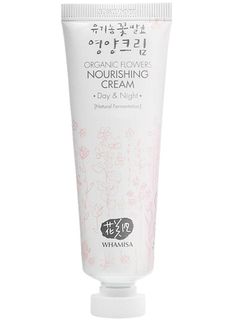
Whamisa Organic Flowers Nourishing Cream
Works for
1 of 1 advertised claim delivered
Moisturizing16 ingredients credited for this claimGood support
“Formulated with Aloe Vera Leaf Extract to soothe and provide lasting hydration to irritated skin.”
This product can help soften the skin and reduce its moisture loss with emollients and occlusives: butyrospermum parkii butter, caprylic/capric triglyceride.
Keep in mind that this product does not contain effective ingredients to attract water to the upper layer of the skin. This is why an additional product with humectants like glycerin or hyaluronic acid can be helpful (apply it before this product for the best results).
Can it cause trouble?
Irritancy8 strong irritants: Citrus aurantium bergamia fruit oil, Nelumbo nucifera flower extract + 6 more — patch-test recommendedHigh risk
Comedogenic3 ingredients rated 2 or more on the 0–5 pore-clogging scale3 flagged
User reviews
Be the first — your take helps the next person decide.
Ingredients
Filter by role to see what each ingredient is doing.
Aloe barbadensis leaf extract~23–34%
- Irritation risk
- Medium
Traditionally used to treat sunburns, dermatitis and inflammation, but evidence for its effectiveness is lacking. The extract can contain humectants that help attract water into the skin
More about Aloe barbadensis leaf extractWater~11–16%
Theobroma cacao seed butter~4.6–6.9%
- Irritation risk
- Low
- Comedogenicity
- 3/5
Helps soften the upper layer of the skin and can be helpful in restoring the skin barrier function. Might have some anti-oxidant effect
More about Theobroma cacao seed butterCetearyl alcohol~2.8–4.1%
- Irritation risk
- Low
- Comedogenicity
- 2/5
A non-drying alcohol. Works as an emollient. Helps water and oil mix together and creates a nice product texture
More about Cetearyl alcoholCetearyl olivate~2.3–3.4%
Olea europaea fruit oil~1.7–2.5%
- Irritation risk
- Medium
An emollient that helps soften the skin but is not effective for restoring its barrier function. Might be helpful to calm down inflammation
More about Olea europaea fruit oilSorbitan olivate~1.6–2.3%
Vitis vinifera seed oil~1.5–2.2%
- Irritation risk
- Medium
A great emollient that can also have anti-oxidant properties
More about Vitis vinifera seed oilMangifera indica seed butter~1.4–2%
- Irritation risk
- Low
Helps to soften the upper layer of the skin and might have some anti-oxidant effect
More about Mangifera indica seed butterGlycyrrhiza glabra root extract~1.2–1.7%
- Irritation risk
- Medium
A plant extract that can help lighten the skin and calm down inflammation. Might be helpful in neutralizing free radicals
More about Glycyrrhiza glabra root extractPaeonia suffruticosa root extract~1–1.5%
Scutellaria baicalensis root extract~0.85–1.3%
- Irritation risk
- High
A plant extract that might contain a compound baicalin that could be helpful in neutralizing free radicals and reducing inflammation in skin. The baicalin concentration in skincare products is often too low for an effective action. Can be used for its fragrant properties
More about Scutellaria baicalensis root extractEuphorbia cerifera cera~1–1.5%
- Irritation risk
- Medium
Helps soften the upper layer of the skin and thickens the product's texture
More about Euphorbia cerifera ceraCopernicia cerifera wax~0.95–1.4%
- Irritation risk
- Low
Helps to soften the upper layer of the skin and create a nice product consistency
More about Copernicia cerifera waxButyrospermum parkii butter~0.85–1.3%
- Irritation risk
- Low
- Comedogenicity
- 3/5
A great moisturising ingredient that softens the skin and reduces water loss from its upper layer. It also can be helpful in protecting skin from free radicals
More about Butyrospermum parkii butterCaprylic/capric triglyceride~0.85–1.3%
- Irritation risk
- Medium
A good mix of fatty acids that forms a protective layer on the skin. Improves the shelf life of products. Derived from coconut and glycerin
More about Caprylic/capric triglycerideCapsicum annuum fruit extract~0.55–1.3%
- Irritation risk
- Medium
Pepper extract. Might be able to help neutralize free radicals
More about Capsicum annuum fruit extractAloe barbadensis leaf~0.55–1.3%
- Irritation risk
- Low
Helianthus annuus seed oil~0.55–1.25%
- Irritation risk
- Low
A great emollient due to its high linoleic acid content. One of the most effective plant oils in helping skin hydration and repairing skin barrier function
More about Helianthus annuus seed oilPersea gratissima butter~0.5–1.1%
- Irritation risk
- Low
Taraxacum officinale root extract~0.45–1%
- Irritation risk
- High
A plant extract that might help neutralize free radicals in skin. Can be irritating
More about Taraxacum officinale root extractButylene glycol~0.35–0.85%
- Irritation risk
- Low
Used to create a nice product texture and help delivery of other ingredients. Might be somewhat helpful in attracting water to the upper layer of the skin
More about Butylene glycolCitrus aurantium bergamia fruit oil~0.3–0.75%
- Irritation risk
- High
A plant oil with a high content of volatile compounds that can irritate the skin and lead to allergic reactions. Can lead to photosensitivity
More about Citrus aurantium bergamia fruit oilMolasses~0.35–0.8%
- Irritation risk
- Low
Chrysanthemum sinense flower extract~0.4–0.9%
Nelumbo nucifera flower extract~0.2–0.8%
Aniba rosaeodora wood oil~0.2–0.75%
- Irritation risk
- High
Pelargonium graveolens flower oil~0.2–0.75%
- Irritation risk
- High
An essential oil. Can be irritating. Can become an allergen with oxidation
More about Pelargonium graveolens flower oilFusanus spicatus wood oil~0.2–0.7%
- Irritation risk
- Low
1,2-hexanediol~0.15–0.6%
Caulerpa lentillifera extract~0.3–0.7%
- Irritation risk
- Low
Lactobacillus~0.15–0.5%
- Irritation risk
- Low
A non-living ingredient made by fermentation with the bacteria Lactobacillus. It can help attract water to the upper layer of the skin and might help reduce inflammation
More about LactobacillusTocopherol~0.1–0.45%
- Irritation risk
- Low
Pure form of vitamin E. Can help moisturise and protect the skin from free radicals. Often used to help stabilise other ingredients or the formula itself
More about TocopherolLinalool~0.1–0.4%
Limonene~0.1–0.3%
- Irritation risk
- High
A common frangrance that can easily irritate skin, especially if exposed to air, light or heat
More about LimoneneCitronellol~0.05–0.3%
Geraniol~0.05–0.25%
Ingredient list view
Aloe barbadensis leaf extract, Water, Theobroma cacao seed butter, Cetearyl alcohol, Cetearyl olivate, Olea europaea fruit oil, Sorbitan olivate, Vitis vinifera seed oil, Mangifera indica seed butter, Glycyrrhiza glabra root extract, Paeonia suffruticosa root extract, Scutellaria baicalensis root extract, Euphorbia cerifera cera, Copernicia cerifera wax, Butyrospermum parkii butter, Caprylic/capric triglyceride, Capsicum annuum fruit extract, Aloe barbadensis leaf, Helianthus annuus seed oil, Persea gratissima butter, Taraxacum officinale root extract, Butylene glycol, Citrus aurantium bergamia fruit oil, Molasses, Chrysanthemum sinense flower extract, Nelumbo nucifera flower extract, Aniba rosaeodora wood oil, Pelargonium graveolens flower oil, Fusanus spicatus wood oil, 1,2-hexanediol, Caulerpa lentillifera extract, Lactobacillus, Tocopherol, Linalool, Limonene, Citronellol, Geraniol
Compare prices
Retailers ranked by price — lowest first.

Sources cited in this review
Every concentration estimate and effectiveness label is anchored to one of these 22 studies and safety reviews.
- 1
- 2Use of “natural” oils for moisturization: Review of olive, coconut, and sunflower seed oilonlinelibrary.wiley.com
- 3Extraction and Characteristics of Seed Kernel Oil from Mangopdfs.semanticscholar.org
- 4
- 5
- 6

Affiliate links · As an Amazon Associate, WIMJ earns from qualifying purchases.