Works for
1 of 1 advertised claim delivered
Moisturizing17 ingredients credited for this claimStrong support
“It’s infused with nourishing ingredients such as honey bee complex, baobab oil and moringa oleifera oil for soft and plump lips.”
This product contains good ingredients to attract water to the upper layer of the skin. These ingredients are called "humectants": sodium hyaluronate, honey extract.
When humectants are on the surface of the skin, they “pull in” the moisture from the outside environment, or from within deeper layers of the skin. If the air is dry, humectants can speed up the moisture loss from the skin. This is why it is a good idea to use another product on top of this one to help "seal in" the moisture (look for ingredients like dimethicone, squalane, oils and butters).
The following ingredients in this product are especially good for supporting the skin barrier and helping with the hydration level: madecassoside
Anti-oxidationNot advertised by the brand · 6 ingredients credited for this claimStrong support
This product contains antioxidants (asiaticoside, madecassoside) that can help neutralize free radicals in skin. By doing so, they can lessen the damage the skin gets from the UV light (sun).
Anti-agingNot advertised by the brand · 4 ingredients credited for this claimModerate support
This product contains asiaticoside, madecassoside. These ingredients might be able to help reduce and prevent fine lines and wrinkles, improve skin elasticity and firmness, but there is not enough evidence that it actually works.
Can it cause trouble?
Irritancy1 strong irritant: ParfumMedium risk
Comedogenic2 ingredients rated 2 or more on the 0–5 pore-clogging scale2 flagged
User reviews
Be the first — your take helps the next person decide.
Ingredients
Filter by role to see what each ingredient is doing.
Hydrogenated polyisobutene~22–33%
- Irritation risk
- Low
Used to improve the product consistency and soften the upper layer of the skin
More about Hydrogenated polyisobuteneIsononyl isononanoate~4.9–7.3%
- Irritation risk
- Low
Forms a protective film on the surface of the skin to prevent moisture loss. Gives a velvety feel to products while reducing tackiness
More about Isononyl isononanoateEthylene/propylene/styrene copolymer~4.6–6.8%
- Irritation risk
- Low
Used to create a thicker product consistency
More about Ethylene/propylene/styrene copolymerOctyldodecanol~3.6–5.4%
- Irritation risk
- Low
An emollient that helps to soften the skin and create a pleasant product texture and stabilize the formulation
More about OctyldodecanolCaprylic/capric/succinic triglyceride~2.8–4.2%
Ethylhexyl palmitate~2.1–3.2%
- Irritation risk
- Low
- Comedogenicity
- 3/5
An emollient that helps soften the skin and create a nice product texture
More about Ethylhexyl palmitateTocopheryl acetate~1.5–2.2%
- Irritation risk
- Medium
A more stable but less bio-available form of vitamin E compared to Tocopherol. Might help moisturize and protect the skin from free radicals, but mostly used in low concentrations to stabilize other ingredients.
More about Tocopheryl acetateCaprylyl glycol~1.4–2.1%
- Irritation risk
- Medium
Helps preserve products and creates a nice product texture
More about Caprylyl glycolEthylhexylglycerin~1.1–1.6%
Butylene/ethylene/styrene copolymer~0.85–1.3%
- Irritation risk
- Low
Used to create a gel-like product texture
More about Butylene/ethylene/styrene copolymerParfum~0.5–1.15%
- Irritation risk
- High
An aromatic blend of unspecified and possibly irritating ingredients
More about Parfum1,2-hexanediol~0.4–1%
Ci 45410~0.4–0.9%
Adansonia digitata seed oil~0.45–1%
- Irritation risk
- Medium
Helps soften the upper layer of the skin
More about Adansonia digitata seed oilMoringa oleifera seed oil~0.4–0.9%
- Irritation risk
- Medium
A plant oil that helps soften the upper layer of the skin. Is unlikely to be helpful in restoring skin barrier function due to the low content of linoleic acid
More about Moringa oleifera seed oilWater~0.35–0.8%
Pentaerythrityl tetra-di-t-butyl hydroxyhydrocinnamate~0.35–0.75%
- Irritation risk
- Low
Used to increase stability of product formulations
More about Pentaerythrityl tetra-di-t-butyl hydroxyhydrocinnamateButylene glycol~0.15–0.7%
- Irritation risk
- Low
Used to create a nice product texture and help delivery of other ingredients. Might be somewhat helpful in attracting water to the upper layer of the skin
More about Butylene glycolCentella asiatica extract~0.2–0.75%
- Irritation risk
- Medium
A plant extract that has been shown to be able to reduce inflammation in skin, support restoration of skin barrier function, as well as support collagen production. Contains active compounds called centelloids: asiaticoside, madecasosside, asiatic acid and madecassic acid. Might be helpful in preventing stretch marks. It can be itself be irritating though.
More about Centella asiatica extractPropolis extract~0.15–0.65%
- Irritation risk
- High
A complex substance produced by honey bees. Can have anti-bacterial and some anti-oxidant effect. Is an allergen and can be irritating
More about Propolis extractHoney extract~0.15–0.55%
- Irritation risk
- Medium
Helps attract water to the upper layer of the skin
More about Honey extractSodium hyaluronate~0.1–0.45%
- Irritation risk
- Low
One of the best moisturizing ingredients. Attracts water into the upper layer of the skin
More about Sodium hyaluronateTocopherol~0.1–0.45%
- Irritation risk
- Low
Pure form of vitamin E. Can help moisturise and protect the skin from free radicals. Often used to help stabilise other ingredients or the formula itself
More about TocopherolAsiaticoside~0.1–0.4%
- Irritation risk
- Medium
An active compound of Centella Asiatica plant extract. In combination with other active compounds of Centella Asiatica extract (madecasosside, asiatic acid and madecassic acid), asiaticoside has been shown to be helpful in wound-healing, restoring skin barrier function and supporting collagen production in skin. It can, however, itself be irritating
More about AsiaticosideAsiatic acid~0.1–0.4%
- Irritation risk
- Medium
An active compound of Centella Asiatica plant extract. In combination with other active compounds of Centella Asiatica extract (asiaticoside, madecasosside and madecassic acid) asiatic acid has been shown to be helpful in wound-healing, restoring skin barrier function and supporting collagen production in skin. It can, however, itself be irritating
More about Asiatic acidMadecassoside~0.1–0.35%
- Irritation risk
- Medium
An antioxidant that is typically derived from plant Centella Asiatica. It can help neutralize free radicals in skin and support skin barrier function. It could, however, itself be irritating. It is often unstable in formulations
More about MadecassosideMadecassic acid~0.1–0.3%
- Irritation risk
- Medium
An active compound of Centella Asiatica plant extract. In combination with other active compounds of Centella Asiatica extract (asiaticoside, madecasosside and asiatic acid), madecassic acid has been shown to be helpful in wound-healing, restoring skin barrier function and supporting collagen production in skin. It can, however, itself be irritating
More about Madecassic acidIngredient list view
Hydrogenated polyisobutene, Isononyl isononanoate, Ethylene/propylene/styrene copolymer, Octyldodecanol, Caprylic/capric/succinic triglyceride, Ethylhexyl palmitate, Tocopheryl acetate, Caprylyl glycol, Ethylhexylglycerin, Butylene/ethylene/styrene copolymer, Parfum, 1,2-hexanediol, Ci 45410, Adansonia digitata seed oil, Moringa oleifera seed oil, Water, Pentaerythrityl tetra-di-t-butyl hydroxyhydrocinnamate, Butylene glycol, Centella asiatica extract, Propolis extract, Honey extract, Sodium hyaluronate, Tocopherol, Asiaticoside, Asiatic acid, Madecassoside, Madecassic acid
Compare prices
Retailers ranked by price — lowest first.

Affiliate links · prices updated regularly
Product summary
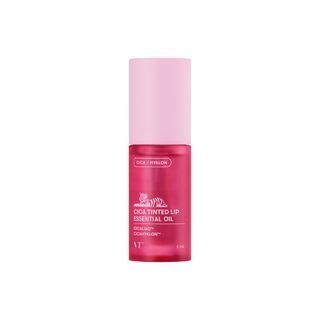
"VT - Cica Tinted Lip Essential Oil" is effective for: Moisturizing
It could be helpful for: Anti-aging, but its actives are not the most effective or are not well-studied.
Ingredient callouts
- Actives derived from an extract of the Centella Asiatica plant (also known as Gotu Kola) - madecassic acid 0.10% - 0.30%, madecassoside 0.10% - 0.35%, asiatic acid 0.10% - 0.40% and asiaticoside 0.10% - 0.40% The Centella Asiatica Actives help strengthen and restore the skin barrier, decrease inflammation in skin and neutralize free radicals. They also can help to reduce scarring. The good news is that these actives work even in low concentrations.
Price
The product retails for 11.50$ in the United States.
For a detailed price comparison: click here.
Sources cited in this review
Every concentration estimate and effectiveness label is anchored to one of these 27 studies and safety reviews.
- 1
- 2
- 3
- 4
- 5
- 6

Affiliate links · As an Amazon Associate, WIMJ earns from qualifying purchases.