Works for
CleansingPeg-20 glyceryl triisostearate, Peg-10 isostearate + 2 moreCan be harsh
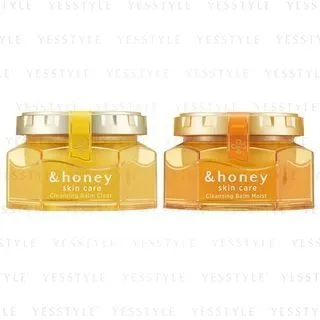
“&honey Cleansing Balm - 2 Types”
This product works by removing dirt and oil from the surface of the skin.
Keep in mind that cleansing can disrupt the skin barrier, and most people do not need to cleanse their skin more than once per day.
Can it cause trouble?
Irritancy7 strong irritants: Citrus limon juice, Citrus limon peel oil + 5 more — patch-test recommendedHigh risk
Comedogenic4 ingredients rated 2 or more on the 0–5 pore-clogging scale4 flagged
User reviews
Be the first — your take helps the next person decide.
Ingredients
Filter by role to see what each ingredient is doing.
Ethylhexyl palmitate~22–33%
- Irritation risk
- Low
- Comedogenicity
- 3/5
An emollient that helps soften the skin and create a nice product texture
More about Ethylhexyl palmitatePeg-20 glyceryl triisostearate~4–6%
- Irritation risk
- Medium
Helps water and oil mix together
More about Peg-20 glyceryl triisostearateCaprylic/capric triglyceride~4.5–6.7%
- Irritation risk
- Medium
A good mix of fatty acids that forms a protective layer on the skin. Improves the shelf life of products. Derived from coconut and glycerin
More about Caprylic/capric triglycerideHydrogenated corn oil~3.6–5.3%
- Irritation risk
- Low
- Comedogenicity
- 3/5
Peg-10 isostearate~2.4–3.6%
Synthetic wax~1.9–2.9%
- Irritation risk
- Low
Used to stabilize product formulations and thicken product consistency
More about Synthetic waxHelianthus annuus seed wax~1.5–2.3%
- Irritation risk
- Low
Helps soften the upper layer of the skin and support skin's barrier function while creating a thicker product consistency
More about Helianthus annuus seed waxHoney~1.2–1.7%
- Irritation risk
- Low
Helps attract water to the skin and might have some anti-bacterial properties. Can be an allergen
More about HoneyPapain~0.95–1.4%
- Irritation risk
- High
An enzyme extracted from papaya fruit. Can have an exfoliating effect on the skin. Can be irritating
More about PapainArgania spinosa kernel oil~0.85–1.25%
- Irritation risk
- Medium
An emollient that helps soften the upper layer of the skin. Might have some weak anti-oxidant properties
More about Argania spinosa kernel oilHydrolyzed hyaluronic acid~0.45–1.05%
- Irritation risk
- Low
One of the best moisturizing ingredients. Attracts water into the upper layer of the skin. A version of it is naturally present in skin
More about Hydrolyzed hyaluronic acidCitrus limon juice~0.35–0.85%
- Irritation risk
- High
Citrus limon peel oil~0.35–0.75%
Pyrus malus fruit extract~0.3–0.75%
- Irritation risk
- Medium
Can have some moisturizing properties due to its sugar content
More about Pyrus malus fruit extractCitrus grandis fruit extract~0.15–0.7%
- Irritation risk
- High
Citrus aurantifolia juice~0.35–0.75%
Crataegus cuneata fruit extract~0.2–0.75%
- Irritation risk
- Low
Citrus aurantium dulcis juice~0.15–0.65%
- Irritation risk
- High
Tocopherol~0.3–0.7%
- Irritation risk
- Low
Pure form of vitamin E. Can help moisturise and protect the skin from free radicals. Often used to help stabilise other ingredients or the formula itself
More about TocopherolPanthenol~0.15–0.55%
- Irritation risk
- Low
Helps attract water to the upper layer of the skin and can help improve skin barrier function
More about PanthenolRetinyl palmitate~0.1–0.45%
- Irritation risk
- High
Three steps removed from the active form of vitamin A - retinoic acid. To have an effect in the skin, it first needs to be converted twice to become the retinoic acid. This means it is less potent than retinol, but could also be less irritating. Once converted to the retinoic acid in the skin, it helps against all signs of aging, improves skin cell turnover and helps fight blemishes and clogged pores. However, in many cosmetic formulations, it is used in a concentration that is too low to have the full effect
More about Retinyl palmitateTetrahexyldecyl ascorbate~0.15–0.7%
- Irritation risk
- Medium
Being a lipid soluble form of vitamin C, it is more stable than ascorbic acid, but still degrades quickly and needs to be stabilized in a formulation with another ingredient. It is claimed to penetrate skin better than pure vitamin C and have the the similar benefits, but solid studies of its effectiveness are lacking. Is likely to require a higher concentration in a product than pure vitamin C to be effective. It might be able to help reduce pore clogging.
More about Tetrahexyldecyl ascorbateHippophae rhamnoides fruit oil~0.1–0.45%
- Irritation risk
- High
A plant oil that might somewhat help to neutralize free radicals. It could be irritating
More about Hippophae rhamnoides fruit oilTocopheryl acetate~0.2–0.7%
- Irritation risk
- Medium
A more stable but less bio-available form of vitamin E compared to Tocopherol. Might help moisturize and protect the skin from free radicals, but mostly used in low concentrations to stabilize other ingredients.
More about Tocopheryl acetateZea mays oil~0.15–0.65%
- Irritation risk
- Low
- Comedogenicity
- 3/5
A good moisturizing plant oil. Due to the high linoleic acid content, it helps soften the upper layer of the skin, reduce water loss and support skin barrier function
More about Zea mays oilMicrocrystalline wax~0.2–0.7%
Phytosteryl isostearyl dimer dilinoleate~0.3–0.7%
- Irritation risk
- Low
Water~0.15–0.55%
Carbomer~0.1–0.5%
- Irritation risk
- Low
Helps create a thicker or gel-like product texture. It is not a surfactant but can be used in gentle cleansing formulations
More about Carbomer1,2-hexanediol~0.1–0.35%
Caprylyl glycol~0.15–0.55%
- Irritation risk
- Medium
Helps preserve products and creates a nice product texture
More about Caprylyl glycolAlgin~0.1–0.35%
- Irritation risk
- Low
- Comedogenicity
- 3/5
Used to thicken product formulation. Can help attract water to the upper layer of the skin
More about AlginButylene glycol~0.05–0.25%
- Irritation risk
- Low
Used to create a nice product texture and help delivery of other ingredients. Might be somewhat helpful in attracting water to the upper layer of the skin
More about Butylene glycolPhenoxyethanol~0.1–0.3%
- Irritation risk
- Low
A preservative. It helps prevent bacterial growth in cosmetic products
More about PhenoxyethanolParfum~0.05–0.2%
- Irritation risk
- High
An aromatic blend of unspecified and possibly irritating ingredients
More about ParfumIngredient list view
Ethylhexyl palmitate, Peg-20 glyceryl triisostearate, Caprylic/capric triglyceride, Unknown, Hydrogenated corn oil, Peg-10 isostearate, Synthetic wax, Helianthus annuus seed wax, Honey, Papain, Argania spinosa kernel oil, Hydrolyzed hyaluronic acid, Citrus limon juice, Citrus limon peel oil, Pyrus malus fruit extract, Citrus grandis fruit extract, Citrus aurantifolia juice, Unknown, Crataegus cuneata fruit extract, Citrus aurantium dulcis juice, Tocopherol, Panthenol, Retinyl palmitate, Tetrahexyldecyl ascorbate, Hippophae rhamnoides fruit oil, Tocopheryl acetate, Zea mays oil, Microcrystalline wax, Phytosteryl isostearyl dimer dilinoleate, Water, Carbomer, 1,2-hexanediol, Caprylyl glycol, Algin, Butylene glycol, Phenoxyethanol, Parfum
Compare prices
Retailers ranked by price — lowest first.
Worth comparing, line by line.
Match % combines shared ingredients, the first five ingredients, shared actives and hero ingredients, irritancy (lower counts in the alternative's favour), texture and body area. Only products in the same routine step are compared.
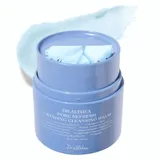
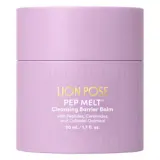
| ViCREA&honey Cleansing Balm - 2 TypesYOUR PRODUCT | Banila CoClean It Zero Cleansing Balm Vita-Pumpkin | Dr. AltheaPore Refresh Grinding Cleansing Balm | Lion PosePep Melt Cleansing Barrier Balm with Peptides, Ceramides, and Colloidal Oatmeal | |
|---|---|---|---|---|
| Match | — | 39% | 38% | 36% |
| Price | — | $20.37 | $14.86 | $35.00 |
| Shared key ingredients | — | 5 of 11 | 3 of 11 | 4 of 11 |
| Key difference | — | Ascorbyl Glucoside | Camellia Sinensis Leaf Extract | Acetyl Octapeptide-3 |
| Irritancy | High | Medium | Medium | Medium |
| Drying alcohol | — | — | — | — |
| View product | Shop | Shop | Shop |


More alternatives: hwarang' Bellflower Cleansing Balmcelimax Dual Barrier Purifying Cleansing Balm
Sources cited in this review
Every concentration estimate and effectiveness label is anchored to one of these 13 studies and safety reviews.
- 1
- 2
- 3
- 4Efficacy of a New Topical Nano-hyaluronic Acid in Humansncbi.nlm.nih.gov
- 5Physiochemical properties and application of hyaluronic acid: a systematic reviewonlinelibrary.wiley.com
- 6Vitamin E in dermatologyncbi.nlm.nih.gov

Affiliate links · As an Amazon Associate, WIMJ earns from qualifying purchases.