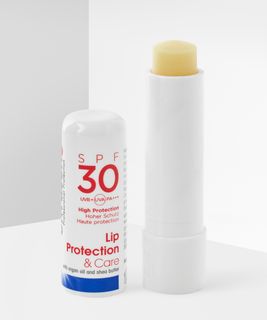
Ultrasun Lip Protection SPF30
Works for
2 of 2 advertised claims delivered
Sun protectionSPF 30 · 3 UV filtersBroad spectrum
This product offers a good level of protection against both UVB and UVA rays.
This sunscreen uses organic (so-called "chemical") sunscreen filters. Organic, or "chemical" filters usually provide reliable sun protection and rarely leave a white cast. Sunscreens with organic filters can sting eyes.
Moisturizing17 ingredients credited for this claimStrong support
“This Ultrasun lip balm will sooth, nourish and protect lips to keep them smooth and hydrated.”
This product can help soften the skin and reduce its moisture loss with emollients and occlusives: cera alba, limnanthes alba seed oil.
Keep in mind that this product does not contain effective ingredients to attract water to the upper layer of the skin. This is why an additional product with humectants like glycerin or hyaluronic acid can be helpful (apply it before this product for the best results).
The following ingredients in this product are especially good for supporting the skin barrier and helping with the hydration level: paraffinum liquidum
Anti-agingNot advertised by the brand · 3 ingredients credited for this claimStrong support
This product can help prevent early signs of skin aging because it offers a good level of broad spectrum sun protection. Sun damage is the main cause of premature skin aging, and protecting your skin from the sun is the best anti-aging strategy.
Can it cause trouble?
Irritancy1 strong irritant: AromaMedium risk
Comedogenic1 ingredient rated 2 or more on the 0–5 pore-clogging scale1 flagged
User reviews
Be the first — your take helps the next person decide.
Ingredients
Filter by role to see what each ingredient is doing.
C12-15 alkyl benzoate~22–34%
- Irritation risk
- Low
Enhances the product texture and makes it more spreadable. Helps reduce water loss from the outer layer of skin. Extands the shelf life by preventing bacteria growth
More about C12-15 alkyl benzoateEthylhexyl stearate~4.9–7.4%
- Irritation risk
- Low
Helps soften the upper layer of the skin
More about Ethylhexyl stearateParaffinum liquidum~4.6–7%
- Irritation risk
- Low
Mineral oil. One of the most effective and well studied occlusive and emollient moisturizing ingredients. Helps reduce moisture loss in skin and repair skin barrier function
More about Paraffinum liquidumEthylhexyl methoxycinnamate~3.9–5.8%
- Irritation risk
- High
Octinoxate. When used in higher concentrations, works as a sunscreen protecting the skin from UVB rays. When used in lower concentration, helps to preserve the product formulation. Is shown to be harmful to coral reefs - consider avoiding bathing in coral reef areas when wearing a product with this ingredient. It can be irritating
More about Ethylhexyl methoxycinnamateDiethylamino hydroxybenzoyl hexyl benzoate~3.3–4.9%
- Irritation risk
- Medium
Uvinul A Plus. A new generation broad spectrum sunscreen that offers an effective protection especially in the UVA range. It is stable in formulations. Unfortunately, is not approved by the FDA (US) yet
More about Diethylamino hydroxybenzoyl hexyl benzoateOzokerite~1.9–2.8%
Paraffin~1.6–2.3%
- Irritation risk
- Low
Prevents water loss from the skin surface and thickens the product consistency
More about ParaffinBis-ethylhexyloxyphenol methoxyphenyl triazine~1.8–2.7%
- Irritation risk
- Medium
Tinosorb S. One of the most effective broad spectrum sunscreen ingredients. Protects from both UVA and UVB rays. It is photostable. Unfortunately, not approved by FDA (US) yet.
More about Bis-ethylhexyloxyphenol methoxyphenyl triazinePeg-8 beeswax~1–1.6%
- Irritation risk
- Medium
Helps water and oil mix together while softening the upper layer of the skin. Can be an allergen (beeswax)
More about Peg-8 beeswaxCera alba~1.1–1.6%
- Irritation risk
- Medium
Forms a protective barrier that holds water and keeps dry skin hydrated. Keeps an emulsion from separating into its oil and liquid components, and increases the thickness of a product. Can be an allergen
More about Cera albaCocoglycerides~0.6–1.4%
- Irritation risk
- High
Help soften the upper layer of the skin and make it easier for oil and water mix together. Recently, a rising number of allergic reactions to cocoglycerides and other coconut-derived surfactants has been reported. As there is a significant overlap between frequent irritants and allergens, we flag this ingredient for attention of those with very sensitive, reactive skin
More about CocoglyceridesCyclopentasiloxane~0.5–1.2%
- Irritation risk
- Low
A silicone that helps improve the product texture and spreadability. Can absorb oil creating a short-term mattifying effect on the skin
More about CyclopentasiloxaneCandelilla cera~0.55–1.25%
- Irritation risk
- Low
Ceresin~0.45–1%
Dipropylene glycol dibenzoate~0.4–0.95%
- Irritation risk
- Low
Limnanthes alba seed oil~0.4–0.95%
- Irritation risk
- Low
This oil's cmposition is closest to rapeseed oil. It is a very stable oil and serves as an emoillient
More about Limnanthes alba seed oilCyclohexasiloxane~0.4–0.9%
- Irritation risk
- Low
A silicone that serves as an emollient. Helps create a nice non-greasy feels
More about CyclohexasiloxaneRibes nigrum seed oil~0.35–0.85%
- Irritation risk
- Medium
An emollient. Can be helpful for restoring skin barrier function.
More about Ribes nigrum seed oilPpg-15 stearyl ether benzoate~0.35–0.8%
- Irritation risk
- Low
Lecithin~0.35–0.8%
- Irritation risk
- Low
Used mostly for creating emulsions - helping oil and water mix together. Helps soften the upper layer of the skin
More about LecithinCopernicia cerifera cera~0.4–0.9%
- Irritation risk
- Low
Brazilian palm wax. Helps soften the upper layer of the skin
More about Copernicia cerifera ceraTocopheryl acetate~0.15–0.6%
- Irritation risk
- Medium
A more stable but less bio-available form of vitamin E compared to Tocopherol. Might help moisturize and protect the skin from free radicals, but mostly used in low concentrations to stabilize other ingredients.
More about Tocopheryl acetateButyrospermum parkii butter extract~0.3–0.75%
- Irritation risk
- Low
- Comedogenicity
- 3/5
A great moisturising ingredient that softens the skin and reduces water loss from its upper layer. It also can be helpful in protecting skin from free radicals
More about Butyrospermum parkii butter extractAroma~0.1–0.5%
Tocopherol~0.1–0.45%
- Irritation risk
- Low
Pure form of vitamin E. Can help moisturise and protect the skin from free radicals. Often used to help stabilise other ingredients or the formula itself
More about TocopherolAscorbyl palmitate~0.1–0.35%
- Irritation risk
- Medium
Being a lipid soluble form of vitamin C, it is more stable and can penetrate the skin better than L-Ascorbic acid. It is effective in protecting the skin from free radicals, as well as evening the skin tone, but is less effective in stimulating collagen production compared to L-Ascorbic acid.
More about Ascorbyl palmitateGlyceryl stearate~0.15–0.6%
- Irritation risk
- Low
An emollient that softens the skin and forms a protective layer on its surface. Helps water and oil mix together
More about Glyceryl stearateGlyceryl oleate~0.15–0.55%
- Irritation risk
- High
Helps oil and water mix together. Can be irritating
More about Glyceryl oleateCitric acid~0.05–0.2%
- Irritation risk
- Medium
Can work as an exfoliant but is typically used to adjust the product pH
More about Citric acidIngredient list view
C12-15 alkyl benzoate, Ethylhexyl stearate, Paraffinum liquidum, Ethylhexyl methoxycinnamate, Diethylamino hydroxybenzoyl hexyl benzoate, Ozokerite, Paraffin, Bis-ethylhexyloxyphenol methoxyphenyl triazine, Peg-8 beeswax, Cera alba, Cocoglycerides, Cyclopentasiloxane, Candelilla cera, Ceresin, Dipropylene glycol dibenzoate, Limnanthes alba seed oil, Cyclohexasiloxane, Ribes nigrum seed oil, Ppg-15 stearyl ether benzoate, Lecithin, Copernicia cerifera cera, Tocopheryl acetate, Butyrospermum parkii butter extract, Aroma, Tocopherol, Ascorbyl palmitate, Glyceryl stearate, Glyceryl oleate, Citric acid
Compare prices
Retailers ranked by price — lowest first.

Product summary
"Ultrasun - Lip Protection SPF30" is using UV filters in a relatively low concentration. Because of this, it might not be able to provide reliable sun protection.
Sunscreen filters
This is a so-called "chemical" sunscreen. It means that it uses organic UV filters. They typically offer good sun protection and rarely leave a white cast, but they can be irritating for some people with sensitive skin. The UV filters in this sunscreen are: tinosorb s 1.90% - 2.80% and uvinul a plus 3.90% - 5.80%.
Irritation risk
There are some common irritants in this product, including ingredients that do not have benefits for the skin. We assess the overall irritancy of this lip product to be medium. For a detailed overview of all potential irritants: click here
You can see the detailed formula review with the breakdown of all actives in the product and the full ingredient list with estimated concentrations in the tables below.
Price
The product retails from 8.00£ up to 10.00£ in the United Kingdom and for 10.50$ in the United States.
For a detailed price comparison: click here.
Sources cited in this review
Every concentration estimate and effectiveness label is anchored to one of these 5 studies and safety reviews.
- 1A review on the extensive skin benefits of mineral oilncbi.nlm.nih.gov
- 2
- 3Vitamin E in dermatologyncbi.nlm.nih.gov
- 4Vitamin E and Skin Healthlpi.oregonstate.edu
- 5

Affiliate links · As an Amazon Associate, WIMJ earns from qualifying purchases.