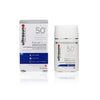
Ultrasun Anti Pigmentation Face Fluid SPF50+
Works for
2 of 2 advertised claims delivered
Sun protectionSPF 50 · 5 UV filtersBroad spectrum
This product offers a good level of protection against both UVB and UVA rays.
This sunscreen uses organic (so-called "chemical") sunscreen filters. Organic, or "chemical" filters usually provide reliable sun protection and rarely leave a white cast. Sunscreens with organic filters can sting eyes.
This product can be considered "reef safe" because it does not contain the UV filters (oxybenzone and octinoxate) that can be harmful to coral reefs when present in the water in high concentrations.
Evens skin toneNo ingredient credited for this claimStrong evidence
“The formula works to target existing pigmentation, brightening, and evening your skin tone with visible results.”
This product offers broad spectrum sun protection. It means that it can prevent hyperpigmentation and help keep the skin tone even (sun damage is the main factor causing age spots, darkening of post-acne marks and other discolorations).
Anti-agingNot advertised by the brand · No ingredient credited for this claimStrong evidence
This product can help prevent early signs of skin aging because it offers a good level of broad spectrum sun protection. Sun damage is the main cause of premature skin aging, and protecting your skin from the sun is the best anti-aging strategy.
MoisturizingNot advertised by the brand · Glycerin, Biosaccharide gum-1 + 12 moreGood evidence
This product contains good ingredients to attract water to the upper layer of the skin. These ingredients are called "humectants": biosaccharide gum-1, glycerin.
When humectants are on the surface of the skin, they “pull in” the moisture from the outside environment, or from within deeper layers of the skin. If the air is dry, humectants can speed up the moisture loss from the skin. This is why it is a good idea to use another product on top of this one to help "seal in" the moisture (look for ingredients like dimethicone, squalane, oils and butters).
Can it cause trouble?
Irritancy1 strong irritant: Alcohol denat.Medium risk
ComedogenicClean of flagged comedogenic ingredientsNone flagged
User reviews
Be the first — your take helps the next person decide.
Ingredients
Filter by role to see what each ingredient is doing.
Water~45–55%
Diethylamino hydroxybenzoyl hexyl benzoate~5.9–7.2%
- Irritation risk
- Medium
Uvinul A Plus. A new generation broad spectrum sunscreen that offers an effective protection especially in the UVA range. It is stable in formulations. Unfortunately, is not approved by the FDA (US) yet
More about Diethylamino hydroxybenzoyl hexyl benzoateAlcohol denat.~4.6–5.6%
- Irritation risk
- High
Produces temporary toning effect. Can help dissolve other ingredients or preserve products
More about Alcohol denat.C12-15 alkyl benzoate~3.3–4%
- Irritation risk
- Low
Enhances the product texture and makes it more spreadable. Helps reduce water loss from the outer layer of skin. Extands the shelf life by preventing bacteria growth
More about C12-15 alkyl benzoateDibutyl adipate~2.6–3.1%
- Irritation risk
- Low
Helps soften the upper layer of the skin and create a nice product consistency
More about Dibutyl adipateC15-19 alkane~2–2.5%
- Irritation risk
- Low
Helps soften the upper layer of the skin and create a nice product texture
More about C15-19 alkaneEthylhexyl triazone~2.3–2.8%
- Irritation risk
- Medium
Uvinul T. A UV filter. Effective against UVB rays. It is photostable. Can increase water resistance properties of the sunscreen. Unfortunately, not approved by the FDA (US) yet
More about Ethylhexyl triazoneTris-biphenyl triazine~1.5–1.8%
- Irritation risk
- Medium
Tinosorb A2B. A UV filter. It is effective against both UVA and UVB rays. It is photostable. Soluble in water, which helps to create lighter sunscreen formulations. Unfortunately, not approved by the FDA in the US yet
More about Tris-biphenyl triazinePropylheptyl caprylate~1.3–1.6%
- Irritation risk
- Low
Helps soften the upper layer of the skin
More about Propylheptyl caprylateC14-22 alcohols~1–1.2%
- Irritation risk
- Low
A non-drying alcohol that helps stabilize product formulations
More about C14-22 alcoholsBis-ethylhexyloxyphenol methoxyphenyl triazine~1.2–1.4%
- Irritation risk
- Medium
Tinosorb S. One of the most effective broad spectrum sunscreen ingredients. Protects from both UVA and UVB rays. It is photostable. Unfortunately, not approved by FDA (US) yet.
More about Bis-ethylhexyloxyphenol methoxyphenyl triazineDiisopropyl sebacate~0.65–0.95%
- Irritation risk
- Low
Helps soften the upper layer of the skin without creatng a greasy finish
More about Diisopropyl sebacateGlycerin~0.6–0.9%
- Irritation risk
- Low
One of the best moisturizing ingredients. Naturally present in skin. It attracts water to the upper layer of the skin working as a humectant
More about GlycerinPotassium cetyl phosphate~0.55–0.8%
- Irritation risk
- Medium
Helps oil and water mix together
More about Potassium cetyl phosphateUndecane~0.5–0.75%
- Irritation risk
- Medium
Helps create a non-greasy finish on the skin
More about UndecanePropylene glycol dicaprylate/dicaprate~0.5–0.75%
- Irritation risk
- Low
Tridecane~0.45–0.65%
Silica~0.55–0.8%
Decyl glucoside~0.55–0.85%
- Irritation risk
- High
Helps oil and water mix together. Can be irritating
More about Decyl glucosideC12-20 alkyl glucoside~0.35–0.65%
- Irritation risk
- Medium
Helps water and oil mix together
More about C12-20 alkyl glucosideHydroxyacetophenone~0.3–0.6%
Diethylhexyl butamido triazone~0.5–0.75%
- Irritation risk
- Medium
Uvasorb HEB. A UV filter. Is effective against UVB and UVA II rays (but not UVA I). It is photostable. Unfortunately, is not approved by FDA (US) yet
More about Diethylhexyl butamido triazoneMaltodextrin~0.3–0.55%
- Irritation risk
- Low
Used to stabilize the product formulation and can help absorb oil
More about MaltodextrinSodium surfactin~0.5–0.75%
Tocopheryl acetate~0.3–0.55%
- Irritation risk
- Medium
A more stable but less bio-available form of vitamin E compared to Tocopherol. Might help moisturize and protect the skin from free radicals, but mostly used in low concentrations to stabilize other ingredients.
More about Tocopheryl acetateCetyl alcohol~0.3–0.6%
- Irritation risk
- Low
A non-drying alcohol that works to soften the skin and stabilize product formulations helping oil and water mix together
More about Cetyl alcoholCitric acid~0.25–0.5%
- Irritation risk
- Medium
Can work as an exfoliant but is typically used to adjust the product pH
More about Citric acidCoco-caprylate/caprate~0.3–0.55%
- Irritation risk
- Low
Helps to soften the upper layer of the skin without creating a greasy texture
More about Coco-caprylate/caprateHydrogenated olive oil unsaponifiables~0.3–0.55%
- Irritation risk
- Low
Help soften the upper layer of the skin
More about Hydrogenated olive oil unsaponifiablesMagnolia officinalis bark extract~0.25–0.5%
- Irritation risk
- Low
Microcrystalline cellulose~0.3–0.55%
Succinoglycan~0.25–0.45%
Sphingomonas ferment extract~0.2–0.4%
- Irritation risk
- Low
Butylene glycol~0.2–0.4%
- Irritation risk
- Low
Used to create a nice product texture and help delivery of other ingredients. Might be somewhat helpful in attracting water to the upper layer of the skin
More about Butylene glycolDisodium phosphate~0.2–0.35%
- Irritation risk
- Low
Helps adjust the product pH and stabilize the formulation
More about Disodium phosphateBiosaccharide gum-1~0.15–0.3%
- Irritation risk
- Low
Helps attract water to the upper layer of the skin and is claimed to provide a longer-lasting hydration because of its ability to create a water-binding film on the surface of the skin
More about Biosaccharide gum-1Xanthan gum~0.15–0.3%
- Irritation risk
- Low
Used to create a thicker product consistency
More about Xanthan gumCellulose gum~0.1–0.25%
- Irritation risk
- Low
Used to create thicker product consistency and stabilize emulsions
More about Cellulose gumCystoseira tamariscifolia extract~0.1–0.2%
- Irritation risk
- Low
Glucose~0.1–0.15%
- Irritation risk
- Low
Helps attract water to the upper layer of the skin. Could be helpful in restoring the skin barrier function
More about GlucoseIngredient list view
Water, Diethylamino hydroxybenzoyl hexyl benzoate, Alcohol denat., C12-15 alkyl benzoate, Dibutyl adipate, C15-19 alkane, Ethylhexyl triazone, Tris-biphenyl triazine, Propylheptyl caprylate, C14-22 alcohols, Bis-ethylhexyloxyphenol methoxyphenyl triazine, Diisopropyl sebacate, Glycerin, Potassium cetyl phosphate, Undecane, Unknown, Propylene glycol dicaprylate/dicaprate, Tridecane, Silica, Decyl glucoside, C12-20 alkyl glucoside, Hydroxyacetophenone, Diethylhexyl butamido triazone, Maltodextrin, Sodium surfactin, Tocopheryl acetate, Cetyl alcohol, Citric acid, Coco-caprylate/caprate, Hydrogenated olive oil unsaponifiables, Magnolia officinalis bark extract, Microcrystalline cellulose, Succinoglycan, Sphingomonas ferment extract, Butylene glycol, Disodium phosphate, Biosaccharide gum-1, Xanthan gum, Cellulose gum, Cystoseira tamariscifolia extract, Glucose
Compare prices
Retailers ranked by price — lowest first.


Sources cited in this review
Every concentration estimate and effectiveness label is anchored to one of these 7 studies and safety reviews.
- 1
- 2
- 3
- 4
- 5Safety Assessment of Decyl Glucoside and Other Alkyl Glucosides as Used in Cosmeticsciteseerx.ist.psu.edu
- 6Safety Assessment of Alkyl Esters as Used in Cosmeticscir-safety.org

Affiliate links · As an Amazon Associate, WIMJ earns from qualifying purchases.