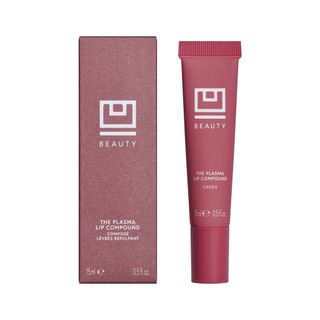
U Beauty The Plasma Lip Compound Tinted
Works for
2 of 2 advertised claims delivered
Anti-aging8 ingredients credited for this claimStrong support
“Key Benefits Enhanced volume Helps the appearance of fine lines around the mouth Improved texture, dryness and dehydration”
This product can help reduce and prevent fine lines and wrinkles, improve skin elasticity and firmness because it contains glycolic acid, lactobionic acid.
These ingredients in the product can also be helpful, even though there is less evidence for their effectiveness: n-prolyl palmitoyl tripeptide-56 acetate, palmitoyl tripeptide-38.
Keep in mind that it typically takes at least 6 weeks to notice any results because the changes that are needed to improve fine lines and elasticity happen in the deeper layers of the skin. No topical anti-aging product can “erase” wrinkles or fully reverse signs of aging.
Moisturizing30 ingredients credited for this claimStrong support
“Key Benefits Enhanced volume Helps the appearance of fine lines around the mouth Improved texture, dryness and dehydration”
This product can help improve hydration of the skin with the two types of ingredients.
The first type is called “humectants”:
these ingredients help attract water.
When humectants are on the surface of the skin, they “pull in” the moisture from the outside environment, or from
within deeper layers of the skin. The following ingredients in this product do the job:
hydrolyzed hyaluronic acid, sodium hyaluronate.
This product also contains ingredients called “occlusives”. They help reduce the speed with which our skin loses moisture to the outside environment. These ingredients also help soften the upper layer of the skin, so it feels less tight and nicer to the touch. The following ingredients in this product do the job: beeswax, butyrospermum parkii butter.
The following ingredients in this product are especially good for supporting the skin barrier and helping with the hydration level: ceramide np, lactobionic acid, linoleic acid, n-prolyl palmitoyl tripeptide-56 acetate, palmitoyl tripeptide-38
ExfoliationNot advertised by the brand · 4 ingredients credited for this claimStrong support
This product can help exfoliate the skin. In other words, it helps break down the bonds between dead cells on the surface of the skin and speed up the skin turnover. Skin often appears softer and brighter after exfoliation, but overdoing it can result in disrupted skin barrier. The following ingredient is doing the exfoliating job in this product: glycolic acid, lactobionic acid, mandelic acid, salicylic acid.
Anti-oxidationNot advertised by the brand · 10 ingredients credited for this claimStrong support
This product contains antioxidants (glutathione, lactobionic acid, superoxide dismutase) that can help neutralize free radicals in skin. By doing so, they can lessen the damage the skin gets from the UV light (sun).
Can it cause trouble?
Irritancy1 strong irritant: Hydroxymethoxyphenyl propylmethylmethoxybenzofuranMedium risk
Comedogenic2 ingredients rated 2 or more on the 0–5 pore-clogging scale2 flagged


User reviews
Be the first — your take helps the next person decide.
Ingredients
Filter by role to see what each ingredient is doing.
Ricinus communis seed oil~28–35%
- Irritation risk
- Medium
A plant oil that can help soften the skin. It might be helpful in calming down inflammation, but solid research is lacking. Is often used in lip products to create the needed product consistency
More about Ricinus communis seed oilPrunus amygdalus dulcis oil~4.9–6%
- Irritation risk
- Low
An emollient that softens the skin
More about Prunus amygdalus dulcis oilVp/hexadecene copolymer~5.5–6.7%
- Irritation risk
- Low
Creates a nice product texture and can support water-resistance of sunscreens
More about Vp/hexadecene copolymerButyrospermum parkii butter~4.4–5.4%
- Irritation risk
- Low
- Comedogenicity
- 3/5
A great moisturising ingredient that softens the skin and reduces water loss from its upper layer. It also can be helpful in protecting skin from free radicals
More about Butyrospermum parkii butterSilica dimethyl silylate~3.3–4%
Cera alba~3–3.7%
- Irritation risk
- Medium
Forms a protective barrier that holds water and keeps dry skin hydrated. Keeps an emulsion from separating into its oil and liquid components, and increases the thickness of a product. Can be an allergen
More about Cera albaBeeswax~2.1–2.5%
- Irritation risk
- Low
Forms a protective barrier that holds water and keeps dry skin hydrated. Keeps an emulsion from separating into its oil and liquid components, and increases the thickness of a product. Can be an allergen
More about BeeswaxPolyester-7~1.7–2.1%
- Irritation risk
- Low
Neopentyl glycol diheptanoate~1.4–1.8%
- Irritation risk
- Low
Helps soften the upper layer of the skin and create a nice product consistency
More about Neopentyl glycol diheptanoateEthylhexyl palmitate~1.2–1.5%
- Irritation risk
- Low
- Comedogenicity
- 3/5
An emollient that helps soften the skin and create a nice product texture
More about Ethylhexyl palmitateTocopheryl acetate~0.95–1.2%
- Irritation risk
- Medium
A more stable but less bio-available form of vitamin E compared to Tocopherol. Might help moisturize and protect the skin from free radicals, but mostly used in low concentrations to stabilize other ingredients.
More about Tocopheryl acetateSodium hyaluronate~0.75–1.15%
- Irritation risk
- Low
One of the best moisturizing ingredients. Attracts water into the upper layer of the skin
More about Sodium hyaluronateHydrolyzed hyaluronic acid~0.75–1.1%
- Irritation risk
- Low
One of the best moisturizing ingredients. Attracts water into the upper layer of the skin. A version of it is naturally present in skin
More about Hydrolyzed hyaluronic acidStearic acid~0.95–1.15%
- Irritation risk
- Low
Helps oil and water mix together and works as an emollient
More about Stearic acidSuperoxide dismutase~0.7–1.05%
- Irritation risk
- Low
An antioxidant enzyme that is naturally present in skin. It can help support skin barrier function and reduce inflammation in skin. It is used in topical medications for inflammatory skin conditions including atopic dermatitis (eczema) and psoriasis. There are three types of natural Superoxide Dismutase in human skin. The compound used in topical treatments and cosmetics are mimics of typically one of these natural variants
More about Superoxide dismutaseCetearyl ethylhexanoate~0.75–1.15%
- Irritation risk
- Low
An emollient that helps soften the skin
More about Cetearyl ethylhexanoateHydroxymethoxyphenyl propylmethylmethoxybenzofuran~0.65–0.95%
- Irritation risk
- High
It is a derivative of isoeugenol, an aromatic compound in clove essential oil. It is sold to cosmetic companies under the name Sym3D. The ingredient's manufacturer claims that it is able to plump lips and have an anti-aging effect. The evidence of effectiveness, however, is weak. The lab tests with skin models (not with real people) show that it, in theory, it can increase the number and size of fat cells underneath the skin and can work as an anti-oxidant. To impact the fat cells, the ingredient, however, needs to penetrate deep through the skin - and it is unlikely that it can do this. A clinical test with 44 female volunteers conducted by the manufacturer showed that twice daily application of this ingredient in 0.25% concentration on lips increased their volume by 6% in 28 days. It is unclear where the effect is coming from. It is possible that this visible effect appears because of the skin irritation
More about Hydroxymethoxyphenyl propylmethylmethoxybenzofuranCeramide np~0.7–1.05%
- Irritation risk
- Low
A type of lipid similar to ceramides naturally present in skin. Helps to soften the upper layer of the skin and supports the skin barrier function to keep it hydrated. Can help to prevent inflammation in skin
More about Ceramide npSalicylic acid~0.55–0.85%
- Irritation risk
- High
Used for skin exfoliation. It has an anti-inflammatory and anti-bacterial effect, helps to unclog pores, prevent blemishes and speed up healing of the existing ones. Sometimes referred to as a BHA (beta-hydroxy acid)
More about Salicylic acidSorbitan isostearate~0.55–0.85%
- Irritation risk
- Low
Helps oil and water mix together
More about Sorbitan isostearateBenzyl nicotinate~0.55–0.8%
- Irritation risk
- Low
Trihydroxystearin~0.5–0.8%
- Irritation risk
- Low
Helps soften the upper layer of the skin and improve the product texture
More about TrihydroxystearinTitanium dioxide~0.6–0.95%
- Irritation risk
- Low
Works as a UV filter when used in high concentrations. It is photostable and is effective mostly against the UVB light, with some protection in the UVA range. In small concentrations, used for its ability to improve the color of cosmetic products. Is usually well tolerated by the skin
More about Titanium dioxidePortulaca pilosa extract~0.5–0.8%
Sucrose cocoate~0.5–0.8%
Palmitoyl tripeptide-38~0.5–0.75%
- Irritation risk
- Low
A type of peptide. Peptides are excellent moisturizers and might be able support collagen production reducing fine lines and wrinkles
More about Palmitoyl tripeptide-38Water~0.5–0.75%
Sodium ascorbyl phosphate~0.5–0.75%
- Irritation risk
- Medium
A stable derivative of vitamin C. It is oil-soluble which means it is more likely to penetrate the skin compared to the pure form of vitamin C (which is water-soluble), but it is less bio-available and is way less effective in stimulating collagen and reducing wrinkles compared to the pure form of vitamin C (L-ascorbic acid) and its other derivatives (for example, magnesium ascorbyl phosphate). At the same time, this vitamin C derivative has been shown in studies to be effective in reducing acne, blemishes and clogged pores. It is less irritating then the pure form of vitamin C
More about Sodium ascorbyl phosphateLinoleic acid~0.65–0.95%
- Irritation risk
- Low
An excellent emollient. Helps soften the skin, restore its barrier function, and can help to calm down inflammation. It can be helpful to prevent blemishes and clogged pores
More about Linoleic acidTocopherol~0.5–0.75%
- Irritation risk
- Low
Pure form of vitamin E. Can help moisturise and protect the skin from free radicals. Often used to help stabilise other ingredients or the formula itself
More about TocopherolOleic acid~0.6–0.9%
- Irritation risk
- Medium
Helps soften the upper layer of the skin. At the same time, it can weaken the skin's barrier enhancing penetration of other ingredients and increasing the risk of skin dryness
More about Oleic acidPolysorbate 20~0.55–0.8%
Palmitic acid~0.6–0.9%
- Irritation risk
- Low
An emollient that is naturally present in skin and helps soften it
More about Palmitic acidAcacia decurrens/jojoba/sunflower seed wax polyglyceryl-3 esters~0.6–0.85%
- Irritation risk
- Medium
Helps soften the upper layer of the skin and create a nice product texture
More about Acacia decurrens/jojoba/sunflower seed wax polyglyceryl-3 estersXanthan gum~0.5–0.8%
- Irritation risk
- Low
Used to create a thicker product consistency
More about Xanthan gumGlutathione~0.5–0.75%
- Irritation risk
- Medium
A peptide that can help neutralize free radicals in skin and reduce melanin production resulting in skin lightening effect and reduction in hyperpigmentation. It can also help attract moisture to the upper layer of the skin
More about GlutathioneLactobionic acid~0.5–0.75%
- Irritation risk
- Medium
A polyhydroxy acid (PHA) that helps shed dead cells from the surface of the skin revealing a smoother, more even skin. PHAs tend to be gentler on the skin compared to AHAs (for example, glycolic acid). It also has hydrating properties and helps attract water to the upper layer of the skin. It can help calm down inflammation in skin and support restoration of the barrier function. It has an anti-oxidant effect as well. It can help reduce fine line, wrinkles and improve skin elasticity
More about Lactobionic acidGlycolic acid~0.5–0.75%
- Irritation risk
- High
An alpha-hydroxy acid (AHA) that helps to remove the dead skin cells on the surface of the skin reveling a more even, smoother complexation. It is also able to stimulate collagen production with long-term use. Could help to reduce pore congestion. It can be irritating to the skin. Apply sunscreen daily if using products with glycolic acid
More about Glycolic acidLinolenic acid~0.6–0.9%
- Irritation risk
- Medium
An emollient that helps soften the skin and calm down inflammation
More about Linolenic acidMandelic acid~0.5–0.75%
- Irritation risk
- High
Helps shed the upper layer of dead cells from the surface of the skin revealing smoother, brighter skin. It can help to reduce hyperpigmentation. It has anti-bacterial properties, and might help to reduce blemishes, as well as fine lines and wrinkles. It is considered to be gentler than glycolic acid
More about Mandelic acidSqualane~0.6–0.9%
- Irritation risk
- Low
An oil naturally present in skin. Works as an emollient to soften the skin and form a protective layer on its surface without a greasy feeling.
More about SqualaneDisteardimonium hectorite~0.5–0.7%
- Irritation risk
- Low
A type of clay that is used to thicken the product consistency
More about Disteardimonium hectoritePropylene carbonate~0.45–0.65%
- Irritation risk
- Low
Is used to dissolve other ingredients and create nice product texture
More about Propylene carbonatePentylene glycol~0.5–0.7%
- Irritation risk
- Medium
Used to preserve products, dissolve other ingredients and create a nice product texture
More about Pentylene glycolCaprylyl glycol~0.45–0.65%
- Irritation risk
- Medium
Helps preserve products and creates a nice product texture
More about Caprylyl glycolN-prolyl palmitoyl tripeptide-56 acetate~0.35–0.6%
- Irritation risk
- Low
A type of peptide. Peptides are excellent moisturizers and might be able support collagen production reducing fine lines and wrinkles
More about N-prolyl palmitoyl tripeptide-56 acetateMica~0.35–0.65%
- Irritation risk
- Low
Creates an illusion of smoother and more radiant skin tone. Adds shimmer to the skin by reflecting light
More about MicaTitanium dioxide~0.45–0.7%
- Irritation risk
- Low
Works as a UV filter when used in high concentrations. It is photostable and is effective mostly against the UVB light, with some protection in the UVA range. In small concentrations, used for its ability to improve the color of cosmetic products. Is usually well tolerated by the skin
More about Titanium dioxideAluminum hydroxide~0.45–0.65%
- Irritation risk
- Low
Is used to add opaque (non-transparent) appearance to formulations. Can be used to coat other ingredients for even dispersion. This is a different ingredient compared to the ones used in antipersperants (aluminium chloride and aluminium chlorohydrate)
More about Aluminum hydroxideIron hydroxide~0.25–0.45%
- Irritation risk
- Low
Ci 15850~0.25–0.4%
Iron oxides~0.2–0.35%
- Irritation risk
- Low
An umbrella term for the following three colorants: CI 77491, CI 77492, CI 77499. They might be able to offer some protection against visible light, but the degree of the protection is not clear
More about Iron oxidesCi 77491~0.15–0.3%
- Irritation risk
- Low
A red colorant made of iron oxide. Typically is not irritating
More about Ci 77491Ci 42090~0.15–0.3%
Ci 19140~0.1–0.15%
Ci 15985~0.05–0.15%
Ingredient list view
Ricinus communis seed oil, Prunus amygdalus dulcis oil, Vp/hexadecene copolymer, Butyrospermum parkii butter, Silica dimethyl silylate, Cera alba, Beeswax, Polyester-7, Neopentyl glycol diheptanoate, Ethylhexyl palmitate, Tocopheryl acetate, Sodium hyaluronate, Hydrolyzed hyaluronic acid, Stearic acid, Superoxide dismutase, Cetearyl ethylhexanoate, Hydroxymethoxyphenyl propylmethylmethoxybenzofuran, Ceramide np, Salicylic acid, Sorbitan isostearate, Benzyl nicotinate, Trihydroxystearin, Titanium dioxide, Portulaca pilosa extract, Sucrose cocoate, Palmitoyl tripeptide-38, Water, Sodium ascorbyl phosphate, Linoleic acid, Tocopherol, Oleic acid, Polysorbate 20, Palmitic acid, Acacia decurrens/jojoba/sunflower seed wax polyglyceryl-3 esters, Xanthan gum, Glutathione, Lactobionic acid, Glycolic acid, Linolenic acid, Mandelic acid, Squalane, Disteardimonium hectorite, Propylene carbonate, Pentylene glycol, Caprylyl glycol, N-prolyl palmitoyl tripeptide-56 acetate, Mica, Titanium dioxide, Aluminum hydroxide, Iron hydroxide, Ci 15850, Iron oxides, Ci 77491, Unknown, Ci 42090, Unknown, Ci 19140, Ci 15985
Compare prices
Retailers ranked by price — lowest first.

Worth comparing, line by line.
Match % combines shared ingredients, the first five ingredients, shared actives and hero ingredients, irritancy (lower counts in the alternative's favour), texture and body area. Only products in the same routine step are compared.
| U BeautyThe Plasma Lip Compound TintedYOUR PRODUCT | FacetheoryLipabalm Bioactive Lip Balm BM1 with Shea Butter, Raspberry Seed Oil and Vegan Petroleum-Free Natural Wax | EcookingLip Balm Pomegranate | BeautycounterCountermatch Recovery Sleeping Cream | |
|---|---|---|---|---|
| Match | — | 59% | 57% | 50% |
| Price | $68.00 | $15.85−$52.15 | $9.00−$59.00 | $62.00−$6.00 |
| Shared key ingredients | — | 2 of 20 | 4 of 20 | 6 of 20 |
| Key difference | — | Cocos Nucifera Fruit Extract | Agran Oil | Betaine |
| Irritancy | Medium | Low | Medium | Low |
| Drying alcohol | — | — | — | — |
| View product | Shop | Shop | Shop |

Product summary
"U Beauty - The Plasma Lip Compound Tinted" is effective for: Exfoliation, Anti-aging and Moisturizing
Ingredient callouts
- This product contains acids (lactobionic acid 0.50% - 0.75%, mandelic acid 0.50% - 0.75% and glycolic acid 0.50% - 0.75%). Their concentration is low, and they will not have a strong exfoliating effect. Instead, they work to support the skin natural acid mantle and to attract water (as humectants). PHAs (lactobionic acid) especially are great for improving skin hydration. They might be even able to stimulate the production of skin's natural humectants and support the healthy skin microbiome.
- Another benefit is that this moisturizer contain ceramides (ceramide np 0.70% - 1.05%). Ceramides are an important part of our natural skin barrier. The Ceramides used in skincare are synthetic or come from plants. They help soften the skin and can help "fill the gaps" in the skin barrier, keeping the skin hydrated and resilient for longer.
- We like that this moisturizer contains peptides (n-prolyl palmitoyl tripeptide-56 acetate 0.35% - 0.60% and palmitoyl tripeptide-38 0.50% - 0.75%). There are many different kind of Peptides and they are naturally present in our skin. They all are a combination of aminoacids. Some of them work as natural antibiotics, promote wound-healing and production of collagen. The science is still not settled on how effective Peptides are in skincare, but it is very likely that they have a benefit. Peptides might help restore the skin barrier and fight the signs of aging. At the very least, Peptides work as humectants: they attract water to the upper layer of the skin and improve its hydration.
- Salicylic acid (0.55% - 0.85%) in this product will have an exfoliating effect and help smooth the skin. We, however, do not recommend using a moisturizer with Salicylic Acid daily to avoid over-exfoliating.
- We love that there is also Linoleic Acid in this lip product (0.65% - 0.95%). Linoleic Acid is one of the skin's natural emollients. It supports the skin barrier and can even help reduce clogged pores.
Price
The product retails for 68.00$ in the United States.
For a detailed price comparison: click here.
Sources cited in this review
Every concentration estimate and effectiveness label is anchored to one of these 49 studies and safety reviews.
- 1
- 2
- 3
- 4
- 5
- 6Hyaluronic acid: A key molecule in skin agingncbi.nlm.nih.gov

Affiliate links · As an Amazon Associate, WIMJ earns from qualifying purchases.