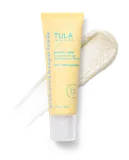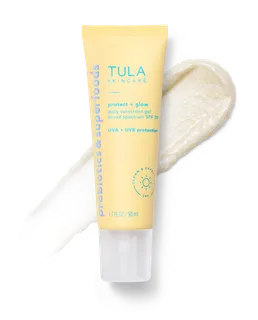
Tula Protect + Glow SPF 30

Tula Protect + Glow SPF 30

SPF 30Efficacy100/100IrritancyHigh·4 UV filters

Works for

Sun protection
SPF 30 · 4 UV filters
Broad spectrum
SPF 30Broad spectrumChemical filters

This product offers a good level of protection against both UVB and UVA rays.

This sunscreen uses organic (so-called "chemical") sunscreen filters. Organic, or "chemical" filters usually provide reliable sun protection and rarely leave a white cast. Sunscreens with organic filters can sting eyes.

This product can be considered "reef safe" because it does not contain the UV filters (oxybenzone and octinoxate) that can be harmful to coral reefs when present in the water in high concentrations.

UV spectrum
UVB290–320 nmUVA II320–340 nmUVA I340–400 nm
Homosalate
Octisalate
Titanium Dioxide
Avobenzone
FilterCoverageWhat it doesEst. amount
HomosalateUVB Photo-stable A weak sunscreen that offers some protection against the sun rays that cause sunburn (UVB), but does not offer meaningful protection against protect against the most aging sun rays (UVA). It loses its effectiveness quickly when exposed to sunlight. It is an organic, or so called "chemical" sunscreen. When used in low concentrations, helps to stabilize the product formulation10%
OctisalateEthylhexyl SalicylateUVBOctisalate. A UV filter. It offers some protection against the sun rays that cause sunburn (UVB), but does not protect against the most aging sun rays (UVA). It loses its effectiveness quickly when exposed to sunlight. It is an organic, or so called "chemical" sunscreen5%
Titanium Dioxide Mineral UVBUVA2 Photo-stable Works as a UV filter when used in high concentrations. It is photostable and is effective mostly against the UVB light, with some protection in the UVA range. In small concentrations, used for its ability to improve the color of cosmetic products. Is usually well tolerated by the skin~0.05–0.1%
AvobenzoneButyl MethoxydibenzoylmethaneUVA1Avobenzone. An organic, or so-called "chemical" UV filter. Protects against both UVA and UVB rays. Needs to be combined with other filters in a formulation to be stable.3%
~ marks concentrations estimated from label position and typical use levels
Reef-safe
No oxybenzone or octinoxate — the two filters banned in Hawaii, Florida Keys and Aruba.
Anti-aging
Side benefit · Lactococcus ferment lysate, Camellia sinensis leaf extract + 2 more
Works well

This product can help prevent early signs of skin aging because it offers a good level of broad spectrum sun protection. Sun damage is the main cause of premature skin aging, and protecting your skin from the sun is the best anti-aging strategy.

Lactococcus ferment lysateEffect: LowConsists of remains of dead bacteria cells. Is likely helpful in attracting water to the upper layer of the skin. Might be helpful in reducing inflammation and neutralizing free radicals in skin~3.3–5%
Camellia sinensis leaf extractEffect: LowCan contain potent anti-oxidant compounds (abbreviated ECG, GCG, EGC, and EGCG) that might help protect the skin from free radicals. Can help calm down inflammation and has some anti-bacterial properties. Unfortunately, these antioxidants are unstable and lose their effectiveness very quickly in products. The concentration of the antioxidant compounds in the extract also tends to be low to be effective in topical formulation~0.15–0.7%
TocopherolEffect: Low, below effective dosePure form of vitamin E. Can help moisturise and protect the skin from free radicals. Often used to help stabilise other ingredients or the formula itself~0.05–0.3%
Lactic acidUnder-dosedAn exfoliating and moisturizing alpha-hydroxy acid (AHA). Typically causes less irritation than other AHAs, for example, glycolic acid. At high concentrations (about 15%), lactic acid can help reduce lines and wrinkles. Recent studies show that lactic acid can support the "good" bacteria living on skin's surface (healthy skin microbiome)~0.15–0.7%
Evens skin tone
Side benefit · Camellia sinensis leaf extract, Lactic acid
Works well

This product offers broad spectrum sun protection. It means that it can prevent hyperpigmentation and help keep the skin tone even (sun damage is the main factor causing age spots, darkening of post-acne marks and other discolorations).

Camellia sinensis leaf extractEffect: LowCan contain potent anti-oxidant compounds (abbreviated ECG, GCG, EGC, and EGCG) that might help protect the skin from free radicals. Can help calm down inflammation and has some anti-bacterial properties. Unfortunately, these antioxidants are unstable and lose their effectiveness very quickly in products. The concentration of the antioxidant compounds in the extract also tends to be low to be effective in topical formulation~0.15–0.7%
Lactic acidUnder-dosedAn exfoliating and moisturizing alpha-hydroxy acid (AHA). Typically causes less irritation than other AHAs, for example, glycolic acid. At high concentrations (about 15%), lactic acid can help reduce lines and wrinkles. Recent studies show that lactic acid can support the "good" bacteria living on skin's surface (healthy skin microbiome)~0.15–0.7%
Anti-oxidation
Side benefit · Camellia sinensis leaf extract, Lactococcus ferment lysate + 4 more
May help

This product contains antioxidants (camellia sinensis leaf extract) that might be able to help neutralize free radicals in skin to lessen the damage it gets from the UV light (sun). There is not enough evidence to confirm their effectiveness in skin though.

Camellia sinensis leaf extractKey activeEffect: MediumCan contain potent anti-oxidant compounds (abbreviated ECG, GCG, EGC, and EGCG) that might help protect the skin from free radicals. Can help calm down inflammation and has some anti-bacterial properties. Unfortunately, these antioxidants are unstable and lose their effectiveness very quickly in products. The concentration of the antioxidant compounds in the extract also tends to be low to be effective in topical formulation~0.15–0.7%
Lactococcus ferment lysateEffect: LowConsists of remains of dead bacteria cells. Is likely helpful in attracting water to the upper layer of the skin. Might be helpful in reducing inflammation and neutralizing free radicals in skin~3.3–5%
Rubus idaeus fruit extractEffect: LowA fruit extract that might have some anti-oxidant properties but evidence of effectiveness in skin is lacking~0.1–0.35%
Pimpinella anisum fruit extractEffect: LowA plant extract that can have some anti-oxidant properties. Can be used as a fragrance and to help preserve product formulations. Can be irritating~0.05–0.3%
Pyrus malus fruit extractEffect: Low, below effective doseCan have some moisturizing properties due to its sugar content~0.1–0.35%
TocopherolUnder-dosedPure form of vitamin E. Can help moisturise and protect the skin from free radicals. Often used to help stabilise other ingredients or the formula itself~0.05–0.3%
Moisturizing
Side benefit the brand mentions · Lactococcus ferment lysate, Ectoin + 10 more
Works
What the product description says
“non-greasy”
Source: Tula

This product can help improve hydration of the skin with the two types of ingredients.

The first type is called “humectants”:
these ingredients help attract water. When humectants are on the surface of the skin, they “pull in” the moisture from the outside environment, or from within deeper layers of the skin. The following ingredients in this product do the job: arginine, glycerin.

This product also contains ingredients called “occlusives”. They help reduce the speed with which our skin loses moisture to the outside environment. These ingredients also help soften the upper layer of the skin, so it feels less tight and nicer to the touch. The following ingredients in this product do the job: arginine, pentylene glycol.

Lactococcus ferment lysateKey activeEffect: HighConsists of remains of dead bacteria cells. Is likely helpful in attracting water to the upper layer of the skin. Might be helpful in reducing inflammation and neutralizing free radicals in skin~3.3–5%
EctoinKey activeEffect: HighSoftens the upper layer of the skin and can support skin barrier function~1.2–1.7%
GlycerinKey active· HumectantEffect: HighOne of the best moisturizing ingredients. Naturally present in skin. It attracts water to the upper layer of the skin working as a humectant~1–1.5%
ArginineKey active· Humectant, OcclusiveEffect: HighAn amino acid that is naturally present in skin and helps keep it hydrated. When used together with AHAs, it can reduce their irritating effect on the skin~0.9–1.35%
Pentylene glycol· EmollientEffect: LowUsed to preserve products, dissolve other ingredients and create a nice product texture~4.2–6.3%
Ananas sativus fruit extractEffect: LowA fruit extract that might help to attract water to the upper layer of the skin, but there is no evidence for any other benefits to the skin~0.4–0.9%
Camellia sinensis leaf extractEffect: LowCan contain potent anti-oxidant compounds (abbreviated ECG, GCG, EGC, and EGCG) that might help protect the skin from free radicals. Can help calm down inflammation and has some anti-bacterial properties. Unfortunately, these antioxidants are unstable and lose their effectiveness very quickly in products. The concentration of the antioxidant compounds in the extract also tends to be low to be effective in topical formulation~0.15–0.7%
Dibutyl ethylhexanoyl glutamideEffect: LowHelps improve the product texture and soften the upper layer of the skin~0.1–0.35%
Pyrus communis fruit extract· HumectantEffect: LowCan have some moisturizing properties due to its sugar content~0.1–0.4%
TocopherolEffect: Low, below effective dosePure form of vitamin E. Can help moisturise and protect the skin from free radicals. Often used to help stabilise other ingredients or the formula itself~0.05–0.3%
Lactic acidUnder-dosedAn exfoliating and moisturizing alpha-hydroxy acid (AHA). Typically causes less irritation than other AHAs, for example, glycolic acid. At high concentrations (about 15%), lactic acid can help reduce lines and wrinkles. Recent studies show that lactic acid can support the "good" bacteria living on skin's surface (healthy skin microbiome)~0.15–0.7%
Pyrus malus fruit extractUnder-dosedCan have some moisturizing properties due to its sugar content~0.1–0.35%

Can it cause trouble?

Irritancy
4 strong irritants: Carica papaya fruit extract, Citrus aurantium dulcis peel extract + 2 more — patch-test recommended
High risk
We flagged 20 ingredients with irritancy potential. Severity depends on your sensitivity threshold; the table lists the worst offenders first.
IngredientFunctionIrritationEst. amount
Carica papaya fruit extract—High~0.3–0.75%est.
Citrus aurantium dulcis peel extractUsed as a fragranceHigh~0.15–0.5%est.
Citrus limon peel extractA very irritating fragrant ingredientHigh~0.1–0.45%est.
Vanilla planifolia fruit extractA plant extract used as a fragrance. Can be irritatingHigh~0.1–0.35%est.
Pimpinella anisum fruit extractA plant extract that can have some anti-oxidant properties. Can be used as a fragrance and to help preserve product formulations. Can be irritatingHigh~0.05–0.3%est.
Butyl methoxydibenzoylmethaneAvobenzone. An organic, or so-called "chemical" UV filter. Protects against both UVA and UVB rays. Needs to be combined with other filters in a formulation to be stable.Medium3%
HomosalateA weak sunscreen that offers some protection against the sun rays that cause sunburn (UVB), but does not offer meaningful protection against protect against the most aging sun rays (UVA). It loses its effectiveness quickly when exposed to sunlight. It is an organic, or so called "chemical" sunscreen. When used in low concentrations, helps to stabilize the product formulationMedium10%
Butyloctyl salicylateA synthetic ester of salicylic acid that is used to help disperse pigments and boost effectiveness of sunscreen ingredients. It is able to absorb UV light (working as an organic, or chemical filter), but is not approved as a sunscreen ingredient on its ownMedium~5.4–8.2%est.
Pentylene glycolUsed to preserve products, dissolve other ingredients and create a nice product textureMedium~4.2–6.3%est.
1,2-hexanediolA preservativeMedium~1.1–1.7%est.
Ananas sativus fruit extractA fruit extract that might help to attract water to the upper layer of the skin, but there is no evidence for any other benefits to the skinMedium~0.4–0.9%est.
Lactic acidAn exfoliating and moisturizing alpha-hydroxy acid (AHA). Typically causes less irritation than other AHAs, for example, glycolic acid. At high concentrations (about 15%), lactic acid can help reduce lines and wrinkles. Recent studies show that lactic acid can support the "good" bacteria living on skin's surface (healthy skin microbiome)Medium~0.15–0.7%est.
Triethyl citrateUsed as a fragrance. Rarely causes irritationMedium~0.15–0.5%est.
Pyrus communis fruit extractCan have some moisturizing properties due to its sugar contentMedium~0.1–0.4%est.
Pyrus malus fruit extractCan have some moisturizing properties due to its sugar contentMedium~0.1–0.35%est.
Rubus idaeus fruit extractA fruit extract that might have some anti-oxidant properties but evidence of effectiveness in skin is lackingMedium~0.1–0.35%est.
Dibutyl lauroyl glutamideHelps improve the product texture and soften the upper layer of the skinMedium~0.15–0.5%est.
Dibutyl ethylhexanoyl glutamideHelps improve the product texture and soften the upper layer of the skinMedium~0.1–0.35%est.
Trisodium ethylenediamine disuccinateUsed to improve stability of the formulationMedium~0.1–0.3%est.
EthylhexylglycerinA preservativeMedium~0.05–0.25%est.
Comedogenic
Clean of flagged comedogenic ingredients
None flagged

User reviews

Would you recommend?
No community reviews yet.

Be the first — your take helps the next person decide.

Ingredients

Filter by role to see what each ingredient is doing.

Butyl methoxydibenzoylmethane3%
UV filterKey activeIrritant · medium
Irritation risk
Medium
Works for
Sun protection

Avobenzone. An organic, or so-called "chemical" UV filter. Protects against both UVA and UVB rays. Needs to be combined with other filters in a formulation to be stable.

More about Butyl methoxydibenzoylmethane
Homosalate10%
UV filterKey activeIrritant · medium
Irritation risk
Medium
Works for
Sun protection

A weak sunscreen that offers some protection against the sun rays that cause sunburn (UVB), but does not offer meaningful protection against protect against the most aging sun rays (UVA). It loses its effectiveness quickly when exposed to sunlight. It is an organic, or so called "chemical" sunscreen. When used in low concentrations, helps to stabilize the product formulation

More about Homosalate
Ethylhexyl salicylate5%
UV filter
Irritation risk
Low
Works for
Sun protection

Octisalate. A UV filter. It offers some protection against the sun rays that cause sunburn (UVB), but does not protect against the most aging sun rays (UVA). It loses its effectiveness quickly when exposed to sunlight. It is an organic, or so called "chemical" sunscreen

More about Ethylhexyl salicylate
Water~40–60%
Formula
Irritation risk
Low

Plain old water

More about Water
Butyloctyl salicylate~5.4–8.2%
Irritant · medium
Irritation risk
Medium

A synthetic ester of salicylic acid that is used to help disperse pigments and boost effectiveness of sunscreen ingredients. It is able to absorb UV light (working as an organic, or chemical filter), but is not approved as a sunscreen ingredient on its own

More about Butyloctyl salicylate
Pentylene glycol~4.2–6.3%
Irritant · medium
Irritation risk
Medium
Works for
Moisturizing

Used to preserve products, dissolve other ingredients and create a nice product texture

More about Pentylene glycol
Lactococcus ferment lysate~3.3–5%
Key active
Irritation risk
Low
Works for
MoisturizingAnti-oxidationAnti-agingAnti-inflammatory

Consists of remains of dead bacteria cells. Is likely helpful in attracting water to the upper layer of the skin. Might be helpful in reducing inflammation and neutralizing free radicals in skin

More about Lactococcus ferment lysate
1,2-hexanediol~1.1–1.7%
Irritant · medium
Irritation risk
Medium

A preservative

More about 1,2-hexanediol
Silica~1.7–2.5%
Formula
Irritation risk
Low

Used to absorb oil and can temporarily mattify skin

More about Silica
Ectoin~1.2–1.7%
Key active
Irritation risk
Low
Works for
Moisturizing

Softens the upper layer of the skin and can support skin barrier function

More about Ectoin
Glycerin~1–1.5%
Key active
Irritation risk
Low
Works for
Moisturizing

One of the best moisturizing ingredients. Naturally present in skin. It attracts water to the upper layer of the skin working as a humectant

More about Glycerin
Arginine~0.9–1.35%
Key active
Irritation risk
Low
Works for
Moisturizing

An amino acid that is naturally present in skin and helps keep it hydrated. When used together with AHAs, it can reduce their irritating effect on the skin

More about Arginine
Hydroxyectoin~0.5–1.15%
Formula
Irritation risk
Low
More about Hydroxyectoin
Ananas sativus fruit extract~0.4–0.9%
Irritant · medium
Irritation risk
Medium
Works for
Moisturizing

A fruit extract that might help to attract water to the upper layer of the skin, but there is no evidence for any other benefits to the skin

More about Ananas sativus fruit extract
Carica papaya fruit extract~0.3–0.75%
Irritant · high
Lactic acid~0.15–0.7%
Under-dosedIrritant · medium
Irritation risk
Medium
Works for
ExfoliationEvens skin toneMoisturizingAnti-aging

An exfoliating and moisturizing alpha-hydroxy acid (AHA). Typically causes less irritation than other AHAs, for example, glycolic acid. At high concentrations (about 15%), lactic acid can help reduce lines and wrinkles. Recent studies show that lactic acid can support the "good" bacteria living on skin's surface (healthy skin microbiome)

More about Lactic acid
Camellia sinensis leaf extract~0.15–0.7%
Key active
Irritation risk
Low
Works for
AntibacterialAnti-oxidationAnti-agingMoisturizingEvens skin toneAnti-blemish

Can contain potent anti-oxidant compounds (abbreviated ECG, GCG, EGC, and EGCG) that might help protect the skin from free radicals. Can help calm down inflammation and has some anti-bacterial properties. Unfortunately, these antioxidants are unstable and lose their effectiveness very quickly in products. The concentration of the antioxidant compounds in the extract also tends to be low to be effective in topical formulation

More about Camellia sinensis leaf extract
Hedychium coronarium root extract~0.15–0.55%
Formula
Triethyl citrate~0.15–0.5%
Irritant · medium
Irritation risk
Medium

Used as a fragrance. Rarely causes irritation

More about Triethyl citrate
Citrus aurantium dulcis peel extract~0.15–0.5%
Irritant · high
Irritation risk
High

Used as a fragrance

More about Citrus aurantium dulcis peel extract
Citrus limon peel extract~0.1–0.45%
Irritant · high
Irritation risk
High

A very irritating fragrant ingredient

More about Citrus limon peel extract
Pyrus communis fruit extract~0.1–0.4%
Irritant · medium
Irritation risk
Medium
Works for
Moisturizing

Can have some moisturizing properties due to its sugar content

More about Pyrus communis fruit extract
Pyrus malus fruit extract~0.1–0.35%
Under-dosedIrritant · medium
Irritation risk
Medium
Works for
MoisturizingAnti-oxidation

Can have some moisturizing properties due to its sugar content

More about Pyrus malus fruit extract
Rubus idaeus fruit extract~0.1–0.35%
Irritant · medium
Irritation risk
Medium
Works for
Anti-oxidation

A fruit extract that might have some anti-oxidant properties but evidence of effectiveness in skin is lacking

More about Rubus idaeus fruit extract
Vanilla planifolia fruit extract~0.1–0.35%
Irritant · high
Irritation risk
High

A plant extract used as a fragrance. Can be irritating

More about Vanilla planifolia fruit extract
Pimpinella anisum fruit extract~0.05–0.3%
Irritant · high
Irritation risk
High
Works for
Anti-oxidation

A plant extract that can have some anti-oxidant properties. Can be used as a fragrance and to help preserve product formulations. Can be irritating

More about Pimpinella anisum fruit extract
Mica~0.1–0.35%
Formula
Irritation risk
Low

Creates an illusion of smoother and more radiant skin tone. Adds shimmer to the skin by reflecting light

More about Mica
Tocopherol~0.05–0.3%
Under-dosed
Irritation risk
Low
Works for
Anti-oxidationMoisturizingAnti-inflammatoryAnti-aging

Pure form of vitamin E. Can help moisturise and protect the skin from free radicals. Often used to help stabilise other ingredients or the formula itself

More about Tocopherol
Ammonium acryloyldimethyltaurate/vp copolymer~0.1–0.35%
Formula
Irritation risk
Low

Increases thickness of a product. Texture enhancer for oil-in-water emulsions

More about Ammonium acryloyldimethyltaurate/vp copolymer
Synthetic fluorphlogopite~0.1–0.35%
Formula
Irritation risk
Low

A mineral that is used as an optical filter (makes the skin looks nicer through light reflection) and to improve the texture of cosmetic products

More about Synthetic fluorphlogopite
Hydrolyzed wheat protein/pvp crosspolymer~0.1–0.4%
Formula
Carbomer~0.1–0.3%
Formula
Irritation risk
Low
Works for
Cleansing

Helps create a thicker or gel-like product texture. It is not a surfactant but can be used in gentle cleansing formulations

More about Carbomer
Dibutyl lauroyl glutamide~0.15–0.5%
Irritant · medium
Irritation risk
Medium

Helps improve the product texture and soften the upper layer of the skin

More about Dibutyl lauroyl glutamide
Dibutyl ethylhexanoyl glutamide~0.1–0.35%
Irritant · medium
Irritation risk
Medium
Works for
Moisturizing

Helps improve the product texture and soften the upper layer of the skin

More about Dibutyl ethylhexanoyl glutamide
Propanediol~0.1–0.35%
Formula
Irritation risk
Low

Acts as a solvent for other ingredients. Speeds up the absorption of other ingredients into the skin

More about Propanediol
Trisodium ethylenediamine disuccinate~0.1–0.3%
Irritant · medium
Irritation risk
Medium

Used to improve stability of the formulation

More about Trisodium ethylenediamine disuccinate
Sodium chloride~0.1–0.4%
Formula
Irritation risk
Low

Used to stabilize mixtures of oil and water, and create thicker, gel-like product textures

More about Sodium chloride
Sodium benzoate~0.05–0.2%
Formula
Irritation risk
Low

A preservative

More about Sodium benzoate
Ethylhexylglycerin~0.05–0.25%
Irritant · medium
Irritation risk
Medium

A preservative

More about Ethylhexylglycerin
Tin oxide~0.15–0.55%
Formula
Irritation risk
Low

A colorant that can add a pearl-like appearance to the formulation

More about Tin oxide
Phenoxyethanol~0.05–0.2%
Formula
Irritation risk
Low

A preservative. It helps prevent bacterial growth in cosmetic products

More about Phenoxyethanol
Titanium dioxide~0.05–0.1%
UV filterKey active
Irritation risk
Low
Works for
Sun protection

Works as a UV filter when used in high concentrations. It is photostable and is effective mostly against the UVB light, with some protection in the UVA range. In small concentrations, used for its ability to improve the color of cosmetic products. Is usually well tolerated by the skin

More about Titanium dioxide
Ingredient list view

Butyl methoxydibenzoylmethane, Homosalate, Ethylhexyl salicylate, Water, Butyloctyl salicylate, Pentylene glycol, Lactococcus ferment lysate, 1,2-hexanediol, Silica, Ectoin, Glycerin, Arginine, Hydroxyectoin, Ananas sativus fruit extract, Carica papaya fruit extract, Lactic acid, Camellia sinensis leaf extract, Hedychium coronarium root extract, Triethyl citrate, Citrus aurantium dulcis peel extract, Citrus limon peel extract, Pyrus communis fruit extract, Pyrus malus fruit extract, Rubus idaeus fruit extract, Vanilla planifolia fruit extract, Pimpinella anisum fruit extract, Mica, Tocopherol, Ammonium acryloyldimethyltaurate/vp copolymer, Synthetic fluorphlogopite, Hydrolyzed wheat protein/pvp crosspolymer, Carbomer, Dibutyl lauroyl glutamide, Dibutyl ethylhexanoyl glutamide, Propanediol, Trisodium ethylenediamine disuccinate, Sodium chloride, Sodium benzoate, Ethylhexylglycerin, Tin oxide, Phenoxyethanol, Titanium dioxide

Compare prices

Retailers ranked by price — lowest first.

Tula
$38.00
Buy
Amazon USPrice as of 11/13 12:40 GMT
$38.00
Buy

Affiliate links · As an Amazon Associate, WIMJ earns from qualifying purchases.

Worth comparing, line by line.

Match % combines shared ingredients, the first five ingredients, shared actives and hero ingredients, irritancy (lower counts in the alternative's favour), texture and body area. Only products in the same routine step are compared.

Side-by-side comparison of this product against its closest alternatives
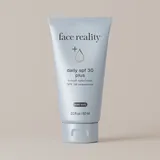
TulaProtect + Glow SPF 30YOUR PRODUCTFace Reality SkincareDaily SPF 30 PlusTatchaMini The Milky Sunscreen Broad Spectrum SPF 50+ with Encapsulated Ectoin + Vitamin ETatcha US DEVThe Milky Sunscreen SPF 50
Match—44%43%43%
Price$38.00$30.00−$8.00$22.00−$16.00—
Shared key ingredients—3 of 74 of 74 of 7
Key difference—NiacinamideCaprylic/Capric TriglycerideCaprylic/Capric Triglyceride
Irritancy High Medium Medium Medium
SPFSPF 30SPF 30SPF 50SPF 50
Drying alcohol————
View product Shop Shop Shop

More alternatives: Glow Hub Beauty DEFEND YOURSELF SUN SILK SPF 30BYOMA Ultralight Face Fluid SPF50

Cheaper alternatives? See how this stacks up against similar formulas.
We compare ingredient profiles across our catalog — pick the closest match for your budget.
Open dupe finder

Affiliate links · As an Amazon Associate, WIMJ earns from qualifying purchases.

As an Amazon Associate, WIMJ earns from qualifying purchases.