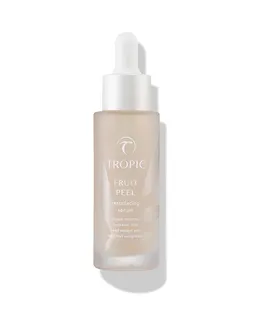
Tropic Skincare FRUIT PEEL resurfacing serum - Fruit Peel
Works for
Evens skin toneGluconolactone, Lactic acidWorks well
“Using an exfoliating trio of alpha, beta, and polyhydroxy acids from fresh fruit, as well as refining papaya enzymes, and brightening Australian lime pearl, it carefully removes impurities to leave you with a smoother, more radiant complexion in 24 hours.”
This product can help reduce hypepigmentation and even out the skin tone because it contains the following effective ingredients: gluconolactone, lactic acid
Keep in mind that you would need to apply any topical skincare targetted at hypigmentation consistently for a couple of months to get a result. No topical skincare product can help get rid of hyperpigmentation (including post-acne marks and age spots) instantly.
ExfoliationGluconolactone, Lactic acid + 2 moreWorks well
“FRUIT PEEL resurfacing serum - Fruit Peel”
This product can help exfoliate the skin. In other words, it helps break down the bonds between dead cells on the surface of the skin and speed up the skin turnover. Skin often appears softer and brighter after exfoliation, but overdoing it can result in disrupted skin barrier. The following ingredient is doing the exfoliating job in this product: gluconolactone, lactic acid.
Anti-agingSide benefit · Gluconolactone, Lactic acidWorks well
This product can help reduce and prevent fine lines and wrinkles, improve skin elasticity and firmness because it contains gluconolactone.
These ingredients in the product can also be helpful, even though there is less evidence for their effectiveness: lactic acid.
Keep in mind that it typically takes at least 6 weeks to notice any results because the changes that are needed to improve fine lines and elasticity happen in the deeper layers of the skin. No topical anti-aging product can “erase” wrinkles or fully reverse signs of aging.
Anti-oxidationSide benefit · Gluconolactone, Tartaric acid + 3 moreMay help
This product contains antioxidants (gluconolactone, tartaric acid) that can help neutralize free radicals in skin to lessen the damage it gets from the UV light (sun). There is some human evidence for this effect in skin, though it is smaller or less consistent than the evidence for the best antioxidants.
MoisturizingSide benefit · Glycerin, Lactobacillus ferment + 10 moreWorks
This product contains good ingredients to attract water to the upper layer of the skin. These ingredients are called "humectants": glycerin, lactic acid.
When humectants are on the surface of the skin, they “pull in” the moisture from the outside environment, or from within deeper layers of the skin. If the air is dry, humectants can speed up the moisture loss from the skin. This is why it is a good idea to use another product on top of this one to help "seal in" the moisture (look for ingredients like dimethicone, squalane, oils and butters).
Can it cause trouble?
Irritancy5 strong irritants: Citrus aurantium dulcis fruit extract, Citrus limon fruit extract + 3 more — patch-test recommendedHigh risk
ComedogenicClean of flagged comedogenic ingredientsNone flagged
User reviews
Be the first — your take helps the next person decide.
Ingredients
Filter by role to see what each ingredient is doing.
Water~40–60%
Glycerin~4–6%
- Irritation risk
- Low
One of the best moisturizing ingredients. Naturally present in skin. It attracts water to the upper layer of the skin working as a humectant
More about GlycerinCocos nucifera water~3.5–5.2%
- Irritation risk
- Low
Might help to attract water to the upper layer of the skin
More about Cocos nucifera waterLactobacillus ferment~2.7–4%
- Irritation risk
- Low
A fermentation product created by bacteria Lactobacillus. The fermented product has anti-bacterial properties and might be helpful in calming down inflammation, but studies are lacking. Helps attract water to the upper layer of the skin. Can be used as a preservative
More about Lactobacillus fermentGluconolactone~2–3%
- Irritation risk
- Medium
A polyhydroxy acid (PHA) that helps shed the dead cells from the skin surface revealing smoother skin. Is believed to be genter than AHAs. It helps attract water to the upper layer of the skin and can stimulate production of skin's own hyaluronic acid resulting in improved hydration levels. It has been shown to be helpful against acne and clogged pores if used consistently (e.g over a period of 12 weeks) in high enough concentration. It can help reduce fine lines and wrinkles and improve skin tone with long-term application. Can help neutralize free radicals
More about GluconolactoneLactic acid~1.7–2.5%
- Irritation risk
- Medium
An exfoliating and moisturizing alpha-hydroxy acid (AHA). Typically causes less irritation than other AHAs, for example, glycolic acid. At high concentrations (about 15%), lactic acid can help reduce lines and wrinkles. Recent studies show that lactic acid can support the "good" bacteria living on skin's surface (healthy skin microbiome)
More about Lactic acidCitric acid~1.4–2.1%
- Irritation risk
- Medium
Can work as an exfoliant but is typically used to adjust the product pH
More about Citric acidTartaric acid~1.2–1.9%
- Irritation risk
- Medium
An AHA (alpha-hydroxy acid). It oxidizes quickly which makes it less effective in skincare formulations. It can support skin's barrier and moisture levels
More about Tartaric acidButylene glycol~1–1.5%
- Irritation risk
- Low
Used to create a nice product texture and help delivery of other ingredients. Might be somewhat helpful in attracting water to the upper layer of the skin
More about Butylene glycolPropanediol~0.85–1.25%
- Irritation risk
- Low
Acts as a solvent for other ingredients. Speeds up the absorption of other ingredients into the skin
More about PropanediolSodium hydroxide~0.5–1.15%
Polyglyceryl-10 laurate~0.4–1%
- Irritation risk
- Medium
Helps water and oil mix together
More about Polyglyceryl-10 laurateSalix alba bark extract~0.15–0.65%
- Irritation risk
- High
A plant extract that can help neutralize free radicals in skin. It contains a compound salicin that can theoretically be converted into salicylic acid that, in turn, helps reduce inflammation in skin, but the evidence of effectiveness in skin is lacking and the extract is usually not used in a concentration that would enable an exfoliating effect
More about Salix alba bark extractAloe barbadensis leaf extract~0.4–0.9%
- Irritation risk
- Medium
Traditionally used to treat sunburns, dermatitis and inflammation, but evidence for its effectiveness is lacking. The extract can contain humectants that help attract water into the skin
More about Aloe barbadensis leaf extractMangifera indica fruit extract~0.3–0.75%
- Irritation risk
- Medium
A fruit extract that might help attract water to the upper layer of the skin. There is no evidence of other benefits in skin
More about Mangifera indica fruit extractPyrus communis water~0.3–0.7%
- Irritation risk
- Low
Ananas sativus fruit extract~0.2–0.8%
- Irritation risk
- Medium
A fruit extract that might help to attract water to the upper layer of the skin, but there is no evidence for any other benefits to the skin
More about Ananas sativus fruit extractVaccinium myrtillus fruit extract~0.15–0.7%
- Irritation risk
- Medium
A plant extract that might help neutralize free radicals in skin, but research on its efficacy in skin is lacking
More about Vaccinium myrtillus fruit extractSaccharum officinarum extract~0.15–0.55%
- Irritation risk
- Low
Sugar extract that helps attract water to the upper layer of the skin
More about Saccharum officinarum extractAcer saccharum extract~0.15–0.5%
- Irritation risk
- Medium
A plant extract that contains small percentage of AHAs. Is unlikely to have any skin benefit due the small concentration of the active compounds
More about Acer saccharum extractSodium hyaluronate~0.1–0.5%
- Irritation risk
- Low
One of the best moisturizing ingredients. Attracts water into the upper layer of the skin
More about Sodium hyaluronateCitrus aurantium dulcis fruit extract~0.1–0.45%
- Irritation risk
- High
A plant extract that is used as a fragrance. Can be irritating and lead to photosensitivity
More about Citrus aurantium dulcis fruit extractCitrus limon fruit extract~0.1–0.35%
- Irritation risk
- High
Used as a fragrance. Can be irritating and cause photosensitivity
More about Citrus limon fruit extractCarica papaya fruit extract~0.1–0.35%
- Irritation risk
- High
Microcitrus australasica fruit extract~0.05–0.25%
- Irritation risk
- High
Most likely used for its fragrance. Can be irritating and lead to photosensitivity
More about Microcitrus australasica fruit extractXanthan gum~0.05–0.25%
- Irritation risk
- Low
Used to create a thicker product consistency
More about Xanthan gumParfum~0.05–0.15%
- Irritation risk
- High
An aromatic blend of unspecified and possibly irritating ingredients
More about ParfumPhytic acid~0.05–0.1%
- Irritation risk
- Medium
An alpha-hydroxy acid (AHA), but is mostly used to stabilize product formulations in cosmetics
More about Phytic acidIngredient list view
Water, Glycerin, Cocos nucifera water, Lactobacillus ferment, Gluconolactone, Lactic acid, Citric acid, Tartaric acid, Butylene glycol, Propanediol, Sodium hydroxide, Polyglyceryl-10 laurate, Salix alba bark extract, Aloe barbadensis leaf extract, Mangifera indica fruit extract, Pyrus communis water, Ananas sativus fruit extract, Vaccinium myrtillus fruit extract, Saccharum officinarum extract, Acer saccharum extract, Sodium hyaluronate, Citrus aurantium dulcis fruit extract, Citrus limon fruit extract, Carica papaya fruit extract, Microcitrus australasica fruit extract, Xanthan gum, Parfum, Phytic acid
Compare prices
Retailers ranked by price — lowest first.
Worth comparing, line by line.
Match % combines shared ingredients, the first five ingredients, shared actives and hero ingredients, irritancy (lower counts in the alternative's favour), texture and body area. Only products in the same routine step are compared.
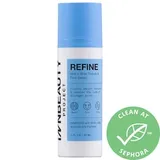
| Tropic SkincareFRUIT PEEL resurfacing serum - Fruit PeelYOUR PRODUCT | INNBEAUTY PROJECTRefine AHA + BHA Texture & Pore Serum | Dr. SchellerSmoothing AHA/PHA Peeling Serum | SEPHORA COLLECTIONGlow Peel Pads with AHA + PHA | |
|---|---|---|---|---|
| Match | — | 61% | 60% | 59% |
| Price | — | $45.50 | $8.00 | — |
| Shared key ingredients | — | 4 of 7 | 4 of 7 | 4 of 7 |
| Key difference | — | Glycolic Acid | Gluconic Acid | — |
| Irritancy | High | Medium | Medium | Medium |
| Drying alcohol | — | — | — | — |
| View product | Shop | Shop | Shop |


More alternatives: Herbivore Botanicals Milky Way 10% AHA + Oat Soothing Exfoliating SerumHerbivore Milky Way Sérum Exfoliant 10% Acide Lactique
Sources cited in this review
Every concentration estimate and effectiveness label is anchored to one of these 33 studies and safety reviews.
- 1
- 2
- 3
- 4Use of Probiotics for Dermal Applicationsresearchgate.net
- 5
- 6

Affiliate links · As an Amazon Associate, WIMJ earns from qualifying purchases.