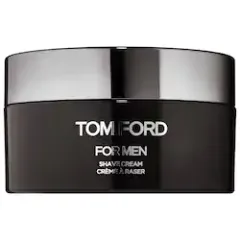
Works for:
based on ingredients and %- Cleansing
Can it cause trouble?
- Irritation risk: high
- Comedogenic risk ingredients: 6
Key actives
Works for
Cleansing
What does the product description say?
shave cream
Source: SpaceNK EU
This product works by removing dirt and oil from the surface of the skin. It uses a combination of mild cleansing agents (propylene glycol stearate, sodium methyl cocoyl taurate, stearic acid, triethanolamine) and should be able to cleanse the skin gently. Still keep in mind that any cleansing can disrupt the skin barrier, and most people do not need to cleanse their skin more than once per day.
Even though this formulation is mild, the following cleansing agents could trigger an irritation or allergy for some people: sodium methyl cocoyl taurate
Helps oil and water mix together. Can be used as cleansing agent
Helps oil and water mix together and works as an emollient
Used to adjust pH of the product and can help improve the product's smell
How honest is this product?
| Promise | Can it deliver? |
|---|---|
| Cleansing |
Total Promises Fulfilled score: 100/100.
We receive a small commission for purchases made through these links at no cost for you. Thank you for your support! Learn more
Affiliate link · supports WIMJ at no cost to you
Potential irritants
Comedogenic ingredients
User reviews (0)
Averages from community submissions.
No reviews yet for this product.
Be the first to share your experience!
Tried this product?
Help capture what the ingredient list can't—texture, finish, pilling, scent, and more. Answer what you can, skip the rest.
Takes ~30 seconds.
Reviews are shown in aggregate. No personal details.
Key Actives
Might be able to help neutralize free radical, calm down inflammation in skin, and even skin tone
Helps oil and water mix together and works as an emollient
A seaweed extract that contains sugars and can be helpful in attracting water to the upper layers of the skin if used in high enough concentrations
An algae extract that can help attract water to the upper layer of the skin and have some anti-oxidant properties
Plant extract that helps the skin to attract water and make it more smooth for touch. Also shows promise of anti-aging properties, but research is not extensive yet
Might be helpful in neutralizing free radicals. Can have a dehydration effect that might somewhat decrease the look of puffy eyes
One of the best moisturizing ingredients. Naturally present in skin. It attracts water to the upper layer of the skin working as a humectant
Helps oil and water mix together. Can be used as cleansing agent
An emollient. Is not recommended for acne-prone skin as it can be comedogenic
One of the best moisturizing ingredients. Attracts water into the upper layer of the skin
An emollient that helps soften the skin
Used to adjust pH of the product and can help improve the product's smell
Potential irritants
Helps oil and water mix together. Can be used as cleansing agent
Might be able to help neutralize free radical, calm down inflammation in skin, and even skin tone
A plant extract that might have some anti-inflammatory properties, but solid evidence is lacking. It can be irritating
Plant extract that can have healing and anti-inflammatory properties. It is a potential allergen and can be irritating
An algae extract that can help attract water to the upper layer of the skin and have some anti-oxidant properties
An aromatic blend of unspecified and possibly irritating ingredients
A common frangrance that can easily irritate skin, especially if exposed to air, light or heat
An emollient. Is not recommended for acne-prone skin as it can be comedogenic
A plant extract that can contain resveratrol, an antioxidant that can help neutralize free radicals in skin. The effectiveness depends on the extract quality and concentration in the product
Might be helpful in neutralizing free radicals. Can have a dehydration effect that might somewhat decrease the look of puffy eyes
A more stable but less bio-available form of vitamin E compared to Tocopherol. Might help moisturize and protect the skin from free radicals, but mostly used in low concentrations to stabilize other ingredients.
Used to adjust pH of the product and can help improve the product's smell
Being a lipid soluble form of vitamin C, it is more stable and can penetrate the skin better than L-Ascorbic acid. It is effective in protecting the skin from free radicals, as well as evening the skin tone, but is less effective in stimulating collagen production compared to L-Ascorbic acid.
Comedogenic ingredients
An emollient. Is not recommended for acne-prone skin as it can be comedogenic
A seaweed extract that contains sugars and can be helpful in attracting water to the upper layers of the skin if used in high enough concentrations
Might help to attract water to the upper layer of the skin
Plant extract that helps the skin to attract water and make it more smooth for touch. Also shows promise of anti-aging properties, but research is not extensive yet
Used to thicken product formulation. Can help attract water to the upper layer of the skin
All ingredients
Used to create a nice product texture and help delivery of other ingredients. Might be somewhat helpful in attracting water to the upper layer of the skin
One of the best moisturizing ingredients. Naturally present in skin. It attracts water to the upper layer of the skin working as a humectant
Helps oil and water mix together. Can be used as cleansing agent
An emollient. Is not recommended for acne-prone skin as it can be comedogenic
Might be able to help neutralize free radical, calm down inflammation in skin, and even skin tone
A plant extract that might have some anti-inflammatory properties, but solid evidence is lacking. It can be irritating
A plant extract that can contain resveratrol, an antioxidant that can help neutralize free radicals in skin. The effectiveness depends on the extract quality and concentration in the product
Plant extract that can have healing and anti-inflammatory properties. It is a potential allergen and can be irritating
A seaweed extract that contains sugars and can be helpful in attracting water to the upper layers of the skin if used in high enough concentrations
Might help to attract water to the upper layer of the skin
An algae extract that can help attract water to the upper layer of the skin and have some anti-oxidant properties
Plant extract that helps the skin to attract water and make it more smooth for touch. Also shows promise of anti-aging properties, but research is not extensive yet
Might be helpful in neutralizing free radicals. Can have a dehydration effect that might somewhat decrease the look of puffy eyes
One of the best moisturizing ingredients. Attracts water into the upper layer of the skin
A more stable but less bio-available form of vitamin E compared to Tocopherol. Might help moisturize and protect the skin from free radicals, but mostly used in low concentrations to stabilize other ingredients.
Used to thicken product formulation. Can help attract water to the upper layer of the skin
Used to adjust pH of the product and can help improve the product's smell
An aromatic blend of unspecified and possibly irritating ingredients
Used to thicken product formulations and create gel-like textures
Being a lipid soluble form of vitamin C, it is more stable and can penetrate the skin better than L-Ascorbic acid. It is effective in protecting the skin from free radicals, as well as evening the skin tone, but is less effective in stimulating collagen production compared to L-Ascorbic acid.
A common frangrance that can easily irritate skin, especially if exposed to air, light or heat
A preservative. It helps prevent bacterial growth in cosmetic products
Ingredient list view
Water, Stearic acid, Propylene glycol stearate, Butylene glycol, Glycerin, Ppg-26 oleate, Sodium methyl cocoyl taurate, Myristyl myristate, Silybum marianum extract, Panax ginseng root extract, Polygonum cuspidatum root extract, Chamomilla recutita flower extract, Laminaria saccharina extract, Hypnea musciformis extract, Gelidiella acerosa extract, Algae extract, Caffeine, Sodium hyaluronate, Tocopheryl acetate, Ethylhexylglycerin, Glycine soja sterols, Menthol, Peg-7m, Algin, Triethanolamine, Parfum, Hydroxyethylcellulose, Ascorbyl palmitate, Trisodium edta, Limonene, Chlorphenesin, Phenoxyethanol
- Glycerol and the skin: holistic approach to its origin and functions
- Safety Assessment of Alkyl Taurate Amides and Taurate Salts as Used in Cosmetics
- Ginseng in Dermatology: A Review
- Antiaging effects of the mixture of Panax ginseng and Crataegus pinnatifida in human dermal fibroblasts and healthy human skin
- Nuclear Factor Kappa B Inhibition as a Therapeutic Target of Nutraceuticals in Arthritis, Osteoarthritis, and Related Inflammation
- Resveratrol as an active ingredient for cosmetic and dermatological applications: a review
- Safety Assessment of Brown Algae-Derived Ingredients as Used in Cosmetics
- The effect of laminaria saccharina extract on suppressing pigmentation in in-vitro system
- Marine Bioactive Compounds and Their Health Benefits: A Review
- Antioxidant Capacity and Lipophilic Content of Seaweeds Collected from the Qingdao Coastline
- Hyaluronic acid: A key molecule in skin aging
- Hyaluronan (Hyaluronic Acid): a natural moisturizer for skin care
- Final report on the safety assessment of EDTA, calcium disodium EDTA, diammonium EDTA, dipotassium EDTA, disodium EDTA, TEA-EDTA, tetrasodium EDTA, tripotassium EDTA, trisodium EDTA, HEDTA, and trisodium HEDTA