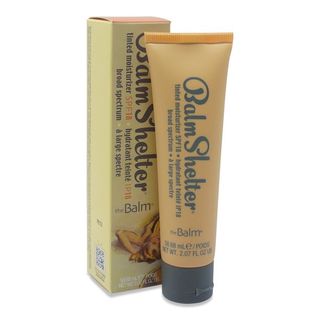
theBalm BalmShelter Tinted Moisturizer SPF 18, Medium
Works for
1 of 3 advertised claims delivered
Sun protectionSPF 18 · 4 UV filters · Broad spectrumWeak protectionSPF under 30
This product offers broad spectrum sun protection, but it is weak. We recommend to use a broad spectrum sunscreen with at least SPF 30.
Moisturizing7 ingredients credited for this claimGood support
“BalmShelter Tinted Moisturizer SPF 18, Medium”
This product can help soften the skin and reduce its moisture loss with emollients and occlusives: dimethicone, cetyl dimethicone.
Keep in mind that this product does not contain effective ingredients to attract water to the upper layer of the skin. This is why an additional product with humectants like glycerin or hyaluronic acid can be helpful (apply it before this product for the best results).
Evens skin toneNo ingredient credited for this claimLimited support
“This moisturizer offers sun protection for everyday drama while helping to improve the look of your skin's tone and texture, leaving you with a polished complexion.”
This product contains ingredients () that could help reduce hyperpigmentation (for example, post-acne marks or age spots) in theory, but there is not enough evidence that they actually work.
The biggest effect for evening out skin tone in this product comes from sun protection. Sun damage is the main factor causing age spots, darkening of post-acne marks and other discolorations. This is why sun protection is the best strategy for maintaining an even skin tone. We, however, do not recommend using this product as a sunscreen because the protection it offers is not strong enough).
Can it cause trouble?
Irritancy1 strong irritant: Sorbitan sesquioleateMedium risk
Comedogenic2 ingredients rated 2 or more on the 0–5 pore-clogging scale2 flagged
User reviews
Be the first — your take helps the next person decide.
Ingredients
Filter by role to see what each ingredient is doing.
Ethylhexyl methoxycinnamate7.5%
- Irritation risk
- High
Octinoxate. When used in higher concentrations, works as a sunscreen protecting the skin from UVB rays. When used in lower concentration, helps to preserve the product formulation. Is shown to be harmful to coral reefs - consider avoiding bathing in coral reef areas when wearing a product with this ingredient. It can be irritating
More about Ethylhexyl methoxycinnamateEthylhexyl salicylate3%
- Irritation risk
- Low
Octisalate. A UV filter. It offers some protection against the sun rays that cause sunburn (UVB), but does not protect against the most aging sun rays (UVA). It loses its effectiveness quickly when exposed to sunlight. It is an organic, or so called "chemical" sunscreen
More about Ethylhexyl salicylateButyl methoxydibenzoylmethane3%
- Irritation risk
- Medium
Avobenzone. An organic, or so-called "chemical" UV filter. Protects against both UVA and UVB rays. Needs to be combined with other filters in a formulation to be stable.
More about Butyl methoxydibenzoylmethaneWater~40–60%
Cetearyl alcohol~5.6–8.4%
- Irritation risk
- Low
- Comedogenicity
- 2/5
A non-drying alcohol. Works as an emollient. Helps water and oil mix together and creates a nice product texture
More about Cetearyl alcoholIsopropyl myristate~4.1–6.2%
- Irritation risk
- Low
- Comedogenicity
- 3/5
An emollient that helps soften the skin. Could be comedogenic
More about Isopropyl myristateCetyl dimethicone~3.6–5.4%
- Irritation risk
- Low
A type of silicone. Helps soften the upper layer of the skin and creates a nice, light product texture
More about Cetyl dimethiconeDimethicone~2.7–4.1%
- Irritation risk
- Low
A silicone that helps to reduce water loss from the surface of the skin. Can temporarily "fill in" lines and wrinkles, absorb oil, and create a nice product finish
More about DimethiconeHexyl laurate~2–2.9%
- Irritation risk
- Medium
Helps soften the upper layer of the skin and create a nice product consistency
More about Hexyl lauratePotassium cetyl phosphate~1.3–1.9%
- Irritation risk
- Medium
Helps oil and water mix together
More about Potassium cetyl phosphateHydroxyethyl acrylate/sodium acryloyldimethyl taurate copolymer~1.1–1.6%
- Irritation risk
- Medium
A gelling agent that thickens the product consistency and leaves the skin with a velvety finish
More about Hydroxyethyl acrylate/sodium acryloyldimethyl taurate copolymerIsohexadecane~1.2–1.7%
- Irritation risk
- Low
Improves the texture of the product and helps soften the skin. Helps oil and water mix together and can be used as a cleansing agent
More about IsohexadecanePolysorbate 60~0.9–1.35%
Styrene/dvb crosspolymer~0.9–1.4%
- Irritation risk
- Low
Sorbitan sesquioleate~0.45–1.1%
- Irritation risk
- High
Used to help oil and water mix together. Can be irritating
More about Sorbitan sesquioleatePhenoxyethanol~0.3–0.75%
- Irritation risk
- Low
A preservative. It helps prevent bacterial growth in cosmetic products
More about PhenoxyethanolCaprylyl glycol~0.4–0.9%
- Irritation risk
- Medium
Helps preserve products and creates a nice product texture
More about Caprylyl glycolEthylhexylglycerin~0.15–0.6%
Hexylene glycol~0.1–0.4%
- Irritation risk
- Medium
Helps create a more spreadable product texture
More about Hexylene glycolSodium dehydroacetate~0.1–0.35%
Titanium dioxide~0.1–0.4%
- Irritation risk
- Low
Works as a UV filter when used in high concentrations. It is photostable and is effective mostly against the UVB light, with some protection in the UVA range. In small concentrations, used for its ability to improve the color of cosmetic products. Is usually well tolerated by the skin
More about Titanium dioxideCi 77891~0.1–0.35%
- Irritation risk
- Low
Iron oxides~0.1–0.35%
- Irritation risk
- Low
An umbrella term for the following three colorants: CI 77491, CI 77492, CI 77499. They might be able to offer some protection against visible light, but the degree of the protection is not clear
More about Iron oxidesIngredient list view
Ethylhexyl methoxycinnamate, Ethylhexyl salicylate, Butyl methoxydibenzoylmethane, Water, Cetearyl alcohol, Isopropyl myristate, Cetyl dimethicone, Dimethicone, Hexyl laurate, Potassium cetyl phosphate, Hydroxyethyl acrylate/sodium acryloyldimethyl taurate copolymer, Isohexadecane, Polysorbate 60, Styrene/dvb crosspolymer, Sorbitan sesquioleate, Phenoxyethanol, Caprylyl glycol, Ethylhexylglycerin, Hexylene glycol, Sodium dehydroacetate, Titanium dioxide, Ci 77891, Iron oxides
Compare prices
Retailers ranked by price — lowest first.

Product summary
"theBalm - BalmShelter Tinted Moisturizer SPF 18, Medium" "is a broad spectrum sunscreen meaning that it protects both from UVB rays (" burning "- they cause sunburn) and UVA rays (" aging "- they don't cause sunburn but lead to premature aging and pigmentation issues). However, this moisturizer does not offer enough sun protection. We recommend to use a sunscreen with at least SPF 30 daily.
It also works as a moisturizer, so you do not have to use an additional hydrating product.
Sunscreen filters
This is a" mixed "sunscreen in the sense that it uses both mineral and organic (so-called" chemical ") sun filters. Here are the organic filters this product uses: avobenzone, octinoxate and octisalate. As for the mineral filters, this sunscreen uses titanium dioxide.
Irritation risk
There are actives in this product that can be irritating. We assess the overall irritancy of this moisturizer to be medium. For a detailed overview of all potential irritants: click here
You can see the detailed formula review with the breakdown of all actives in the product and the full ingredient list with estimated concentrations in the tables below.
About the brand
According to Cruelty-Free Kitty" theBalm "is cruelty free and so is its parent company.
Price
The product retails from 12.39$ up to 67.91$ in the United States.
For a detailed price comparison: click here.
Sources cited in this review
Every concentration estimate and effectiveness label is anchored to one of these 4 studies and safety reviews.
- 1
- 2Final Report on the Safety Assessment of Dimethicone Copolyoljournals.sagepub.com
- 3
- 4

Affiliate links · As an Amazon Associate, WIMJ earns from qualifying purchases.