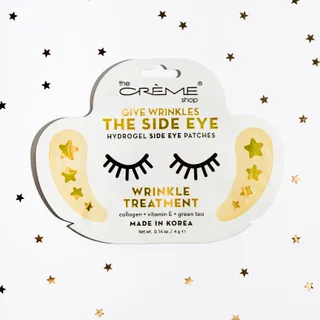
The Crème Shop Give Wrinkles The Side Eye - Hydrogel Side Eye Patches, Wrinkle Treatment

The Crème Shop Give Wrinkles The Side Eye - Hydrogel Side Eye Patches, Wrinkle Treatment

Efficacy37/100IrritancyHigh

Works for

Moisturizing
Glycerin, Sucrose + 8 more
Works
What the product description says
“Hydrogel Side Eye Patches, Wrinkle Treatment”
From product name

This product contains good ingredients to attract water to the upper layer of the skin. These ingredients are called "humectants": glycerin, sodium hyaluronate.

When humectants are on the surface of the skin, they “pull in” the moisture from the outside environment, or from within deeper layers of the skin. If the air is dry, humectants can speed up the moisture loss from the skin. This is why it is a good idea to use another product on top of this one to help "seal in" the moisture (look for ingredients like dimethicone, squalane, oils and butters).

GlycerinKey active· HumectantEffect: HighOne of the best moisturizing ingredients. Naturally present in skin. It attracts water to the upper layer of the skin working as a humectant~4.1–6.1%
SucroseKey active· HumectantEffect: HighCan help attract water to the upper layer of the skin. In crystal form, it can work as a gentle exfoliant, gentler than the salt scrub. Helps stabilize the emulsion~0.15–0.55%
Sodium hyaluronateKey active· HumectantEffect: HighOne of the best moisturizing ingredients. Attracts water into the upper layer of the skin~0.1–0.35%
Butylene glycol· HumectantEffect: LowUsed to create a nice product texture and help delivery of other ingredients. Might be somewhat helpful in attracting water to the upper layer of the skin~3.5–5.2%
Dextrin· HumectantEffect: LowA sugar that is used to stabilize the product formulation. Can help attract water to the upper layer of the skin~0.4–0.95%
Caprylyl glycol· Humectant, EmollientEffect: LowHelps preserve products and creates a nice product texture~0.1–0.5%
Camellia sinensis leaf extractEffect: Low, below effective doseCan contain potent anti-oxidant compounds (abbreviated ECG, GCG, EGC, and EGCG) that might help protect the skin from free radicals. Can help calm down inflammation and has some anti-bacterial properties. Unfortunately, these antioxidants are unstable and lose their effectiveness very quickly in products. The concentration of the antioxidant compounds in the extract also tends to be low to be effective in topical formulation~0.4–0.95%
Brassica oleracea acephala leaf extractEffect: Low, below effective doseMight be helpful in neutralizing free radicals in skin but solid research is lacking. Helps attract water to the upper layer of the skin~0.15–0.5%
Dipotassium glycyrrhizateUnder-dosedA salt derived from licorice. Works as an emollient to soften the upper layer of the skin and can help calm down inflammation. Might be helpful for skin lightening~0.15–0.65%
PanthenolUnder-dosedHelps attract water to the upper layer of the skin and can help improve skin barrier function~0.05–0.15%
Anti-aging
Retinyl palmitate ~0.05–0.25%, below the ~0.5% it needs
Under-dosed
What the product description says
“Hydrogel Side Eye Patches, Wrinkle Treatment”
From product name

Effective ingredients missing or their concentration is too low.

Camellia sinensis leaf extractEffect: Low, below effective doseCan contain potent anti-oxidant compounds (abbreviated ECG, GCG, EGC, and EGCG) that might help protect the skin from free radicals. Can help calm down inflammation and has some anti-bacterial properties. Unfortunately, these antioxidants are unstable and lose their effectiveness very quickly in products. The concentration of the antioxidant compounds in the extract also tends to be low to be effective in topical formulation~0.4–0.95%
Magnesium ascorbyl phosphateEffect: Low, below effective doseA derivative of vitamin C that is more stable, but less bioavailable than the pure form of vitamin C. It does not penetrate the skin well, but has been shown to convert to pure vitamin C once in skin. It can be helpful in stimulating collagen production and lightening the skin tone, but the required concentration is likely to be very high~0.05–0.25%
Retinyl palmitateUnder-dosedThree steps removed from the active form of vitamin A - retinoic acid. To have an effect in the skin, it first needs to be converted twice to become the retinoic acid. This means it is less potent than retinol, but could also be less irritating. Once converted to the retinoic acid in the skin, it helps against all signs of aging, improves skin cell turnover and helps fight blemishes and clogged pores. However, in many cosmetic formulations, it is used in a concentration that is too low to have the full effect~0.05–0.25%

Can it cause trouble?

Irritancy
3 strong irritants: Zingiber officinale root extract, Parfum + 1 more — patch-test recommended
High risk
We flagged 16 ingredients with irritancy potential. Severity depends on your sensitivity threshold; the table lists the worst offenders first.
IngredientFunctionIrritationEst. amount
Zingiber officinale root extractA plant extract that can contain an irritating essential oil. Might have some anti-oxidant effect, but evidence is lackingHigh~0.3–0.75%est.
Coptis japonica root extractA plant extract that might have some anti-oxidant propertiesHigh~0.15–0.7%est.
ParfumAn aromatic blend of unspecified and possibly irritating ingredientsHigh~0.1–0.4%est.
Retinyl palmitateThree steps removed from the active form of vitamin A - retinoic acid. To have an effect in the skin, it first needs to be converted twice to become the retinoic acid. This means it is less potent than retinol, but could also be less irritating. Once converted to the retinoic acid in the skin, it helps against all signs of aging, improves skin cell turnover and helps fight blemishes and clogged pores. However, in many cosmetic formulations, it is used in a concentration that is too low to have the full effectHigh~0.05–0.25%est.
CarrageenanHelps thicken the product formula and create a nice product formulationMedium~2.1–3.1%est.
1,2-hexanediolA preservativeMedium~0.6–1.35%est.
Ceratonia siliqua gumUsed to stabilize product formulations and create thicker consistencyMedium~1.1–1.7%est.
ChlorphenesinA preservativeMedium~0.16–0.32%est.
EthylhexylglycerinA preservativeMedium~0.5–1.15%est.
Glycyrrhiza glabra root extractA plant extract that can help lighten the skin and calm down inflammation. Might be helpful in neutralizing free radicalsMedium~0.2–0.75%est.
Schisandra chinensis fruit extractA berry extract that might help neutralize free radicals on the surface of the skinMedium~0.2–0.8%est.
Disodium edtaStabilizes the product formulationMedium~0.15–0.55%est.
Brassica oleracea acephala leaf extractMight be helpful in neutralizing free radicals in skin but solid research is lacking. Helps attract water to the upper layer of the skinMedium~0.15–0.5%est.
Caprylyl glycolHelps preserve products and creates a nice product textureMedium~0.1–0.5%est.
Magnesium ascorbyl phosphateA derivative of vitamin C that is more stable, but less bioavailable than the pure form of vitamin C. It does not penetrate the skin well, but has been shown to convert to pure vitamin C once in skin. It can be helpful in stimulating collagen production and lightening the skin tone, but the required concentration is likely to be very highMedium~0.05–0.25%est.
Tocopheryl acetateA more stable but less bio-available form of vitamin E compared to Tocopherol. Might help moisturize and protect the skin from free radicals, but mostly used in low concentrations to stabilize other ingredients.Medium~0.05–0.2%est.
Comedogenic
1 ingredient rated 2 or more on the 0–5 pore-clogging scale
1 flagged
These ingredients have a comedogenic rating of 2 or more on a 0–5 scale; the table shows each one's rating. In leave-on products they can clog pores in acne-prone skin.
IngredientFunctionRatingEst. amount
CarrageenanHelps thicken the product formula and create a nice product formulation3/5~2.1–3.1%est.

User reviews

Would you recommend?
No community reviews yet.

Be the first — your take helps the next person decide.

Ingredients

Filter by role to see what each ingredient is doing.

Water~40–60%
Formula
Irritation risk
Low

Plain old water

More about Water
Glycerin~4.1–6.1%
Key active
Irritation risk
Low
Works for
Moisturizing

One of the best moisturizing ingredients. Naturally present in skin. It attracts water to the upper layer of the skin working as a humectant

More about Glycerin
Butylene glycol~3.5–5.2%
Formula
Irritation risk
Low
Works for
Moisturizing

Used to create a nice product texture and help delivery of other ingredients. Might be somewhat helpful in attracting water to the upper layer of the skin

More about Butylene glycol
Olive oil peg-8 esters~2.5–3.7%
Formula
Irritation risk
Low
Works for
Cleansing
More about Olive oil peg-8 esters
Carrageenan~2.1–3.1%
Comedogenic 3/5Irritant · medium
Irritation risk
Medium
Comedogenicity
3/5

Helps thicken the product formula and create a nice product formulation

More about Carrageenan
1,2-hexanediol~0.6–1.35%
Irritant · medium
Irritation risk
Medium

A preservative

More about 1,2-hexanediol
Polysorbate 20~1.4–2.1%
Formula
Irritation risk
Low
Works for
Cleansing

Helps oil and water mix together

More about Polysorbate 20
Cyamopsis tetragonoloba gum~1.3–1.9%
Formula
Ceratonia siliqua gum~1.1–1.7%
Irritant · medium
Irritation risk
Medium

Used to stabilize product formulations and create thicker consistency

More about Ceratonia siliqua gum
Chlorphenesin~0.16–0.32%
Irritant · medium
Irritation risk
Medium

A preservative

More about Chlorphenesin
Ethylhexylglycerin~0.5–1.15%
Irritant · medium
Irritation risk
Medium

A preservative

More about Ethylhexylglycerin
Camellia sinensis leaf extract~0.4–0.95%
Formula
Irritation risk
Low
Works for
AntibacterialAnti-oxidationAnti-agingAnti-blemishMoisturizingEvens skin tone

Can contain potent anti-oxidant compounds (abbreviated ECG, GCG, EGC, and EGCG) that might help protect the skin from free radicals. Can help calm down inflammation and has some anti-bacterial properties. Unfortunately, these antioxidants are unstable and lose their effectiveness very quickly in products. The concentration of the antioxidant compounds in the extract also tends to be low to be effective in topical formulation

More about Camellia sinensis leaf extract
Dextrin~0.4–0.95%
Formula
Irritation risk
Low
Works for
Moisturizing

A sugar that is used to stabilize the product formulation. Can help attract water to the upper layer of the skin

More about Dextrin
Zingiber officinale root extract~0.3–0.75%
Irritant · high
Irritation risk
High
Works for
Anti-oxidation

A plant extract that can contain an irritating essential oil. Might have some anti-oxidant effect, but evidence is lacking

More about Zingiber officinale root extract
Glycyrrhiza glabra root extract~0.2–0.75%
Irritant · medium
Irritation risk
Medium
Works for
Anti-inflammatoryAnti-oxidationEvens skin toneReduces rednessAntibacterial

A plant extract that can help lighten the skin and calm down inflammation. Might be helpful in neutralizing free radicals

More about Glycyrrhiza glabra root extract
Schisandra chinensis fruit extract~0.2–0.8%
Irritant · medium
Irritation risk
Medium
Works for
Anti-oxidation

A berry extract that might help neutralize free radicals on the surface of the skin

More about Schisandra chinensis fruit extract
Potassium chloride~0.2–0.8%
Formula
Coptis japonica root extract~0.15–0.7%
Irritant · high
Irritation risk
High
Works for
Anti-oxidation

A plant extract that might have some anti-oxidant properties

More about Coptis japonica root extract
Dipotassium glycyrrhizate~0.15–0.65%
Under-dosed
Irritation risk
Low
Works for
MoisturizingAnti-inflammatoryEvens skin tone

A salt derived from licorice. Works as an emollient to soften the upper layer of the skin and can help calm down inflammation. Might be helpful for skin lightening

More about Dipotassium glycyrrhizate
Sucrose~0.15–0.55%
Key active
Irritation risk
Low
Works for
Moisturizing

Can help attract water to the upper layer of the skin. In crystal form, it can work as a gentle exfoliant, gentler than the salt scrub. Helps stabilize the emulsion

More about Sucrose
Disodium edta~0.15–0.55%
Irritant · medium
Irritation risk
Medium

Stabilizes the product formulation

More about Disodium edta
Brassica oleracea acephala leaf extract~0.15–0.5%
Irritant · medium
Irritation risk
Medium
Works for
Moisturizing

Might be helpful in neutralizing free radicals in skin but solid research is lacking. Helps attract water to the upper layer of the skin

More about Brassica oleracea acephala leaf extract
Parfum~0.1–0.4%
Irritant · high
Irritation risk
High

An aromatic blend of unspecified and possibly irritating ingredients

More about Parfum
Dipropylene glycol~0.1–0.4%
Formula
Irritation risk
Low

Helps to dissolve other ingredients in a formulation. Slows down the rate of product drying

More about Dipropylene glycol
Caprylyl glycol~0.1–0.5%
Irritant · medium
Irritation risk
Medium
Works for
Moisturizing

Helps preserve products and creates a nice product texture

More about Caprylyl glycol
Polyglyceryl-10 myristate~0.1–0.45%
Formula
Sodium hyaluronate~0.1–0.35%
Key active
Irritation risk
Low
Works for
Moisturizing

One of the best moisturizing ingredients. Attracts water into the upper layer of the skin

More about Sodium hyaluronate
Hydrogenated lecithin~0.1–0.35%
Formula
Irritation risk
Low
Works for
Cleansing

Helps to retain moisture by creating a protective barrier on the skin. Rich in fatty acids. Improves product texture and helps with the penetration of other ingredients.

More about Hydrogenated lecithin
Retinyl palmitate~0.05–0.25%
Under-dosedIrritant · high
Irritation risk
High
Works for
Evens skin toneAnti-blemishAnti-agingExfoliation

Three steps removed from the active form of vitamin A - retinoic acid. To have an effect in the skin, it first needs to be converted twice to become the retinoic acid. This means it is less potent than retinol, but could also be less irritating. Once converted to the retinoic acid in the skin, it helps against all signs of aging, improves skin cell turnover and helps fight blemishes and clogged pores. However, in many cosmetic formulations, it is used in a concentration that is too low to have the full effect

More about Retinyl palmitate
Magnesium ascorbyl phosphate~0.05–0.25%
Irritant · medium
Irritation risk
Medium
Works for
Anti-agingEvens skin toneAnti-oxidation

A derivative of vitamin C that is more stable, but less bioavailable than the pure form of vitamin C. It does not penetrate the skin well, but has been shown to convert to pure vitamin C once in skin. It can be helpful in stimulating collagen production and lightening the skin tone, but the required concentration is likely to be very high

More about Magnesium ascorbyl phosphate
Tocopheryl acetate~0.05–0.2%
Irritant · medium
Irritation risk
Medium
Works for
Anti-oxidation

A more stable but less bio-available form of vitamin E compared to Tocopherol. Might help moisturize and protect the skin from free radicals, but mostly used in low concentrations to stabilize other ingredients.

More about Tocopheryl acetate
Panthenol~0.05–0.15%
Under-dosed
Irritation risk
Low
Works for
Reduces rednessMoisturizingReduces irritation

Helps attract water to the upper layer of the skin and can help improve skin barrier function

More about Panthenol
Ingredient list view

Water, Glycerin, Butylene glycol, Olive oil peg-8 esters, Carrageenan, 1,2-hexanediol, Polysorbate 20, Cyamopsis tetragonoloba gum, Ceratonia siliqua gum, Chlorphenesin, Ethylhexylglycerin, Camellia sinensis leaf extract, Dextrin, Zingiber officinale root extract, Glycyrrhiza glabra root extract, Schisandra chinensis fruit extract, Potassium chloride, Coptis japonica root extract, Dipotassium glycyrrhizate, Sucrose, Disodium edta, Brassica oleracea acephala leaf extract, Parfum, Dipropylene glycol, Caprylyl glycol, Polyglyceryl-10 myristate, Sodium hyaluronate, Hydrogenated lecithin, Retinyl palmitate, Magnesium ascorbyl phosphate, Tocopheryl acetate, Panthenol

Compare prices

Retailers ranked by price — lowest first.

🇨🇦 Amazon CA (CA)
Price unavailable Out of stock
Check
🇦🇺 Amazon Australia (AU)
Price unavailable Out of stock
Check

Affiliate links · As an Amazon Associate, WIMJ earns from qualifying purchases.

Worth comparing, line by line.

Match % combines shared ingredients, the first five ingredients, shared actives and hero ingredients, irritancy (lower counts in the alternative's favour), texture and body area. Only products in the same routine step are compared.

Side-by-side comparison of this product against its closest alternatives
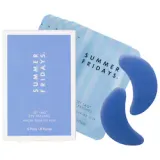
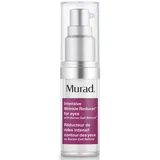
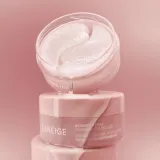
The Crème ShopGive Wrinkles The Side Eye - Hydrogel Side Eye Patches, Wrinkle TreatmentYOUR PRODUCTSummer FridaysJet Lag Eye PatchesMuradIntensive Wrinkle Reducer For EyesLANEIGEBouncy & Firm Hydrogel Eye Patches
Match—63%61%61%
Price—$23.05—$26.30
Shared key ingredients—5 of 66 of 64 of 6
Key difference—NiacinamideRetinyl PalmitateNiacinamide
Irritancy High Medium Medium Medium
Drying alcohol————
View product Shop Shop Shop

More alternatives: Neutrogena Hydro Boost Hydrogel Eye Patches, 10 PairsImage skincare IMAGE MD restoring eye masks

Cheaper alternatives? Browse formulas in the same category.
We compare ingredient profiles across our catalog — pick the closest match for your budget.
Open dupe finder

Sources cited in this review

Every concentration estimate and effectiveness label is anchored to one of these 12 studies and safety reviews.

  1. 1
  2. 2
  3. 3
  4. 4
  5. 5
  6. 6
The Crème Shop Give Wrinkles The Side Eye - Hydrogel Side Eye Patches, Wrinkle Treatment
The Crème ShopGive Wrinkles The Side Eye - Hydrogel Side Eye Patches, Wrinkle Treatment

Affiliate links · As an Amazon Associate, WIMJ earns from qualifying purchases.

As an Amazon Associate, WIMJ earns from qualifying purchases.