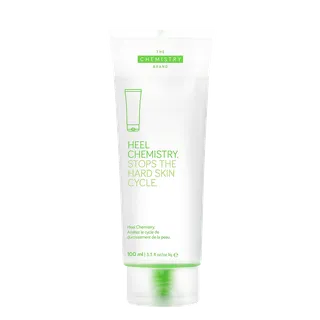
The Chemistry Brand Heel Chemistry
Works for
MoisturizingCaprylic/capric triglyceride, Cetearyl alcohol + 12 moreWorks
“Our Antarctic Marine Complex increases skin health and moisturisation, showing a significant increase of skin hydration of 90% in 14 days.”
This product can help improve hydration of the skin with the two types of ingredients.
The first type is called “humectants”:
these ingredients help attract water.
When humectants are on the surface of the skin, they “pull in” the moisture from the outside environment, or from
within deeper layers of the skin. The following ingredients in this product do the job:
alanine, betaine.
This product also contains ingredients called “occlusives”. They help reduce the speed with which our skin loses moisture to the outside environment. These ingredients also help soften the upper layer of the skin, so it feels less tight and nicer to the touch. The following ingredients in this product do the job: caprylic/capric triglyceride, glycine soja oil.
Anti-agingSide benefit · Serine, TocopherolMay help
This product contains serine. There is some human evidence that this ingredient helps reduce and prevent fine lines and wrinkles and improve skin elasticity and firmness, though it is smaller or less consistent than the evidence for the best anti-aging ingredients.
Can it cause trouble?
Irritancy7 strong irritants: Calendula officinalis flower extract, Menthol + 5 more — patch-test recommendedHigh risk
Comedogenic2 ingredients rated 2 or more on the 0–5 pore-clogging scale2 flagged
User reviews
Be the first — your take helps the next person decide.
Ingredients
Filter by role to see what each ingredient is doing.
Water~45–55%
Propanediol~4.9–6%
- Irritation risk
- Low
Acts as a solvent for other ingredients. Speeds up the absorption of other ingredients into the skin
More about PropanediolCaprylic/capric triglyceride~4.2–5.1%
- Irritation risk
- Medium
A good mix of fatty acids that forms a protective layer on the skin. Improves the shelf life of products. Derived from coconut and glycerin
More about Caprylic/capric triglycerideCetearyl glucoside~2.6–3.2%
- Irritation risk
- Medium
Helps water and oil in the product mix well together and improves product texture
More about Cetearyl glucosideCetearyl alcohol~2.4–2.9%
- Irritation risk
- Low
- Comedogenicity
- 2/5
A non-drying alcohol. Works as an emollient. Helps water and oil mix together and creates a nice product texture
More about Cetearyl alcoholCyclopentasiloxane~2–2.5%
- Irritation risk
- Low
A silicone that helps improve the product texture and spreadability. Can absorb oil creating a short-term mattifying effect on the skin
More about CyclopentasiloxaneCetyl alcohol~1.7–2.1%
- Irritation risk
- Low
A non-drying alcohol that works to soften the skin and stabilize product formulations helping oil and water mix together
More about Cetyl alcoholGlycerin~1.5–1.9%
- Irritation risk
- Low
One of the best moisturizing ingredients. Naturally present in skin. It attracts water to the upper layer of the skin working as a humectant
More about GlycerinAlanine~1.2–1.5%
- Irritation risk
- Low
An amino-acid that helps to attract water to the upper layer of the skin and might help to lighten the skin, but solid evidence is lacking
More about AlanineProline~1–1.2%
Serine~0.75–1.1%
- Irritation risk
- Low
An amino-acid that helps to attract water to the upper layer of the skin. In combination with other amino-acids, might help to reduce fine lines and wrinkles
More about SerineTremella fuciformis sporocarp extract~0.65–0.95%
- Irritation risk
- Low
Mushroom extract that helps attract water to the upper layer of the skin
More about Tremella fuciformis sporocarp extractPseudoalteromonas ferment extract~0.6–0.85%
- Irritation risk
- Low
Calendula officinalis flower extract~0.5–0.75%
- Irritation risk
- High
A plant extract that has some anti-oxidant and anti-bacterial properties. Can be irritating
More about Calendula officinalis flower extractGlycine soja oil~0.55–0.8%
- Irritation risk
- Medium
- Comedogenicity
- 2/5
A good emollient that helps soften the skin and helps repair its barrier function. It can clog pores if used in high concentrations.
More about Glycine soja oilTocopherol~0.5–0.75%
- Irritation risk
- Low
Pure form of vitamin E. Can help moisturise and protect the skin from free radicals. Often used to help stabilise other ingredients or the formula itself
More about TocopherolBetaine~0.5–0.7%
- Irritation risk
- Low
Helps attract water to the upper layer of the skin and improves the product texture
More about BetaineDimethicone/vinyl dimethicone crosspolymer~0.45–0.7%
- Irritation risk
- Low
Used to stabilize product formulations and create a nice product texture
More about Dimethicone/vinyl dimethicone crosspolymerAcrylates copolymer~0.45–0.7%
- Irritation risk
- Medium
Used to stabilize product formulation, help create an even product layer over skin (for example, in sunscreen) and create a thicker product consistency
More about Acrylates copolymerSodium polyacrylate~0.45–0.7%
- Irritation risk
- Low
Used to create a gel-like product texture, as well as to stabilize emulsions
More about Sodium polyacrylateHydroxypropylcellulose~0.45–0.65%
Cellulose~0.4–0.6%
- Irritation risk
- Low
Can be used to help absorb oil as well as add volume and imporve texture of products.
More about CelluloseXanthan gum~0.3–0.6%
- Irritation risk
- Low
Used to create a thicker product consistency
More about Xanthan gumMenthol~0.25–0.5%
- Irritation risk
- High
Menthyl lactate~0.3–0.55%
Methyl diisopropyl propionamide~0.3–0.5%
- Irritation risk
- Low
Ethyl menthane carboxamide~0.25–0.5%
- Irritation risk
- High
Propylene glycol~0.25–0.5%
- Irritation risk
- High
Helps oil and water mix together and can enhance the penetration of other ingredients into the skin. It can be irritating
More about Propylene glycolSodium phosphate~0.25–0.45%
Sodium hydroxide~0.25–0.45%
Potassium sorbate~0.2–0.35%
Ethylhexylglycerin~0.2–0.35%
Caprylyl glycol~0.2–0.35%
- Irritation risk
- Medium
Helps preserve products and creates a nice product texture
More about Caprylyl glycolPhenoxyethanol~0.15–0.25%
- Irritation risk
- Low
A preservative. It helps prevent bacterial growth in cosmetic products
More about PhenoxyethanolChlorphenesin~0.1–0.2%
Parfum~0.1–0.15%
- Irritation risk
- High
An aromatic blend of unspecified and possibly irritating ingredients
More about ParfumLimonene~0.05–0.1%
- Irritation risk
- High
A common frangrance that can easily irritate skin, especially if exposed to air, light or heat
More about LimoneneLinalool~0.05–0.1%
Ingredient list view
Water, Propanediol, Caprylic/capric triglyceride, Cetearyl glucoside, Cetearyl alcohol, Cyclopentasiloxane, Cetyl alcohol, Glycerin, Alanine, Proline, Serine, Tremella fuciformis sporocarp extract, Pseudoalteromonas ferment extract, Calendula officinalis flower extract, Glycine soja oil, Tocopherol, Betaine, Dimethicone/vinyl dimethicone crosspolymer, Acrylates copolymer, Sodium polyacrylate, Hydroxypropylcellulose, Cellulose, Xanthan gum, Menthol, Menthyl lactate, Methyl diisopropyl propionamide, Ethyl menthane carboxamide, Propylene glycol, Sodium phosphate, Sodium hydroxide, Potassium sorbate, Ethylhexylglycerin, Caprylyl glycol, Phenoxyethanol, Chlorphenesin, Parfum, Limonene, Linalool
Compare prices
Retailers ranked by price — lowest first.
Worth comparing, line by line.
Match % combines shared ingredients, the first five ingredients, shared actives and hero ingredients, irritancy (lower counts in the alternative's favour), texture and body area. Only products in the same routine step are compared.
| The Chemistry BrandHeel ChemistryYOUR PRODUCT | Hand ChemistryHeel Chemistry | Eveline CosmeticsSerum Shot Multi Peptides & Collagen Serum Rejuvenation | COSRXSkin Barrier Moisturizing Cream | |
|---|---|---|---|---|
| Match | — | 36% | 28% | 28% |
| Price | — | — | — | $16.22 |
| Shared key ingredients | — | 10 of 10 | 6 of 10 | 6 of 10 |
| Key difference | — | — | N-Prolyl Palmitoyl Tripeptide-56 Acetate | Ceramide Ap |
| Irritancy | High | High | Medium | Medium |
| Drying alcohol | — | — | — | — |
| View product | Shop | Shop | Shop |


More alternatives: Jeffree Star Cosmetics Magic Star Hydrating MoisturizerCommon Clouds Cloud Barrier
Product summary
"The Chemistry Brand - Heel Chemistry" could be helpful for: Moisturizing and Anti-aging, but its actives are not the most effective or are not well-studied.
Ingredient callouts
- Humectants (tremella fuciformis sporocarp extract 0.65% - 0.95%, glycerin 1.50% - 1.90%, betaine 0.50% - 0.70% and alanine 1.20% - 1.50%). These ingredients help attract water to the upper layer of the skin and improve the skin hydration.
Price
The product retails for 7.50$ in the United States.
For a detailed price comparison: click here.
Sources cited in this review
Every concentration estimate and effectiveness label is anchored to one of these 15 studies and safety reviews.
- 1
- 2
- 3Topical palmitoyl pentapeptide provides improvement in photoaged human facial skinonlinelibrary.wiley.com
- 4
- 5
- 6

Affiliate links · As an Amazon Associate, WIMJ earns from qualifying purchases.