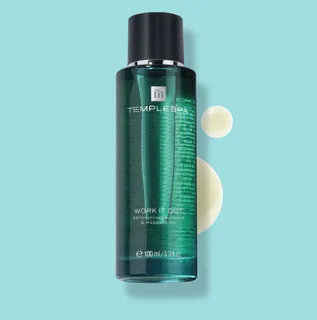
Works for
MoisturizingVitis vinifera seed oil, Caprylic/capric triglyceride + 8 moreWorks
“Vitamins A, C & E work together with the lush base of natural oils including avocado, jojoba, kukui, grapeseed, olive & upcycled apricot to deliver deep moisturisation.”
This product can help soften the skin and reduce its moisture loss with emollients and occlusives: caprylic/capric triglyceride, helianthus annuus seed oil.
Keep in mind that this product does not contain effective ingredients to attract water to the upper layer of the skin. This is why an additional product with humectants like glycerin or hyaluronic acid can be helpful (apply it before this product for the best results).
Anti-agingSide benefit · Retinyl palmitate, Tocopherol + 1 moreMay help
This product contains retinyl palmitate. This ingredient might be able to help reduce and prevent fine lines and wrinkles, improve skin elasticity and firmness, but there is not enough evidence that it actually works.
Evens skin toneSide benefit · Retinyl palmitate, Ascorbyl tetraisopalmitateMay help
The following ingredient (ingredients) in this product might be helpful, but there is no evidence to confirm that it actually works: retinyl palmitate.
Can it cause trouble?
Irritancy16 strong irritants: Parfum, Menthol + 14 more — patch-test recommendedHigh risk
ComedogenicClean of flagged comedogenic ingredientsNone flagged
User reviews
Be the first — your take helps the next person decide.
Ingredients
Filter by role to see what each ingredient is doing.
Vitis vinifera seed oil~29–44%
- Irritation risk
- Medium
A great emollient that can also have anti-oxidant properties
More about Vitis vinifera seed oilCaprylic/capric triglyceride~6–9%
- Irritation risk
- Medium
A good mix of fatty acids that forms a protective layer on the skin. Improves the shelf life of products. Derived from coconut and glycerin
More about Caprylic/capric triglycerideC12-13 pareth-3~3.5–5.3%
Parfum~2.7–4%
- Irritation risk
- High
An aromatic blend of unspecified and possibly irritating ingredients
More about ParfumOlea europaea fruit oil~2.2–3.3%
- Irritation risk
- Medium
An emollient that helps soften the skin but is not effective for restoring its barrier function. Might be helpful to calm down inflammation
More about Olea europaea fruit oilPersea gratissima oil~1.9–2.8%
- Irritation risk
- Medium
An emollient that helps soften the skin and could be helpful in repairing its barrier function
More about Persea gratissima oilSimmondsia chinensis seed oil~1.7–2.6%
- Irritation risk
- Medium
Softens the upper layer of skin and helps restore the healthy skin barrier. Has shown to help calm down inflammation in skin. It is a stable oil, meaning that it retains its properties even when exposed to air.
More about Simmondsia chinensis seed oilAleurites moluccanus seed oil~1.3–1.9%
- Irritation risk
- Low
Helps soften the upper layer of the skin
More about Aleurites moluccanus seed oilTocopheryl acetate~1–1.5%
- Irritation risk
- Medium
A more stable but less bio-available form of vitamin E compared to Tocopherol. Might help moisturize and protect the skin from free radicals, but mostly used in low concentrations to stabilize other ingredients.
More about Tocopheryl acetateJuniperus communis fruit oil~0.8–1.25%
- Irritation risk
- Low
Menthol~0.5–1.15%
- Irritation risk
- High
Helianthus annuus seed oil~0.45–1.05%
- Irritation risk
- Low
A great emollient due to its high linoleic acid content. One of the most effective plant oils in helping skin hydration and repairing skin barrier function
More about Helianthus annuus seed oilEucalyptus globulus leaf oil~0.35–0.85%
- Irritation risk
- High
An essential oil that can be very irritating. Has some anti-bacterial properties
More about Eucalyptus globulus leaf oilCupressus sempervirens leaf oil~0.35–0.75%
- Irritation risk
- Low
Lavandula angustifolia oil~0.3–0.75%
- Irritation risk
- High
An essential oil. Potential allergen and can be irritating. It has some anti-bacterial properties
More about Lavandula angustifolia oilArnica montana flower extract~0.2–0.8%
- Irritation risk
- High
A plant extract that can be irritating. It can have some anti-bacterial properties, but there are no evidence of a beneficial effect for skin
More about Arnica montana flower extractThymus vulgaris flower/leaf oil~0.3–0.7%
- Irritation risk
- High
Eugenia caryophyllus leaf oil~0.15–0.65%
- Irritation risk
- High
An essential oil. Used as a fragrance. Can be irritating and sensitizing
More about Eugenia caryophyllus leaf oilPrunus armeniaca kernel oil~0.2–0.75%
- Irritation risk
- Medium
An emollient that helps soften the skin
More about Prunus armeniaca kernel oilAscorbyl tetraisopalmitate~0.15–0.7%
- Irritation risk
- Medium
A vitamin C derivative. Studies show that is might be effective in reducing hyperpigmentation, but there are no studies confirming that it is effectively converted into the bioavailable form of Vitamin C in skin. It is not clear how this derivative compares in effectiveness to the topical application of bioavailable form of vitamin C (L-ascorbic acid)
More about Ascorbyl tetraisopalmitateRetinyl palmitate~0.1–0.5%
- Irritation risk
- High
Three steps removed from the active form of vitamin A - retinoic acid. To have an effect in the skin, it first needs to be converted twice to become the retinoic acid. This means it is less potent than retinol, but could also be less irritating. Once converted to the retinoic acid in the skin, it helps against all signs of aging, improves skin cell turnover and helps fight blemishes and clogged pores. However, in many cosmetic formulations, it is used in a concentration that is too low to have the full effect
More about Retinyl palmitateTocopherol~0.15–0.55%
- Irritation risk
- Low
Pure form of vitamin E. Can help moisturise and protect the skin from free radicals. Often used to help stabilise other ingredients or the formula itself
More about TocopherolLimonene~0.1–0.45%
- Irritation risk
- High
A common frangrance that can easily irritate skin, especially if exposed to air, light or heat
More about LimoneneLinalool~0.1–0.4%
Geraniol~0.1–0.35%
Citronellol~0.1–0.3%
Eugenol~0.05–0.25%
Citral~0.05–0.2%
Farnesol~0.05–0.15%
Coumarin~0.05–0.1%
Ingredient list view
Vitis vinifera seed oil, Caprylic/capric triglyceride, C12-13 pareth-3, Parfum, Olea europaea fruit oil, Persea gratissima oil, Simmondsia chinensis seed oil, Aleurites moluccanus seed oil, Tocopheryl acetate, Juniperus communis fruit oil, Menthol, Helianthus annuus seed oil, Eucalyptus globulus leaf oil, Cupressus sempervirens leaf oil, Lavandula angustifolia oil, Arnica montana flower extract, Thymus vulgaris flower/leaf oil, Eugenia caryophyllus leaf oil, Prunus armeniaca kernel oil, Ascorbyl tetraisopalmitate, Retinyl palmitate, Tocopherol, Limonene, Linalool, Geraniol, Citronellol, Eugenol, Citral, Farnesol, Coumarin
Compare prices
Retailers ranked by price — lowest first.

Worth comparing, line by line.
Match % combines shared ingredients, the first five ingredients, shared actives and hero ingredients, irritancy (lower counts in the alternative's favour), texture and body area. Only products in the same routine step are compared.
| Temple SpaWORK IT OUTYOUR PRODUCT | Soji HealthBody Oil | Herbivore BotanicalsHerbivore Jasmine Glowing Hydration Body Oil | First Aid BeautyNourish + Glow Body Oil Duo | |
|---|---|---|---|---|
| Match | — | 40% | 37% | 36% |
| Price | — | — | $29.41 | $71.00 |
| Shared key ingredients | — | 5 of 8 | 4 of 8 | 5 of 8 |
| Key difference | — | Prunus Amygdalus Dulcis Seed | Camellia Oleifera Seed Oil | Orbignya Oleifera Seed Oil |
| Irritancy | High | Medium | Medium | High |
| Drying alcohol | — | — | — | — |
| View product | Shop | Shop | Shop |


More alternatives: Summer Fridays Pool Time Glowing Body OilMilk + Honey Lavender, Eucalyptus Bath & Body Oil No.08
Sources cited in this review
Every concentration estimate and effectiveness label is anchored to one of these 16 studies and safety reviews.
- 1Use of “natural” oils for moisturization: Review of olive, coconut, and sunflower seed oilonlinelibrary.wiley.com
- 2
- 3
- 4Effect of topically applied lipids on surfactant-irritated skinonlinelibrary.wiley.com
- 5
- 6Effects of Topical Arnica Gel on Post-Laser Treatment Bruisesonlinelibrary.wiley.com

Affiliate links · As an Amazon Associate, WIMJ earns from qualifying purchases.