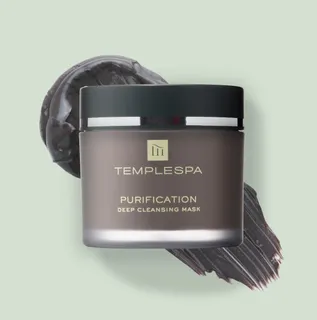
Works for
Anti-blemishRetinyl palmitate ~0.1–0.35%Under-dosed
“Say goodbye to excess oil and blemishes with PURIFICATION.”
Effective ingredients missing or their concentration is too low.
MoisturizingSide benefit · Glycerin, Saccharum officinarum extract + 6 moreWorks
This product contains good ingredients to attract water to the upper layer of the skin. These ingredients are called "humectants": glycerin, propylene glycol.
When humectants are on the surface of the skin, they “pull in” the moisture from the outside environment, or from within deeper layers of the skin. If the air is dry, humectants can speed up the moisture loss from the skin. This is why it is a good idea to use another product on top of this one to help "seal in" the moisture (look for ingredients like dimethicone, squalane, oils and butters).
Can it cause trouble?
Irritancy14 strong irritants: Alcohol denat., Melaleuca alternifolia leaf oil + 12 more — patch-test recommendedHigh risk
Comedogenic1 ingredient rated 2 or more on the 0–5 pore-clogging scale1 flagged
User reviews
Be the first — your take helps the next person decide.
Ingredients
Filter by role to see what each ingredient is doing.
Water~40–60%
Kaolin~4.5–6.7%
- Irritation risk
- Low
A type of clay that consists mainly of aluminum silicate. Helps absorb oil and creates a thicker product consistency. Can be used to add a white color
More about KaolinGlycerin~3.3–4.9%
- Irritation risk
- Low
One of the best moisturizing ingredients. Naturally present in skin. It attracts water to the upper layer of the skin working as a humectant
More about GlycerinPropylene glycol~2.5–3.8%
- Irritation risk
- High
Helps oil and water mix together and can enhance the penetration of other ingredients into the skin. It can be irritating
More about Propylene glycolAlcohol denat.~2–3%
- Irritation risk
- High
Produces temporary toning effect. Can help dissolve other ingredients or preserve products
More about Alcohol denat.Peg-40 hydrogenated castor oil~1.7–2.5%
- Irritation risk
- Medium
Helps oil and water mix together
More about Peg-40 hydrogenated castor oilPolyacrylamide~1.4–2.1%
- Irritation risk
- Medium
Used to improve product texture and help oil and water mix together
More about PolyacrylamidePhenoxyethanol~0.5–1%
- Irritation risk
- Low
A preservative. It helps prevent bacterial growth in cosmetic products
More about PhenoxyethanolC13-14 isoparaffin~1–1.5%
- Irritation risk
- Low
Helps soften the upper layer of the skin, dissolve other ingredients and create a thicker product consistency
More about C13-14 isoparaffinMelaleuca alternifolia leaf oil~0.55–1.25%
- Irritation risk
- High
An essential oil that can be irritating. Has some anti-bacterial properties
More about Melaleuca alternifolia leaf oilLaureth-7~0.4–0.95%
Laminaria digitata extract~0.2–0.8%
- Irritation risk
- Low
- Comedogenicity
- 3/5
Seaweed extract that helps the skin to attract water and make it more smooth for touch. Also shows promise of anti-aging properties, but good research is lacking at the moment
More about Laminaria digitata extractEthylhexylglycerin~0.15–0.55%
Tocopheryl acetate~0.1–0.45%
- Irritation risk
- Medium
A more stable but less bio-available form of vitamin E compared to Tocopherol. Might help moisturize and protect the skin from free radicals, but mostly used in low concentrations to stabilize other ingredients.
More about Tocopheryl acetateSaccharum officinarum extract~0.1–0.4%
- Irritation risk
- Low
Sugar extract that helps attract water to the upper layer of the skin
More about Saccharum officinarum extractPhoenix dactylifera fruit extract~0.15–0.5%
- Irritation risk
- Low
Plantago lanceolata leaf extract~0.1–0.45%
- Irritation risk
- Medium
A plant extract that might have anti-oxidant properties
More about Plantago lanceolata leaf extractRetinyl palmitate~0.1–0.35%
- Irritation risk
- High
Three steps removed from the active form of vitamin A - retinoic acid. To have an effect in the skin, it first needs to be converted twice to become the retinoic acid. This means it is less potent than retinol, but could also be less irritating. Once converted to the retinoic acid in the skin, it helps against all signs of aging, improves skin cell turnover and helps fight blemishes and clogged pores. However, in many cosmetic formulations, it is used in a concentration that is too low to have the full effect
More about Retinyl palmitateLavandula angustifolia oil~0.1–0.4%
- Irritation risk
- High
An essential oil. Potential allergen and can be irritating. It has some anti-bacterial properties
More about Lavandula angustifolia oilCymbopogon flexuosus oil~0.1–0.4%
- Irritation risk
- High
Eucalyptus globulus leaf oil~0.05–0.25%
- Irritation risk
- High
An essential oil that can be very irritating. Has some anti-bacterial properties
More about Eucalyptus globulus leaf oilSalvia officinalis oil~0.1–0.35%
- Irritation risk
- High
Caprylic/capric triglyceride~0.1–0.4%
- Irritation risk
- Medium
A good mix of fatty acids that forms a protective layer on the skin. Improves the shelf life of products. Derived from coconut and glycerin
More about Caprylic/capric triglycerideCitral~0.05–0.2%
Linalool~0.05–0.25%
Limonene~0.05–0.25%
- Irritation risk
- High
A common frangrance that can easily irritate skin, especially if exposed to air, light or heat
More about LimoneneMelissa officinalis flower/leaf/stem extract~0.05–0.25%
- Irritation risk
- High
Punica granatum seed extract~0.05–0.2%
Illicium verum fruit oil~0.05–0.2%
- Irritation risk
- Low
Citrus aurantium bergamia fruit oil~0.05–0.2%
- Irritation risk
- High
A plant oil with a high content of volatile compounds that can irritate the skin and lead to allergic reactions. Can lead to photosensitivity
More about Citrus aurantium bergamia fruit oilMyrtus communis oil~0.05–0.25%
- Irritation risk
- Low
Rosmarinus officinalis leaf oil~0.1–0.3%
- Irritation risk
- High
A plant oil with high content of volatile compounds that can irritate the skin. Can be used as a fragrance. Has anti-bacterial properties and might help neutralize free radicals on the surface of the skin
More about Rosmarinus officinalis leaf oilSodium benzoate~0.05–0.25%
Geraniol~0.05–0.2%
Citric acid~0.05–0.2%
- Irritation risk
- Medium
Can work as an exfoliant but is typically used to adjust the product pH
More about Citric acidTocopherol~0.05–0.2%
- Irritation risk
- Low
Pure form of vitamin E. Can help moisturise and protect the skin from free radicals. Often used to help stabilise other ingredients or the formula itself
More about TocopherolCi 77491~0.05–0.1%
- Irritation risk
- Low
A red colorant made of iron oxide. Typically is not irritating
More about Ci 77491Ci 77492~0.01–0.05%
Ci 77499~0.01–0.05%
Ingredient list view
Water, Kaolin, Glycerin, Propylene glycol, Alcohol denat., Peg-40 hydrogenated castor oil, Polyacrylamide, Phenoxyethanol, C13-14 isoparaffin, Melaleuca alternifolia leaf oil, Laureth-7, Laminaria digitata extract, Ethylhexylglycerin, Tocopheryl acetate, Saccharum officinarum extract, Phoenix dactylifera fruit extract, Plantago lanceolata leaf extract, Retinyl palmitate, Lavandula angustifolia oil, Cymbopogon flexuosus oil, Eucalyptus globulus leaf oil, Salvia officinalis oil, Caprylic/capric triglyceride, Citral, Linalool, Limonene, Melissa officinalis flower/leaf/stem extract, Punica granatum seed extract, Illicium verum fruit oil, Citrus aurantium bergamia fruit oil, Myrtus communis oil, Rosmarinus officinalis leaf oil, Sodium benzoate, Geraniol, Citric acid, Tocopherol, Ci 77491, Ci 77492, Ci 77499
Compare prices
Retailers ranked by price — lowest first.

Worth comparing, line by line.
Match % combines shared ingredients, the first five ingredients, shared actives and hero ingredients, irritancy (lower counts in the alternative's favour), texture and body area. Only products in the same routine step are compared.
| Temple SpaPURIFICATIONYOUR PRODUCT | Donna KaranDONNA BELLA Bio Anti-Aging Thermal Mask | REVOLUTION SKINCAREBlemish 2% Salicylic Acid Face Mask | KmartFirming Mask Treatment - Kaolin Clay, Turmeric & Vitamin B3 | |
|---|---|---|---|---|
| Match | — | 41% | 38% | 38% |
| Price | — | — | $10.71 | — |
| Shared key ingredients | — | 3 of 5 | 2 of 5 | 2 of 5 |
| Key difference | — | Beeswax | Salicylic Acid | Salicylic Acid |
| Irritancy | High | Medium | Medium | Medium |
| Drying alcohol | Contains drying alcohol | — | Contains drying alcohol | — |
| View product | Shop | Shop | Shop |


More alternatives: Sabon Dead Sea Mud MaskL'Oréal Paris Pure Clay Blemish Rescue Face Mask
Sources cited in this review
Every concentration estimate and effectiveness label is anchored to one of these 18 studies and safety reviews.
- 1
- 2Surfactants and experimental irritant contact dermatitisncbi.nlm.nih.gov
- 3Propylene Glycolpubmed.ncbi.nlm.nih.gov
- 4Skin-sensitizing and irritant properties of propylene glycolonlinelibrary.wiley.com
- 5
- 6Safety Assessment of Isoparaffins as Used in Cosmeticsjournals.sagepub.com

Affiliate links · As an Amazon Associate, WIMJ earns from qualifying purchases.