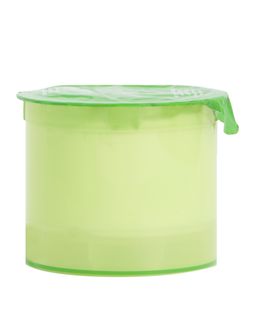
Tata Harper Water-Lock Moisturizer Pod
Works for
1 of 1 advertised claim delivered
Moisturizing15 ingredients credited for this claimGood support
“Water-Lock Moisturizer Pod”
This product contains good ingredients to attract water to the upper layer of the skin. These ingredients are called "humectants": diglycerin, glycerin.
When humectants are on the surface of the skin, they “pull in” the moisture from the outside environment, or from within deeper layers of the skin. If the air is dry, humectants can speed up the moisture loss from the skin. This is why it is a good idea to use another product on top of this one to help "seal in" the moisture (look for ingredients like dimethicone, squalane, oils and butters).
Anti-oxidationNot advertised by the brand · 5 ingredients credited for this claimModerate support
This product contains antioxidants (punica granatum extract) that might be able to help neutralize free radicals in skin to lessen the damage it gets from the UV light (sun). There is not enough evidence to confirm their effectiveness in skin though.
Can it cause trouble?
Irritancy10 strong irritants: Citrus aurantium dulcis flower extract, Arnica montana extract + 8 more — patch-test recommendedHigh risk
Comedogenic1 ingredient rated 2 or more on the 0–5 pore-clogging scale1 flagged
User reviews
Be the first — your take helps the next person decide.
Ingredients
Filter by role to see what each ingredient is doing.
Hordeum vulgare leaf juice~23–34%
- Irritation risk
- Low
Octyldodecanol~5.4–8%
- Irritation risk
- Low
An emollient that helps to soften the skin and create a pleasant product texture and stabilize the formulation
More about OctyldodecanolC10-18 triglycerides~5.3–8%
- Irritation risk
- Low
Helps soften the skin and attract water to its upper layer. Helps create nice product texture
More about C10-18 triglyceridesGlycerin~3.6–5.4%
- Irritation risk
- Low
One of the best moisturizing ingredients. Naturally present in skin. It attracts water to the upper layer of the skin working as a humectant
More about GlycerinWater~2.9–4.3%
Cetearyl alcohol~2.3–3.5%
- Irritation risk
- Low
- Comedogenicity
- 2/5
A non-drying alcohol. Works as an emollient. Helps water and oil mix together and creates a nice product texture
More about Cetearyl alcoholShea butter ethyl esters~1.9–2.8%
- Irritation risk
- Low
Helps soften the upper layer of the skin
More about Shea butter ethyl estersDiglycerin~1.5–2.3%
- Irritation risk
- Low
Helps attract water to the upper layer of the skin
More about DiglycerinSclerotium gum~1.3–1.9%
- Irritation risk
- Low
Used to create gel-like formulas and stabilize emulsions
More about Sclerotium gumPunica granatum extract~1–1.5%
- Irritation risk
- Medium
A plant extract that can help neutralize free radicals in skin and even out the skin tone, but is typically used in products in a concentration that is too low to be effective
More about Punica granatum extractCitrus aurantium dulcis flower extract~0.85–1.3%
- Irritation risk
- High
Sodium hyaluronate~0.55–1.3%
- Irritation risk
- Low
One of the best moisturizing ingredients. Attracts water into the upper layer of the skin
More about Sodium hyaluronateSaccharide isomerate~0.5–1.2%
- Irritation risk
- Low
Helps attract water to the upper layer of the skin
More about Saccharide isomerateBeta vulgaris root extract~0.5–1.15%
- Irritation risk
- Medium
A plant extract that might have some antioxidant properties, but mostly used in cosmetics for its color
More about Beta vulgaris root extractArnica montana extract~0.45–1.1%
- Irritation risk
- High
Borago officinalis leaf extract~0.45–1.1%
- Irritation risk
- Low
Calendula officinalis flower extract~0.45–1%
- Irritation risk
- High
A plant extract that has some anti-oxidant and anti-bacterial properties. Can be irritating
More about Calendula officinalis flower extractMedicago sativa extract~0.4–1%
- Irritation risk
- Medium
A plant extract that might help neutralize free radicals in skin
More about Medicago sativa extractSpiraea ulmaria extract~0.4–0.95%
- Irritation risk
- Low
Sambucus nigra fruit extract~0.4–0.9%
- Irritation risk
- High
A plant extract that may contain a small amount of essential oils. Might be helpful in neutralizing free radicals in skin
More about Sambucus nigra fruit extractOlea europaea fruit oil~0.4–1%
- Irritation risk
- Medium
An emollient that helps soften the skin but is not effective for restoring its barrier function. Might be helpful to calm down inflammation
More about Olea europaea fruit oilMagnolia officinalis bark extract~0.35–0.85%
- Irritation risk
- Low
Citrus aurantium dulcis peel oil~0.35–0.85%
- Irritation risk
- High
An essentil oil from orange peel. Potential allergen and can be irritating
More about Citrus aurantium dulcis peel oilArachidyl alcohol~0.4–1%
- Irritation risk
- Low
Used to soften the upper layer of the skin and create a thicker product consistency
More about Arachidyl alcoholGlyceryl caprylate~0.45–1%
- Irritation risk
- Low
An emollient that can also help water and oil mix together, as well as prevent bacteria growth in products
More about Glyceryl caprylateSodium phytate~0.35–0.85%
Hydrolyzed corn starch~0.35–0.8%
- Irritation risk
- Low
Helps improve the product texture
More about Hydrolyzed corn starchGlyceryl undecylenate~0.45–1%
- Irritation risk
- Medium
Helps oil and water mix together and helps preserve the product formulation
More about Glyceryl undecylenateCetearyl glucoside~0.35–0.85%
- Irritation risk
- Medium
Helps water and oil in the product mix well together and improves product texture
More about Cetearyl glucosideBehenyl alcohol~0.4–1%
- Irritation risk
- Low
Non-drying alcohol that helps water and oil mix together. Also serves as an emollient
More about Behenyl alcoholSodium levulinate~0.35–0.8%
Sodium anisate~0.35–0.8%
Arachidyl glucoside~0.35–0.85%
Citric acid~0.3–0.75%
- Irritation risk
- Medium
Can work as an exfoliant but is typically used to adjust the product pH
More about Citric acidSodium citrate~0.15–0.7%
- Irritation risk
- Medium
Helps to control the skin's pH level. Maintains the skin's natural film of amino-lactic acids and oils. Helps to preserve products
More about Sodium citrateLactic acid~0.15–0.65%
- Irritation risk
- Medium
An exfoliating and moisturizing alpha-hydroxy acid (AHA). Typically causes less irritation than other AHAs, for example, glycolic acid. At high concentrations (about 15%), lactic acid can help reduce lines and wrinkles. Recent studies show that lactic acid can support the "good" bacteria living on skin's surface (healthy skin microbiome)
More about Lactic acidPhenethyl alcohol~0.15–0.55%
Alcohol~0.1–0.5%
- Irritation risk
- High
Can be drying and contribute to skin irritation. Used in formulars to dissolve other ingredients, create a thinner product consistency or for its antibacterial properties
More about AlcoholLimonene~0.1–0.45%
- Irritation risk
- High
A common frangrance that can easily irritate skin, especially if exposed to air, light or heat
More about LimoneneCitral~0.1–0.4%
Citronellol~0.1–0.35%
Linalool~0.1–0.35%
Ingredient list view
Hordeum vulgare leaf juice, Octyldodecanol, C10-18 triglycerides, Glycerin, Water, Cetearyl alcohol, Shea butter ethyl esters, Diglycerin, Sclerotium gum, Punica granatum extract, Citrus aurantium dulcis flower extract, Sodium hyaluronate, Saccharide isomerate, Beta vulgaris root extract, Arnica montana extract, Borago officinalis leaf extract, Calendula officinalis flower extract, Medicago sativa extract, Spiraea ulmaria extract, Sambucus nigra fruit extract, Olea europaea fruit oil, Magnolia officinalis bark extract, Citrus aurantium dulcis peel oil, Arachidyl alcohol, Glyceryl caprylate, Sodium phytate, Hydrolyzed corn starch, Glyceryl undecylenate, Cetearyl glucoside, Behenyl alcohol, Sodium levulinate, Sodium anisate, Arachidyl glucoside, Citric acid, Sodium citrate, Lactic acid, Phenethyl alcohol, Alcohol, Limonene, Citral, Citronellol, Linalool
Compare prices
Retailers ranked by price — lowest first.
Affiliate links · prices updated regularly · As an Amazon Associate, WIMJ earns from qualifying purchases.
Sources cited in this review
Every concentration estimate and effectiveness label is anchored to one of these 17 studies and safety reviews.
- 1
- 2
- 3
- 4
- 5Hyaluronic acid: A key molecule in skin agingncbi.nlm.nih.gov
- 6

Affiliate links · As an Amazon Associate, WIMJ earns from qualifying purchases.