Works for:
based on ingredients and %- Moisturizing
Doesn't work for:
based on ingredients and %- Exfoliation
Can it cause trouble?
- Irritation risk: high
- Comedogenic risk ingredients: 0
Key actives

Moisturizing
What does the product description say?
How To Use Use as often as desired, to exfoliate and to replenish skin's moisture.
Source: Content
This product can help improve hydration of the skin with the two types of ingredients.
The first type is called “humectants”:
these ingredients help attract water.
When humectants are on the surface of the skin, they “pull in” the moisture from the outside environment, or from
within deeper layers of the skin. The following ingredients in this product do the job:
sucrose.
This product also contains ingredients called “occlusives”. They help reduce the speed with which our skin loses moisture to the outside environment. These ingredients also help soften the upper layer of the skin, so it feels less tight and nicer to the touch. The following ingredients in this product do the job: beeswax, cera alba.
An emollient that helps soften the upper layer of the skin. Might have some weak anti-oxidant properties
Forms a protective barrier that holds water and keeps dry skin hydrated. Keeps an emulsion from separating into its oil and liquid components, and increases the thickness of a product. Can be an allergen
Forms a protective barrier that holds water and keeps dry skin hydrated. Keeps an emulsion from separating into its oil and liquid components, and increases the thickness of a product. Can be an allergen
A great emollient due to its high linoleic acid content. One of the most effective plant oils in helping skin hydration and repairing skin barrier function
Can help attract water to the upper layer of the skin. In crystal form, it can work as a gentle exfoliant, gentler than the salt scrub. Helps stabilize the emulsion
An emollient that helps soften the skin but is not effective for restoring its barrier function. Might be helpful to calm down inflammation
An emollient that helps soften the skin and is used to improve product texture and stability
An emollient that can also help water and oil mix together, as well as prevent bacteria growth in products
Helps oil and water mix together and helps preserve the product formulation
Exfoliation
What does the product description say?
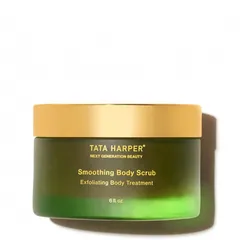
Smoothing Body Scrub
Source: From product name
This product does not contain effective exfoliating ingredients. It might be able to deliver physical exfoliation, that is scrub off some of the dead cells on the surface of the skin. We do not recommend physical exfoliation, because it is not uniform (some bits of skin can get exfoliated too much while others not at all). It can also traumatize the skin and aggrevate acne and other skin conditions.
Used to thicken the product formulation and might help to add minerals to the surface of the skin. It is used in scrubs as a physical exfoliant. Can increase sensitivity to other ingredients if left on the skin or used in high concentration
Used to thicken the product formulation and might help to add minerals to the surface of the skin. It is used in scrubs as a physical exfoliant. Can increase sensitivity to other ingredients if left on the skin or used in high concentration
How honest is this product?
| Promise | Can it deliver? |
|---|---|
| Moisturizing | |
| Exfoliation |
Total Promises Fulfilled score: 37/100.
We receive a small commission for purchases made through these links at no cost for you. Thank you for your support! Learn more
Potential irritants
Comedogenic ingredients
No comedogenic ingredients detected
User reviews (0)
Averages from community submissions.
No reviews yet for this product.
Be the first to share your experience!
Tried this product?
Help capture what the ingredient list can't—texture, finish, pilling, scent, and more. Answer what you can, skip the rest.
Takes ~30 seconds.
Reviews are shown in aggregate. No personal details.
Key Actives
An emollient that helps soften the upper layer of the skin. Might have some weak anti-oxidant properties
Forms a protective barrier that holds water and keeps dry skin hydrated. Keeps an emulsion from separating into its oil and liquid components, and increases the thickness of a product. Can be an allergen
Can help attract water to the upper layer of the skin. In crystal form, it can work as a gentle exfoliant, gentler than the salt scrub. Helps stabilize the emulsion
A great emollient due to its high linoleic acid content. One of the most effective plant oils in helping skin hydration and repairing skin barrier function
Forms a protective barrier that holds water and keeps dry skin hydrated. Keeps an emulsion from separating into its oil and liquid components, and increases the thickness of a product. Can be an allergen
Potential irritants
Oil of a very fragrant pink rose used as fragrance in cosmetics. Extensive research has shown it has mixed benefits. In the pro column, inhaling this flower’s scent seems to have relaxing properties and the plant’s petals contain skin-soothing and antioxidant compounds that can benefit skin. On the flipside, the numerous chemicals that create this rose’s distinctive fragrance pose a risk of causing skin aggravation.
A plant extract that has some anti-oxidant and anti-bacterial properties. Can be irritating
A plant extract that may contain a small amount of essential oils. Might be helpful in neutralizing free radicals in skin
An emollient that helps soften the skin but is not effective for restoring its barrier function. Might be helpful to calm down inflammation
An emollient that helps soften the upper layer of the skin. Might have some weak anti-oxidant properties
Used to thicken the product formulation and might help to add minerals to the surface of the skin. It is used in scrubs as a physical exfoliant. Can increase sensitivity to other ingredients if left on the skin or used in high concentration
Used to thicken the product formulation and might help to add minerals to the surface of the skin. It is used in scrubs as a physical exfoliant. Can increase sensitivity to other ingredients if left on the skin or used in high concentration
Forms a protective barrier that holds water and keeps dry skin hydrated. Keeps an emulsion from separating into its oil and liquid components, and increases the thickness of a product. Can be an allergen
Helps oil and water mix together and helps preserve the product formulation
Helps water and oil mix together and stabilize the product formulation
A plant extract that might help neutralize free radicals in skin
Comedogenic ingredients
We couldn't find any comedogenic ingredients in this product
All ingredients
Can help attract water to the upper layer of the skin. In crystal form, it can work as a gentle exfoliant, gentler than the salt scrub. Helps stabilize the emulsion
A great emollient due to its high linoleic acid content. One of the most effective plant oils in helping skin hydration and repairing skin barrier function
An emollient that helps soften the skin but is not effective for restoring its barrier function. Might be helpful to calm down inflammation
An emollient that helps soften the upper layer of the skin. Might have some weak anti-oxidant properties
Used to thicken the product formulation and might help to add minerals to the surface of the skin. It is used in scrubs as a physical exfoliant. Can increase sensitivity to other ingredients if left on the skin or used in high concentration
Used to thicken the product formulation and might help to add minerals to the surface of the skin. It is used in scrubs as a physical exfoliant. Can increase sensitivity to other ingredients if left on the skin or used in high concentration
Forms a protective barrier that holds water and keeps dry skin hydrated. Keeps an emulsion from separating into its oil and liquid components, and increases the thickness of a product. Can be an allergen
Forms a protective barrier that holds water and keeps dry skin hydrated. Keeps an emulsion from separating into its oil and liquid components, and increases the thickness of a product. Can be an allergen
An emollient that helps soften the skin and is used to improve product texture and stability
Helps oil and water mix together and helps preserve the product formulation
Helps water and oil mix together and stabilize the product formulation
An emollient that can also help water and oil mix together, as well as prevent bacteria growth in products
An umbrella term for the following three colorants: CI 77491, CI 77492, CI 77499. They might be able to offer some protection against visible light, but the degree of the protection is not clear
A plant extract that might help neutralize free radicals in skin
Oil of a very fragrant pink rose used as fragrance in cosmetics. Extensive research has shown it has mixed benefits. In the pro column, inhaling this flower’s scent seems to have relaxing properties and the plant’s petals contain skin-soothing and antioxidant compounds that can benefit skin. On the flipside, the numerous chemicals that create this rose’s distinctive fragrance pose a risk of causing skin aggravation.
A plant extract that has some anti-oxidant and anti-bacterial properties. Can be irritating
A plant extract that may contain a small amount of essential oils. Might be helpful in neutralizing free radicals in skin
Ingredient list view
Sucrose, Helianthus annuus seed oil, Polyglyceryl-4 oleate, Olea europaea fruit oil, Argania spinosa kernel oil, Maris sal, Sea salt, Cera alba, Beeswax, Cetyl palmitate, Glyceryl undecylenate, Prunus armeniaca seed powder, Vaccinium macrocarpon fruit, Sorbitan palmitate, Sorbitan olivate, Glyceryl caprylate, Iron oxides, Phenethyl alcohol, Arnica montana extract, Borago officinalis leaf extract, Medicago sativa extract, Rosa damascena extract, Calendula officinalis flower extract, Unknown, Jasminum sambac flower extract, Sambucus nigra fruit extract
- Effect of Olive and Sunflower Seed Oil on the Adult Skin Barrier: Implications for Neonatal Skin Care
- Topically Applied Sunflower Seed Oil Prevents Invasive Bacterial Infections in Preterm Infants in Egypt
- Effect of topically applied lipids on surfactant-irritated skin
- Impact of topical oils on the skin barrier: possible implications for neonatal health in developing countries
- Use of “natural” oils for moisturization: Review of olive, coconut, and sunflower seed oil
- Natural vegetable fats in the prevention of irritant contact dermatitis
- Efficacy of barrier creams in comparison to skin care products in dental laboratory technicians--a controlled trial
- Final Report on the Safety Assessment of Phenethyl Alcohol
- Antioxidant Activity and Cytotoxicity of Medicago sativa L. Seeds and Herb Extract on Skin Cells
- Topical application of Calendula officinalis (L.): Formulation and evaluation of hydrophilic cream with antioxidant activity
- The seamy side of natural medicines: contact sensitization to arnica (Arnica montana L.) and marigold (Calendula officinalis L.)
- Final report on the safety assessment of Calendula officinalis extract and Calendula officinalis
- Contact dermatitis as an adverse reaction to some topically used European herbal medicinal products – part 1: Achillea millefolium–Curcuma longa
- Assessment report on Sambucus nigra L., fructus
- SKIN PROTECTION AGAINST SOLAR UV RADIATION BY NATURAL PLANT PRODUCTS: EXTRACTS FROM ELDER FRUIT (SAMBUCUS NIGRA L.)