Works for
1 of 1 advertised claim delivered
MoisturizingTheobroma cacao seed butter, Helianthus annuus seed oil + 15 moreGood evidence
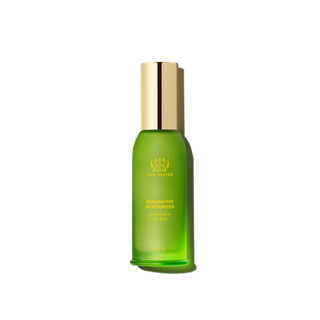
“A silky, ultra-hydrating moisturizer to leave skin with a dewy finish.”
This product can help improve hydration of the skin with the two types of ingredients.
The first type is called “humectants”:
these ingredients help attract water.
When humectants are on the surface of the skin, they “pull in” the moisture from the outside environment, or from
within deeper layers of the skin. The following ingredients in this product do the job:
glycerin, lactobacillus ferment.
This product also contains ingredients called “occlusives”. They help reduce the speed with which our skin loses moisture to the outside environment. These ingredients also help soften the upper layer of the skin, so it feels less tight and nicer to the touch. The following ingredients in this product do the job: caprylic/capric triglyceride, helianthus annuus seed oil.
Can it cause trouble?
Irritancy19 strong irritants: Rosa damascena flower water, Lavandula stoechas extract + 17 more — patch-test recommendedHigh risk
Comedogenic2 ingredients rated 2 or more on the 0–5 pore-clogging scale2 flagged
User reviews
Be the first — your take helps the next person decide.
Ingredients
Filter by role to see what each ingredient is doing.
Hordeum vulgare leaf juice~22–33%
- Irritation risk
- Low
Mangifera indica seed butter~3.7–5.6%
- Irritation risk
- Low
Helps to soften the upper layer of the skin and might have some anti-oxidant effect
More about Mangifera indica seed butterCarthamus tinctorius oleosomes~4.5–6.8%
- Irritation risk
- Low
Helps soften the upper layer of the skin
More about Carthamus tinctorius oleosomesGlycerin~3.3–5%
- Irritation risk
- Low
One of the best moisturizing ingredients. Naturally present in skin. It attracts water to the upper layer of the skin working as a humectant
More about GlycerinCaprylic/capric triglyceride~3–4.4%
- Irritation risk
- Medium
A good mix of fatty acids that forms a protective layer on the skin. Improves the shelf life of products. Derived from coconut and glycerin
More about Caprylic/capric triglycerideWater~2–3%
Shea butter ethyl esters~1.7–2.5%
- Irritation risk
- Low
Helps soften the upper layer of the skin
More about Shea butter ethyl estersCetearyl olivate~1.3–2%
Cocos nucifera fruit extract~1.2–1.8%
- Irritation risk
- Low
- Comedogenicity
- 3/5
An emollient. Found to be as effective as a moisturizer for dry skin as mineral oil. Could be comedogenic
More about Cocos nucifera fruit extractLeuconostoc ferment filtrate~0.9–1.4%
Rosa damascena flower water~0.55–1.3%
- Irritation risk
- High
Used to add a nice rose smell to the product. Might help attract water to the upper layer of the skin and have some anti-oxidant effect. Can be irritating
More about Rosa damascena flower waterSimmondsia chinensis seed oil~0.55–1.3%
- Irritation risk
- Medium
Softens the upper layer of skin and helps restore the healthy skin barrier. Has shown to help calm down inflammation in skin. It is a stable oil, meaning that it retains its properties even when exposed to air.
More about Simmondsia chinensis seed oilSorbitan olivate~0.45–1.05%
Lactobacillus ferment~0.4–0.95%
- Irritation risk
- Low
A fermentation product created by bacteria Lactobacillus. The fermented product has anti-bacterial properties and might be helpful in calming down inflammation, but studies are lacking. Helps attract water to the upper layer of the skin. Can be used as a preservative
More about Lactobacillus fermentHoney~0.4–0.9%
- Irritation risk
- Low
Helps attract water to the skin and might have some anti-bacterial properties. Can be an allergen
More about HoneySaccharide isomerate~0.4–0.9%
- Irritation risk
- Low
Helps attract water to the upper layer of the skin
More about Saccharide isomerateSodium hyaluronate~0.35–0.85%
- Irritation risk
- Low
One of the best moisturizing ingredients. Attracts water into the upper layer of the skin
More about Sodium hyaluronateSalix alba bark extract~0.35–0.8%
- Irritation risk
- High
A plant extract that can help neutralize free radicals in skin. It contains a compound salicin that can theoretically be converted into salicylic acid that, in turn, helps reduce inflammation in skin, but the evidence of effectiveness in skin is lacking and the extract is usually not used in a concentration that would enable an exfoliating effect
More about Salix alba bark extractTheobroma cacao seed butter~0.4–0.9%
- Irritation risk
- Low
- Comedogenicity
- 3/5
Helps soften the upper layer of the skin and can be helpful in restoring the skin barrier function. Might have some anti-oxidant effect
More about Theobroma cacao seed butterLavandula stoechas extract~0.3–0.7%
Propanediol~0.2–0.8%
- Irritation risk
- Low
Acts as a solvent for other ingredients. Speeds up the absorption of other ingredients into the skin
More about PropanediolAnthemis nobilis flower oil~0.15–0.7%
- Irritation risk
- High
An essential oil that is used as a fragrance and can be irritating. It might have some anti-oxidant effect in skin
More about Anthemis nobilis flower oilArnica montana extract~0.15–0.65%
- Irritation risk
- High
Borago officinalis leaf extract~0.15–0.65%
- Irritation risk
- Low
Calendula officinalis flower extract~0.15–0.6%
- Irritation risk
- High
A plant extract that has some anti-oxidant and anti-bacterial properties. Can be irritating
More about Calendula officinalis flower extractCitrus aurantium bergamia peel oil~0.15–0.7%
- Irritation risk
- High
Citrus paradisi peel oil~0.15–0.65%
Medicago sativa extract~0.15–0.65%
- Irritation risk
- Medium
A plant extract that might help neutralize free radicals in skin
More about Medicago sativa extractMichelia alba leaf oil~0.15–0.65%
- Irritation risk
- High
An essential oil used in cosmetics for its smell. Can be irritating
More about Michelia alba leaf oilPelargonium graveolens oil~0.15–0.65%
Sambucus nigra fruit extract~0.15–0.65%
- Irritation risk
- High
A plant extract that may contain a small amount of essential oils. Might be helpful in neutralizing free radicals in skin
More about Sambucus nigra fruit extractRosa damascena flower oil~0.15–0.65%
- Irritation risk
- High
Used as a fragrance. Can be irritating
More about Rosa damascena flower oilRosmarinus officinalis leaf extract~0.15–0.6%
- Irritation risk
- High
Can be helpful in reducing inflammation in skin, including inflamed acne. It can be irritating
More about Rosmarinus officinalis leaf extractSantalum spicata wood oil~0.15–0.6%
- Irritation risk
- High
Spiraea ulmaria extract~0.15–0.65%
- Irritation risk
- Low
Helianthus annuus seed oil~0.3–0.7%
- Irritation risk
- Low
A great emollient due to its high linoleic acid content. One of the most effective plant oils in helping skin hydration and repairing skin barrier function
More about Helianthus annuus seed oilOlea europaea fruit oil~0.2–0.75%
- Irritation risk
- Medium
An emollient that helps soften the skin but is not effective for restoring its barrier function. Might be helpful to calm down inflammation
More about Olea europaea fruit oilCetyl palmitate~0.3–0.7%
- Irritation risk
- Low
An emollient that helps soften the skin and is used to improve product texture and stability
More about Cetyl palmitateSodium phytate~0.15–0.65%
Sclerotium gum~0.15–0.65%
- Irritation risk
- Low
Used to create gel-like formulas and stabilize emulsions
More about Sclerotium gumSorbitan palmitate~0.15–0.7%
- Irritation risk
- Medium
Helps water and oil mix together and stabilize the product formulation
More about Sorbitan palmitateCitric acid~0.15–0.65%
- Irritation risk
- Medium
Can work as an exfoliant but is typically used to adjust the product pH
More about Citric acidSodium citrate~0.15–0.65%
- Irritation risk
- Medium
Helps to control the skin's pH level. Maintains the skin's natural film of amino-lactic acids and oils. Helps to preserve products
More about Sodium citrateAlcohol~0.15–0.7%
- Irritation risk
- High
Can be drying and contribute to skin irritation. Used in formulars to dissolve other ingredients, create a thinner product consistency or for its antibacterial properties
More about AlcoholLimonene~0.15–0.6%
- Irritation risk
- High
A common frangrance that can easily irritate skin, especially if exposed to air, light or heat
More about LimoneneLinalool~0.15–0.6%
Citronellol~0.15–0.6%
Geraniol~0.15–0.55%
Pinene~0.15–0.65%
- Irritation risk
- Low
Santalol~0.15–0.5%
- Irritation risk
- Low
Farnesol~0.1–0.45%
Beta-caryophyllene~0.1–0.5%
- Irritation risk
- Low
Citral~0.1–0.4%
Cinnamal~0.1–0.4%
- Irritation risk
- High
Terpineol~0.1–0.45%
- Irritation risk
- Low
Geranyl acetate~0.1–0.4%
- Irritation risk
- Low
Terpinolene~0.1–0.3%
- Irritation risk
- Low
Ingredient list view
Hordeum vulgare leaf juice, Mangifera indica seed butter, Carthamus tinctorius oleosomes, Glycerin, Caprylic/capric triglyceride, Water, Shea butter ethyl esters, Cetearyl olivate, Cocos nucifera fruit extract, Leuconostoc ferment filtrate, Rosa damascena flower water, Simmondsia chinensis seed oil, Sorbitan olivate, Lactobacillus ferment, Honey, Saccharide isomerate, Sodium hyaluronate, Salix alba bark extract, Theobroma cacao seed butter, Lavandula stoechas extract, Propanediol, Anthemis nobilis flower oil, Arnica montana extract, Borago officinalis leaf extract, Calendula officinalis flower extract, Citrus aurantium bergamia peel oil, Citrus paradisi peel oil, Medicago sativa extract, Michelia alba leaf oil, Pelargonium graveolens oil, Sambucus nigra fruit extract, Rosa damascena flower oil, Rosmarinus officinalis leaf extract, Santalum spicata wood oil, Spiraea ulmaria extract, Helianthus annuus seed oil, Olea europaea fruit oil, Cetyl palmitate, Sodium phytate, Sclerotium gum, Sorbitan palmitate, Citric acid, Sodium citrate, Alcohol, Limonene, Linalool, Citronellol, Geraniol, Pinene, Santalol, Farnesol, Beta-caryophyllene, Citral, Cinnamal, Terpineol, Geranyl acetate, Terpinolene
Compare prices
Retailers ranked by price — lowest first.

Affiliate links · prices updated regularly
Sources cited in this review
Every concentration estimate and effectiveness label is anchored to one of these 29 studies and safety reviews.
- 1Extraction and Characteristics of Seed Kernel Oil from Mangopdfs.semanticscholar.org
- 2
- 3
- 4
- 5
- 6

Affiliate links · As an Amazon Associate, WIMJ earns from qualifying purchases.