Works for:
based on ingredients and %- Cleansing
Doesn't work for:
based on ingredients and %- Exfoliation
Can it cause trouble?
- Irritation risk: high
- Comedogenic risk ingredients: 0
Key actives

Cleansing
What does the product description say?
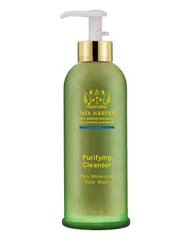
Purifying Cleanser
Source: From product name
This product works by removing dirt and oil from the surface of the skin. It uses a combination of mild cleansing agents (decyl glucoside, sucrose laurate, sucrose palmitate, sucrose stearate) and should be able to cleanse the skin gently. Still keep in mind that any cleansing can disrupt the skin barrier, and most people do not need to cleanse their skin more than once per day.
Even though this formulation is mild, the following cleansing agents could trigger an irritation or allergy for some people: decyl glucoside
Helps oil and water mix together. Can be irritating
Helps oil and water mix together. Can be used as a cleansing agent
Helps water and oil mix together
Exfoliation
What does the product description say?
This cleanser creates a natural enzymatic anti-pollution effect to purge impurities and fight free radicals, absorbs oil and dirt buildup to cleanse skin without stripping its natural moisture while it cleans, clears and minimises the look of clogged pores with the help of Broccoli extract, Purple clay complex and Papaya enzymes.
Source: Sephora New Zealand
This product might help exfoliate the skin with lactobacillus/punica granatum fruit ferment extract, papain, but These ingredients is not the most effective.
An enzyme extracted from papaya fruit. Can have an exfoliating effect on the skin. Can be irritating
An enzyme-based exfoliant
A plant extract that can help neutralize free radicals in skin. It contains a compound salicin that can theoretically be converted into salicylic acid that, in turn, helps reduce inflammation in skin, but the evidence of effectiveness in skin is lacking and the extract is usually not used in a concentration that would enable an exfoliating effect
How honest is this product?
| Promise | Can it deliver? |
|---|---|
| Cleansing | |
| Exfoliation |
Total Promises Fulfilled score: 75/100.
We receive a small commission for purchases made through these links at no cost for you. Thank you for your support! Learn more
Potential irritants
Comedogenic ingredients
No comedogenic ingredients detected
User reviews (0)
Averages from community submissions.
No reviews yet for this product.
Be the first to share your experience!
Tried this product?
Help capture what the ingredient list can't—texture, finish, pilling, scent, and more. Answer what you can, skip the rest.
Takes ~30 seconds.
Reviews are shown in aggregate. No personal details.
Key Actives
A fermentation product created by bacteria Lactobacillus. The fermented product has anti-bacterial properties and might be helpful in calming down inflammation, but studies are lacking. Helps attract water to the upper layer of the skin. Can be used as a preservative
A type of clay that consists mainly of aluminum silicate. Helps absorb oil and creates a thicker product consistency. Can be used to add a white color
A good mix of fatty acids that forms a protective layer on the skin. Improves the shelf life of products. Derived from coconut and glycerin
A great emollient due to its high linoleic acid content. One of the most effective plant oils in helping skin hydration and repairing skin barrier function
One of the best moisturizing ingredients. Naturally present in skin. It attracts water to the upper layer of the skin working as a humectant
Helps oil and water mix together. Can be used as a cleansing agent
A great emollient due to its high linoleic acid content. One of the most effective plant oils in helping skin hydration and repairing skin barrier function
Helps oil and water mix together. Can be irritating
Potential irritants
An enzyme extracted from papaya fruit. Can have an exfoliating effect on the skin. Can be irritating
An enzyme-based exfoliant
A plant extract that can help neutralize free radicals in skin. It contains a compound salicin that can theoretically be converted into salicylic acid that, in turn, helps reduce inflammation in skin, but the evidence of effectiveness in skin is lacking and the extract is usually not used in a concentration that would enable an exfoliating effect
An essential oil that is likely to be irritating and can cause photosensitivity
Can be helpful in reducing inflammation in skin, including inflamed acne. It can be irritating
A common frangrance that can easily irritate skin, especially if exposed to air, light or heat
A good mix of fatty acids that forms a protective layer on the skin. Improves the shelf life of products. Derived from coconut and glycerin
Might have some anti-inflammatory properties but research is lacking
Traditionally used to treat sunburns, dermatitis and inflammation, but evidence for its effectiveness is lacking. The extract can contain humectants that help attract water into the skin
Comedogenic ingredients
We couldn't find any comedogenic ingredients in this product
All ingredients
A good mix of fatty acids that forms a protective layer on the skin. Improves the shelf life of products. Derived from coconut and glycerin
A great emollient due to its high linoleic acid content. One of the most effective plant oils in helping skin hydration and repairing skin barrier function
One of the best moisturizing ingredients. Naturally present in skin. It attracts water to the upper layer of the skin working as a humectant
A fermentation product created by bacteria Lactobacillus. The fermented product has anti-bacterial properties and might be helpful in calming down inflammation, but studies are lacking. Helps attract water to the upper layer of the skin. Can be used as a preservative
Acts as a solvent for other ingredients. Speeds up the absorption of other ingredients into the skin
Helps oil and water mix together. Can be used as a cleansing agent
An enzyme extracted from papaya fruit. Can have an exfoliating effect on the skin. Can be irritating
An enzyme-based exfoliant
A plant extract that can help neutralize free radicals in skin. It contains a compound salicin that can theoretically be converted into salicylic acid that, in turn, helps reduce inflammation in skin, but the evidence of effectiveness in skin is lacking and the extract is usually not used in a concentration that would enable an exfoliating effect
A great emollient due to its high linoleic acid content. One of the most effective plant oils in helping skin hydration and repairing skin barrier function
An essential oil that is likely to be irritating and can cause photosensitivity
Might have some anti-inflammatory properties but research is lacking
Traditionally used to treat sunburns, dermatitis and inflammation, but evidence for its effectiveness is lacking. The extract can contain humectants that help attract water into the skin
A clay mineral. Can absorb oil from the surface of the skin
A type of clay that consists mainly of aluminum silicate. Helps absorb oil and creates a thicker product consistency. Can be used to add a white color
Might be helpful in restoring skin barrier function and, when combined with zinc carbonate and malonic acid, reducing fine lines and wrinkles by stimulating elastin production. Also helps stabilize the product formulation
Can be helpful in reducing inflammation in skin, including inflamed acne. It can be irritating
Creates an illusion of smoother and more radiant skin tone. Adds shimmer to the skin by reflecting light
A common frangrance that can easily irritate skin, especially if exposed to air, light or heat
Ingredient list view
Caprylic/capric triglyceride, Helianthus annuus seed oil, Glycerin, Water, Lactobacillus ferment, Leuconostoc ferment filtrate, Propanediol, Sucrose laurate, Citrus paradisi seed oil, Sucrose stearate, Papain, Lactobacillus/punica granatum fruit ferment extract, Salix alba bark extract, Helianthus annuus seed oil, Zingiber officinale root oil, Brassica oleracea italica extract, Aloe barbadensis leaf extract, Montmorillonite, Kaolin, Bioflavonoids, Curcuma longa root oil, Magnesium aluminum silicate, Foeniculum vulgare oil, Abies pectinata oil, Cymbopogon flexuosus oil, Eugenia caryophyllus flower oil, Rosmarinus officinalis leaf extract, Decyl glucoside, Sucrose palmitate, Mica, Limonene, Citral, Eugenol, Linalool, Geraniol
- Effect of Olive and Sunflower Seed Oil on the Adult Skin Barrier: Implications for Neonatal Skin Care
- Topically Applied Sunflower Seed Oil Prevents Invasive Bacterial Infections in Preterm Infants in Egypt
- Effect of topically applied lipids on surfactant-irritated skin
- Impact of topical oils on the skin barrier: possible implications for neonatal health in developing countries
- Glycerol and the skin: holistic approach to its origin and functions
- The effect of probiotics on immune regulation, acne, and photoaging
- Comparison of clinical and histological effects between lactobacillus-fermented Chamaecyparis obtusa and tea tree oil for the treatment of acne: an eight-week double-blind randomized controlled split-face study
- Use of Probiotics for Dermal Applications
- Efficacy and Safety of White Willow Bark (Salix alba) Extract
- An evaluation of the effect of a topical product containing salicin on the visible signs of human skin aging
- Zingiber officinale Rosc. essential oil, a review on its composition and bioactivity
- Final report on the safety assessment of aluminum silicate, calcium silicate, magnesium aluminum silicate, magnesium silicate, magnesium trisilicate, sodium magnesium silicate, zirconium silicate, attapulgite, bentonite, Fuller's earth, hectorite, kaolin, lithium magnesium silicate, lithium magnesium sodium silicate, montmorillonite, pyrophyllite, and zeolite
- Extracellular matrix in cutaneous ageing: the effects of 0.1% copper-zinc malonate-containing cream on elastin biosynthesis
- Allergic contact dermatitis induced by rosemary leaf extract in a cleansing gel
- Safety Assessment of Rosmarinus officinalis (Rosemary)-Derived Ingredients as Used in Cosmetics
- Rosmarinus officinalis Extract Suppresses Propionibacterium acnes–Induced Inflammatory Responses
- Ecofriendly surfactant is allergen of the year
- Annex I: Clinical evidence regarding sensitisation to individual fragrance chemicals and to natural extracts